
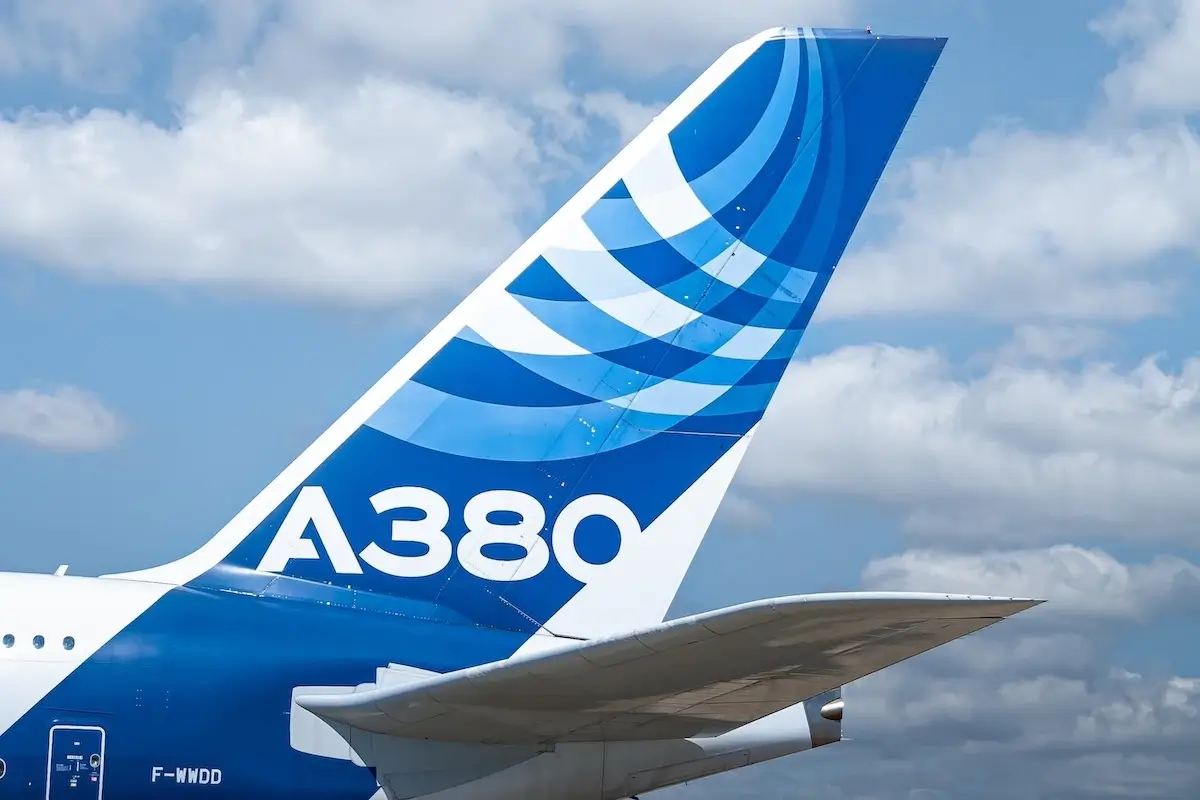
A prospective Airbus A380neo was intended to address the shortcomings of the A380-800, which, despite its stature in the industry, struggled to stick the landing in terms of market adoption.
With some airlines requiring a more efficient alternative to meet the booming demand for hub-to-hub traffic at airports that could not keep up with it through infrastructure development, a solution was proposed: a new engine option to replace the first iteration.
However, with interest waning at the end of the superjumbo era and airlines moving towards smaller widebody jets that offered greater flexibility and efficiency, could the A380neo have truly saved the world’s largest passenger plane?
Where The A380neo Idea Came From
The push for the Airbus A380neo did not come directly from the manufacturer; it was an initiative by Emirates, the largest customer of the A380-800, calling for a perfect replacement for its superjumbo, which was beginning to show signs of age.
However, the interest, spurred on by Sir Tim Clark, the airline’s President, came as early as 2014, when he pushed for a platform like the A380 that would improve fuel burn by roughly 10% to 12%, and the belief remained that this would be possible with a simple re-engine of the existing platform.
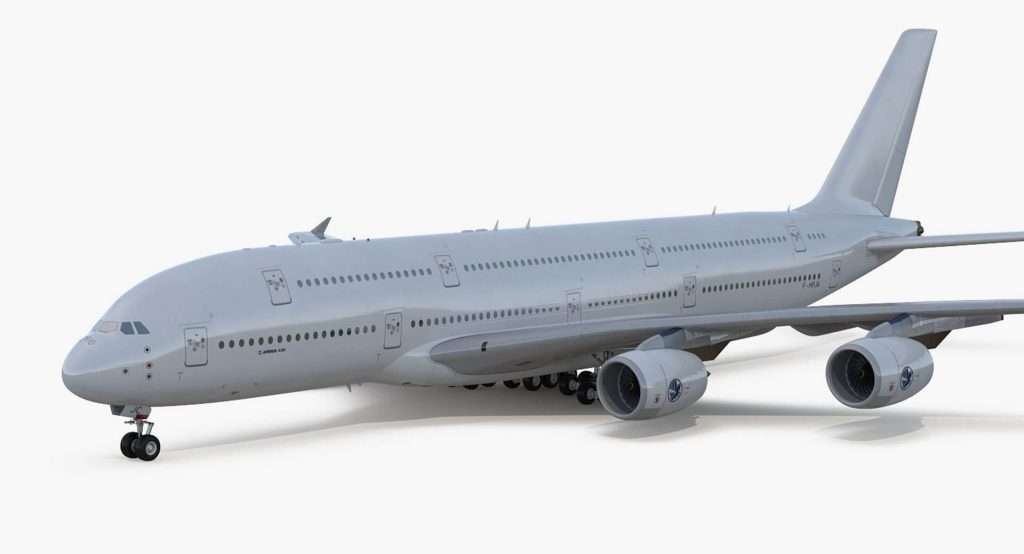
Clark is going one step further, saying that his investment in the development of such an aircraft would lead to a sizeable commitment if launched, the strongest backing the product had received in its years of speculation, including even murmurs from Doha-based Qatar Airways, which said they would consider such an offering in their future fleet plan.
The origin of the A380neo matters for whether the model could have played a role in saving the superjumbo from extinction, because it was never a broad-market programme like the A320neo or A350, but rather a response from the planemaker itself to evolving trends.
Rather, it was an answer Emirates put forward to its network challenges, ranging from demand for premium services to the drive to improve margins and to the challenge of managing traffic at dense hubs that were not developing fast enough to accommodate it.
If the launch customer becomes the only customer of such a proposition, especially in a niche that was already coming to its end, it’s a dangerous proposition for any planemaker to push forward with a business case that presents a viable and sustainable endpoint.
The Struggles Of The Airbus A380
Even before the A380neo talk, the A380 had been experiencing slower sales and a dwindling market presence. This came as airlines pushed harder for efficient twin-engine aircraft capable of travelling long distances with capacity to match the demand, all at a fraction of the cost of the superjumbo era.
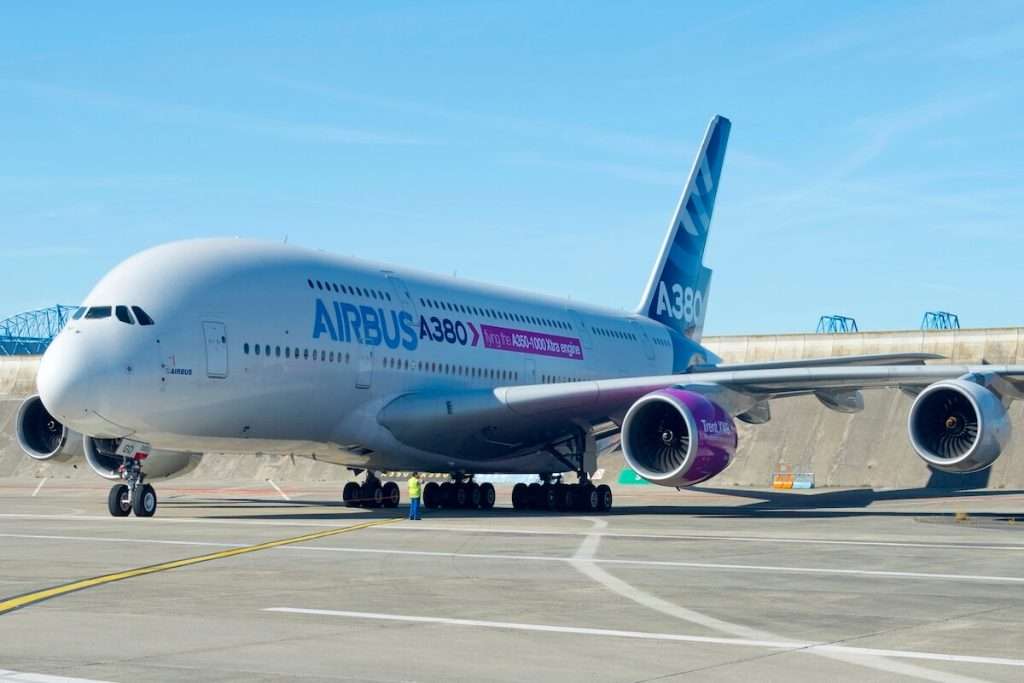
As a consequence, the A380 did not itself come to an end of struggle to obtain the market share once intended because of its technological advancements, which still apply today, but more so because its economics were no longer up to par for an industry that was moving quickly past the era of the quad-engined type.
A Switch To Twin-Engine Widebodies
Airbus’ A380 was a platform designed solely on the assumption that growth would continue, but only by driving through a handful of mega hubs that would not see infrastructure develop quickly enough to match that demand. The solution was to drive higher-capacity jets on fewer flights through these airports.
However, airlines very quickly began to evolve. The desire to address point-to-point flying and thus connectivity between more direct city pairs became a driving force behind airlines’ order books, made possible by the development of smaller widebodies.
Twin-engine long-haul jets helped kill the roles of the A380, the Boeing 787, and the Airbus A350 as driving forces in the new era, but the early groundwork was laid by the A330 and 777 in an era before the A380 had made its first flight.
These widebodies all offered airlines lower fuel burn, a much less risky capacity point to fill, and the flexibility on the network to deploy to international destinations globally, without restrictions.
Could A Neo Have Changed That?
If Airbus had listened to calls from Emirates to build an A380neo, even if adopted by the Dubai-based carrier, the fate of the superjumbo would’ve already been sealed, and the possible new engine option would have only delayed the inevitable.
While the A380neo could’ve offered lower fuel burn and thus been more attractive to an airline like Emirates operating through slot-constrained hubs such as London Heathrow, Los Angeles, or Singapore Changi, its adoption by other airlines would’ve been virtually nonexistent.
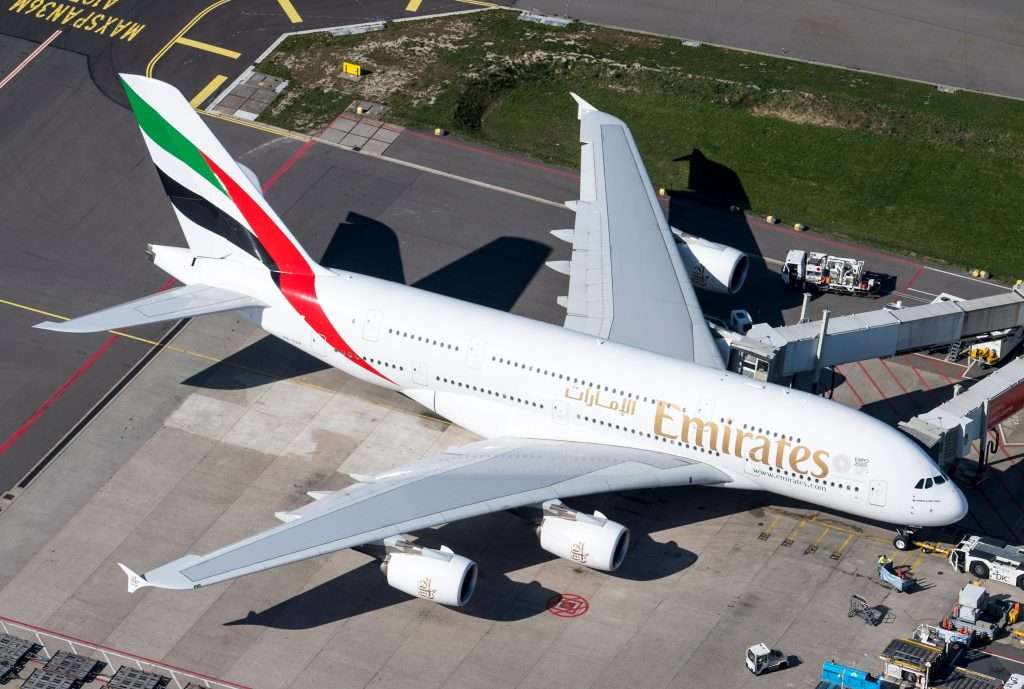
As a result, a longer production run may have been supported to keep the line open, but it would not have saved the program. Even a 20% improvement would still leave the Airbus A380 in a market that had moved on from these very large quad-engined jets.
Emirates may have been able to navigate the persistent requirement to have high load factors to mitigate the expensive costs associated, but on Airbus’ end, they had, despite sales pressures in the late-2010s, realised that the era of the superjumbo had come to a close, even despite hopeful calls from one of its most important customers.
Too Little Too Late For The NEO
Another reality for the prospective A380neo was that, by the time the concept became serious and Emirates pushed, the A380-800 had already entered the final stages of its life cycle, and at times of public interest, production had already closed, too.
As a result, with the A380-800 on the way out, Airbus had firmly begun looking to the future and responding to customer requirements through other initiatives, such as the A350-1000ULR and A321XLR, two further derivatives on popular platforms to fulfill a niche required by customers globally.

The 2019 decision to end production of the world’s largest passenger plane, spurred by Emirates’ order cancellation, and a resulting backlog that couldn’t justify the line. Relaunching this for a NEO made no sense.
The 21st Century Jumbo Jet
In the end, Emirates, as of the last 12 months, seemingly abandoned focus on the A380neo, isntead turning its attention to future ultra-high-capacity jets that could somewhat replicate the A380 but at a fraction of the cost and more importantly visible through programs which are in production, or aawiaitng certiication, the A350 and 777X platforms from Airbus and Boeing are key to that.
Effectively, through a stretch of the largest models in both families, the A350 Stretch and 777-10, both in late-2025, entered feasibility studies by the two planemakers in response to growing interest, even beyond Emirates.

The new era jumbo jet shows that while appetite exists for high-capacity flying into slot contained hubs and a replacement for the A380 type aircraft will need to come, it will arrive more than likely in other ways instead of through four engines and an evolution of a type that had its fate somewhat sealed before it even operated its first scheduled passenger flight in the late 2000s.
The Verdict
An Airbus A380neo, pushed by Emirates, not the planemaker, may have brought back the upsejrumbo times if actioned, improved the Dubai-based carriers’ economics, and thus ensured a smaller second act.
However, it would not have restored the A380 as a central piece among the Airbus commercial airplane portfolio, because efficiency wasn’t the only killer of the first iteration; there were many more defining factors.
The downfall of the A380 came about in an era where the superjumbo was destined to end; it was positioned within an industry almost too late, as a change in direction signalled a new dawn, the dawn of the efficiency and flexibility twins.
With Airbus never moving ahead with the A380neo, merely listening to customers but not progressing, this jet never got the legs to be worth considering as a successor firmly. Still, it shows how adamant airlines can be when they deem a type the perfect fit and will stop at nothing to push for a replacement.

ABOUT THE AUTHOR
Daniel Fowkes is a Melbourne-based aviation analyst and journalist with over a decade of industry experience. As founder of Dj’s Aviation, he delivers trusted analysis on aircraft, airline strategy and global aviation trends for djsaviation.net
Related Articles




Stay Informed
Get the latest aviation news, analysis and route updates delivered to your inbox.
We respect your privacy. Unsubscribe at any time.
Enjoyed this story?
Make us your go-to for aviation news
Add us as a preferred source on Google and see our latest stories first in Top Stories.
Add Us On Your News FeedRelated articles
· Airlines
· Airbus A380
Would The Airbus A380 Work In India?
Bryan Shelmon
24/09/2026
· Aircraft
· Airbus
· Airlines
Airbus’ Forgotten A350-800 Order
Bryan Shelmon
24/09/2026
· Aircraft
· Airbus
· Routes
Airbus A321XLR Route Map: How One Jet Opens Thin Long-Haul Market
Bryan Shelmon
23/09/2026
· Analysis
· Airbus
· Aircraft
· Boeing
Airbus A350-1000 vs Boeing 777-9: The Next-Gen Widebody Matchup
Bryan Shelmon
22/09/2026