
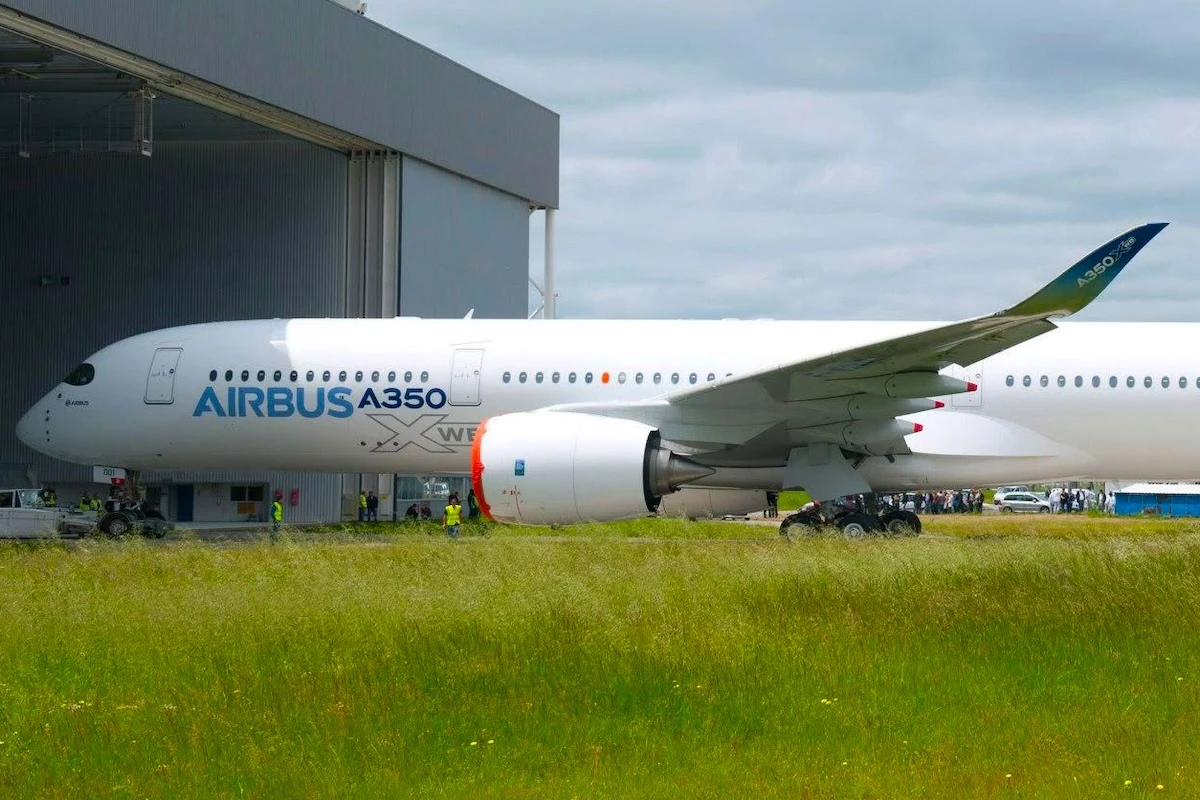
Hawaiian Airlines was one of the few that felt the A350-800 model was a good fit for operations in an industry gravitating towards larger aircraft.
Demand for the A350-800 was subpar across the entire airline industry, leading Airbus to pull the plug entirely on the program. This program drop didn’t come with repercussions, as it ultimately lost the order from Hawaiian Airlines.
Here’s how Airbus’ decisions led to the Boeing 787-9 Dreamliner landing in Hawaiian Airlines’ fleet instead of one of its own.
Hawaiian’s Deal For The A350-800
The Boeing 767-300ER was Hawaiian Airlines’ go-to aircraft for routes to other Pacific Islands, Japan, the Philippines, and the US West Coast. However, with its older technology, Hawaiian Airlines began considering options for its next generation of aircraft to operate long-haul flights by the early 2000s.
In 2008, it placed an order for six Airbus A350-800s, paired with an order for six A330-200s. This double order was a strategy to phase out older Boeing aircraft with the A330-200s until the A350-800s arrived by 2017 to become the true flagship for long-haul routes.
Hawaiian Airlines saw true potential in the A350-800. Compared to the 767, it would significantly increase range, seat capacity, and fuel efficiency on international routes. The A350-800 would capture the mid-size widebody market with 250-270 seats and a range of 15,270km (8,245nm), enabling nonstop service from its Honolulu (HNL) hub to destinations such as Bangkok, Kuala Lumpur, Jakarta, and Perth. The increased speed would also shorten travel time to the mainland US.

The A330-200 order would satisfy the current growth in market demand that Hawaiian Airlines was experiencing at the time, while maintaining fleet commonality to make a seamless switch to the A350-800.
It was a foolproof plan that perfectly aligned with Hawaiian Airlines’ vision. However, Airbus had other plans for the A350-800, which threw the entire deal into a tailspin.
How The Smallest A350 Lost Its Place
Airbus began steps to upgrade the successful A350 family with approved variants in 2006, including the A350-800, A350-900, and A350-1000. The -800 was the smallest variant, designed for the mid-size widebody market. The -900 and -1000 were designated for higher-demand routes.
Hawaiian Airlines specialised in long, thin routes to the islands, largely servicing passengers on holiday to Hawaii. It was far from a major transportation hub. The A350-800 had the ideal capacity for the demand and the range to expand the international route network.
However, this island destination was a unique case. For most airlines considering the upgraded A350 family, growing demand from major hubs to international destinations was barely feasible long-term with smaller aircraft, which made the -900 and -1000 significantly more popular for locking in capacity for future growth.
Demand for the -800 variant was substantially less than demand for the larger models. This data led Airbus to terminate the A350-800 program before it entered production.
A Cancellation Then Switch To The A330neo
The popularity of the -900 and -1000 models didn’t persuade Hawaiian Airlines to consider them as replacements for the cancelled A350-800. The capacity on either aircraft far exceeded what the airline needed. Demand would not be sufficient to fill the aircraft, and operating them would not be economically feasible.
Luckily, Airbus had an alternative for airlines still interested in this mid-size segment. This is also another reason for cancelling the -800 variant. Airbus began promoting the A330neo as a substitute for the A350-800.
The A330-800neo would serve as the next-gen for the A330-200 order that the airline still had pending. It could seat 240-260 passengers and had a range of 15,000km (8,100nm). It had slightly better range than the A330-200, but the biggest advantage was its fuel efficiency. The downside was that it didn’t quite stack up to the specs of the A350-800, which offered less capacity and range.
With Airbus cancelling the A350-800 order in 2014 due to closing the program, Hawaiian Airlines settled for the alternative, changing its order to six A330-800neos.
A330neo Dropped For The 787?
The A330 family was never the end goal for Hawaiian Airlines. The A330-200 order was used to supplement the growing demand until the A350-800s were delivered. So, when it had to change its order from the A350 family to the latest A330 family model, it never quite fit the airline’s long-term fleet growth plan. This order would also prove to be just a temporary solution until a better deal emerged.
The problem with the A330 family was the size and range. It was a smaller aircraft that could manage the current demand. But with growing travel demand every year, it would not be a strategic long-term plan.
One of the biggest determining factors for Hawaiian Airlines’ preference for the A350 family was the range. It was seeking further international routes, especially with the island’s isolation in the middle of the Pacific Ocean to connect hubs in Asia, Oceania, and the mainland US.
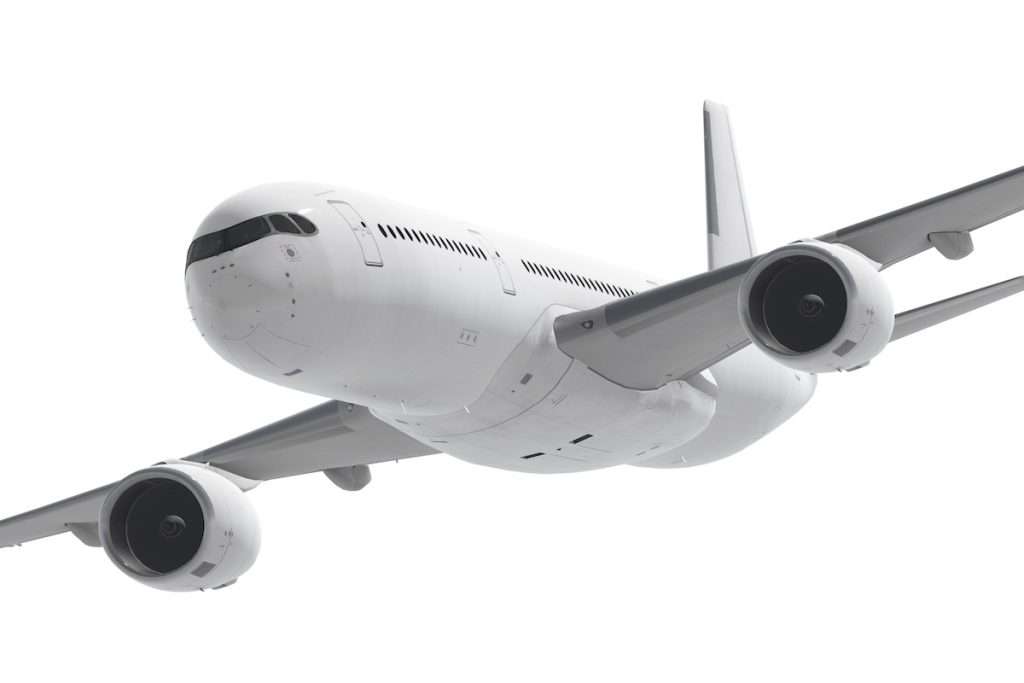
With the A350-800 out of the equation, the only viable solution was found in Boeing. Boeing initiated the 787 program in 2004 and had it in commercial service by 2014, when the A350-800 order was cancelled. The 787-9 Dreamliner offered slightly more seat capacity, up to 290 passengers, with slightly less range at 14,000 km (7,500nm).
The main advantage was the airframe design using lightweight materials, making it more fuel-efficient for long-haul international routes and able to carry much more cargo weight. More efficient operations would compensate for the small sacrifice in range to reach those farther-reaching destinations, which would pay off in the long term.
Hawaiian Airlines ordered 10 Boeing 787-9 Dreamliners in July 2018 based on this decision. It later increased its order for two additional 787s in 2023.
A 787 For Long-Haul & Now Alaska
In hindsight, the switch from the Airbus A350-800 to the Boeing 787-9 Dreamliner was the necessary move for Hawaiian Airlines. The 787’s long-haul capabilities would serve more than just Hawaiian Airlines.
Hawaiian Airlines merged with Alaska Airlines in 2024 with a US1.9 billion deal. The two airlines would still operate their individual brands, but housed under one company umbrella. The merger allows them to perform strategic operations to expand routes and leverage shared assets.
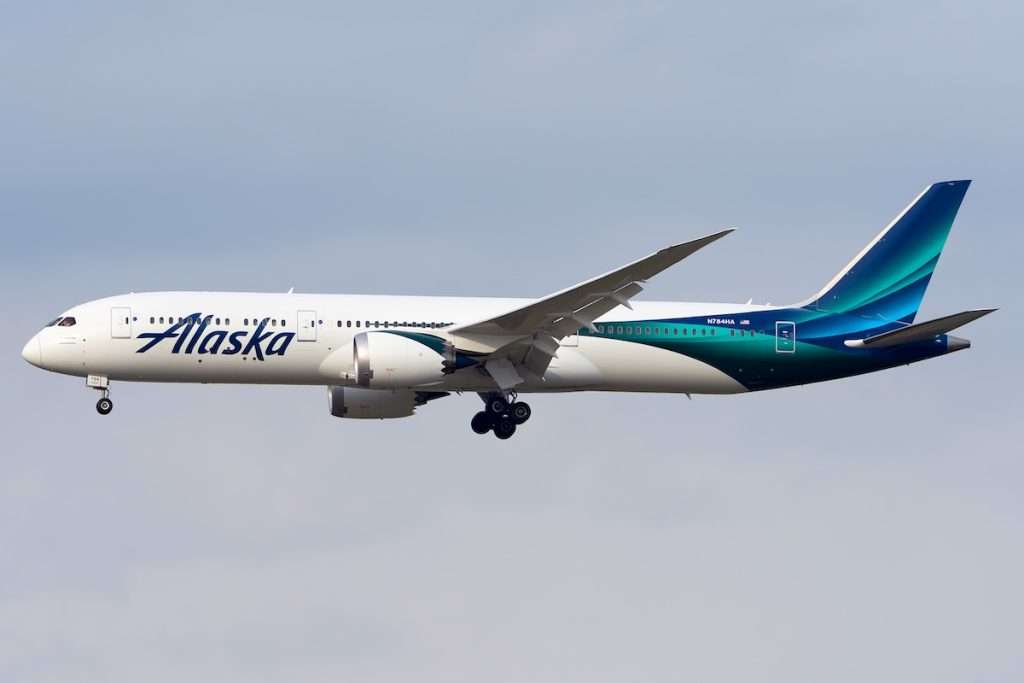
One of the headlining plans is for Hawaiian Airlines to transfer its 787 fleet to Alaska Airlines to operate non-stop international routes from the Seattle-Tacoma International Airport (SEA) hub to Europe and Asia.
Following the merger, the airline group upgraded its 787-9 Dreamliner order to 5 787-10 Dreamliner models to better execute the new route strategy.

ABOUT THE AUTHOR
Bryan Shelmon is an aviation journalist with 10 years of experience covering commercial aviation, private aviation, airports, aircraft and wider industry news. Based in the Detroit metropolitan area, he has contributed to publications including Lonely Planet, Matador Network and Visit Detroit.
Related Articles




Stay Informed
Get the latest aviation news, analysis and route updates delivered to your inbox.
We respect your privacy. Unsubscribe at any time.
Enjoyed this story?
Make us your go-to for aviation news
Add us as a preferred source on Google and see our latest stories first in Top Stories.
Add Us On Your News Feed