
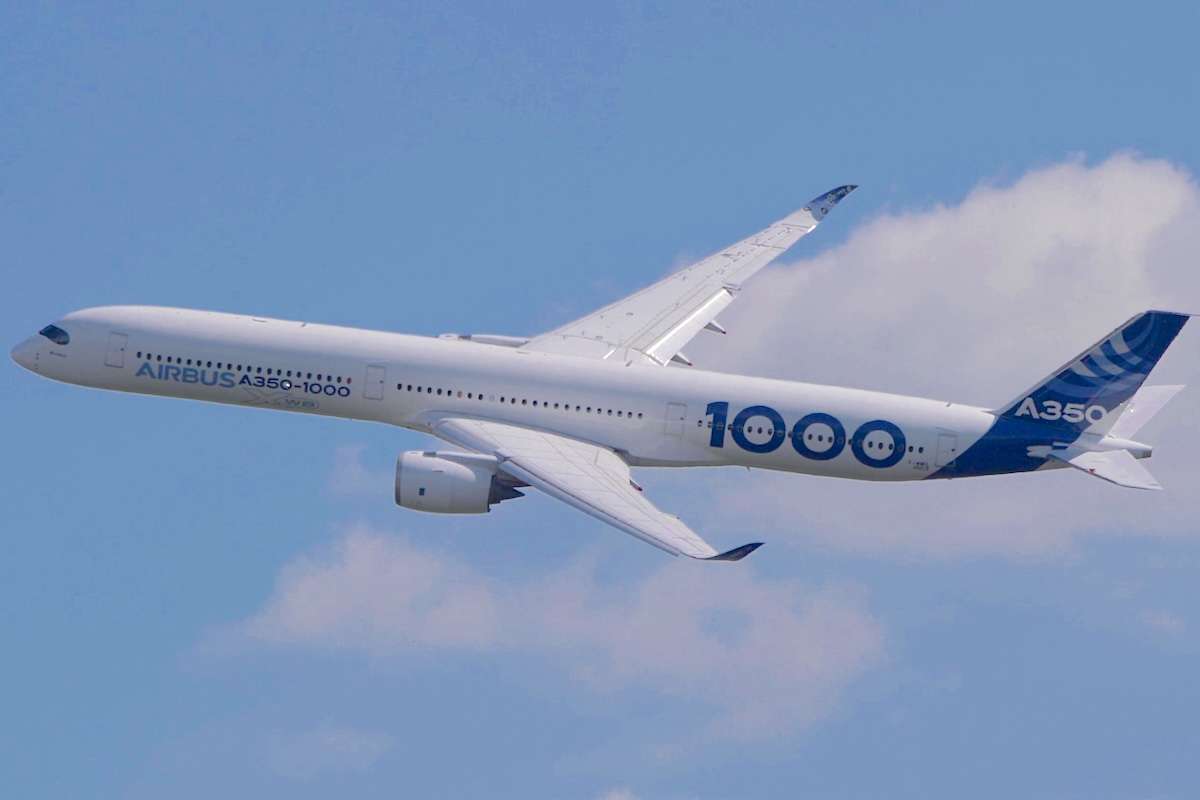
The newest long-haul widebody aircraft from Airbus and Boeing, the largest aircraft manufacturers, are going head-to-head in a challenge between efficiency and capacity.
Airbus and Boeing have entered the next-generation widebody era with aircraft designed to propel airlines worldwide into the future of travel.
As the A350 and the 777X compete for orders, it’s time to examine exactly what separates these two aircraft models and what makes an airline pick one over the other.
How The A350-1000 & 777-9 Stack Up
The Airbus A350-1000 and Boeing 777-9 are revolutionising how airlines operate long-haul routes. These competing aircraft force airlines to focus on their long-term strategy to determine the best solution for their operations. Here’s what sets them apart from each other.
The A350-1000 seats between 350 and 410 passengers in a standard three-class layout and has a range of up to 16,700km (9,000 nm). One of its most striking design features is the carbon fibre composite airframe, which makes the aircraft lightweight and suitable for long-distance travel.
This is a twin-engine jet powered by Rolls-Royce Trent XWB-97 engines that combine power and fuel efficiency to support a max payload of 71 tonnes. It burns approximately 32lbs of fuel per nautical mile, making it the more fuel-efficient of the two aircraft.
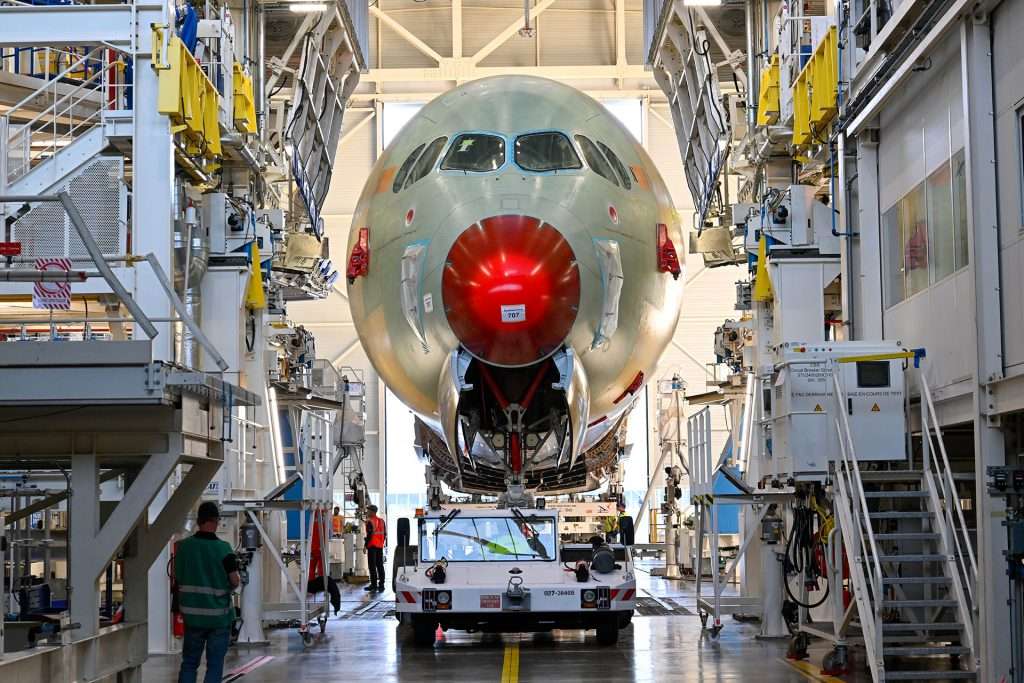
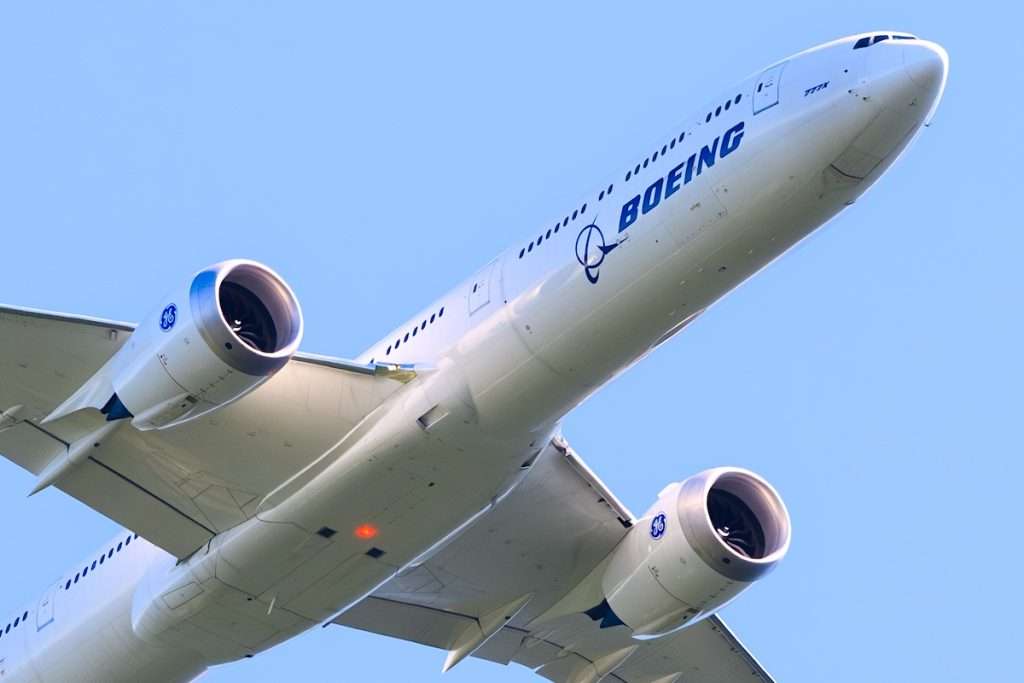
The 777-9 has a capacity of more than 420 passengers and a range of up to 14,820km (8,000nm). It uses two General Electric GE9X engines to power the aircraft and support a payload of up to 73.5 tonnes.
With these fuel-efficient engines, it burns approximately 48lbs of fuel per nautical mile. Since this is a larger aircraft, one of its defining features is the folding wingtips, designed for better aerodynamics and flexibility to fit into standard gate sizes at most airports.
Airlines can expect to invest approximately US$440M for the 777-9 and US$366M for the A350-1000 at retail prices, although they typically receive discounts based on relationships and order quantities.
The Story Of These Flagships So Far
Based on their specs, Airbus and Boeing created two highly competitive aircraft for the long-haul market. Despite their similarities, each aircraft took a very different route to become the powerhouse it is.
The Airbus A350-1000 was the first to enter service, launching in February 2018 with Qatar Airways. It was an upgrade from the smaller A350-900 to enhance Airbus’s widebody product offerings.
The manufacturer was striving to create an aircraft with long-range capabilities, improved passenger comfort on long-haul flights, and better fuel efficiency. Boeing already had the 787-10 Dreamliner, so this aircraft was designed to supersede it in capacity and efficiency.
The Boeing 777 series emerged in the 1990s, with the 777X program becoming the latest in the family. The 777-9 is the larger variant, offering greater capacity than its predecessor, the 777-8.
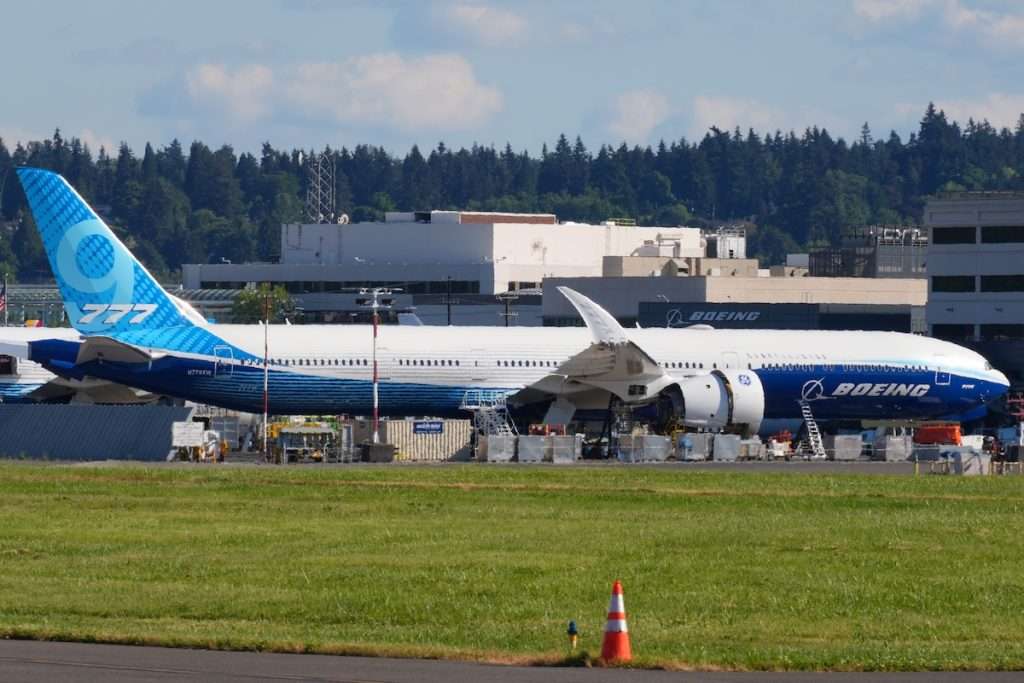
With the A350-1000 arriving first, Boeing had a benchmark for what airlines were looking for and what to improve. It ultimately served as an upgrade to the 777-300ER, providing 747-class capacity with twin-engine efficiency.
The A350-1000 is already in service, but the 777-9 is still awaiting certification and is expected to start commercial flights in 2027 with its launch airline, Lufthansa.
Why Airlines Are Buying These Jets
Long-haul aircraft have been all the hype for airlines in recent years. Travel demand has skyrocketed, and airlines are seeking solutions to support the growing number of passengers and route demands.
Additionally, both the A350-1000 and 777-9 offer better fuel efficiency. This is a key factor for next-gen aircraft seeking to replace quad-engine models, driven by rising fuel costs and the need to reduce environmental impact.
The A350-1000 has already delivered 115 aircraft as of mid-2026 and sits on a backlog of more than 250 orders. It still has a long way to go to catch up to the smaller -900 variant, which has more than 1100 orders total.
The 777-9 is already the more popular option of these two widebody aircraft, with a backlog of more than 520 orders even before it launches. It’s attracting the interest of Emirates, Qatar Airways, and Singapore Airlines, known for their high-capacity, high-demand routes.
Which Model Has The Upper Hand?
To say that the 777-9 and the A350-1000 are next-gen, long-haul, widebody aircraft assumes that they were built for the same purposes. However, based on their designs and airline demand, it’s clear they play different roles in operations. Some airlines are even considering utilising both in their fleets.
The 777-9 is the larger of the two aircraft. Its main goal is to capitalise on growing passenger travel demand. Gate slots are increasingly more competitive at every airport.
So, instead of increasing the number of aircraft, opting for larger aircraft that can hold more passengers is a more effective strategy. Airlines ordering the 777-9 are banking on higher profit per flight, since its revenue on a full-capacity flight will significantly outweigh the cost savings from better fuel efficiency.
The A350-1000 is designed for airlines interested in managing their fleet’s fuel costs. Fuel is the highest expense for operating an aircraft. Thanks to its engines and lighter airframe, it’s the most fuel-efficient widebody at its capacity. This aircraft performs best on long, thin routes that can’t be served by an aircraft as large as the 777-9, but still require the range performance to reach international destinations.
Emirates is an excellent example of an airline leveraging the strengths of both aircraft. It uses the A350-1000 for routes from Dubai to Europe, Africa, and Asia, while it will use the 777-9 on routes extending as far as North and South America and Australia.
The A350-1000 has a significant head start over the 777-9. Airlines are already operating the aircraft successfully, while 777-9 customers continue to wait for delivery due to certification delays.
Is A Stretch Coming From Airbus & Boeing?
The A350-1000 and the 777-9 were both conceptualised in response to rising demand from travellers. And it’s no surprise that demand is already pushing these aircraft to their capacity limits, even before the 777-9 gets delivered.
Airlines are already whispering to both manufacturers about designing stretch versions for both aircraft families. It will reduce time-to-market with minimal design changes, primarily by expanding capacity. Airbus has already begun studying the possibility of an A350 Stretch, dubbed the A350-2000, which could increase capacity to more than 400 seats.
Boeing has also begun exploring a possible 777-10 to inch closer to 500 seats. With airline customers like Emirates, who are accustomed to the 500+ seat capacity of the A350 superjumbo, but have officially ended production, a more fuel-efficient twin-engine jet market is up for grabs to see who can fulfill

ABOUT THE AUTHOR
Bryan Shelmon is an aviation journalist with 10 years of experience covering commercial aviation, private aviation, airports, aircraft and wider industry news. Based in the Detroit metropolitan area, he has contributed to publications including Lonely Planet, Matador Network and Visit Detroit.
Related Articles




Stay Informed
Get the latest aviation news, analysis and route updates delivered to your inbox.
We respect your privacy. Unsubscribe at any time.
Enjoyed this story?
Make us your go-to for aviation news
Add us as a preferred source on Google and see our latest stories first in Top Stories.
Add Us On Your News FeedRelated articles
· Analysis
· Airbus
· Aircraft
· Boeing
Airbus A350-1000 vs Boeing 777-9: The Next-Gen Widebody Matchup
Bryan Shelmon
22/09/2026
· Analysis
How Long Does It Take to Become a Pilot?
Daniel Fowkes
10/09/2026
· Airlines
· Analysis
Can JetBlue Escape A Shutdown?
Daniel Fowkes
15/06/2026
· Airbus
· Aircraft
· Analysis
Airbus Being Killed By China Because Of COMAC
Daniel Fowkes
28/05/2026