

Qatar Airways has begun ferrying its flagship Airbus A380 superjumbo into storage at Teruel Airport in Spain.
The Doha-based carrier’s decision marks a reversal in the use of these high-capacity quad-engined jets amid escalating regional tensions that prevent full schedules from being operated.
Flight data tracking shows that at least one Airbus A380, QR106 from London Heathrow, arrived at the Spanish airport, which has specialised forces for deep maintenance and extended aircraft parking.
A7-APC is parked in Teruel. This aircraft was first delivered to the airline in December 2014, and this is now its oldest, measured by age, following the removal of other units during the COVID-19 pandemic that never ultimately returned to service.
Fleet data shows that Qatar Airways has eight Airbus A380s to its name; however, only four remain active, according to the latest remarks, with A7-APC in Spain and A7-APE, A7-APG, and A7-APJ all listed as parked.
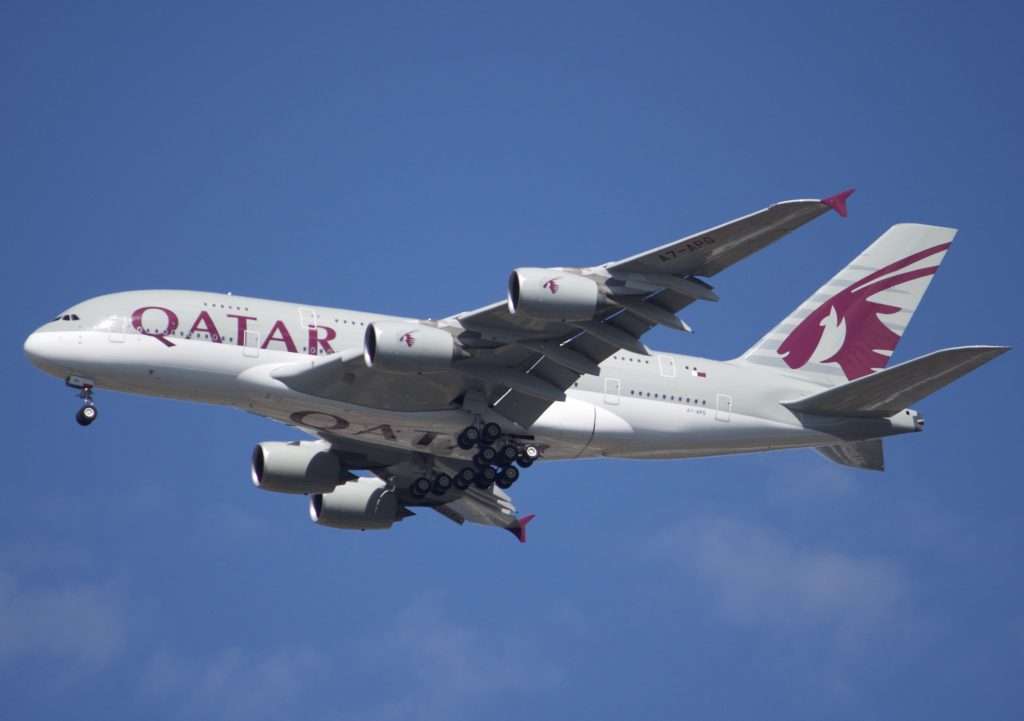
This move by the Doha-based carrier echoes a pandemic-era grounding style; however, for the moment, it’s more of a temporary pause, as uncertainties remain about the fleet’s short-term use.
Qatar Airways A330 See Same Fate
Qatar’s aging Airbus A330 fleet is also heading to Teruel with four jets, three A330-200s and one A330-300, ferried from Doha in quick succession last week with special flight numbers.
These aircraft were already slated for retirement in the coming years; however, with the emergence of conflict in the Middle East, there’s been considerable uncertainty over the fate of the airlines’ operations, and the parking of specific aircraft has been fast-tracked.
The A330 removal has been directly tied to the delivery of new next-generation aircraft such as the Airbus A350 and Boeing 787; however, with ongoing conflict in the Middle East, it has forced Qatar Airways to cut down its fleet and focus on the jets that are more profitable and efficient in an already challenging environment.
Unfortunately, despite its long-standing presence in the fleet, the A330 is not on par with the aforementioned next-generation twin-engine jets and is therefore easier to pull from service, even as the A350s and 787s are also grounded.

Gulf airspace has consistently been affected by the tensions in this part of the world, Reuters reporting that the Spanish site of Teruel is acting as a prime location for widebodies to be rerouted from the Middle East, with upwards of 15 aircraft from Qatar Airways alone parked here alongside aircraft from European and Latin American carriers.
For now, the fate of the Airbus A330 fleet remains uncertain; as the conflict in the Middle East develops over the coming days, weeks, and months, the likelihood of these aircraft returning will depend heavily on how this pans out.
Why Is This Happening?
The Airbus A380 parked in Spain is a direct result of the ongoing conflict in Iran, which has spiked fuel costs, slashed demand through Doha’s Hamad hub, and forced the cancellation of many regular operations.
While Qatar had permission to restart operations last week at a reduced rate, cancellations still heavily outpaced expectations, making the knock-on effect severe.

If the situation in the Gulf worsens to the point where operations are further restricted, and fuel prices soar to new highs, demand may plummet, and aircraft like the A330 and the A380 may not return to service, though the Doha-based carrier would hope this is not the case.
With such uncertainty in the Middle East, Qatar Airways must prioritise its customers and crew and avoid any risks that could jeopardise their safety. Full compliance with authorities is required, with a laser focus on the evolving situation and close communication to determine when it would be safe to resume full service.

ABOUT THE AUTHOR
Daniel Fowkes is a Melbourne-based aviation analyst and journalist with over a decade of industry experience. As founder of Dj’s Aviation, he delivers trusted analysis on aircraft, airline strategy and global aviation trends for djsaviation.net
Related Articles



Stay Informed
Get the latest aviation news, analysis and route updates delivered to your inbox.
We respect your privacy. Unsubscribe at any time.
Enjoyed this story?
Make us your go-to for aviation news
Add us as a preferred source on Google and see our latest stories first in Top Stories.
Add Us On Your News Feed