
Aircraft Guide · Seat Map
Airbus A380
The Airbus A380 is the world's largest passenger airliner, developed as Airbus's flagship challenger to Boeing's long-standing dominance in the very large aircraft market. Distinguished by its full-length double-deck fuselage, the Airbus A380 was designed to move more passengers per flight than any other commercial jet, easing congestion at capacity-constrained hub airports. Although Airbus ended production of the type in 2021, Dj's Aviation covers the Airbus A380's specifications, fleet status, safety history and current operators below.
Delivered 251, plus 3 test aircraft (production ended 2021)
In Service Since October 2007 (Singapore Airlines launch)
Cruise M 0.85
Range ~8,000 nmi (14,800 km)
Latest NewsAirbus A380
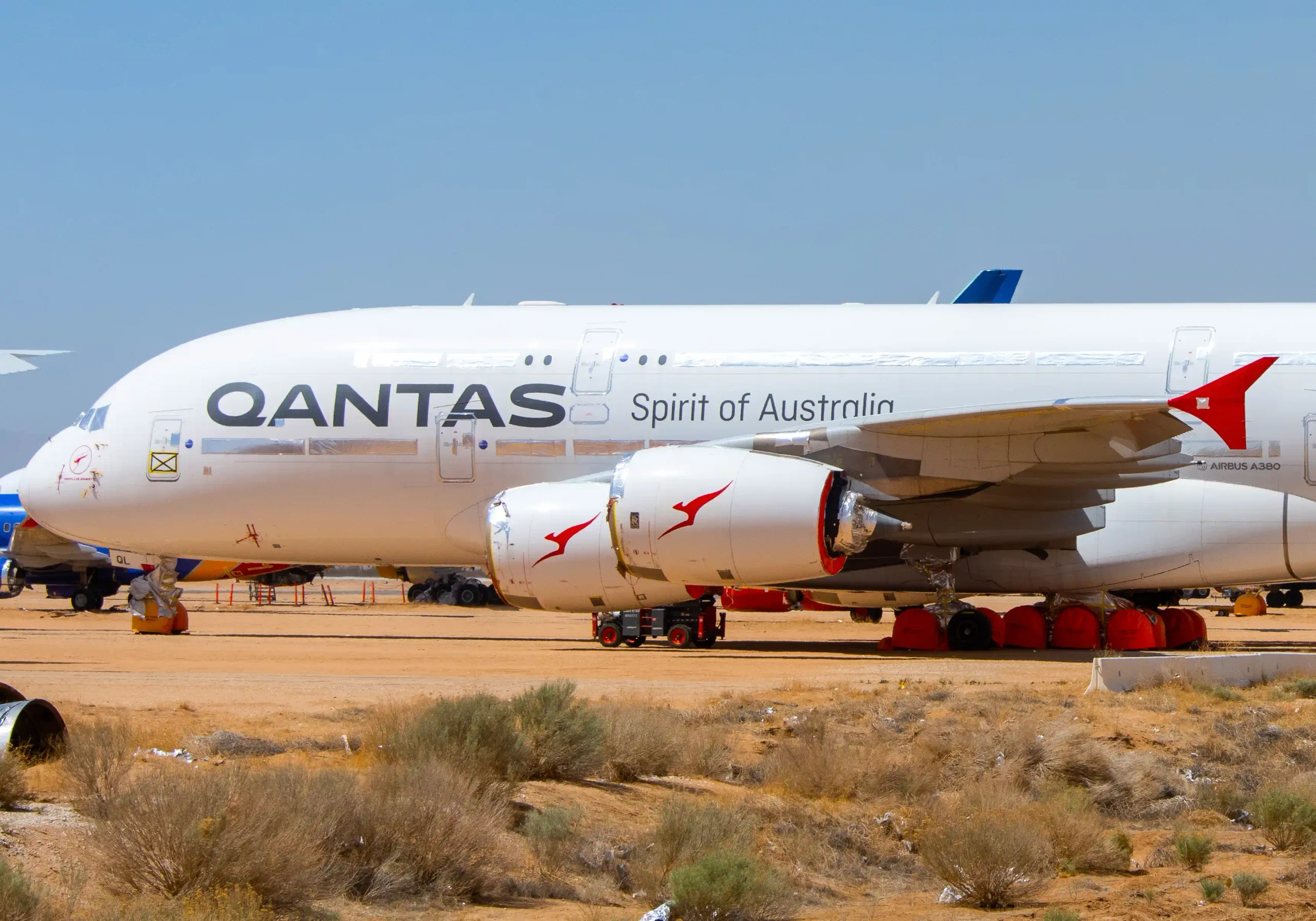
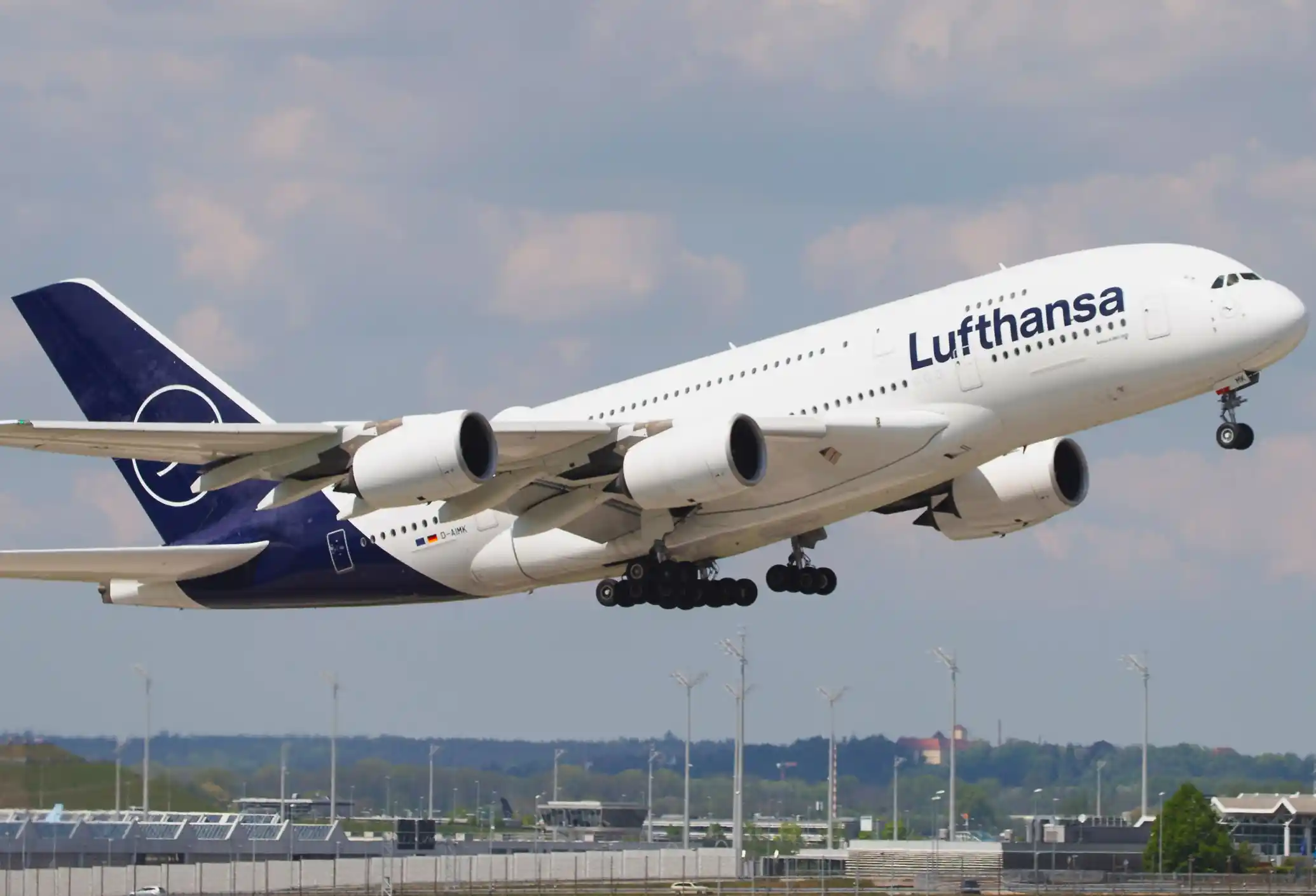
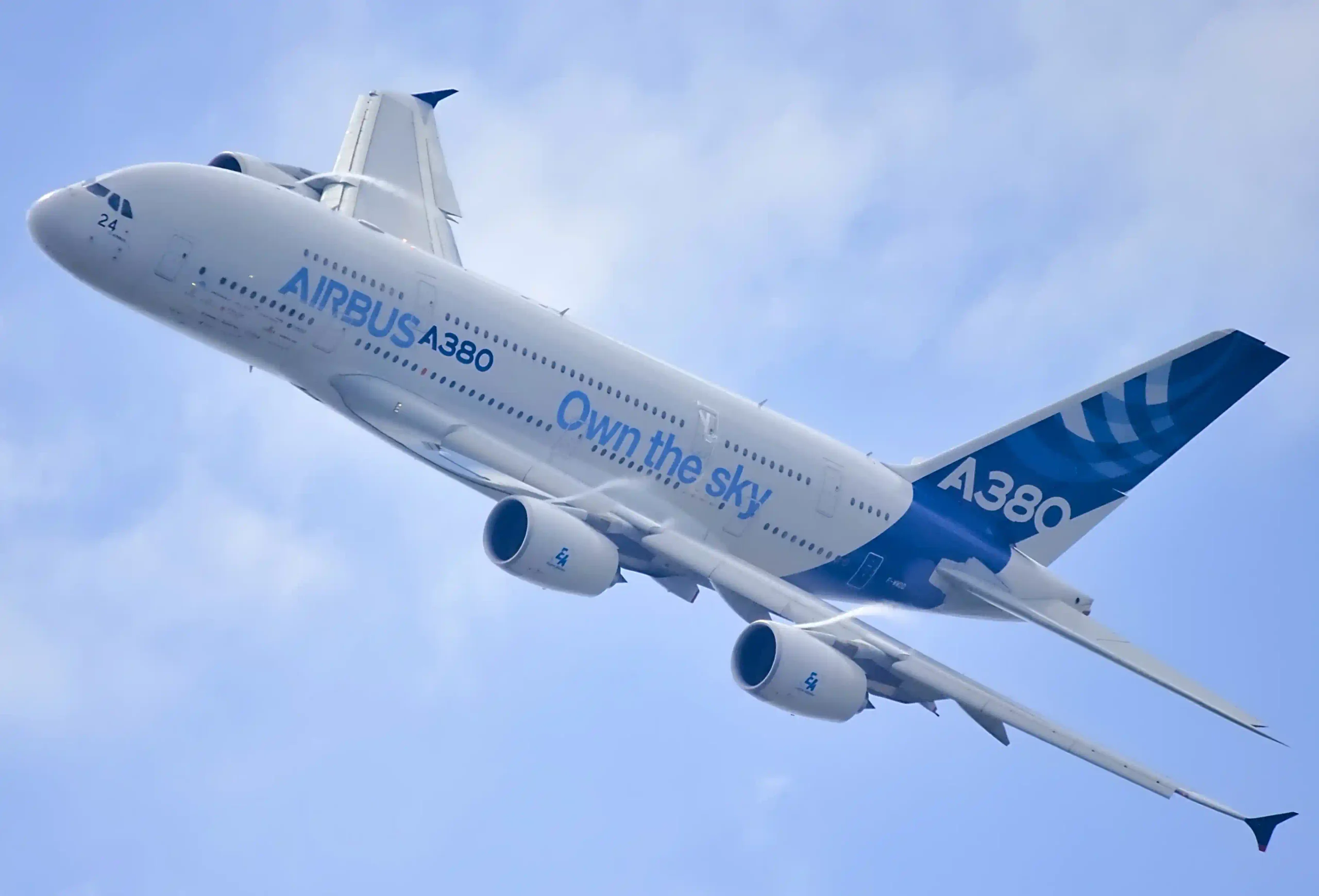
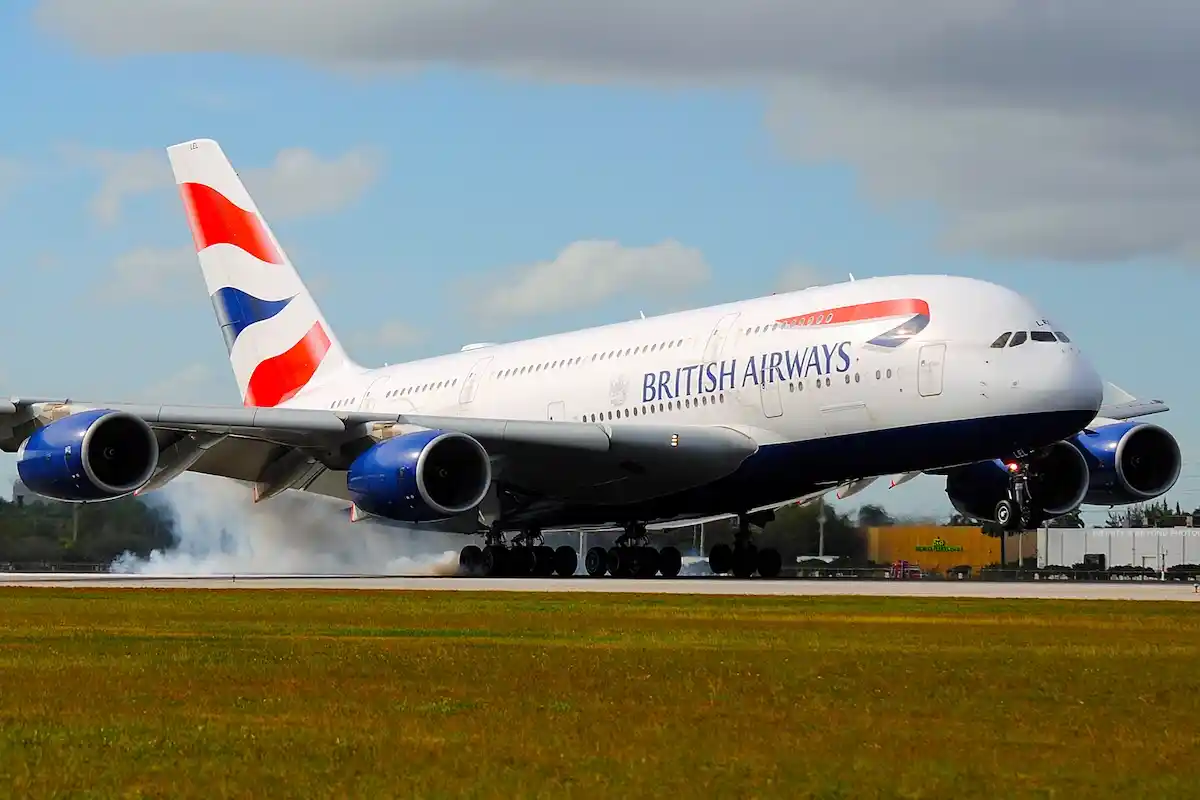
Airbus A380 Quick Facts
ManufacturerAirbus
TypeWide-body, full-length double-deck, four-engine (quadjet)
First flight27 April 2005
StatusIn active commercial service since 2007; production ended in 2021 (last delivery to Emirates, December 2021)
DimensionsL 72.72 m (238.58 ft)
W 79.75 m (261.65 ft)
H 24.09 m (79.04 ft)
W 79.75 m (261.65 ft)
H 24.09 m (79.04 ft)
MTOW~575,000 kg (~1,267,658 lb)
Cruise / RangeM 0.85
~8,000 nmi
~8,000 nmi
Ceiling~13,106 m (~43,000 ft)
EnginesRolls-Royce Trent 900
Engine Alliance GP7200
Engine Alliance GP7200
Total ordered/built251
Customers14+ Airlines
First delivery15 October 2007 (Singapore Airlines)
Variants
Seat Map
Hover or tap a seat for details
First Suites
Economy
Exit Row
Galley / Lav / Stairs
14First1-1-1 suites
341Economy3-4-3 · 32-in pitch
355Deck TotalLower deck
Illustrative layout · row 78 not used. Exact seating varies by operator and cabin fit.
History & Development
Airbus launched the A380 program in December 2000 as a direct challenge to the Boeing 747’s long-standing position at the top of the market, aiming to offer significantly lower seat-mile costs on the world’s busiest, most capacity-constrained long-haul routes. The aircraft was formally unveiled and rolled out on 18 January 2005 in Toulouse, France, and made its first flight on 27 April 2005.
The A380 received joint type certification from EASA and the FAA in December 2006. Singapore Airlines was the launch customer, taking delivery of the first production A380 on 15 October 2007 and operating its inaugural revenue service between Singapore and Sydney on 25 October 2007. Emirates, Qantas and other major carriers followed as early operators.
Airbus announced in February 2019 that it would end A380 production, citing insufficient orders (particularly the absence of a follow-on order from Emirates, its largest customer) and the broader industry shift toward smaller, more fuel-efficient twin-engine widebodies such as the Airbus A350 and Boeing 787. The final A380, built for Emirates, was delivered in December 2021, bringing total production to 251 aircraft. Despite the end of production, the type has proven more commercially durable than widely predicted, with several airlines reactivating stored A380s from 2023 onward to meet strong post-pandemic long-haul demand.
Cabin: Seating & Configuration
The Airbus A380 is the only commercial airliner with a full-length double deck across its entire fuselage, rather than a partial upper deck as on the Boeing 747. Both decks can be configured for passengers, giving operators substantial flexibility in cabin design. Because each airline designs its own cabin, seating totals vary widely: typical multi-class configurations generally range from 480 to 615 passengers, with a certified single-class maximum capacity of 853 passengers (a density no operator has used commercially).
Specifications
The dimensions and weights below reflect standard Airbus A380-800 production data.
Metric
Value
The A380's wingspan required the creation of a new ICAO/FAA aircraft category ("Code F" / New Large Aircraft), prompting airports worldwide to widen taxiways, reinforce gates and build dedicated double-deck jet bridges to accommodate it.
Performance & Range
Metric
Value
M 0.85 (~903 km/h max cruising speed)
~13,100 m (~43,000 ft)
~8,000 nmi (14,800 km)
Engines & Fuel
The Airbus A380 is powered by four engines, with operators choosing between two competing options at the time of order.
Metric
Value
4× Rolls-Royce Trent 900 or 4× Engine Alliance GP7200
Joint venture between GE Aerospace and Pratt & Whitney
Precise fan diameter and blade-count figures vary between the Trent 900 and GP7200 options.
Family Variants
A380-800
The only Airbus A380 variant to enter production and commercial service
A380F (freighter)
Announced but cancelled before delivery; no A380 freighter has ever entered service
A380neo / A380plus (proposed)
Stretched and/or re-engined concepts requested by Emirates; consistently declined by Airbus, citing insufficient market demand
In-Seat Amenities & Tech
In-seat amenities vary significantly by operator and by cabin refurbishment status. Some carriers’ Airbus A380 fleets feature onboard bars or lounges (Emirates’ upper-deck bar, Etihad’s “The Lobby”), private suites and showers in first class (Etihad’s First Apartments, Emirates’ First Class suites), and seatback entertainment as standard across nearly all operators. Wi-Fi provision has historically varied, though Emirates is rolling out Starlink connectivity across its A380 fleet from 2026 as part of a wider cabin retrofit. As with any long-serving type, standards can differ markedly between an airline’s oldest and most recently refurbished A380 airframes.
Production & Timeline
Airbus assembled the A380 at its Toulouse, France facility (Jean-Luc Lagardère plant), with major structural sections manufactured across multiple European sites and transported to Toulouse for final assembly.
Milestone
Date
December 2000
18 January 2005
27 April 2005
December 2006
15 October 2007
25 October 2007
February 2019
December 2021
Fleet & Operators
The Airbus A380 is flown by a smaller, concentrated group of operators, most of whom use it on high-demand routes into slot- or capacity-constrained hub airports.
Operator
Role
Notes
Passenger
By far the largest A380 operator; roughly 116 of 123 aircraft active as of mid-2026
Passenger
Launch customer; continues to serve multiple long-haul routes from Singapore
Passenger
Reactivating stored aircraft; premium-heavy configuration including First Apartments
A number of other airlines have previously flown and since retired the A380, including China Southern, Air France, Malaysia Airlines, Thai Airways and Hi Fly Malta (a wet-lease operator). Fleet figures vary by year and by month as airlines reactivate stored aircraft or scale back routes; figures above reflect general fleet composition as of mid-2026 rather than exact real-time counts.
Incidents & Safety
The Airbus A380 has no hull losses or passenger fatalities in commercial service to date.
Notable safety events specific to the Airbus A380 include:
Related News
Aircraft News
Latest Airlines News
Carrier strategy, fleet moves & financial updates
Aircraft News
Latest Aircraft News
Programmes, retrofits & next-gen narrowbodies
Route News
Latest Route Updates
New launches, cuts & network shifts
Freight Orders & Delivery
Latest Freight Orders & Delivery News
Cargo conversions, orders & deliveries