

The Airbus A380 has re-entered headlines with yet another weird flight for a previously stored unit.
MSN114 is the 100th Airbus A380 to be built, but late last week, as flagged by Flightradar24, the aircraft’s transponder turned on for the first time in years.
The 100th A380 previously flew with Malaysia Airlines, where it was registered as 9M-MNF and first delivered in March 2013. It was active for less than a decade.
Since the aircraft was removed from the Malaysia Airlines fleet, it has now been adopted by a new owner, who has registered it as 2-JAYN. Previously, it was also stored in Tarbes, France, from the latter stages of 2022 through to last month.
On September 25, 2025, 2-JAYN turned its transponder on and saw a completed rejected takeoff. The following day, the aircraft returned to the skies, completing an almost three-hour flight as AIB114.
Flightradar’s data continued to show activity at the beginning of this month for this A380-800, which completed a flight from Tarbes (LDE) to Abu Dhabi (AUH).

What’s next for the A380-800 has now also been confirmed; this aircraft will undergo heavy maintenance, per Airbus. After this extensive maintenance, modifications will be added to the aircraft.
Thanks to these modifications, Airbus says the aircraft will then act as a future flight test aircraft. Further details on the planned timeframe for the unit are yet to be confirmed at this stage; however, more information will be available in due course.
Discussions over MSN114 follow previous activity with MSN006, where EFW, Elbe Flugzeugwerke GmbH, confirmed they were representing ALG as a new customer.
This new acquisition was also subject to a final maintenance check, which would ensure it was in good condition before it could be cleared to return to operation.
Malaysia Airlines’ A380 Retirement
MSN114, now acting as an essential future flight test aircraft for Airbus, ultimately only follows Malaysia Airlines’ decision to retire the superjumbo from its operations.
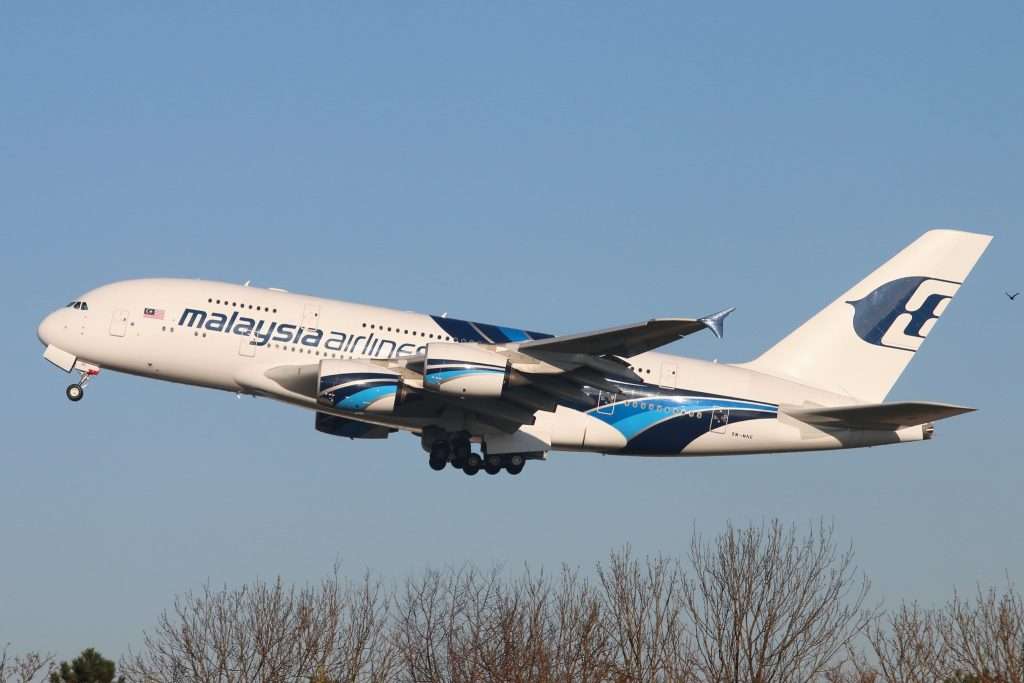
During the height of the COVID-19 pandemic, Malaysia Airlines grounded its aircraft in an effort to streamline its operations, and this decision ultimately led to the retirement of its fleet.
While the retirement was in response to lower demand, it was also arguably inevitable; several airlines that flew the world’s largest passenger plane had struggled to turn a profit with the jet and make the purchase worthwhile.
For Malaysia Airlines, analysts argued that the writing was on the wall, and the aircraft had a shorter future than that of some other airlines, even before restrictions were imposed. As a result, the retirement came as hardly a surprise.
These same analysts who criticised the acquisition and predicted its retirement pointed towards the Kuala Lumpur-based carrier chasing the business model of Singapore Airlines, which also adopted the A380. However, for the Changi carrier, flying this aircraft proved successful.
Unfortunately for Malaysia Airlines, with essentially no secondary market for the world’s largest passenger plane, there was very little interest in acquiring these units once they were retired.

In comparison to other aircraft types of the same age, the difference in interest for these units if they were to enter the second-hand market is visible. For any other kind of widebody instead of these quad-engined units, airlines would be flocking to grab the jet on the cheap, but for the A380, it’s crickets.
As more airlines begin retiring the A380, a similar fate is likely to follow; the only prospective takers are those airlines that retain the superjumbo into the 2030s, and that could benefit from specific spare parts as their existing units continue to age. However, as for flying, that ship has long sailed.

ABOUT THE AUTHOR
Daniel Fowkes is a Melbourne-based aviation analyst and journalist with over a decade of industry experience. As founder of Dj’s Aviation, he delivers trusted analysis on aircraft, airline strategy and global aviation trends for djsaviation.net
Related Articles




Stay Informed
Get the latest aviation news, analysis and route updates delivered to your inbox.
We respect your privacy. Unsubscribe at any time.
Enjoyed this story?
Make us your go-to for aviation news
Add us as a preferred source on Google and see our latest stories first in Top Stories.
Add Us On Your News Feed