
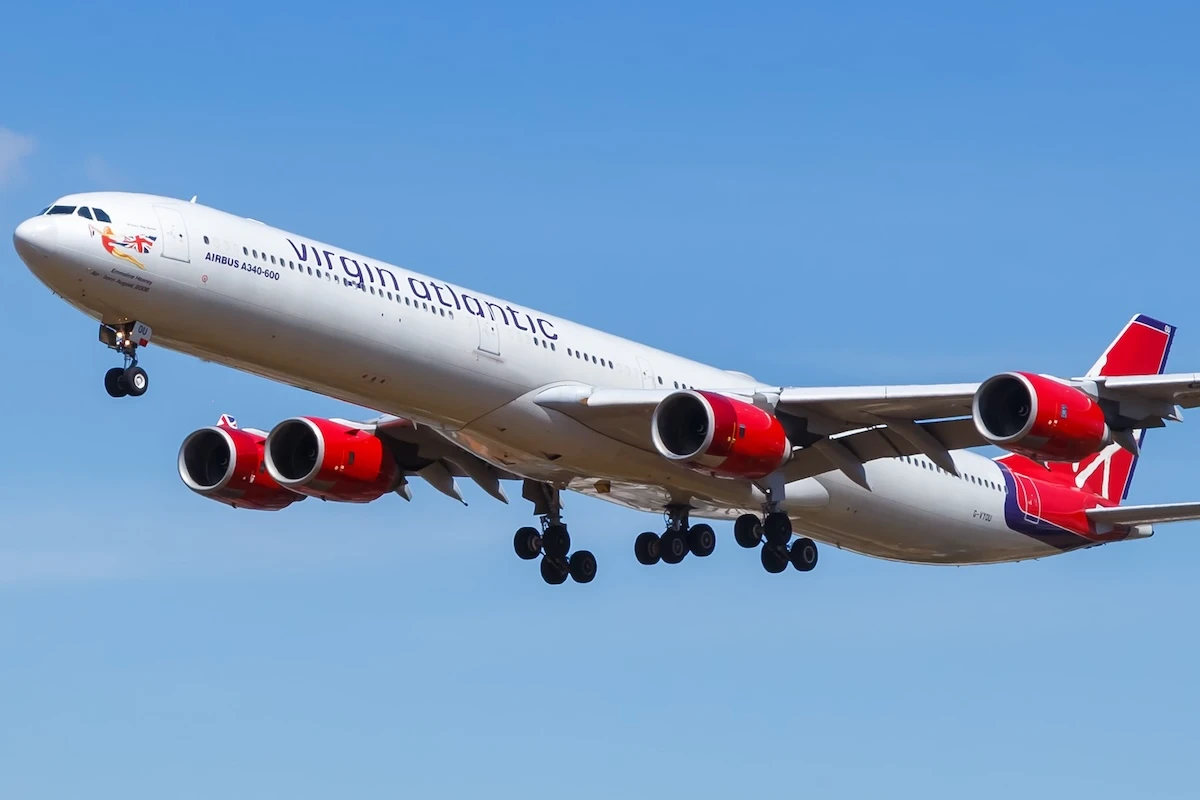
An Airbus A340neo would be a compelling fifth variant to revive the A340 family.
Airbus spent significant resources developing the A340 series. For more than two decades, the manufacturer produced four models: the -200, -300, -500, and -600.
Each new variant built upon the successes and failures of the previous model, tracking the market needs at the time.
As we’re entering a new era of flying, let’s explore if a final A340neo model would be suitable for today’s skies.
Could A Modernised A340 Make Sense Today?
Creating updated models of its popular aircraft is common for Airbus. Think the A319neo, A320neo, A321neo, and A330neo. Aside from the A330neo, most of its NEO models were based on narrowbody aircraft. An A340neo would expand Airbus’ product line to include a newer widebody option.
The original A340 family was popular for several airlines. Lufthansa, Iberia, Air France, and Virgin Atlantic were the biggest customers. Modernising the A340 with Airbus’ NEO treatment would make it a compelling aircraft for these airlines that made the original A340 popular.
With new features developed for today’s market demands, it may even attract the eyes of other airlines seeking to extend their flying range to new international destinations.
A Move Away From Four-Engined Planes In The 2020s
The A340 was developed in the 1900s as a widebody aircraft that could achieve long-haul distances. It was designed with four engines to help the large jet reach over 14,000km. It’s what made routes like Newark (EWR) to Singapore (SIN) or Frankfurt (FRA) to Rio de Janeiro (GIG) possible with non-stop flights starting in the early 1990s.

Quad-engine aircraft proved these long-haul trips were possible for commercial airlines. Airbus launched the A340 to compete with Boeing’s flagship quad-engine, the 747. However, the very feature that made these aircraft in demand for long-haul travel is what would ultimately cause them to decline.
Jet fuel is the most expensive operating cost for any aircraft. In the 1990s, when the A340 first arrived, fuel was nearly 5 times cheaper per gallon than it is in the 2020s.
Fuel prices remained relatively stable throughout the 90s, but nearly doubled in 2020 with the COVID pandemic. And just five years later, in 2025/26, fuel prices doubled once again following tensions in the Middle East.
Operating aircraft with four engines would mean unpredictable operating cost increases year over year. As a result, developing more fuel-efficient aircraft became a leading priority for aircraft manufacturers.
Why Did The A340 Die Out
More fuel-efficient aircraft not only meant less fuel burn on four engines. But it also meant figuring out a way to reduce the number of engines altogether to achieve the same power with two engines, while simultaneously burning less fuel per engine. During the 1990s, this technology was still being developed.
Airbus’ solution finally arrived with the launch of the A350 family, a widebody twin-engine aircraft that could fly even further than the A340 while burning significantly less fuel.
This family also comes in several variants, with the -1000 model offering enough capacity to match the largest A340-600. The A350 program launched in 2006 and marked the beginning of the A340’s decline.
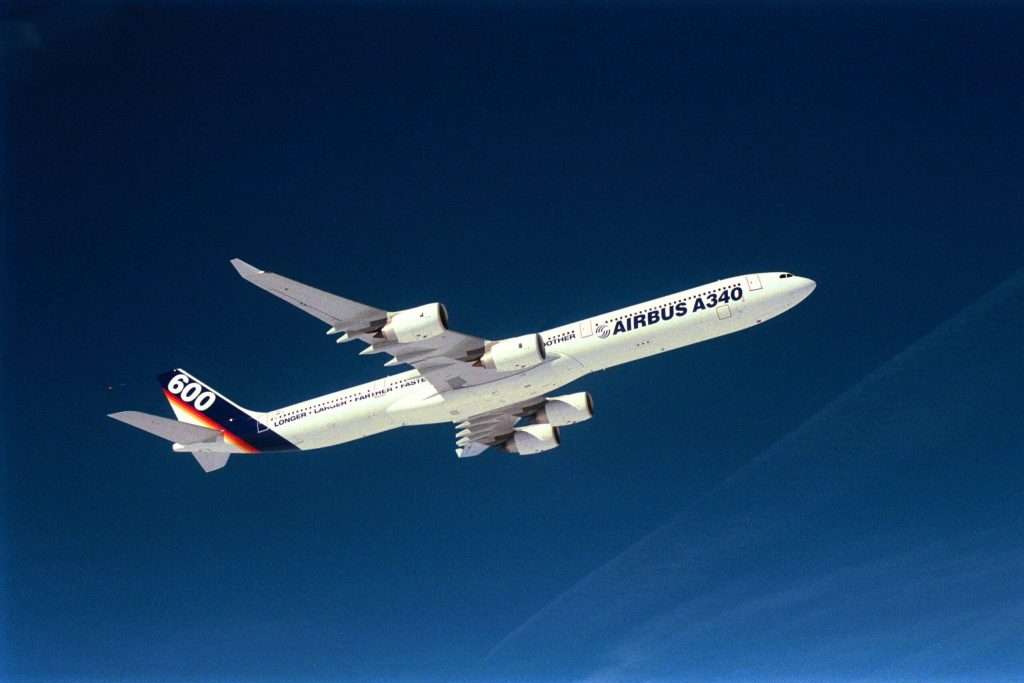
Production of the A340 ended in 2011. It received 380 total orders, with the most popular models being the A340-300 with 218 orders, followed by the A340-600 with 97 orders. The A350 proved to be a much better fit for the future travel outlook, securing 140 firm orders when the program launched and surpassing more than 1,500 total orders by 2026.
The A340 is now a rare sight for planespotters since many of the aircraft were retired from commercial fleets. Lufthansa is the most prominent airline still operating them, with plans to retire the entire A340 fleet by October 2026.
Economics vs Nostalgia For The A340neo
It will be sad to see the iconic A340 leaving the skies forever. However, it sparks curiosity about whether it could ever be reborn with modern modifications.
Revisiting one of its older aircraft programs would put Airbus years ahead of clean-sheet models. And at significantly less cost. Airbus still lacks a viable competitor to the Boeing 777X, which was designed to outperform the A350-1000. The A340’s body is the closest resemblance outside of the A350 family. And with the mounting delays for the 777X launch, it may give Airbus time to outfit the A340neo with today’s technology and launch it as a direct competitor.
The larger A340-600 model already has the seating capacity for up to 380 passengers. Although it has a longer body than the A350-1000, the A350 has higher capacity. Reconfiguring the seats on an A340neo model could accommodate even more seats due to its size.

The biggest challenge in developing an A340neo would be making it more fuel-efficient. Using new Rolls-Royce Trent XWB engines, as on the A350, would give it the most powerful, fuel-efficient turbofan engines on the market to achieve long-range distances with better fuel burn. An updated airframe using lighter composite materials and better wings for aerodynamics is just one more necessary change to add to the list of upgrades.
Why An A340neo Makes Little To No Sense
The redesign process for the A340neo quickly adds up, effectively stripping the aircraft to its frame to make it more suitable for a twin-engine design. Pursuing a NEO model would still cost Airbus billions of dollars and take years of testing. It was made for a past era of aviation, when quad-engine design was cutting-edge, to push travel distances even further. Today, aircraft like the A350-1000ULR are achieving 20+ hour flights with twin engines.
Airbus must consider the time and costs of reviving the A340 program for a NEO model compared to updating an A350 family model, which was already designed for better fuel economy. Although it has the size and range capacity, its technology may be too outdated to make an A340neo economically viable today.

ABOUT THE AUTHOR
Bryan Shelmon is an aviation journalist with 10 years of experience covering commercial aviation, private aviation, airports, aircraft and wider industry news. Based in the Detroit metropolitan area, he has contributed to publications including Lonely Planet, Matador Network and Visit Detroit.
Related Articles




Stay Informed
Get the latest aviation news, analysis and route updates delivered to your inbox.
We respect your privacy. Unsubscribe at any time.
Enjoyed this story?
Make us your go-to for aviation news
Add us as a preferred source on Google and see our latest stories first in Top Stories.
Add Us On Your News FeedRelated articles
· Airlines
· Airbus A380
Would The Airbus A380 Work In India?
Bryan Shelmon
24/09/2026
· Aircraft
· Airbus
· Airlines
Airbus’ Forgotten A350-800 Order
Bryan Shelmon
24/09/2026
· Aircraft
· Airbus
· Routes
Airbus A321XLR Route Map: How One Jet Opens Thin Long-Haul Market
Bryan Shelmon
23/09/2026
· Analysis
· Airbus
· Aircraft
· Boeing
Airbus A350-1000 vs Boeing 777-9: The Next-Gen Widebody Matchup
Bryan Shelmon
22/09/2026