
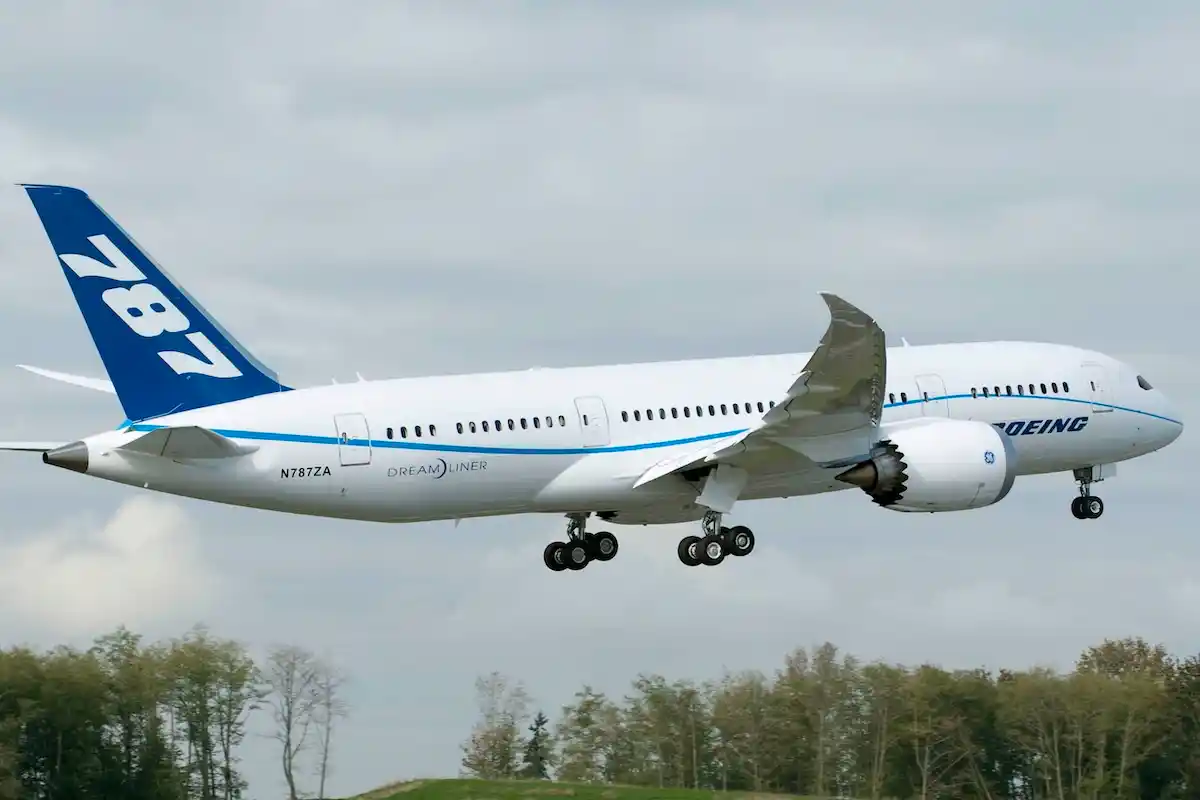
Boeing is celebrating 15 years since the 787 Dreamliner received FAA and EASA type certification, paving the way for the aircraft’s commercial debut.
The Boeing 787-8 achieved this milestone on 26 August 2011, and from there the planemaker has developed the widebody family to include three variants, the 787-9 and 787-10, complementing the smallest 787-8, with over 1,100 deliveries spanning more than 85 countries.
Receiving certification at the Everett facility marked a vital moment for the programme, which, like the 777-9, had been defined by industrial problems and heavy delays that had proved hard to overcome until then.
By securing the certification, Boeing proved it had developed a safe and reliable aircraft as marketed, and customers who had faced heavy delays could begin accepting the type and introducing Boeing’s first next-generation twin-engine jet to service.
All Nippon Airways became the launch customer when it accepted the first 787-8 one month after certification was granted on 26 September 2011, and, one month later, the type debuted between Tokyo Narita (NRT) and Hong Kong (HKG).
The start of ANA’s service marked a new chapter in its widebody operations; for Boeing, the manufacturer, it was also a landmark moment and a new chapter for its commercial portfolio, as the first next-generation model to debut and raise efficiency standards.
Despite the excitement around the debut of the new-generation widebody, the programme’s early years were not without difficulty for Boeing, not just before the certification but after the first delivery as well. In the early years, persistent production difficulties pushed deliveries of many aircraft beyond their original timetables.

Then, in 2013, the global fleet was temporarily grounded following lithium-ion battery incidents that sparked a redesign of the battery system, followed by a return to service. At this point, the global 787 fleet was still small, but this was another roadblock to the jet’s smooth entry into service.
How The Boeing 787 Dreamliner Family Has Evolved
The initial 787-8 approval marked the first variant in the family; Boeing later introduced the 787-9, a larger variant certified three years later in 2014, and then the final, highest-capacity variant, the 787-10, in 2018.
These three variants were designed to give Boeing a family that spans a broader range of future widebody requirements, whether in thinner or higher-capacity long-haul markets.
The 787-9 has become the family’s core member, with its long range and strong passenger capacity allowing it to serve long-haul networks. The mid-sized model in the family has seen airlines like Qantas leverage its capabilities for nonstop routes such as Perth–London Heathrow.
Certification of the final 787 variant, the 787-10, in 2018 gave the planemaker a chance to develop a variant that served operators seeking additional capacity without requiring the 787-9’s range or a step up to the larger and more expensive 777X.
The 787-10 has been a success for the manufacturer in an era where airlines have been attempting to increase seat capacity across existing slots into constrained airports. In these markets, additional slots may be unavailable or prohibitively expensive; as such, deploying a 787-10 in place of older A330s has opened the door to more seats and improved margins.
Boeing says the 787 Dreamliner fleet has now carried more than 1.3 billion passengers and has directly enabled the launch of more than 540 new nonstop routes as it has become one of the leading widebody options alongside the Airbus A350 for this generation.
Boeing Looks To The Next Phase Of The 787 Dreamliner
With strong demand persisting for the 787 Dreamliner family, Boeing has been prompted to invest further in the programme and in its South Carolina production system, where final assembly takes place.
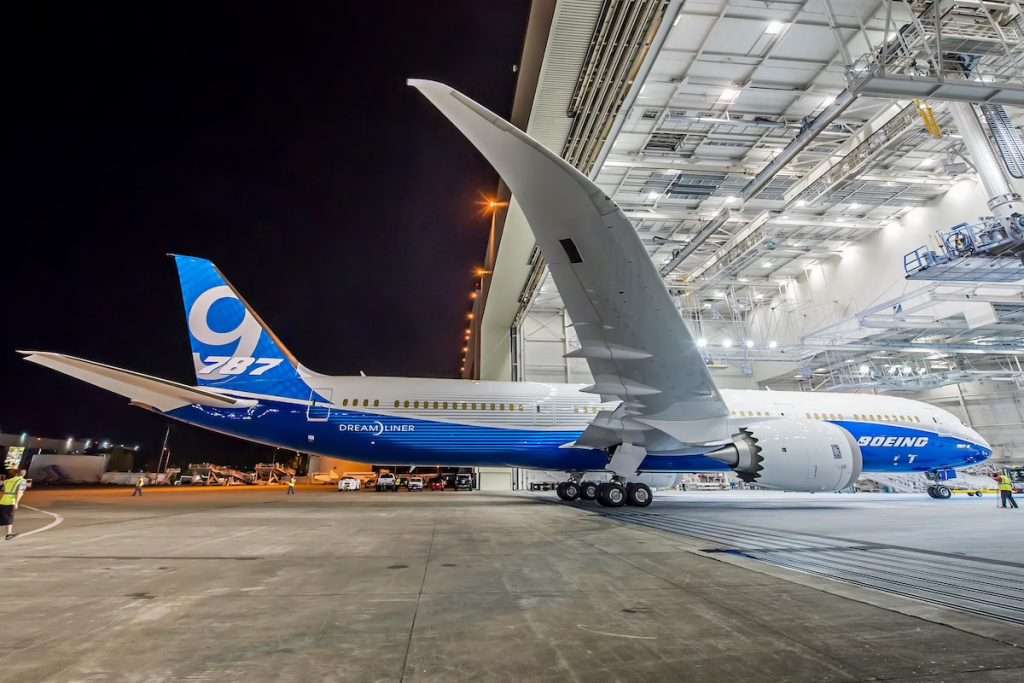
Boeing has committed to expanding the facilities to support higher production rates and sustained customer demand, with the backlog growing faster than the manufacturer can produce aircraft.
The manufacturer announced the 787 expansion in the last 12 months, and now, 15 years after certification, the family remains critical to the commercial aircraft mix, with airlines securing delivery positions into the 2030s, ensuring the type will fly for more than three decades.

ABOUT THE AUTHOR
Daniel Fowkes is a Melbourne-based aviation analyst and journalist with over a decade of industry experience. As founder of Dj’s Aviation, he delivers trusted analysis on aircraft, airline strategy and global aviation trends for djsaviation.net
Related Articles




Stay Informed
Get the latest aviation news, analysis and route updates delivered to your inbox.
We respect your privacy. Unsubscribe at any time.
Enjoyed this story?
Make us your go-to for aviation news
Add us as a preferred source on Google and see our latest stories first in Top Stories.
Add Us On Your News Feed