
Aircraft Guide · Seat Map
Boeing 787-8 Dreamliner
The Boeing 787-8 Dreamliner is the founding member of Boeing's composite-airframe widebody family, developed to replace the ageing 767 and open new long-haul routes that older aircraft couldn't fly profitably. As the shortest and lightest variant in the range (below the larger 787-9 and 787-10), the Boeing 787-8 combines a fuel-efficient, mostly composite structure with a choice of GE or Rolls-Royce engines to deliver wide-body range on a mid-size frame. Dj's Aviation covers its specifications, fleet status, safety history and operators below.
Ordered ~430 (variant total)
In Service Since 2011 (All Nippon Airways launch)
Cruise M 0.85
Range ~7,305 nmi (varies by source/config)
Latest NewsBoeing 787-8 Dreamliner
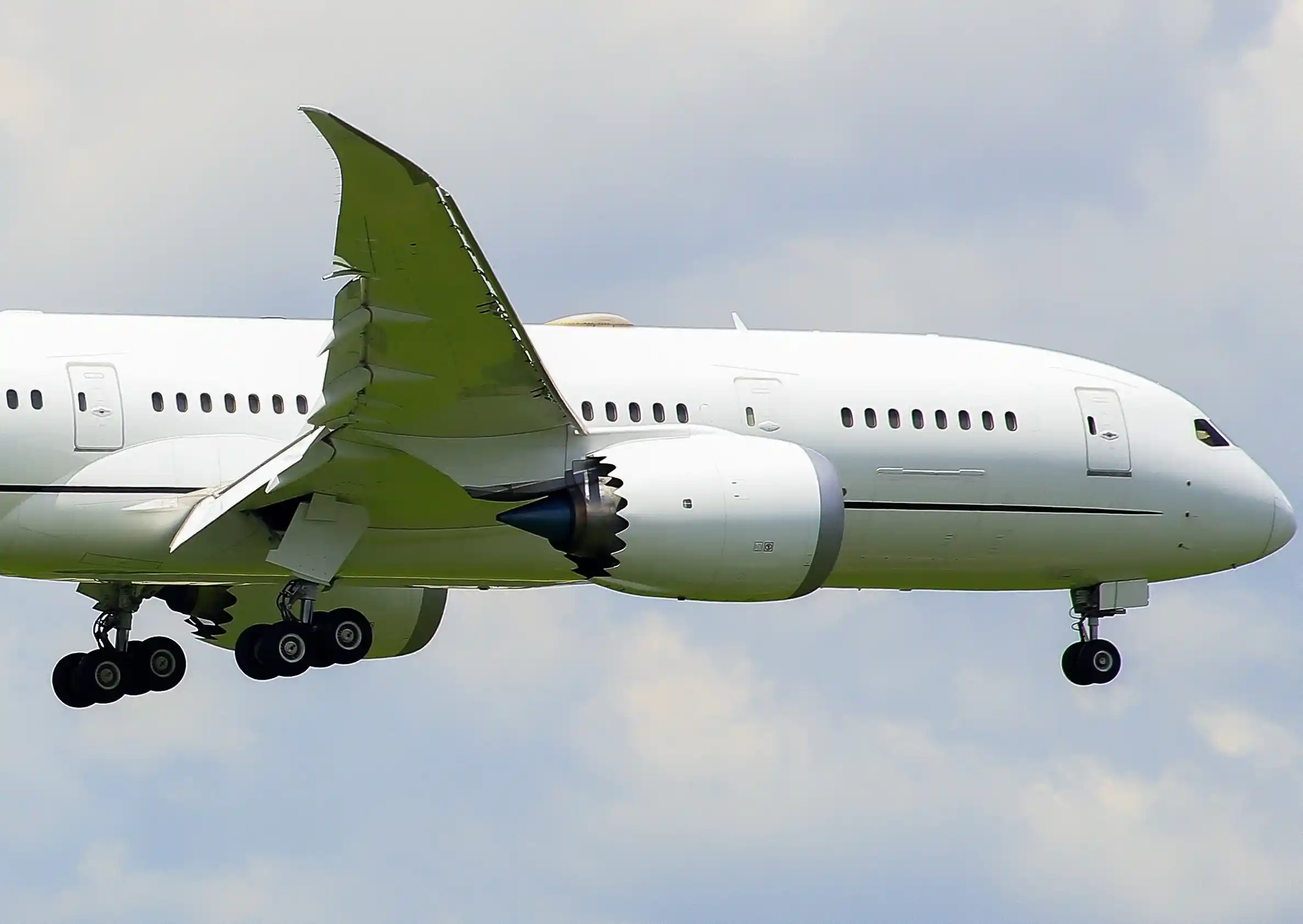
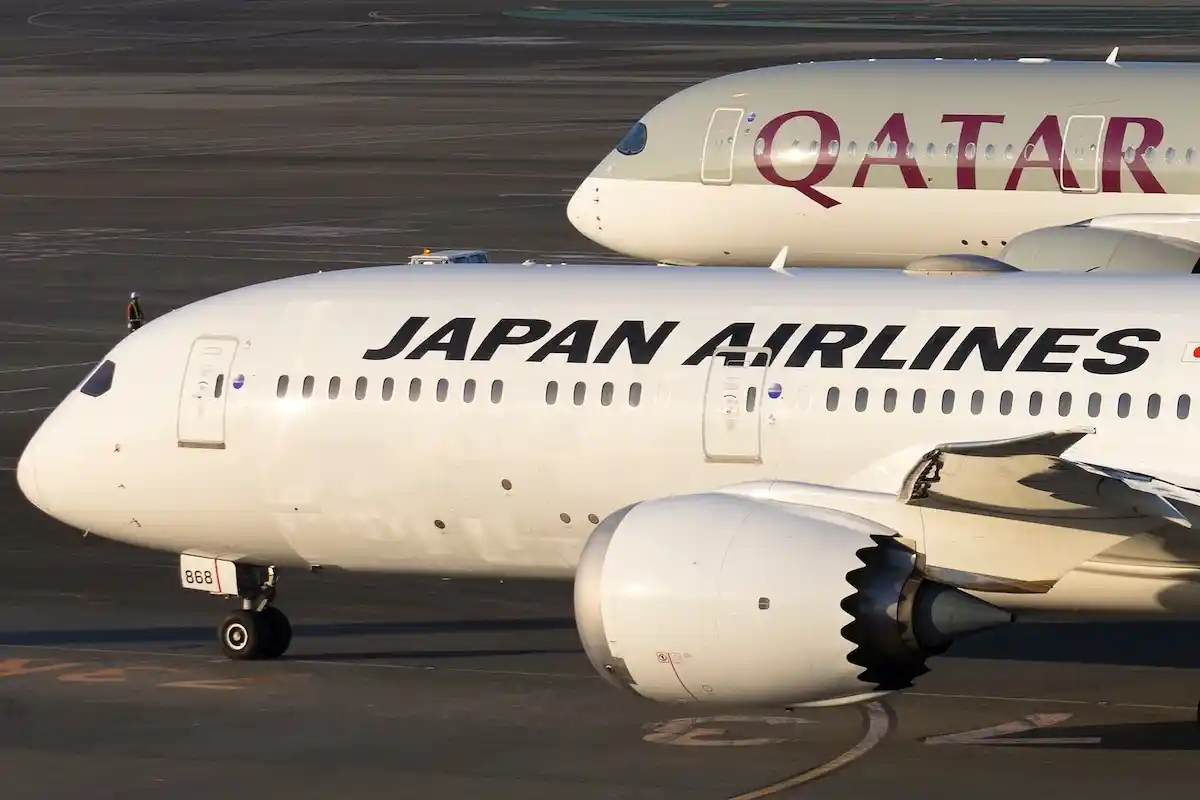

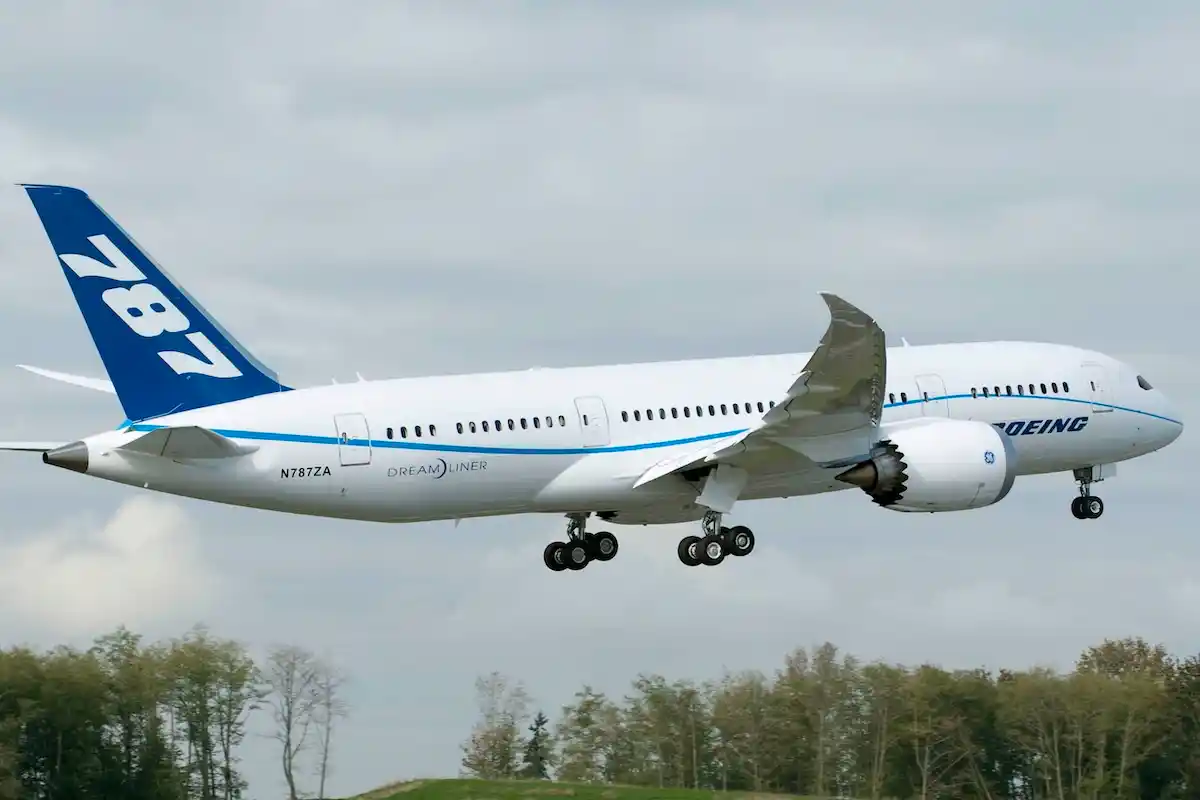
Boeing 787-8 Dreamliner Quick Facts
ManufacturerBoeing
TypeWide-body twinjet
First flight15 December 2009
StatusIn active since 2011
DimensionsL 56.7 m (186.02 ft)
W 60.1 m (197.18 ft)
H 16.9 m (55.45 ft)
W 60.1 m (197.18 ft)
H 16.9 m (55.45 ft)
MTOW~227,930 kg (~502,500 lb)
Cruise / RangeM 0.85
~7,305 nmi
~7,305 nmi
Ceiling~43,000 ft
EnginesGE GEnx-1B
Rolls-Royce Trent 1000
Rolls-Royce Trent 1000
Total ordered~427–431
Total delivered~396–399
CustomersMultiple carriers across Asia
North America
the Middle East and Europe
North America
the Middle East and Europe
First delivery25 September 2011 (All Nippon Airways)
Variants
Seat Map
Hover or tap a seat for details
Business
Economy
Exit Row
Galley / Lav / Doors
24Business1-2-1 · 85-in pitch
218Economy3-3-3 · 32-in pitch
242Total4 J seats at 75-in
Illustrative layout. Exact seating varies by operator and cabin fit.
History & Development
Boeing announced the 787 programme on 26 April 2004, with All Nippon Airways (ANA) as launch customer for 50 aircraft, initially split between a proposed short-haul 787-3 and the long-haul 787-8. The 787-3 was later cancelled in December 2010 as Boeing focused resources on the 787-8 and the stretched 787-9.
The first 787-8 rolled out at a public ceremony in Everett, Washington on 8 July 2007, though its first flight was delayed roughly two years by production and supply-chain issues. The Boeing 787-8 finally flew for the first time on 15 December 2009 from Paine Field. The FAA certified the 787-8 in August 2011, and the first delivery went to All Nippon Airways on 25 September 2011, entering commercial service the following month.
The 787-8, along with the rest of the fleet at the time, was grounded worldwide from January to April 2013 following lithium-ion battery fires, before Boeing’s redesigned battery system was approved. From 2019 onward, broader 787 programme quality-control issues caused a significant production slowdown, and from January 2021 into August 2022 deliveries across the whole 787 family nearly ceased while the FAA reviewed Boeing’s inspection and rework processes.
Most recently, a Boeing 787-8 Dreamliner was involved in the type’s first fatal accident and hull loss: Air India Flight 171 on 12 June 2025. That investigation remains open as of July 2026.
Cabin: Seating & Configuration
The Boeing 787-8 was originally designed around an 8-abreast (2-4-2) economy layout intended to preserve extra personal space, though most operators today fly it 9-abreast (3-3-3) for higher density, similar to competing wide-bodies. Because each airline designs its own cabin, seating totals vary; typical two-class capacity is generally cited around 234 to 248 passengers, with higher-density configurations reported at some operators.
Specifications
The dimensions and weights below reflect standard 787-8 production data.
Metric
Value
Like the rest of the 787 family, the 787-8 features raked wingtips (rather than blended winglets) and an airframe built from roughly 50% composite materials by weight, including a one-piece composite fuselage barrel construction, a first for a Boeing commercial jet.
Performance & Range
Metric
Value
Engines & Fuel
The Boeing 787-8 is offered with a choice of two engine types, both developed specifically for the Dreamliner programme.
Metric
Value
2× GE GEnx-1B or 2× Rolls-Royce Trent 1000
~69,800 lbf (310 kN)
~2.82 m (111 in)
~2.85 m (112 in)
The GEnx family also powers the Boeing 747-8 (as the GEnx-2B) and is GE Aerospace's fastest-selling widebody engine line by units in service or on order. The Trent 1000 uses a distinctive three-shaft architecture and the highest bypass ratio in the Trent family, around 10:1.
Family Variants
787-8
Original, shortest and lightest variant covered on this page; replaces the 767
787-9
Stretched, higher-capacity, longest-range variant; the family's best-seller
787-10
Largest variant; longest fuselage, shortest range of the three
In-Seat Amenities & Tech
In-seat amenities vary by operator. Boeing 787-8 cabins typically feature LED mood lighting that can shift colour and intensity to reduce jet lag, electrochromic dimmable windows (among the largest fitted to any airliner), and a lower cabin altitude and higher humidity than on older aircraft for improved comfort on long flights. Wi-Fi provision is not universal, and in-flight entertainment systems vary by operator and delivery date.
Production & Timeline
Boeing assembles the 787-8 at its North Charleston, South Carolina, facility.
Milestone
Date
26 April 2004
8 July 2007
15 December 2009
August 2011
25 September 2011
October 2011
January 2013 – April 2013
January 2021 – August 2022
Fleet & Operators
Operator
Role
Notes
Fleet figures vary by year as airlines take delivery of new aircraft or retire older types; figures above reflect general fleet composition rather than exact current counts.
Incidents & Safety
Unlike some newer widebody types with a clean individual safety record, the Boeing 787-8 Dreamliner has two specific, well-documented safety events attached to its history.
Notable safety events specific to the Boeing 787-8 include:
Related News
Aircraft News
Latest Airlines News
Carrier strategy, fleet moves & financial updates
Aircraft News
Latest Aircraft News
Programmes, retrofits & next-gen narrowbodies
Route News
Latest Route Updates
New launches, cuts & network shifts
Freight Orders & Delivery
Latest Freight Orders & Delivery News
Cargo conversions, orders & deliveries