

Qatar Airways is bringing back the Airbus A380 from its temporary grounding on 16 June 2026; however, initially under a heavily restricted deployment.
The Doha-based carrier will return its world’s largest passenger plane to service on just two routes from its hub, Hamad International Airport, with London Heathrow to be complemented by Bangkok Suvarnabhumi.
With the A380’s capacity returning to the network, the airline’s special focus on London Heathrow, which had transitioned to an exclusive 777 operation, will bring much-needed seat capacity to the popular airport and restore more premium options for the airline amid an attempted recovery following a turbulent 2026.
For now, this is a limited revival of the world’s largest passenger plane and is expected to benefit more of the high-demand, premium-generating corridors, where capacity and upper-class seating options can benefit the airline, as the smaller widebodies can be redeployed to other international markets.
A Grounding Confirmed After Iran War
The Airbus A380 fleet was sidelined in April, with the planes grounded in the last week of March when soaring jet fuel costs and economic instability meant that the size of the A380 in a market that was restricted from flying and its ability to deploy capacity was no longer required.
As a fallout from the Iran conflict, detours and closures in the Strait of Hormuz add hours to typical international flights, and, as a consequence, airlines were forced to make changes to their operations to mitigate rising costs, including switching to four-engine jets, which are more expensive than the A350, which also carries less risk.

Whether to Paris, Singapore, or Sydney, the decision to shift to these smaller, fuel-efficient widebodies in the short term made much more sense, even though the A380 went on to become an integral part of the business following its grounding during the COVID-19 pandemic and its effective retirement.
Qatar Airways pulled the plug on the fleet in the first week of April, confirming the axing and grounding for April and May 2026, and did not share any further details beyond these two months, citing regional volatility and uncertainty around bringing these planes back into service.
An Impact On Passengers & The Airline
Without the Airbus A380s, Qatar Airways has maintained frequency using twin-jet aircraft, but, as a consequence, has lost thousands of weekly seats on key peak routes. At the same time, demand has remained robust, and the load factor in premium seating reflects that. The return unlocks crucial seat capacity for the airline.
For passengers, it’s another step in what has been a strategic recovery, offsetting the disruption caused by the war and rebuilding the schedule from a point when the airline was entirely grounded.
Given the timing and in anticipation of the northern Summer 2026 schedule, with strong demand expected, Qatar Airways and passengers get a big win with the return of the superjumbo, even if initially on a limited basis, as it builds international schedules on affected legs where revenue would have dipped.
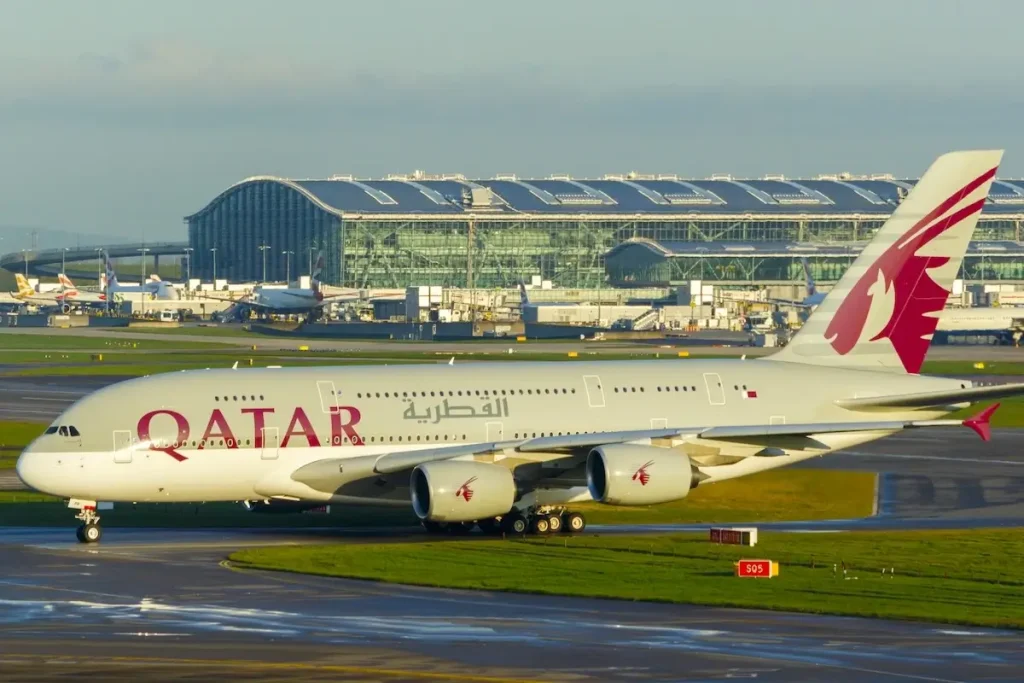
Long-term, despite its resurgence, the A380 still isn’t viewed as the solution for businesses to meet capacity needs, with a strong reliance instead placed on jets like the 777X, which have been heavily delayed. However, these aircraft are to be leveraged across slot-constrained airports in a much more efficient way.

ABOUT THE AUTHOR
Daniel Fowkes is a Melbourne-based aviation analyst and journalist with over a decade of industry experience. As founder of Dj’s Aviation, he delivers trusted analysis on aircraft, airline strategy and global aviation trends for djsaviation.net
Related Articles




Stay Informed
Get the latest aviation news, analysis and route updates delivered to your inbox.
We respect your privacy. Unsubscribe at any time.
Enjoyed this story?
Make us your go-to for aviation news
Add us as a preferred source on Google and see our latest stories first in Top Stories.
Add Us On Your News Feed