

The Boeing 787-3 was a much-talked-about aircraft variant by the American manufacturer at a time when it was introducing the widebody to the world.
This prospective aircraft would have aimed to offer something different to its counterparts with a smaller capacity and to form part of the series’ initial entry into the market.
Ultimately, however, the aircraft wouldn’t eventuate, and Boeing would proceed with three other variations instead, from the -8 to the -9 and up to the -10.
So, what was the 787-3, why was it introduced, why wasn’t it launched, and was it the right decision?
What Is The Boeing 787-3?
The 787-3 was introduced in the early 2000s as part of Boeing’s broader 787 Dreamliner program. Unlike other variants in the family, it was designed for shorter routes between high-traffic hubs.
From a specification standpoint, the aircraft was to be the same length as the now-released 787-8, but its wingspan was more aimed at fitting into a broader gate range at airports worldwide.
Boeing would focus on the wings to align it with the ICAO Aerodrome Reference Code D, allowing it to slot into 757 and 767 slots. Moreover, it could operate routes served by this aircraft more efficiently.
The 787-3 would, in essence, carry around 290 to 330 passengers in a standard two-class configuration and be able to fly upwards of 5,600km (3,510 miles).
After being proposed, the aircraft became a relatively quick hit in Asia, specifically in Japan, with orders coming only through Japan Airlines and ANA.
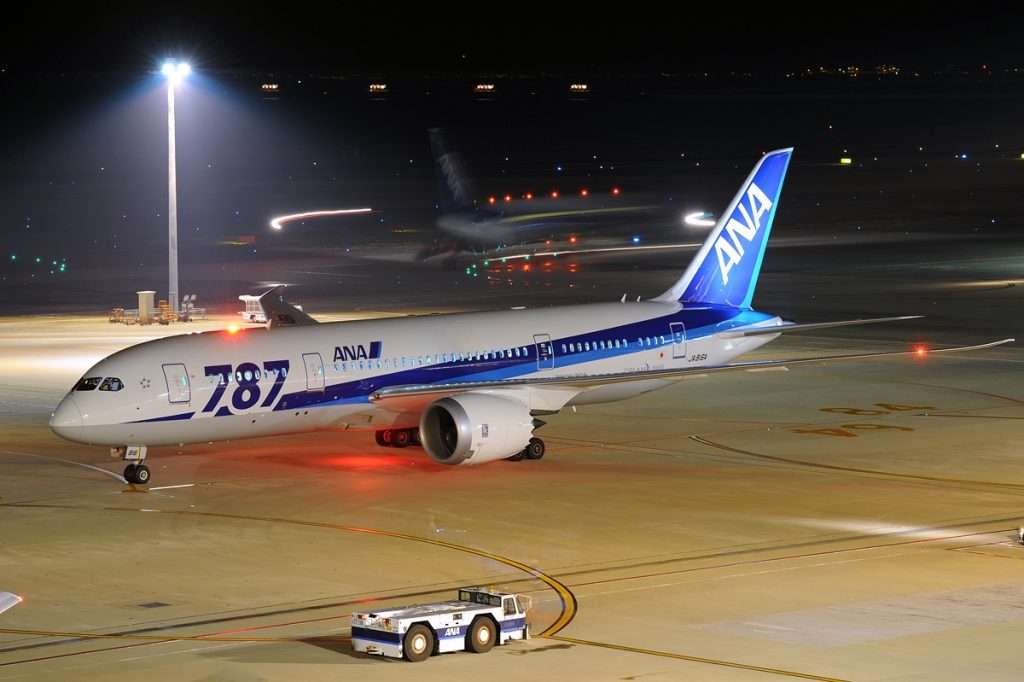
Despite the concept’s appeal, the 787-3 faced challenges. Its design, which focused on accommodating more narrow taxiways seen across major Japanese airports, made it a niche variant compared to its sibling variants.
Ultimately, demand for this high-density, short-haul Dreamliner variant was insufficient to justify production, especially as the longer-range version 787 gained popularity. In 2010, Boeing formally dropped the 787-3, refocusing efforts on the 787-8 and 787-9 models.
Could Boeing Launch The 787-3 Now?
One of the industry’s biggest talking points has been Boeing’s lack of a middle-of-the-market aircraft to adequately replace the 757 and 767 for some operators.
As a result, although Boeing eventually scrapped the short-range Dreamliner in 2010, could this aircraft still be a realistic option in 2024 that wouldn’t require a great deal of adjustment?
Unfortunately, Boeing’s future outlook has dramatically changed over the last five years following many internal issues that have damaged the business.
As such, Boeing finds itself in a position where instead of focusing solely on innovating as a company like it once did, it is looking to rebuild and mitigate production delays, financial pressures, and overall setbacks to its reputation.
Boeing has always remained cautious about introducing new aircraft, but this has been heightened tenfold in the last decade or so, especially in the last couple of years, when even if it wanted to proceed, it likely would not be able to from a resource and regulator standpoint.
Whether a clean sheet or something like a 787-3, which was already proposed, launching new programs requires significant financial investments. Developing a new or revived variant like the 787-3 would involve substantial costs, including retooling production lines, re-certification processes, and meeting safety standards.
Boeing’s financial resources are already stretched, and the added risk of developing a 787-3 at this point would be a bad look for the many uncertified programmes it already has that frustrate customers.
Would The 787-3 Be Worth It?
Airline customers ultimately play a major role in an aircraft manufacturer’s decision to proceed with a specific new type.
Ultimately, while a Boeing idea on paper can be good if no airline customers express interest in it, there’s little to no point in proceeding with it.
So, would the 787-3 be a good investment for Boeing now, or will its fate in the mid-2020s be the same as the catalyst for why it was cancelled over a decade and a half ago?
The middle-of-the-market segment remains largely underserved. While Airbus has moved ahead with the A321XLR, some airlines still hope that something will come from Boeing.

While the 787-3’s original concept as a high-density, shorter-range aircraft could appeal to airlines operating on crowded domestic and regional routes, it did face limited interest from the offing on a more global scale.
Nowadays, airlines that may have sought something like the 787-3 have gone in the opposite direction, to single-aisle narrowbodies, with Airbus and Boeing putting forward their best attempts at a high-capacity single-aisle.
In the realm of airlines calling for new aircraft, the -3 offered by Boeing is not one at its core that has re-emerged as a prospective solution and, as such, would likely not be worthy of the investment required to see a return occur.
The Wrong Time For Boeing
Reviving the 787-3 at this time would require Boeing to divert resources from its current priorities, which have only continued to grow with time and put a strain on its day-to-day operations.
When considering the investment and even the lengthy certification process that would add to the already existing aircraft that can’t seem to get approved, it becomes a completely wrong place, wrong time.
Furthermore, with little to no interest, at least from a public standpoint, while the variant’s premise had some backing some time ago, its cancellation in 2010 seemed the right decision.
If the industry had shaped differently and Boeing hadn’t taken a downward spiral as the late 2010s approached, further development of the 787 could’ve very well occurred, and if not through a 787-3, potentially something very different.
Today, Boeing remains better off focusing solely on stabilising other fundamental business areas away from a prospective but also cancelled 787-3.
New aircraft are on the horizon through the continued studies of the TTBW and Boeing’s knowledge that it must still focus on the long term. Still, given the current complexities and technology development, those prospects seem further away.

ABOUT THE AUTHOR
Daniel Fowkes is a Melbourne-based aviation analyst and journalist with over a decade of industry experience. As founder of Dj’s Aviation, he delivers trusted analysis on aircraft, airline strategy and global aviation trends for djsaviation.net
Leave a Reply
Related Articles




Stay Informed
Get the latest aviation news, analysis and route updates delivered to your inbox.
We respect your privacy. Unsubscribe at any time.
Enjoyed this story?
Make us your go-to for aviation news
Add us as a preferred source on Google and see our latest stories first in Top Stories.
Add Us On Your News Feed
Mr. Daniel, your article on Boeing 787-3 is too much excellent, very very good interesting to read you have given very exhaustive information about this model