

Delta’s blockbuster order for up to 60 of the Boeing 787-10 Dreamliners came years after an initial cancellation and represented a shift in widebody strategy.
The high-capacity variant targeted at replacing the 767 from 2031 will not only deliver significant cost savings but also enable a denser premium cabin, if chosen, while maintaining a range that prioritises versatility across the network.
Now, with the 787 joining the A330neo and A350, it represents the first Boeing next-generation widebody to join the fleet, but what does the deal truly mean?
Delta Orders Up To 60 Boeing 787s
Delta’s order for the Boeing 787 Dreamliner came on 13 January 2026, with up to 60 high-capacity 787-10s purchased, marking its first direct widebody deal with Boeing in years and providing a significant boost to the backlog.
As part of the contract deal, there are orders for 30 of the 787-10s, the largest model in the family, under a firm status, with options for an additional 30 should it wish to activate these at a later date.

Announced at the start of the year, the order will enable Delta to significantly improve efficiency across routes, with a 25% fuel savings on outbound flights.
Deliveries are scheduled to commence in 2031 under the current schedule and align with Boeing’s intent to expand production at its North Charleston facility amid a growing widebody backlog.
A Long-Awaited Deal For Boeing
Delta’s deal for the Boeing 787 Dreamliner comes more than 1.5 decades after its first entry into service and joins competitors United Airlines and American Airlines as one of the big three relying on this model for long-haul connectivity.
While the two other competitor airlines were quick to pounce on the jet’s flexibility and superior economics, Delta held off. As part of its strategy, it continued to pivot towards Airbus widebodies, including the A330neo, A350-900, and the soon-to-be-introduced A350-1000.

With these newer Airbus widebodies being delivered continuously, alongside a commitment to the A321neo and A220, Delta’s shift towards Airbus was accelerating, with older Boeing planes remaining workhorses.
All this changed, however, when Delta began to realise that it needed more versatility across its widebody operations, something that could undoubtedly be achieved with Airbus aircraft but may not have felt complete, especially as specific models began to age.
Farewell To The Boeing 767
Delta’s order for up to 60 787-10s is central to the eventual phasing out of the iconic, lovable but now inefficient 767 fleet. A reliance on this jet is evident across the 767-300ER and 767-400ER, which are slated for retirement in the medium term.
The decision to replace the 767 marks the end of a Boeing era at the U.S. airline, which also includes the 757, also known as the flying pencil. These aircraft have been a staple at the airline for decades, but their operational life is nearing its end.

For Boeing, replacing the 767 has been a long time in the making. Still, it has been challenging, with no genuine mid-market aircraft positioned to serve this sector that Delta has been so passionate about.
With delays to the replacement plan stemming from teething issues with the Dreamliner, a complex history, and a shift toward Airbus, the deal strengthens ties with the American planemaker for the future amid its own demand for additional widebodies.
By the 2030s, with the 767 retired, the Delta widebody fleet will look very different. From the 787 to the A350-1000, A350-900, and A330neo, it’ll be a composition that maximises flexibility and efficiency.
What The 787-10 Means For Delta
The Boeing 787-10 is the largest variant in the Dreamliner family; its longer fuselage enables optimised operations on high-demand routes that require capacity but not as strong a focus on range.

Delta expects to leverage the 787-10’s capabilities to operate across Transatlantic and South American routes, replacing the 767 while delivering significant enhancements for customers and improved operating performance.
The 787-10s represent a capacity jump over the 767 and enable a denser premium configuration across long-haul markets, resulting in premium revenue increasing across locations.
Additionally, the per-seat fuel savings of the Boeing 787-10 will be more than apparent, a 25% per-seat saving compared to the 767, plus belly cargo space for e-commerce operations, which strengthens the diversification of the Delta business.

With the 787 expected to replace the 767, there will also be new opportunities to deploy across high-demand corridors. The jet will integrate into an already versatile fleet of next-generation aircraft and can be easily replaced where required across markets.
Delta’s Complicated History With The 787
Delta’s 787-10 was a landmark moment for several reasons. Still, at its core, it represents a full-circle journey from when the business first inherited a deal for the widebody jet that never materialised.
When the U.S. carrier merged with Northwest, it inherited a small 787 order, but at the time of the merger, it did not seem likely to be completed and was eventually removed from Delta’s backlog.
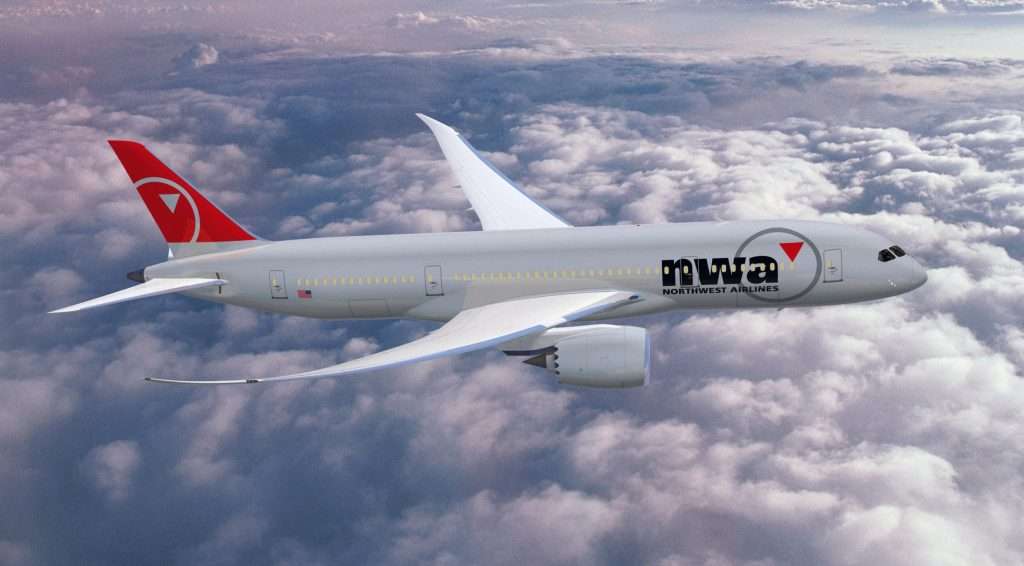
The airline instead chose to prioritise Airbus widebodies and continue building a strategy that relied on the 767 until its age began to weigh on the business.
Returning now for a headline order for up to 60 787-10s is timely, as the airline understands there’s no better opportunity to secure a replacement amid a requirement for more widebodies and progress into the next stage of growth.
Delta Boeing 787-10 Frequently Asked Questions
Which Boeing 787 variant did Delta order?
The U.S. carrier has ordered the largest 787 variant, the 787-10.
When will Delta take delivery of the 787?
Delta expects to begin taking delivery of the Boeing 787-10 in 2031
What aircraft will the 787-10 replace?
The Boeing 787-10 is intended to replace the outgoing 767-300ER and 767-400ER in Delta’s fleet.
How does this change Delta’s future fleet?
For Delta’s widebody operations, the addition of the 787-10 will complement the A330-900, A350-900, and A350-1000 from Airbus, making it the first next-generation widebody from Boeing.

ABOUT THE AUTHOR
Daniel Fowkes is a Melbourne-based aviation analyst and journalist with over a decade of industry experience. As founder of Dj’s Aviation, he delivers trusted analysis on aircraft, airline strategy and global aviation trends for djsaviation.net
Related Articles




Stay Informed
Get the latest aviation news, analysis and route updates delivered to your inbox.
We respect your privacy. Unsubscribe at any time.
Enjoyed this story?
Make us your go-to for aviation news
Add us as a preferred source on Google and see our latest stories first in Top Stories.
Add Us On Your News Feed