
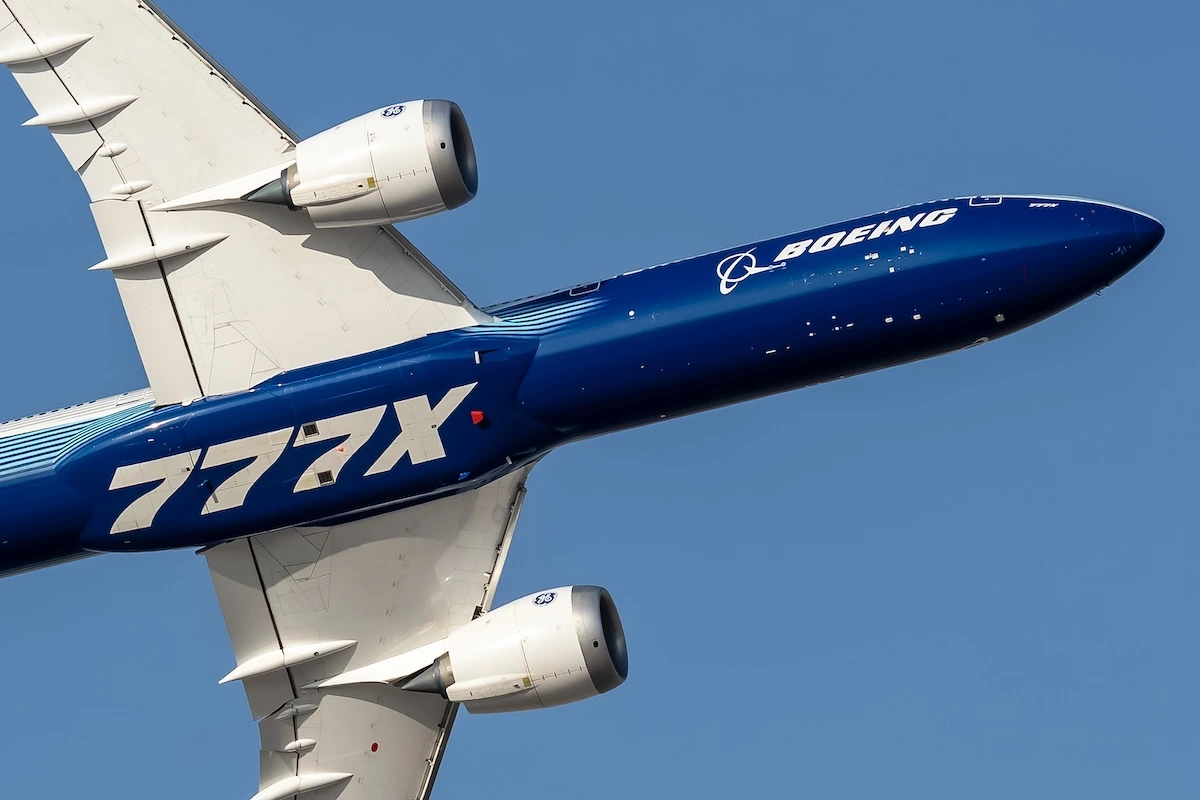
A new era of ultra-high-capacity widebodies is approaching with the Boeing 777-10 and Airbus A350-2000 expected to lead the way.
Amid shifts in business models and airline fleet strategies for outgoing quad-engined superjumbos, the need for ultra-high-capacity jets remains, albeit in a more flexible form.
With both the 777-10 and A350-2000 having entered feasibility studies, what are their stories, who are pursuing the jets, and how do they stack up in the early stages?
Four-Engine Superjumbos To Two Engines
The aviation industry has undergone a seismic shift over the last two decades, shifting from four-engine superjumbos such as the Boeing 747 and the Airbus A380 toward versatile twin-engine jets such as the 777, 787, A350, and even the A330neo.

Fundamentally, the shift was driven by the evolution of 1980s ETOPS regulations, which extended the range of twin-engine aircraft, realigned prior restrictions, and enabled previously unavailable organic routes on smaller platforms.
The era of twin-engine aircraft, however, saw a tenfold increase, driven by advances in engine technology that enabled reliable performance and significant cost savings, including the upcoming GE9X, Trent XBW, and others.
Airlines that acquired these planes achieved significant savings, with costs halved due to the two-engine maintenance approach, greater reliability, and more point-to-point flexibility compared with hub-and-spoke flights, which carry higher risks.
For airlines, the shift took shape further as renewal progressed in the 21st century, with a greater priority than ever on nimble fleets that served thinner routes and could boost profitability through higher frequencies.
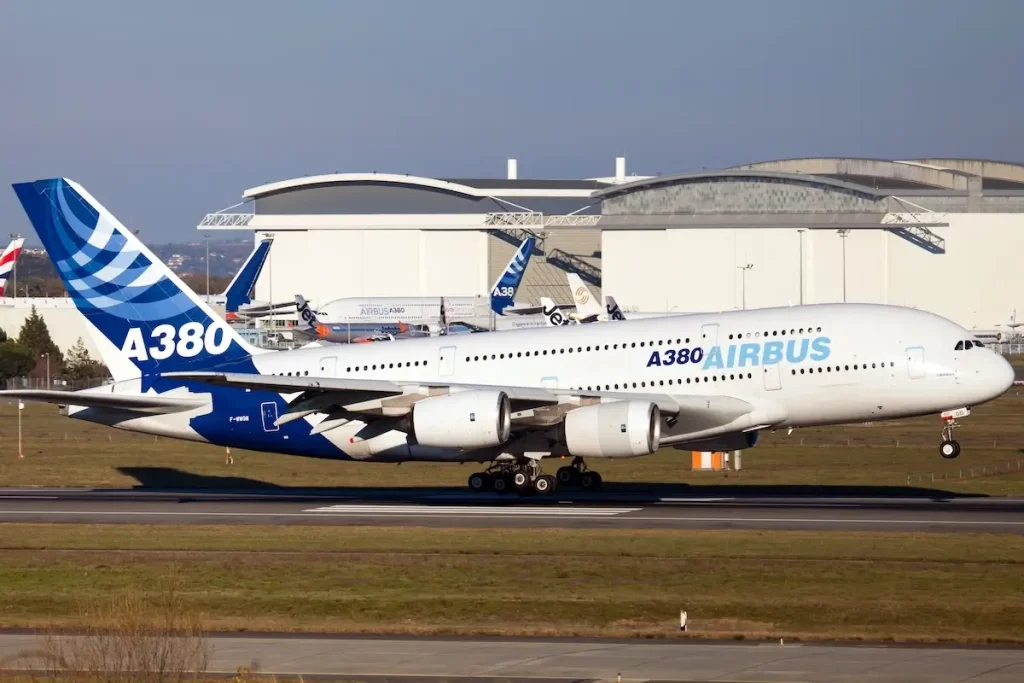
For the vast majority of airlines, the risks of operating larger quad-engined planes were too high, and aircraft manufacturers were forced to pivot sharply: A380 production halted in 2021, far earlier than Airbus had expected, and passenger 747s were discontinued despite a new iteration, the 747-8.
What Is Currently Being Studied?
While quad-engined aircraft are no longer being produced, many existing planes are being retired from this type, and some airlines are pushing for larger jets that still deliver efficiency.
Following the most recent Dubai Airshow, Airbus and Boeing are advancing studies of ultra-stretched versions of the A350-200 and the 777-10, respectively.
These studies offer a means to address the high-capacity void left by retired quad-jets, such as the 747, A380, and even A340, the latter two offering sizeable capacity increases over what’s currently active on the market.
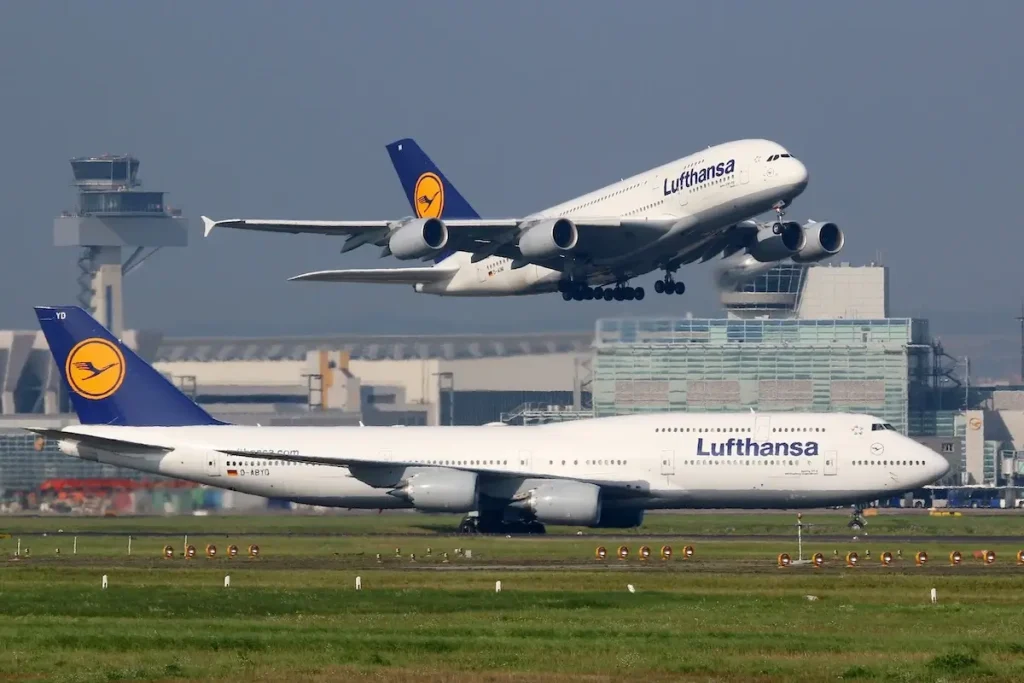
The pursuit of larger planes is required for slot-constrained mega hubs. Both Airbus and Boeing are in the feasibility stage of their respective models, as discussions intensify among interested parties to find common ground to enable these studies.
Both prospective models are stretched versions of existing aircraft types, the A350-1000 and 777-9, and ultimately aim to deliver the nearest possible jump in capacity at a fraction of the cost and in a much more efficient manner.
Who Is Interested In The Aircraft?
Interest from airlines in aircraft such as the A350-2000 and 777-10 remains; however, publicly, most airlines are remaining tight-lipped about their interest, aside from a small few.
Emirates has been a leader in cabin interiors for larger aircraft, prompting aircraft manufacturers to upgrade existing models to add more seats without sacrificing the efficiency of newer models.

The Dubai-based carrier essentially led the feasibility study for the 777-10 in November 2025, following a commitment to 65 additional 777-9s, with options to convert to the larger model. Following that, Boeing confirmed it had the confidence to begin proceeding with feasibility studies.
More than a decade ago, Singapore Airlines was also linked to the larger twin-engine jets, but the programs were halted for various reasons. 10 years on, with the industry in a different place, they have been picked up on again.
While public interest remains scarce, Airbus has already hinted that multiple airlines are pushing for larger planes, and a theme has reemerged: mega-hub airlines operating through slot-constrained airports require larger aircraft to replace their older quad-engined jets without incurring the associated costs.
Why Are Airlines Interested
Airlines are seeking the 777-10 and A350-2000 aircraft to re-create an era when Jumo jet aircraft, capable of seating over 400 passengers in comfort, dominated the industry.
However, airlines want to replicate this era at a fraction of the cost, knowing they can retain commonality and efficiency across their operations without sacrificing capacity.

With Airbus and Boeing having suspended production of their largest quad-engined superjumbos, the realisation has set in that for airlines seeking larger planes, those ultra-high-capacity jets no longer exist.
As airports do not evolve at an infrastructure pace sufficient to keep up with demand growth, as Emirates President Sir Tim Clark noted, there is a need for larger planes, which is why airlines are interested.
How Does The 777-10 & A350-2000 Stack Up?
Despite Airbus and Boeing studying the A350-2000 and the 777-10, respectively, little is known about how the pair will compare due to the lack of released specifications.
However, the A350-2000 would aim to stretch the -1000 fuselage further, enabling a significant capacity increase and helping bridge the gap to the 777-9 by seating well over 400 passengers in a three-class configuration.
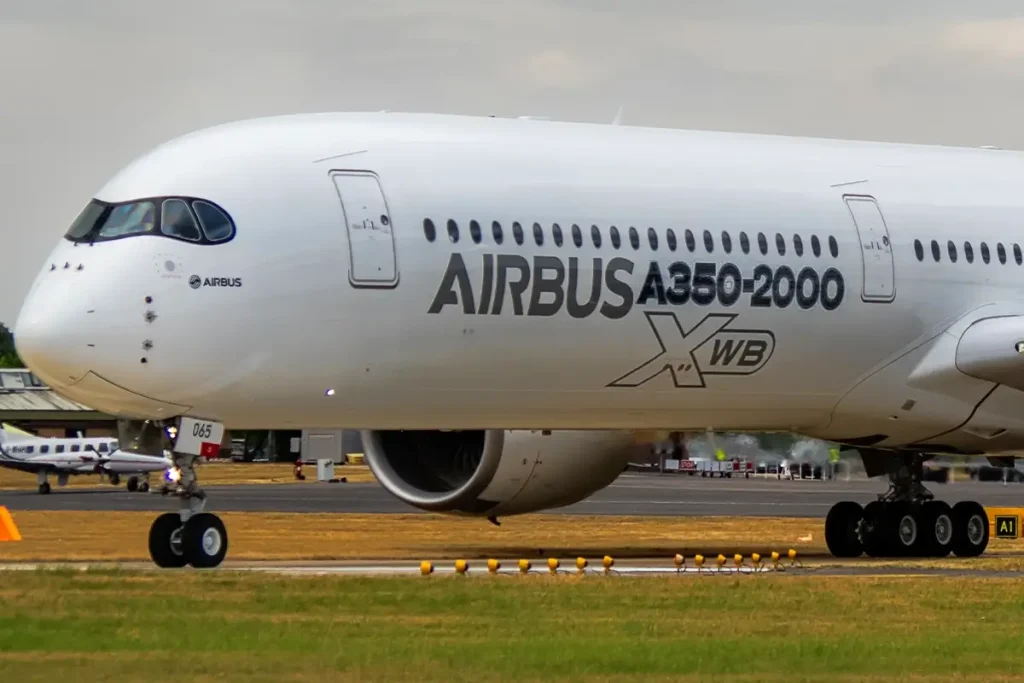
While capacity remains at the forefront, it will also be integral for airlines like Emirates to preserve range on these planes to reach hub airports with constrained slots.
As for the 777-10, this would represent an extension of the 777-9 and, as a result, push capacity close to the 450-seat market while reinforcing key pillars to ensure the jet is capable across all markets.
With these aircraft still in the feasibility stage, both planemakers have much to narrow down, including whether they, despite interest from global carriers, are sufficiently viable to become a firm choice in their product lines.

ABOUT THE AUTHOR
Daniel Fowkes is a Melbourne-based aviation analyst and journalist with over a decade of industry experience. As founder of Dj’s Aviation, he delivers trusted analysis on aircraft, airline strategy and global aviation trends for djsaviation.net
Related Articles




Stay Informed
Get the latest aviation news, analysis and route updates delivered to your inbox.
We respect your privacy. Unsubscribe at any time.
Enjoyed this story?
Make us your go-to for aviation news
Add us as a preferred source on Google and see our latest stories first in Top Stories.
Add Us On Your News Feed