
Aircraft Guide · Seat Map
Airbus A350
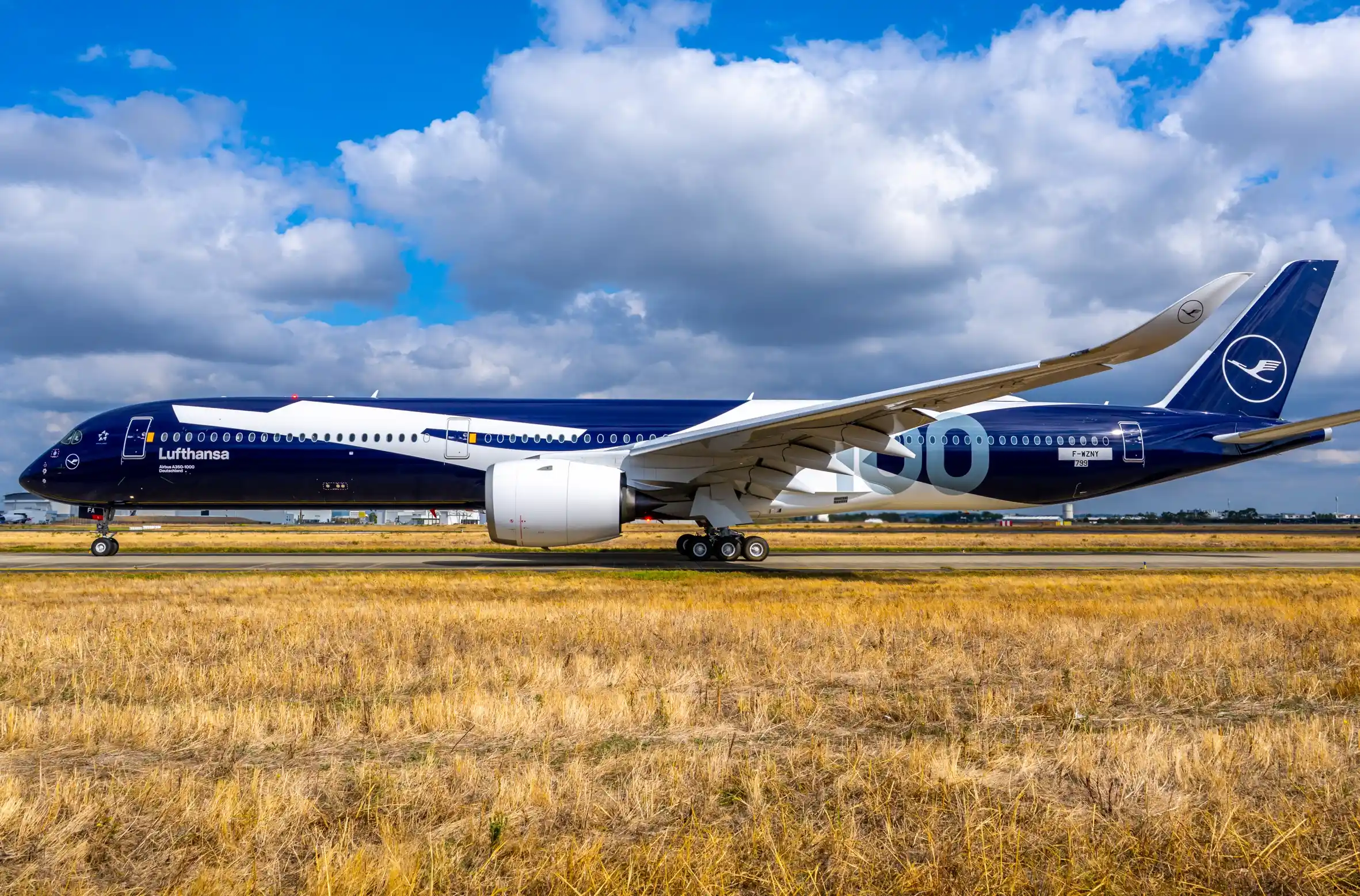
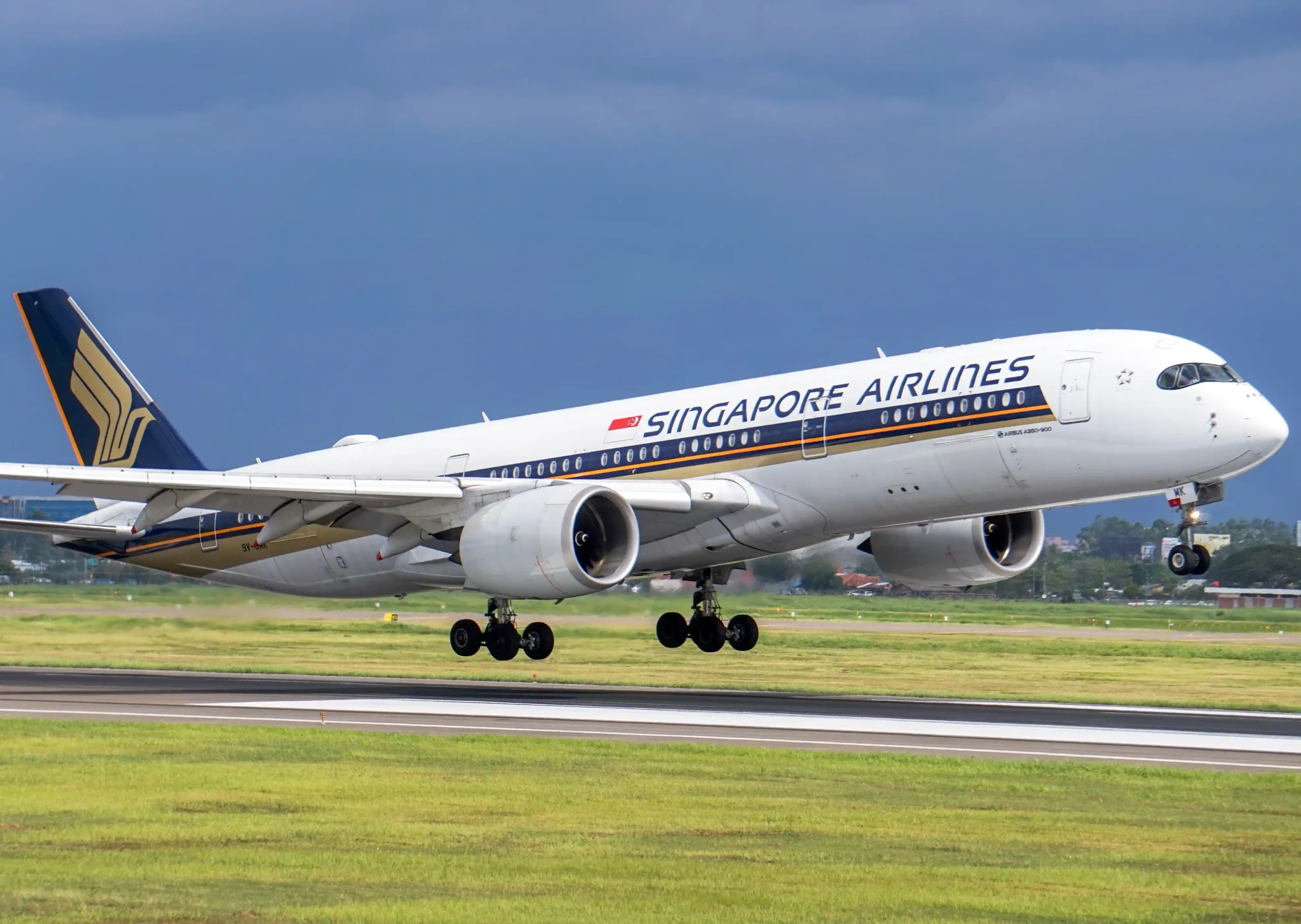
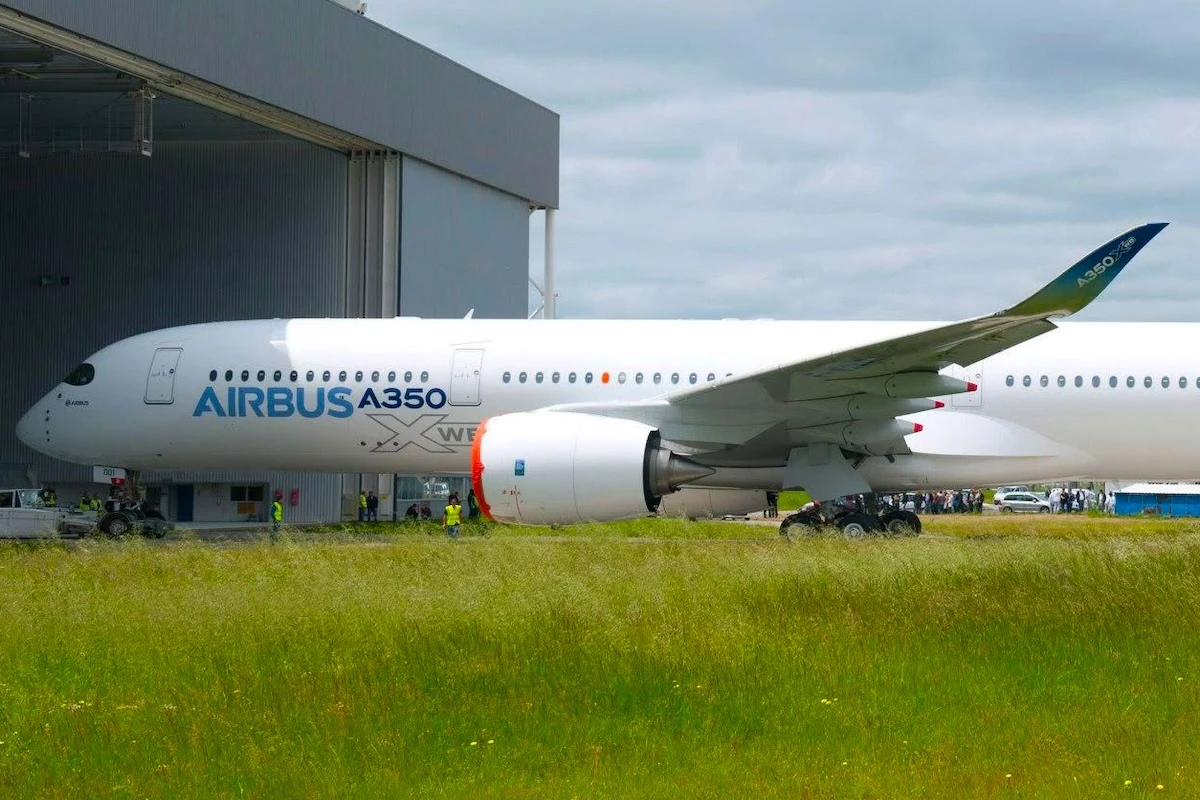
The Airbus A350 is Airbus's flagship long-range, twin-engine widebody, built as Europe's clean-sheet answer to the Boeing 787 and 777 in the modern long-haul market. Constructed largely from carbon-fibre-reinforced composites, the A350 is the first Airbus aircraft largely made of carbon-fibre-reinforced polymers. Dj's Aviation covers the Airbus A350's specifications, fleet status, safety history and current operators below.
Orders Nearly 1,600 (across the family)
In Service Since January 2015 (Qatar Airways launch, A350-900)
Cruise M 0.85
Range up to ~9,700 nmi (18,000 km) on the A350-900ULR
Latest NewsAirbus A350

Airbus A350 Quick Facts
ManufacturerAirbus
TypeWide-body, twin-engine widebody
First flight14 June 2013
StatusIn active since 2015
Dimensions (A350-900)L 66.8 m (219.16 ft)
W 64.75 m (212.43 ft)
H ~17.05 m (~55.94 ft)
W 64.75 m (212.43 ft)
H ~17.05 m (~55.94 ft)
MTOW~283,000 kg (~617,000 lb)
308,000–322,000 kg (~679,000–710,000 lb)
308,000–322,000 kg (~679,000–710,000 lb)
Cruise / RangeM 0.85
8,700 nmi
8,700 nmi
Ceiling~ 13,106 m (~43,000 ft)
EnginesRolls-Royce Trent XWB
Trent XWB-84
Trent XWB-97
Trent XWB-84
Trent XWB-97
Total ordered (family)~1,600
Customers (Biggest)Singapore Airlines
Turkish Airlines
Turkish Airlines
First delivery22 December 2014 — Qatar Airways (A350-900)
Variants
Seat Map
Hover or tap a seat for details
Business
Premium Economy
Economy
Exit Row
Galley / Lav / Doors
38Business1-2-1 · 45-in pitch
28Prem Econ2-4-2 · 40-in pitch
214Economy3-3-3 · 32-in pitch
Illustrative layout · rows 13, 22–29, 34–38 and 49–58 are not used. Exact seating varies by operator and cabin fit.
History & Development
The Airbus A350 XWB was launched in 2006, following airlines’ rejection of an earlier Airbus proposal to re-engine the A330 in response to the Boeing 787; Airbus instead developed a clean-sheet, majority-composite widebody intended to render the Boeing 777 obsolete. The A350-900 made its first flight on 14 June 2013, and the first A350-900 entered service with Qatar Airways on 15 January 2015, with the larger A350-1000 following into service with the same launch operator on 24 February 2018.
As of May 2026, Singapore Airlines is the largest A350 operator with 65 aircraft in its fleet, while Turkish Airlines is the largest customer by order book, with 110 aircraft on order. A freighter derivative, the A350F, has had a more complicated path to market: Air Lease Corporation was originally the launch customer at the 2021 Dubai Air Show, but cancelled its order in August 2025; Airbus separately delayed the freighter’s entry into service to 2027 due to supply chain issues with fuselage supplier Spirit Aerosystems. Singapore Airlines and CMA CGM Air Cargo have both been linked to the launch operator role, and in March 2026 Atlas Air placed a firm order for 20 aircraft.
Cabin: Seating & Configuration
The A350 fuselage is built around a 3-3-3 nine-across economy cross-section, wider than the eight-across A330/A340 layout, with select operators flying a denser 3-4-3 ten-across economy configuration. Seating totals vary by airline and variant: the A350-900 typically carries 300 to 350 passengers, while the A350-1000 accommodates 350 to 410 passengers, with high-density operators such as Air Caraïbes reaching around 480 seats on the A350-1000.
Specifications
Dimensions
Performance & Range
Metric
Value
M 0.85
~43,000 ft
up to 9,700 nmi (18,000 km) on the ULR variant
up to 8,700 nmi (16,100 km)
Engines & Fuel
Family Variants
A350-900
The baseline, best-selling member of the family; also offered in regional, classic and ULR weight variants
A350-900ULR
Ultra-long-range version; capable of up to 9,700 nmi (~18,000 km), among the longest-range airliners flying
A350-1000
The largest passenger variant, seating 350–410 in standard configurations
A350-1000ULR
Ultra-long-range variant built for Qantas's Project Sunrise network, with an enlarged rear centre fuel tank; first deliveries anticipated in late 2026
A350F (freighter)
Cargo variant based on the A350-1000 airframe; delayed to a 2027 entry into service, with Atlas Air as its largest confirmed customer (20 firm orders)
In-Seat Amenities & Tech
In-seat amenities vary by operator and cabin refurbishment status. The A350’s Airspace cabin is designed to reduce jet lag through wider seats, high ceilings, and customisable ambient lighting, with HEPA-filtered cabin air renewed every 2–3 minutes. Composite construction also allows a lower effective cabin altitude of around 6,000 feet, versus roughly 8,000 feet on older-generation metal widebodies, reducing the physiological toll of long-haul flights.
Premium cabin standouts include Qatar Airways’ QSuites and first/business suites on carriers such as Japan Airlines and Etihad-comparable products elsewhere in the market. As with any widely-operated type, standards differ markedly between an airline’s oldest and most recently delivered A350s.
Production & Timeline
Airbus assembles the A350 at its Toulouse, France facility, with structural sections manufactured across multiple European sites before final assembly.
Milestone
Date
2006
14 June 2013
22 December 2014
24 February 2018
Delayed to 2027 (from original 2026/2027 target)
Expected 2029–2034
Fleet & Operators
Operator
Role
Notes
Passenger
Largest A350 operator overall, with 65 aircraft, all A350-900 (also has the A350-900ULR ultra-long range variant used for Singapore to New York)
Passenger
Largest A350-1000 operator, with 42 ordered and 29 delivered; also flies the A350-900
Passenger
Operates both A350-900 and A350-1000; A350-1000 flown extensively on long-haul North America routes
Passenger
Flies the A350-1000 in a high-capacity configuration with smaller premium cabins relative to its other fleet types
Passenger
A350-1000 is the airline's flagship aircraft, with more seats and more premium seats than any other type in its fleet
Passenger
Operates the A350-900 and A350-1000; an A350-900 was involved in the January 2024 Haneda runway collision
Passenger
Recently introduced the A350-900 on select Asia routes (e.g. Taipei–Dubai) in 2026, alongside its existing A380 fleet
Passenger
A350-1000ULR on order for Project Sunrise ultra-long-haul flights; first deliveries anticipated late 2026 A350-1000 also on order to replace A380s from the 2030s
Passenger
Operates some of the densest A350-1000 configurations worldwide, seating up to 480 in a ten-abreast economy layout
Passenger
Expanding A350-1000 fleet, with 18 aircraft on order to support growth into North America, Europe and Oceania
Cargo
Launch customer for the A350F freighter with 20 firm orders; deliveries expected 2029–2034
Fleet figures vary by month as airlines take delivery of new aircraft or retire older fleet; figures above reflect general fleet composition as of mid-2026 rather than exact real-time counts.
Incidents & Safety
On 2 January 2024, a runway collision occurred at Tokyo Haneda Airport between Japan Airlines Flight 516, an Airbus A350, and a Japan Coast Guard De Havilland Canada Dash 8. Notable details:
This was the first hull loss for the A350 and for the broader generation of carbon-fibre composite widebodies from Airbus and Boeing; the evacuation of all 379 people aboard the A350 (all of whom survived) has since been studied as a benchmark for cabin crew performance.
Beyond this event, no A350 passengers or crew have died in commercial service, and the type continues to be positioned by Airbus and operators as one of the most technologically advanced and efficient widebodies flying.
Follow Dj’s Aviation for the latest all latest update aviation news
Related News
Aircraft News
Latest Airlines News
Carrier strategy, fleet moves & financial updates
Aircraft News
Latest Aircraft News
Programmes, retrofits & next-gen narrowbodies
Route News
Latest Route Updates
New launches, cuts & network shifts
Freight Orders & Delivery
Latest Freight Orders & Delivery News
Cargo conversions, orders & deliveries