

Airbus and Boeing will compete for a new order from a rebuilding customer.
South African Airways is expected to move forward with Request for Proposals for what it describes as a significant number of new narrowbody and widebody aircraft before the end of the year.
Reporting comes from Aviation Week, which spoke with the airline’s CEO, Tebogo Tsimane, at the African Airlines Association annual meeting. Here, greater clarity was provided on the state of the African aviation sector and what’s next for these airlines that call the region home.
While no details were provided on the direction South African Airways would take with fleet acquisition efforts from Airbus and Boeing, its fleet currently consists of 20 planes, 19 of which are listed as active as of 8 December 2025.
As part of the fleet, the company has commitments for 14 Airbus A320s, all A320-200s averaging 12.5 years of age, followed by two Airbus A330-300s, two A340-300s, and, lastly, two Boeing 737s.
However, once upon a time, the carrier had the Airbus A350 to its name, which was purchased as a critical aircraft to evolve the airline’s operations at the time, but one endeavour that did not pan out as expected.
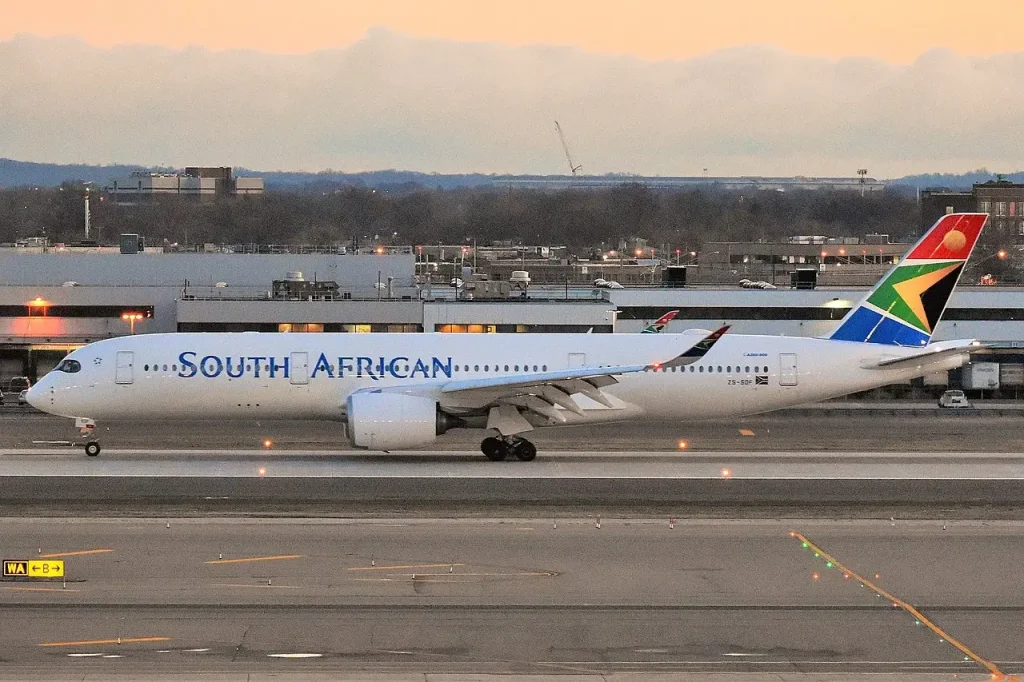
All four of the airline’s Airbus A350s were delivered between October and November of 2019, registered as ZS-SDC, ZS-SDD, ZS-SDE, and ZS-SDF. All aircraft then exited the fleet in the first three to four months of 2020, at the height of the COVID-19 pandemic.
South African Airways has been through a lot: the airline almost entirely collapsed due to bankruptcy. The last four years have been marked by restructuring and slow growth, but now there’s a firm belief that capacity can begin to grow. That plan, if anything, is starting to accelerate as well.
Next year will see the company move ahead with future aircraft acquisitions on lease, with the hope of introducing more A320 and A330 aircraft; these, which have been delayed, are still expected to benefit the carrier’s codeshare and connectivity from Johannesburg and even Cape Town.
However, while the leasing market offers a fantastic platform to secure more immediate capacity, it’s not a permanent solution; it’s an opportunity to bridge the gap in the meantime.
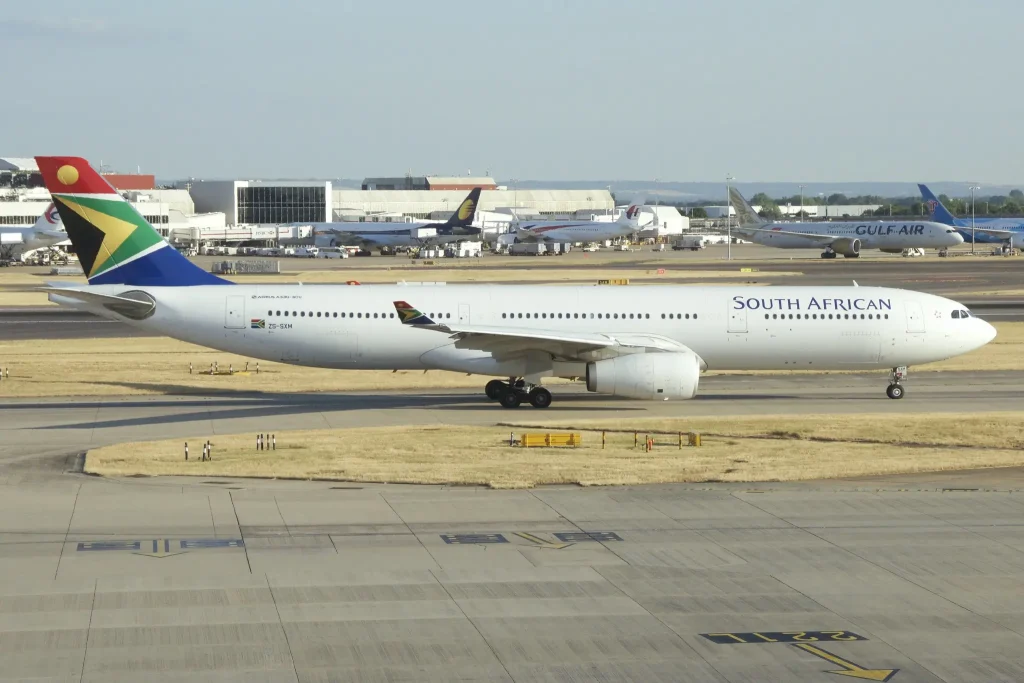
Deep down, the airline is studying a fleet renewal process, with these requests for proposals being put forward to plane makers to gauge what aircraft, deals, delivery windows, and such are available for planes that would truly elevate the business, whether from Airbus or Boeing.
South African Airways has ambitions to increase its international flying in the medium term dramatically, and with this in mind, it will need aircraft, especially widebodies, to enable the expansion. What is critical is that expansion is conducted adequately, with hiccups avoided financially, to avoid setting the carrier back after such lengthy restructuring.
The Race For Airbus & Boeing Aircraft
As South African Airways notes, the purchase of new planes is critical to growth. While the leasing market is viewed as a fantastic solution, it is, in fact, a temporary solution to move ahead with restructuring efforts.
With the requirement for new planes comes additional pressure in commercial aircraft programs, as many airlines have felt the same, emerging from the pandemic and purchasing planes in quite significant numbers.

As manufacturers such as Airbus and Boeing continue to battle supply chain troubles, and in the latter’s case, certification woes on aircraft, deliveries are delayed. Still, beyond that, available delivery slots are seen as scarce.
With not all airlines in a position to make commitments for plans so far in advance, these airlines have, of late, found themselves falling behind more established competitors, unable to source new planes until the 2030s.
The leasing market, therefore, provides the only option. Even here, lessors are facing additional pressure to meet customer requirements and are racing to grow their backlogs, creating bottlenecks across the industry.
What planmakers need to achieve is sustained stability across their production floors and, critically, with suppliers, to safely begin moving ahead with increased production rates across key programs, which will go a long way toward clearing the substantial backlogs seen.

ABOUT THE AUTHOR
Daniel Fowkes is a Melbourne-based aviation analyst and journalist with over a decade of industry experience. As founder of Dj’s Aviation, he delivers trusted analysis on aircraft, airline strategy and global aviation trends for djsaviation.net
Related Articles



Stay Informed
Get the latest aviation news, analysis and route updates delivered to your inbox.
We respect your privacy. Unsubscribe at any time.
Enjoyed this story?
Make us your go-to for aviation news
Add us as a preferred source on Google and see our latest stories first in Top Stories.
Add Us On Your News Feed