

Airbus could be part of a new sizeable order with the high-capacity A350-1000 placed front and centre.
Under Vision 2035, outlined by the newly formed Gatisheel Loktantrik Party and flagged by the Kathmandu Post, the aviation industry, among other sectors, will undergo a shakeup.
Backed by a founder who played a substantial role in creating Buddha Air and building this company from the ground up, the desire to continue improving this sector remains.
Birendra Bahadur Basnet is setting his sights on Vision 2035, which aims to create three million high-paying jobs and attract five million tourists, hoping this will address long-standing concerns across the region.
From an aviation standpoint, one of Basnet’s key focuses moving forward is to improve Nepal Airlines, which is described not only as corrupt but also facing significant debt, making it unsustainable.
Overhauling this business is viewed as a substantial task; however, the belief is that it can still take place, and the A350-1000 is envisioned as the perfect aircraft to drive especially high-capacity international expansion.

For this policy to work, the five million tourists need better connectivity options, which equates to about five new planes every year. This follows a thorough business study to determine the most feasible strategy moving forward.
Under their plan, Nepal Airlines would receive five planes each year, bringing its fleet to 50 aircraft, which is quite the increase from what is currently operational.
The A350-1000 Would Mark A New Era
The A350-1000 would redefine Nepal Airlines’ operations and, if possible, redefine Nepal itself.
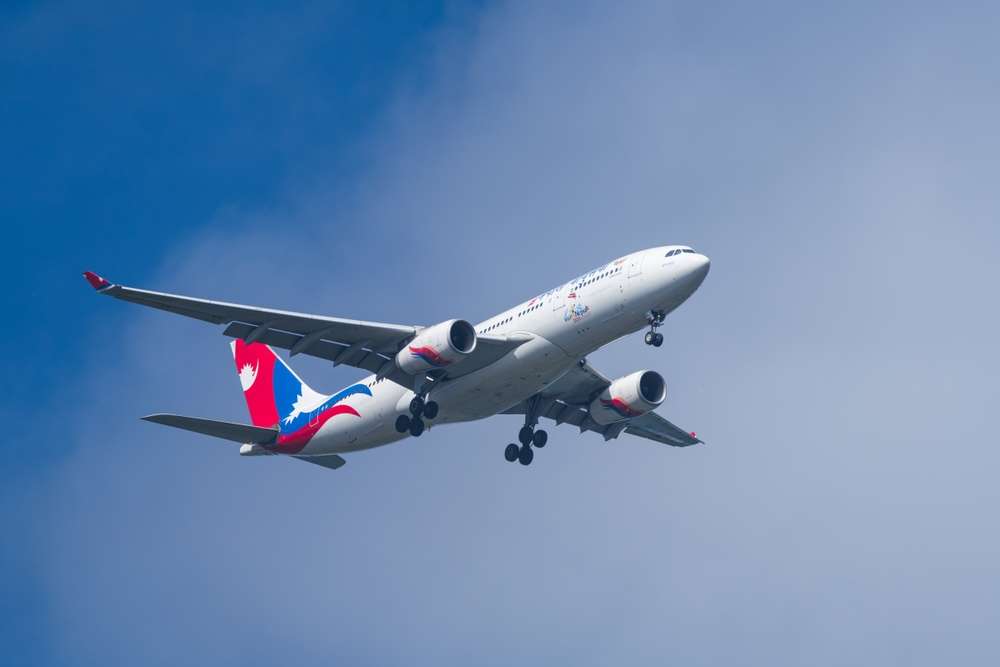
At this stage, Nepal Airlines has only six aircraft in operation, averaging 19.8 years, spread across the A320, A330, and the DHC-6 Twin Otter, the latter being the oldest at 41.3 years.
Bringing in, therefore, an aircraft like the A350-1000 would redefine this business, bringing capacity not seen before and certainly elevating sustainability and efficiency.
However, it’s one thing to dream of bringing in a type under a new business model; there needs to be tangible proof that this endeavour would work out, that finances are in order, and, for a long-winded, struggling business such as Nepal Airlines, there remain many roadblocks too.
With this in mind and understanding it’s no overnight job, the building blocks are in place. The Basnet is hopeful that, unlike more traditional parties, they’ll look to ensure these policies deliver results, and they hope to be known for being economically focused rather than politically opportunistic.
For investments in the fleet to work, the airline would look to use a public-private model in which the government retains a stake, with the majority owned by investors —a model many governments have used with their airlines.
While governments can adequately support the airline industry, as seen with the likes of Air India, they can also be a burden or lack the capacity to navigate the strenuous requirements of managing a national carrier. Investments open up the opportunity for a party to develop a business to their liking.

ABOUT THE AUTHOR
Daniel Fowkes is a Melbourne-based aviation analyst and journalist with over a decade of industry experience. As founder of Dj’s Aviation, he delivers trusted analysis on aircraft, airline strategy and global aviation trends for djsaviation.net
Related Articles




Stay Informed
Get the latest aviation news, analysis and route updates delivered to your inbox.
We respect your privacy. Unsubscribe at any time.
Enjoyed this story?
Make us your go-to for aviation news
Add us as a preferred source on Google and see our latest stories first in Top Stories.
Add Us On Your News Feed