
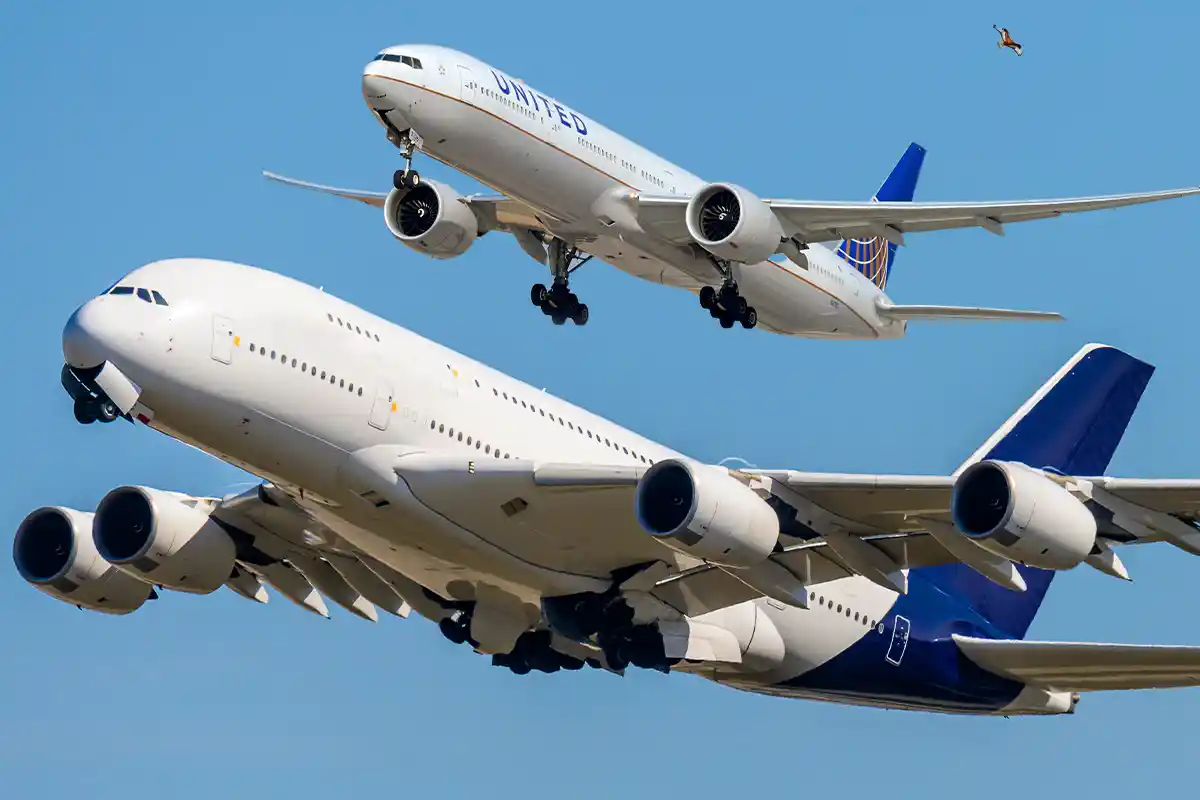
The Boeing 777 vs Airbus A380 debate has followed both aircraft since the A380 entered service in 2007. One is a four-engine double-decker built to move as many people as possible between major hubs. The other is a twin-engine workhorse that airlines can send almost anywhere. Neither approach “won” outright, but understanding how they differ tells you a lot about where commercial aviation is heading.
Key Insights
- The Airbus A380-800 has the largest wingspan, height, and maximum passenger capacity, and it flies roughly 200–300nm farther.
- The Boeing 777-300ER is longer nose-to-tail, burns noticeably less fuel per seat thanks to its twin-engine design, and is still in production in upgraded form as the 777X.
- Airlines increasingly favour the 777-300ER’s economics, which is why Airbus stopped building new A380s in 2021 while Boeing’s 777 line keeps rolling.
What Are the Airbus A380 and the Boeing 777-300ER?
What Is the Airbus A380?
The Airbus A380 is a full-length, double-deck wide-body developed to challenge the Boeing 747’s decades-long grip on the very large aircraft market. It entered commercial service with Singapore Airlines in October 2007. Airbus built 251 examples before ending production in 2021, and the aircraft remains the largest passenger jet ever certified for commercial service.
What Is the Boeing 777-300ER?
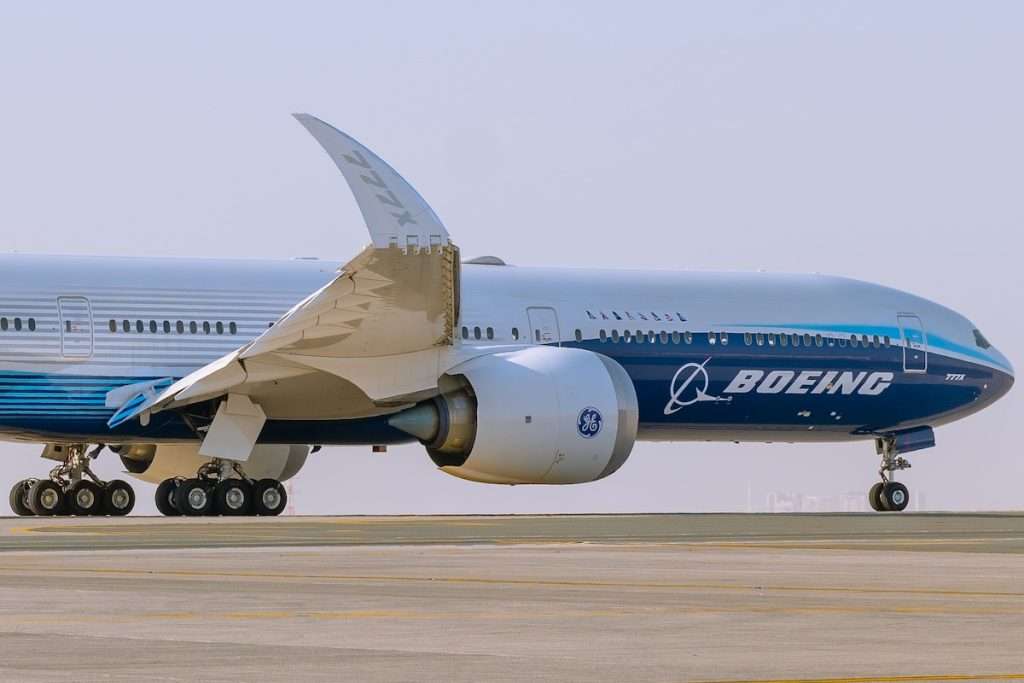
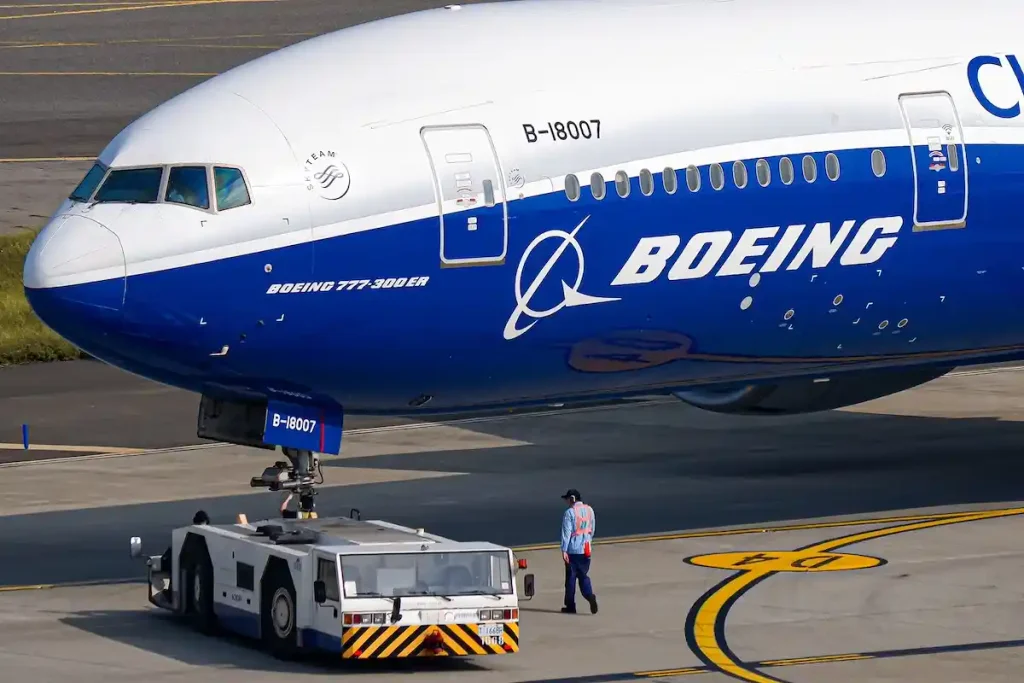
The Boeing 777-300ER (“ER” for Extended Range) is a stretched, heavier-payload version of the original 777-300, combining that model’s extra length with the range of the 777-200ER. It entered service in 2004 and quickly became one of the best-selling wide-body aircraft of all time, with well over a thousand 777 family aircraft delivered. Boeing continues that lineage today through the Boeing 777X programme, headlined by the Boeing 777-9.
What Are the Key Differences Between the Airbus A380 and Boeing 777-300ER?
Beyond the obvious (one has two decks, one has one), the Boeing 777-300ER vs Airbus A380-800 comparison comes down to two design philosophies. Every angle below, from cockpit controls to cabin comfort, ultimately traces back to that same Boeing 777-300ER vs Airbus A380-800 split in engineering priorities. Airbus prioritised maximum capacity between congested hub airports. Boeing prioritised flexibility, letting airlines fly a wide-body on routes that couldn’t justify a superjumbo.
How Do the Flight Control Systems Differ?
Both aircraft use fly-by-wire flight controls, in which electronic signals, rather than mechanical linkages, move the control surfaces. The 777-300ER was actually Boeing’s first fly-by-wire airliner, but it retains a traditional yoke in front of each pilot. The A380 pairs its fly-by-wire system with Airbus’s signature sidestick, mounted to the side of each pilot’s seat rather than in front of them, with computers enforcing flight-envelope protections that limit how far the aircraft can be pushed.
How Do the Fuselage and Engine Designs Differ?
The A380’s fuselage is built around its distinctive full-length upper deck, giving it a total cabin floor area of roughly 550 square metres across both levels. It’s powered by four engines, either the Rolls-Royce Trent 900 or the Engine Alliance GP7200. The 777-300ER, by contrast, uses a single-deck, wider single-aisle-per-side layout and relies on just two engines: the General Electric GE90-115B, which set a Guinness World Record for thrust output during certification testing.
How Do the Airbus A380 and Boeing 777-300ER Compare in Size and Dimensions?
The Airbus A380-800 has a length of around 73m, a wingspan of 79.8m and a height of 24.1m. The Boeing 777-300ER is slightly longer at 73.9m but has a much narrower wingspan of 64.8m and stands 18.6m tall. So while the 777-300ER edges out the A380 on fuselage length, the A380 is larger in almost every other dimension, including wing area, which is nearly double that of the 777-300ER.
Which Aircraft Carries More Passengers, the A380 or the 777-300ER?
This is where the size difference becomes obvious. In a typical three-class configuration, the A380 seats around 525 passengers, against roughly 365–396 for the 777-300ER. At maximum single-class density, the gap widens further. The A380 is certified for up to 853 passengers, while the 777-300ER tops out around 550. In practice, airlines rarely fly either aircraft at those extremes, but the A380 will always carry meaningfully more people on the same route.
How Far Can the Airbus A380 and Boeing 777-300ER Fly?
Range is one area where the aircraft are closer than their size difference suggests. The A380 has a maximum range of around 15,000km (8,100nm), while the 777-300ER can fly approximately 14,600km (7,880nm).
Both comfortably cover true ultra-long-haul sectors, from Dubai to Los Angeles or Singapore to London. The A380’s slight edge rarely decides route planning. Payload, airport slots and demand matter far more.
Which Aircraft Is More Fuel-Efficient, the A380 or the 777-300ER?
Here, the twin-engine design tips the balance firmly towards Boeing. Four engines and a heavier structure mean the A380 burns substantially more fuel per flight than the 777-300ER, and most of that extra weight comes from the fuel it needs to carry itself over long distances. This is the core reason airlines have gravitated back toward twin-engine wide-bodies since ETOPS regulations made long overwater twin-engine flying routine: two big, efficient engines cost less to run and maintain than four.
How Do the Engine Options Compare?
The A380 was offered with a choice of two engine families, the Rolls-Royce Trent 900 or the Engine Alliance GP7200, a joint venture between GE Aviation and Pratt & Whitney. The 777-300ER, by comparison, is exclusively powered by the General Electric GE90-115B, which develops up to 513 kN (115,300 lbf) of thrust per engine and set a certified thrust record of 127,900 lbf during GE’s testing programme.
Having a single, purpose-built engine simplified maintenance planning for 777-300ER operators in a way the A380’s dual-source engine programme never quite matched.
Which Aircraft Is More Comfortable for Passengers?
Comfort depends on the airline’s cabin configuration rather than the airframe alone, but each aircraft has structural advantages. The A380’s upper deck is famously quiet, since it sits well forward of the engines and away from the main undercarriage. Airlines, including Emirates and Singapore Airlines, have used the extra deck space for first-class suites, bars and even onboard showers.
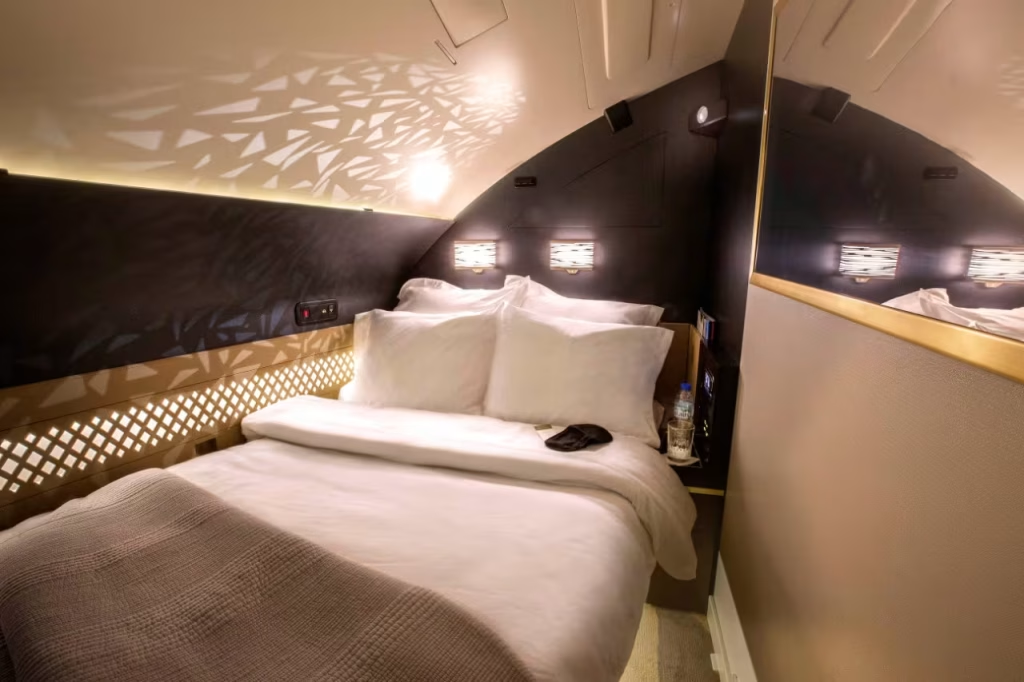
The 777-300ER counters with a wider single-deck cabin and, on carriers like Qatar Airways and Etihad, fully enclosed first-class suites with sliding doors. Neither aircraft is objectively more comfortable. It largely depends on which airline’s premium cabin you’re booking, and both now offer modern in-flight entertainment and Wi-Fi on most long-haul configurations.
How Safe Are the Airbus A380 and Boeing 777-300ER?
Both aircraft have exceptionally strong safety records. The Airbus A380 has never recorded a fatal accident or full hull loss since entering service in 2007, and the fleet has completed well over 500,000 flights. Its most serious incident remains Qantas Flight 32 in November 2010, when an uncontained engine failure over Indonesia damaged the wing and multiple systems; the crew landed safely with no injuries.
The Boeing 777 family, including the 777-300ER, has a hull-loss rate below 0.1 per million departures across more than 20 million flights, a track record built on more than two decades of ETOPS long-haul operations.
How Much Do the Airbus A380 and Boeing 777-300ER Cost to Operate?
Operating costs are where airlines most sharply diverge. The A380 needs four engines maintained, more fuel burnt, and (because production ended in 2021), a shrinking pool of spare parts and specialist infrastructure.
Airlines with large A380 fleets, such as Emirates, benefit from economies of scale that smaller operators like Lufthansa and ANA simply don’t have. The 777-300ER’s twin-engine layout, lower fuel burn and enormous production run (Boeing has built well over 1,700 aircraft across the 777 family) keep unit costs down and spare-parts supply healthy, which is a major reason it remains in front-line service on so many networks even as newer types arrive.
Which Airlines Fly the Airbus A380 and Boeing 777-300ER?
Emirates operates the largest fleet of both aircraft types, alongside a growing number of Airbus A350 aircraft as it diversifies its long-haul fleet. Other A380 operators include Singapore Airlines, Qantas, British Airways, Lufthansa, Qatar Airways and Korean Air.
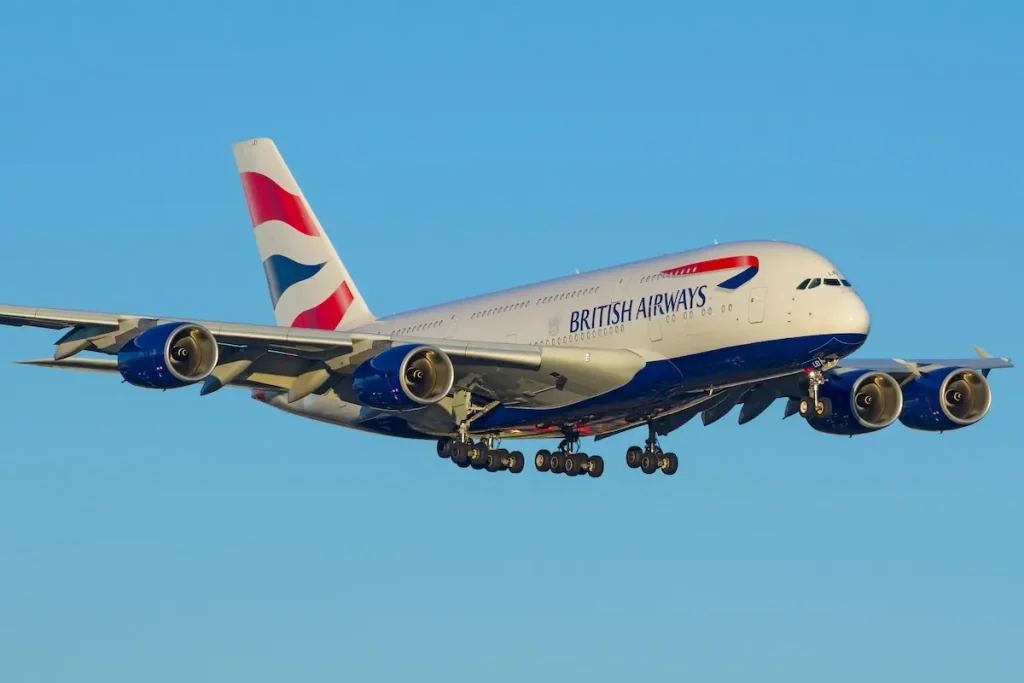
The Boeing 777-300ER has a far broader customer base, flown by carriers including Cathay Pacific, Air France, ANA, Air India, Turkish Airlines and United, among many others. For the latest fleet and delivery updates on either type, our Airbus latest news and Boeing updates sections track announcements as they happen.
Airbus A380 vs Boeing 777-300ER: Full Specification Comparison
| Specification | Airbus A380-800 | Boeing 777-300ER |
| Length | 73.0m | 73.9m |
| Wingspan | 79.8m | 64.8m |
| Height | 24.1m | 18.6m |
| Wing area | 845m² | 452m² |
| Engines | 4 x Rolls-Royce Trent 900 or Engine Alliance GP7200 | 2 x GE90-115B |
| Total thrust | ~1,336kN | ~1,026kN |
| Max takeoff weight | 548,000kg | 351,534kg |
| Typical 3-class capacity | ~525 passengers | ~365 passengers |
| Max certified capacity | 853 passengers | 550 passengers |
| Max range | 15,000km (8,100nm) | 14,600km (7,880nm) |
| Cruise speed | Mach 0.85 | Mach 0.84 |
| Entered service | 2007 | 2004 |
| Production status | Ended 2021 | In production (transitioning to 777X) |
Ultimately, the Boeing 777 vs Airbus A380 comparison isn’t really about which aircraft is “better”; it’s about which job needs doing. The A380 remains unmatched for moving large numbers of passengers through capacity-constrained hub airports, while the 777-300ER’s efficiency and flexibility help explain why Boeing’s twinjet has outlasted Airbus’s superjumbo in production.
As the 777X and A350 take over the next generation of long-haul flying, both aircraft will keep flying premium routes for years yet. For ongoing aviation updates on how airlines are managing their A380 and Boeing 777-300ER fleets, keep checking back as fleet and route news develops.

ABOUT THE AUTHOR
Daniel Fowkes is a Melbourne-based aviation analyst and journalist with over a decade of industry experience. As founder of Dj’s Aviation, he delivers trusted analysis on aircraft, airline strategy and global aviation trends for djsaviation.net
Related Articles




Stay Informed
Get the latest aviation news, analysis and route updates delivered to your inbox.
We respect your privacy. Unsubscribe at any time.
Enjoyed this story?
Make us your go-to for aviation news
Add us as a preferred source on Google and see our latest stories first in Top Stories.
Add Us On Your News Feed