
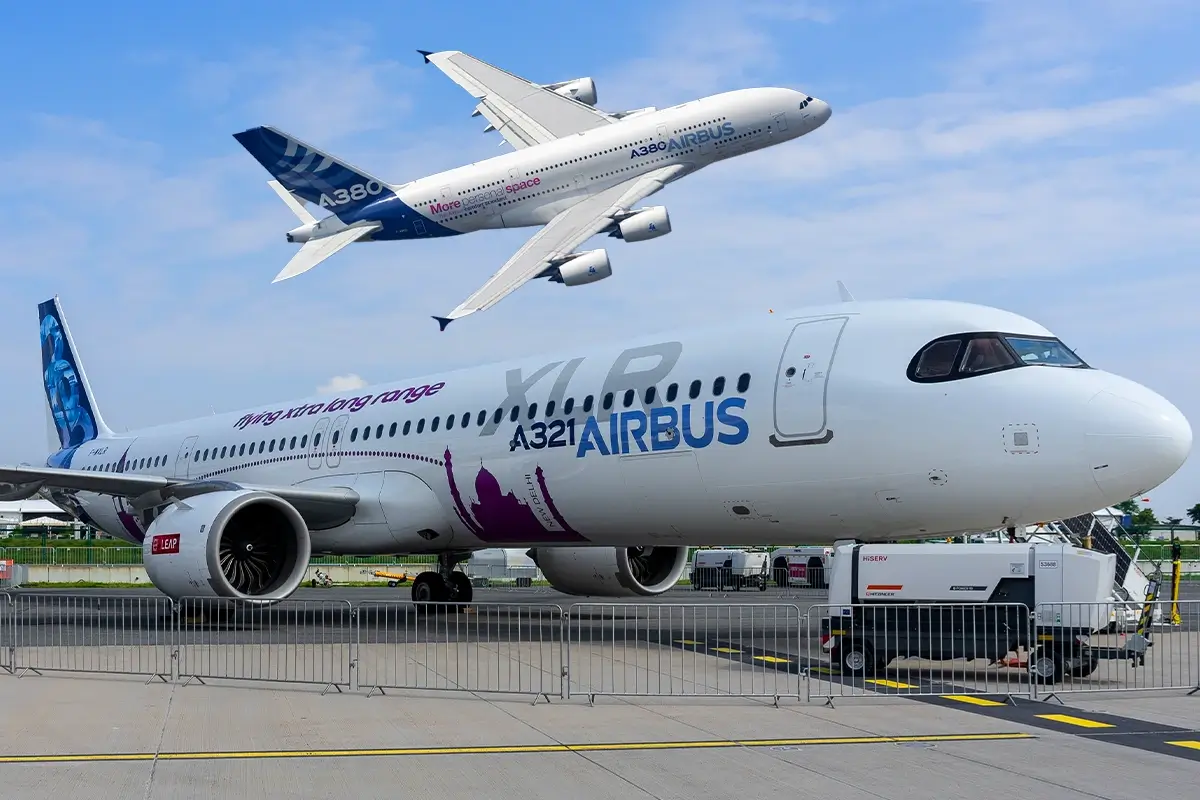
The Airbus A380 and A321XLR represent two distinct eras in aviation strategy. The A380 is a massive, quad-engine superjumbo built for high-density hub-to-hub routing.
In contrast, the A321XLR is a highly efficient, single-aisle twinjet designed to fly long-haul, point-to-point routes that bypass major hubs entirely.
Airbus A380 vs A321XLR: Two Aircraft, Two Eras
The Airbus A380 and Airbus A321XLR belong to two very different eras of the aviation industry, despite their obvious overlap in customer use into the 2020s, with both still in active service.
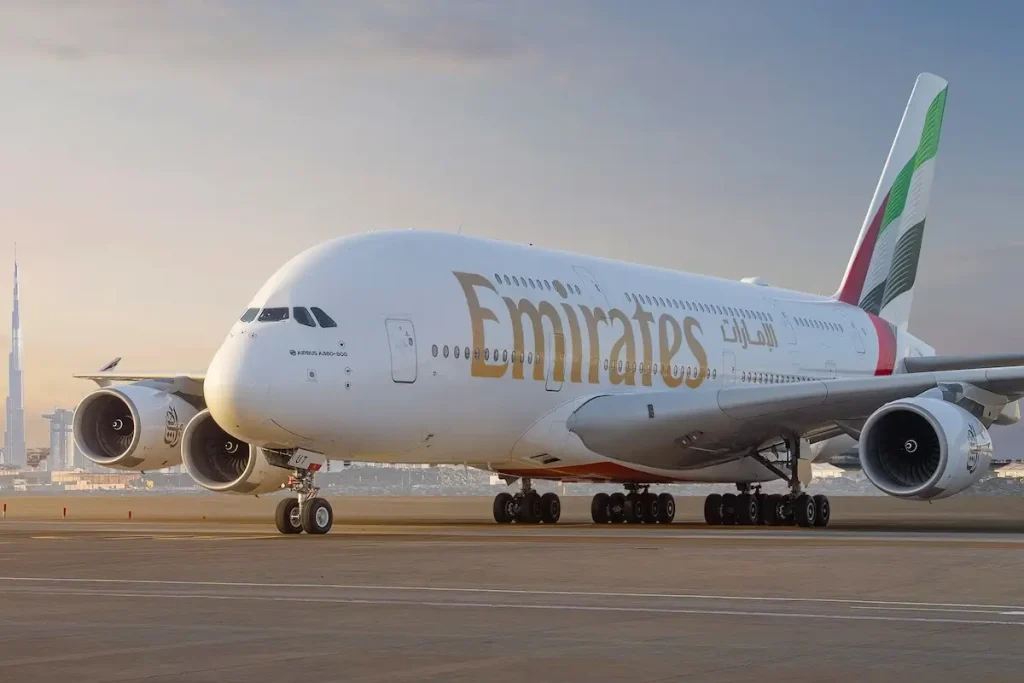
When the Airbus A380 launched, it did so with airlines that were chasing scalability, seeking to fit as many passengers as possible per flight to navigate congestion at some of the world’s busiest hubs, where infrastructure advancements were not keeping pace with record levels of demand.
As a direct consequence, the belief was that an aircraft like the A380 would be able to answer airlines’ calls and ensure that volume on trunk routes could be handled effectively.
However, the A321XLR, launched decades later, responded to the industry shift and the call for flexibility, as more airlines sought a safer plane that would still deliver strong capacity while opening new market opportunities in secondary cities and lowering operating costs.
Nowadays, customers want not mega aircraft capable of carrying 600 passengers, but rather something that will drive operating costs down and enable evolution across the network.
Why the Airbus A380 Defined an Era of Aviation
At its core, the Airbus A380 defined an era in which aviation was built around scale, with hub congestion prevalent. The idea was that larger aircraft could be the cleanest answer to meeting growing global demand.
The aircraft arrived at a time when airlines and airports were grappling with hubs that were only continuing to crowd, and the means to accommodate more passengers but on fewer flights compelled the launch of these superjumbo jets.
The A380 reflected a mindset shared across the industry, viewing premium long-haul markets as central to key airlines’ strategies for pursuing a flagship aircraft. These flagships are capable of carrying not just large numbers of passengers, but especially business and first-class passengers, without compromising economy seats either.
In this sense, the Airbus A380 wasn’t viewed as just any ordinary aircraft; it symbolised a key statement of how airlines expected to connect the world amid ongoing challenges in meeting demand and responding to the slowed development of airport infrastructure.
The A380s Scale Changes The Industry
Its size alone changed expectations as well; the A380 pushed airports to adopt infrastructure to accommodate the aircraft, including changes to gates, boarding procedures, and taxiway planning. The jet, therefore, was positioned with the view that aviation growth would continue to concentrate in a smaller number of megahubs, where some of the industry’s biggest airlines would have a clear advantage.

The Airbus A380 ultimately captured a period, arguably even after the peak of an industry that prioritises the defined hub-and-spoke model over the point-to-point transit that became more popular across the 21st century, as airlines began shifting to aircraft that are effiienct and flexible in nature.
Even though the Airbus A380 defined an era in aviation thanks to its size and hub-to-hub dominance, it proved much harder to sustain than the internal expectations the planemaker had initially outlined.
Airbus A380 Specs, Capacity, and Airlines
The Airbus A380 remains a true supertanker, the world’s largest passenger plane and a scale that is a defining part of its success.
| Specifications | Airbus A380 |
| Aircraft type | A long-range double decker, with four engines. |
| First Flight | 27 April, 2005 |
| Entry Into Service | 2007 |
| Maximum certified capacity | A long-range double-decker, with four engines. |
| Length | 72.7m |
| Wingspan | 79.8m |
| Height | 24.1m |
| Cabin layout | Full length double deck |
| Engines | 4x Rolls-Royce Trent 900 or Engine Alliance GP7200 |
| Maximum range | Full double-deck length |
Airlines Pick The Airbus A380
The airlines that selected the Airbus A380 were typically those with already established long-haul networks, not just dense in their own right but operating through fundamental hub strategies, such as London Heathrow, Dubai International, Doha Hamad or Paris Charles de Guale.
Emirates has long been the largest customer of the aircraft, leveraging its capabilities to drive growth from Dubai as a transit location and end-point destination.
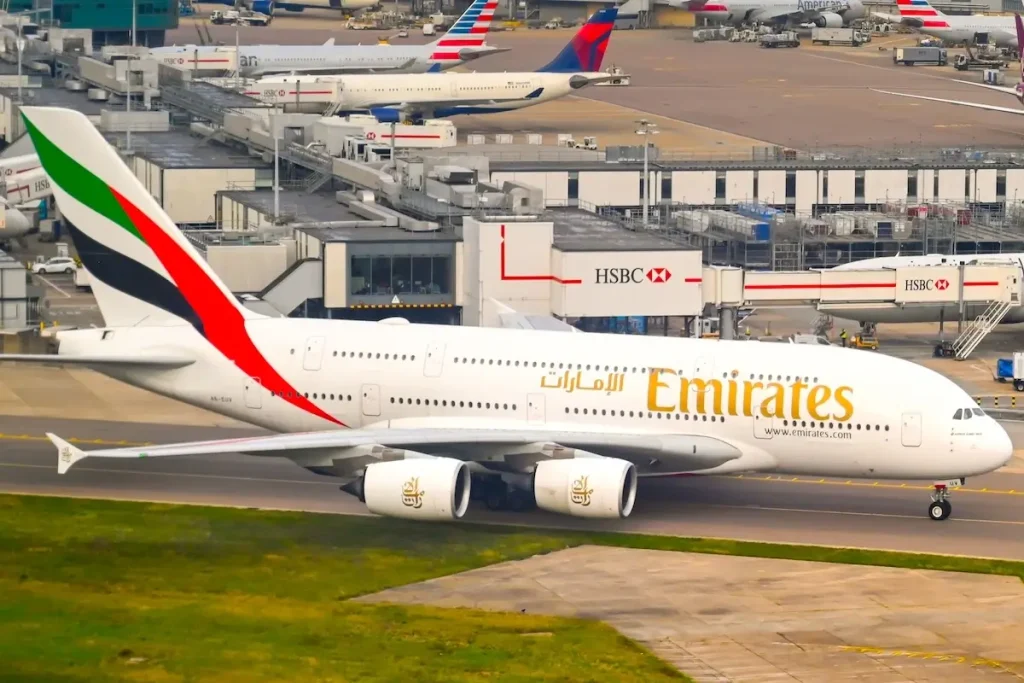
However, other major operators include Singapore Airlines, Qantas, Lufthansa, Air France, British Airways, Korean Air, ANA, China Southern Airlines, Malaysia Airlines, and Asiana Airlines.
Why Airlines Are Retiring the A380
Airlines, however, are looking more towards retiring the Airbus A380 rather than retaining it for the long term, in a market that has changed faster than the aircraft has been around. The superjumbo, initially built for a world of heavy hub-to-hub traffic, now sees airlines increasingly move towards smaller aircraft that can fly more routes with a lower risk of being overbooked, all while achieving greater efficiency.
Economics Hurt The A380
The biggest issues have been economic; the A380 is expensive to operate, not only because it burns more fuel than a modern twin-engine widebody such as the Airbus A350 or Boeing 787, but also because it incurs higher maintenance costs and airport handling charges.
For many airlines, the costs of operating aircraft only break even when they’re flying near full capacity on premium haul routes. Still, once demand softens, the A380 becomes difficult to keep profitable and thus has only ever been available to a select few carriers.
Airlines Want Flexible Aircraft
Fleet flexibility is cited as another critical reason for the downturn in A380 usage, despite a short-term resurgence. Airlines are favouring flexible aircraft that can be deployed across more cities at higher frequencies.
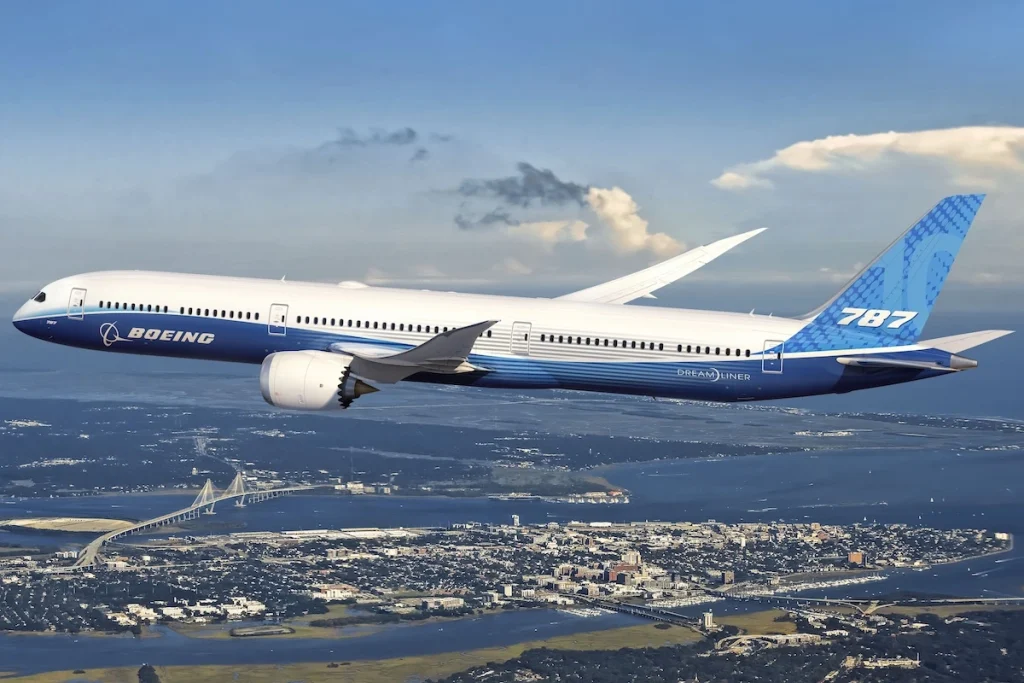
A smaller widebody aircraft like the A350 or 787 can open routes that would never be possible with the A380, where the capacity of the superumbo and its flexibility would not permit viable service, and these smaller planes also allow easier scaling of capacity up or down.
A Superjumbo Just Too Big?
The size of the Airbus A380 is another defining factor, aligned with its flexibility. In a post-pandemic market where airlines are more cautious about overcapacity, airlines have instead of relying on giant aircraft to hubs with overflowing traffic, the point-to-point flying model has become more favoured.
The A380 remains capable of performing well on the very busiest routes. Still, those opportunities have become more limited. As airlines have started preparing for the future, there has been a need to make decisions that have led to the A380’s role dwindling, including at Air France, Malaysia Airlines, Thai Airways, and China Southern.
Airbus A321XLR: Game-Changer for Long Routes
Where the Airbus A380 departs from airlines’ fleets, the Airbus A321XLR steps in as a game-changer, giving airlines in the 21st century what they have long been screaming for: a true long-haul-capable airframe in a single-aisle body.
The aircraft, introduced in 2019, immediately allowed airlines that launched it to open routes that were too thin for a widebody but too long for older narrowbodies, while leveraging the A321neo’s base, which meant solid capacity for airlines that commit to it.

All these defining factors matter because, for Airbus, it meant that, unlike the fight to keep the A380 alive, it wasted time responding to shifts in demand and the requirement to produce aircraft that matched capacity across core routes rather than going with the maximum-size option.
Airlines Love The A321XLR
The A321XLR lets airlines launch long, thin routes without the daily risk of filling a widebody, which, for some operators, can undermine the viability of the route launch, even if demand is present. It could prove to be a valuable addition to the network.
Airlines have also been able to increase frequencies to secondary markets without relying so heavily on major hub connections. It has turned route planning into an even bigger part of the business, and in the late 2020s, it has now truly opened the door to nonstop service between new corridors previously deemed unfeasible.
Customer List Grows For The Single-Aisle
A growing number of airlines have adopted the type, or placed orders for it, including American Airlines, United Airlines, JetBlue, Iberia, Aer Lingus, Wizz Air, IndiGo, Qantas, and others. Each airline has a slightly different use strategy. Still, the common mission is the same: to leverage the aircraft to keep operating costs low, increase capacity, and unlock new business opportunities.
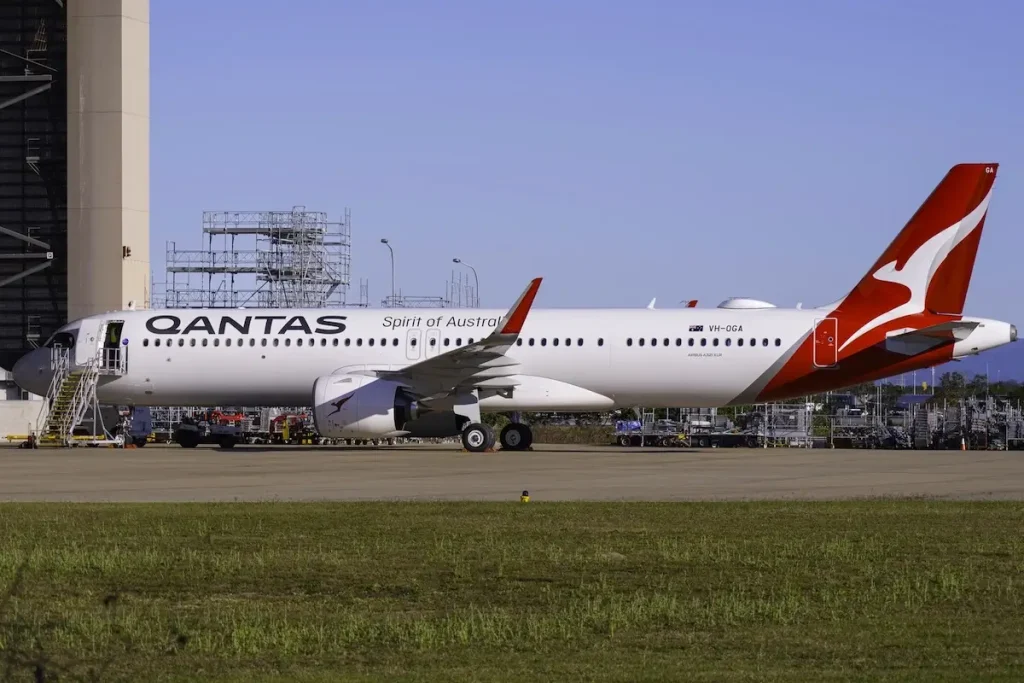
This aircraft will therefore thrive where demand is strong enough to support long-haul service but simply not enough for a widebody to be deployed, whether on transatlantic routes serving secondary airports or in longer-range leisure sectors hotly contested by competing airlines.
What This Means for the Future of Air Travel
What all this means for the future of air travel is that airlines are beginning to say goodbye to an era defined by the likes of the Boeing 747 and, eventually, the Airbus A380, where maximum seat capacity was crucial at the world’s biggest hubs.
Instead, there’s a visible shift towards aircraft like the Airbus A321XLR, a driving force on key fronts, including better fuel efficiency, advanced technology, and a base capacity that allows demand to be met more closely on services that have been underserved for too long.
Technological advancements have been a driving force behind a narrowbody such as the A321XLR being able to cover long-haul routes of up to 4,700 nautical miles. It’s a change from the old assumption that long-haul flights automatically required a larger jet.
Airlines want lower-fuel-burn power seats, which reduce trip costs and make those aircraft easier to fill more consistently. The A321XLR, compared to older widebody jets, gives businesses exactly that: safety and lower risk when opening new routes, with more stable financial exposure.
An Evolution, Not A Replacement
The A321XLR hasn’t been launched to replace the A380; the two are very different aircraft. However, it more symbolises the industry taking a step towards adaptation and airlines looking to a world where they respond to passengers’ requirements, which involves more direct options to cities around the world, not just major hubs.
All the while, the move from Airbus allows for better use of its fleet of BelugaXL jets; these aircraft are fundamental to transporting fuselage parts between factories and enable production rate increases for programs such as the A321neo.
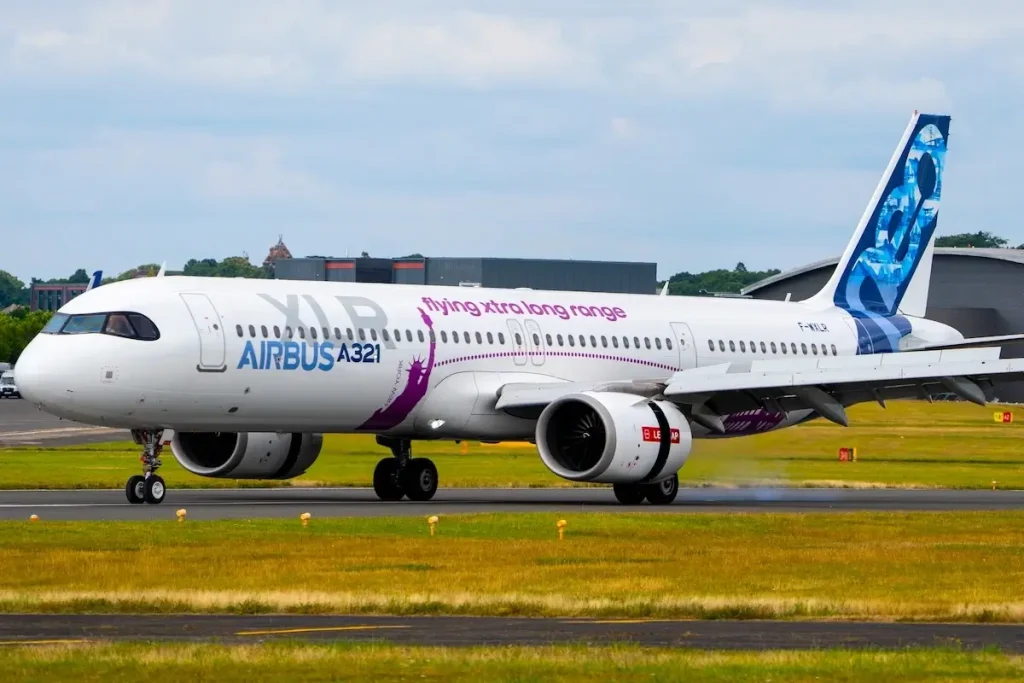
As airlines look to develop their networks, they also want to take less risk to ensure they can maintain service. The A321XLR is part of an era when such business moves are possible. The A380 is from the previous generation and was not as capable in this niche.
Verdict: Will Passengers Reject Long-Haul Narrowbodies?
The Airbus A380 represents the peak of aviation, the world’s largest passenger plane, whereas the A321XLR enters an era that’s firmly defined by a drive for efficient long-range travel at a fraction of the cost.
The verdict thus rests beyond just the business case for airlines, but also on how passengers will respond to real-world use cases. The likelihood remains that the vast majority of passengers will exercise tolerance if the route, price, schedule, and connectivity options make the most sense to them.
For many travellers, the aircraft type remains far less important than whether the flight is nonstop, is convenient and at the right price. A vocal minority strongly prefer widebodies for long-haul flying, and the points for a wider cabin, more spacious galleys and a quieter, less cramped feeling are agreed upon worldwide.
However, for the vast majority of passengers, they do not choose a ticket based on the aircraft family but rather on the journey’s outcome. Airlines know their flights will still be full on these planes, and they’ll achieve the bottom line they forecasted at the time of purchase.
As a result, to strike the perfect balance, airlines need to find the right way to sell the long-haul narrowbody flying experience on the A321XLR to ensure backlash on these services isn’t driven by a poor product with a cramped experience, which is key.
Frequently Asked Questions
Can a single-aisle plane like the A321XLR really fly across the Atlantic?
Yes. The A321XLR has an additional permanent rear center tank, giving it a range of up to 4,700 nautical miles (8,700 km). This allows it to fly from London to Miami or New York to Rome—routes previously reserved for much larger widebody jets.
Why did Airbus stop making the A380?
The A380 was designed for a “hub-and-spoke” model that required filling 500+ seats per flight to be profitable. As engines became more efficient, airlines shifted toward smaller twin-jets (like the A350 and 787) that can fly directly between smaller cities, bypassing the need for massive hubs.
Is the A321XLR as comfortable as a widebody for 8+ hour flights?
This is the biggest debate in aviation today. While Airbus has introduced the “Airspace” cabin with larger bins and better lighting, the 3-3 seating layout of a narrowbody can feel more cramped than the 2-4-2 or 3-3-3 layout of a widebody on long-haul sectors.

ABOUT THE AUTHOR
Daniel Fowkes is a Melbourne-based aviation analyst and journalist with over a decade of industry experience. As founder of Dj’s Aviation, he delivers trusted analysis on aircraft, airline strategy and global aviation trends for djsaviation.net
Related Articles




Stay Informed
Get the latest aviation news, analysis and route updates delivered to your inbox.
We respect your privacy. Unsubscribe at any time.
Enjoyed this story?
Make us your go-to for aviation news
Add us as a preferred source on Google and see our latest stories first in Top Stories.
Add Us On Your News Feed