

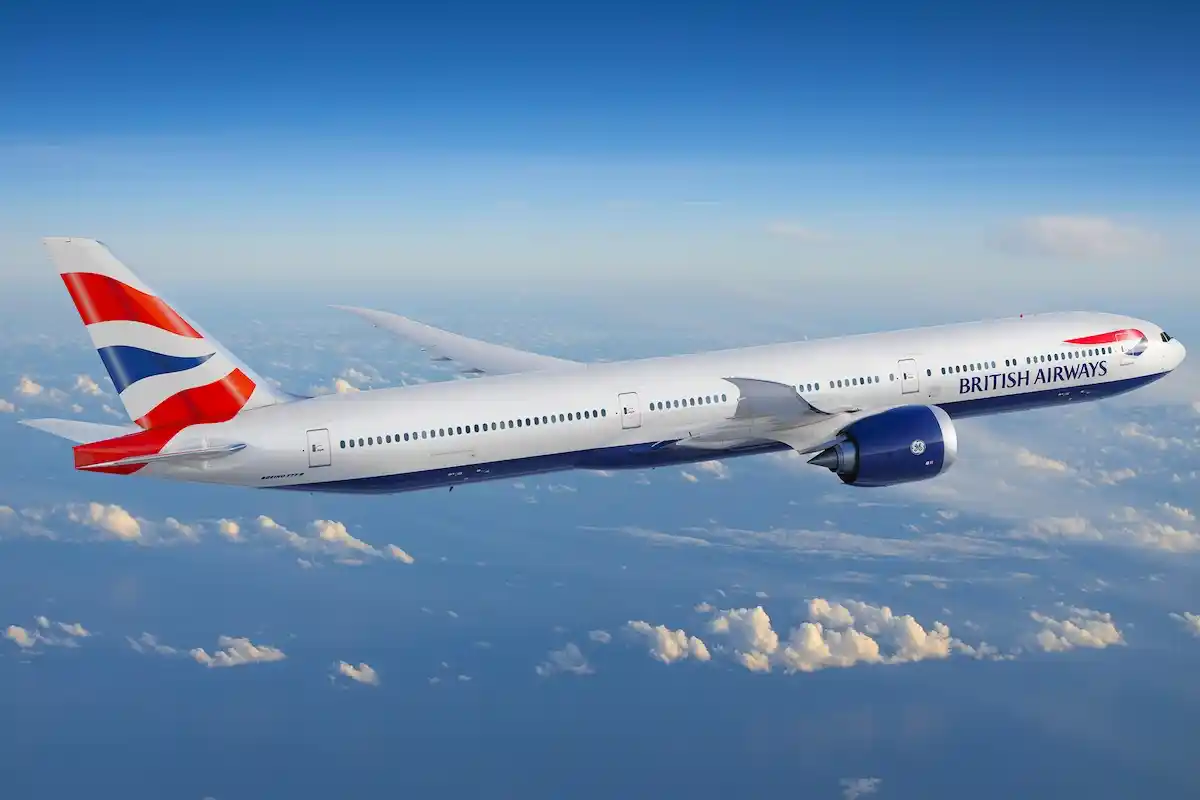
The Boeing 777X is the world’s largest and most fuel-efficient twin-engine commercial aircraft, developed in two variants: the 777-8 and the 777-9.
Launched in November 2013 at the Dubai Airshow, the program has amassed over 600 orders from some of the world’s biggest airlines.
As of early 2026, no 777X has entered commercial service. First delivery to launch customer Lufthansa is now expected in 2027, making the program nearly seven years behind its original schedule.
Here’s a full breakdown of what the 777X is, how the two variants compare, who’s ordered them, and what the delay means for the airlines waiting on them.
What Is The Boeing 777X?
The 777X is Boeing’s next-generation long-haul widebody, designed to succeed the 777-300ER and 777-200LR. It brings together composite wings borrowed from 787 technology, the most powerful commercial jet engines ever built, and a cabin experience closer to what passengers are used to on the Dreamliner.
The program was formally launched at the 2013 Dubai Airshow with 259 orders and commitments worth around $95 billion at list prices. Emirates, Qatar Airways, Etihad, and Lufthansa were among the first customers to sign up.

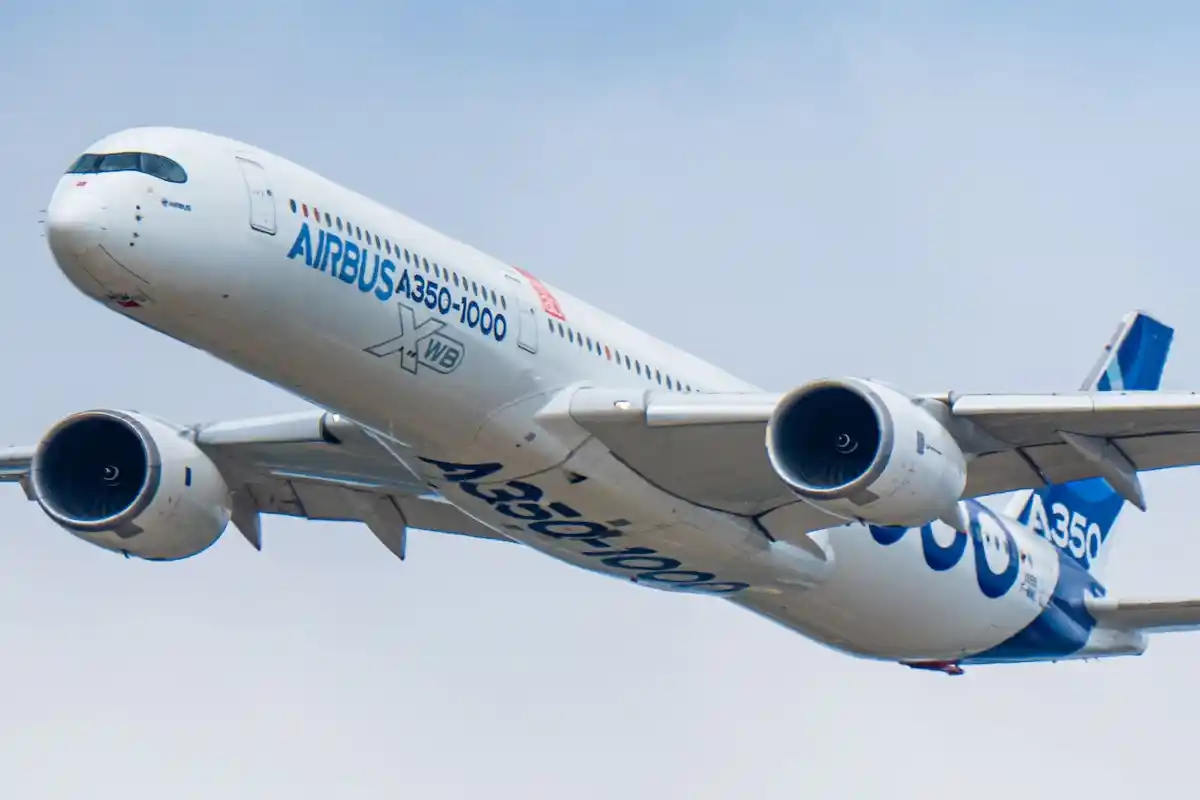
Boeing positioned the 777X as the direct answer to the Airbus A350 XWB, promising better economics, more capacity, and longer range than anything else in the twin-aisle market.
For more on the latest Boeing news and developments, visit Dj’s Aviation.
777-9 vs 777-8: What’s The Difference?
The two variants serve different airline needs. The 777-9 is the bigger of the two, designed for high-volume routes where capacity matters most. The 777-8 is shorter and seats fewer passengers but flies farther, making it well-suited to ultra-long-haul operations.
| Specification | Boeing 777-8 | Boeing 777-9 |
| Typical seating | 395 passengers | 426 passengers |
| Range | 8,745 nm (16,196 km) | 7,285 nm (13,492 km) |
| Length | 69.8 m (229 ft) | 76.7 m (251 ft 9 in) |
| Wingspan (extended) | 71.8 m (235 ft 5 in) | 71.8 m (235 ft 5 in) |
| Max takeoff weight | 365,150 kg (805,000 lb) | 351,550 kg (775,000 lb) |
| Engines | GE9X-87B | GE9X-105B1A |
The 777-9 is the first variant to be certified and delivered. The 777-8 will follow later, with a freighter version also planned.

One of the most talked-about design features on both variants is the folding wingtip system. The 777X has a wingspan of nearly 72 metres when extended, which would push it outside standard airport gate categories. Boeing’s solution is a set of wingtips that fold up hydraulically on the ground, reducing the overall span to fit existing infrastructure. It’s a first for a commercial airliner.
Specifications
Beyond seating and range, the 777X brings meaningful upgrades over its predecessors. The GE9X engines are the largest turbofans ever fitted to a commercial aircraft, with a 134-inch fan diameter on the 777-9 variant. Boeing claims a fuel-efficiency improvement of around 10% over current competitors and 20-30% lower CO2 emissions than previous-generation widebodies.
The cabin takes several cues from the 787. Passengers can expect larger windows, higher ceilings, wider seats, increased cabin pressure equivalent to an altitude of 6,000 feet (compared to 8,000 feet on older jets), and improved humidity levels. Overhead bins are also larger than those found on the 777-300ER.

The composite wing, which required a new $1 billion manufacturing facility at Boeing’s Everett plant in Washington, is another major step forward. It’s the largest carbon-fibre wing ever built for a commercial aircraft.
Airline Orders
As of November 2025, the 777X program had recorded 619 total orders across passenger and freighter variants from 12 customers. The backlog, after Boeing reclassified 33 orders into a risk accounting category, stood at 473 aircraft.
Emirates remains by far the largest customer. In November 2025, the Dubai-based carrier placed an additional order for 65 aircraft, bringing its total commitment to more than 250 777X jets. Qatar Airways holds orders for over 70 units. Lufthansa is the launch customer with a firm order for 20 aircraft.
Other confirmed customers include:
- Cathay Pacific
- Singapore Airlines
- British Airways parent IAG
- Air India
- Korean Air
- China Airlines
- Ethiopian Airlines

Boeing also secured 84 new 777X orders through October 2025, a strong sales year despite the ongoing certification challenges. You can follow the latest airline order news at Dj’s Aviation.
Delivery Timeline
This is where things get complicated. The 777X was originally supposed to enter service in 2020. That didn’t happen.
What followed was a long string of delays: the COVID-19 pandemic, an “uncommanded pitch event” during testing flagged by the FAA in 2021, engine-related issues in 2022 and again in 2024, cracks discovered in engine mounting hardware, a production worker strike, and a door that blew off during a stress test. Each delay pushed the timeline back another year.
Boeing’s CEO Kelly Ortberg confirmed in October 2025 that the first delivery is now expected in 2027, resulting in a $4.9 billion charge in Boeing’s third-quarter results. Total program cost overruns have now exceeded $15 billion.
FAA approved Boeing to begin Phase 3 of the 5-phase Type Inspection Authorisation process in November 2025. In February 2026, Boeing announced plans for the first flight of a production-standard 777X in April 2026, with that aircraft earmarked for Lufthansa.

According to reporting by FlightGlobal, Boeing’s 777X backlog now sits at 473 aircraft after the reclassification of 33 orders — reflecting the uncertainty that years of delays have introduced into some customer relationships, though no major airline has cancelled outright.
Interior
The passenger experience on the 777X is expected to be a significant step up from anything currently flying in the widebody market. Boeing borrowed heavily from the 787 Dreamliner’s interior philosophy, and airlines have invested heavily in new cabin products designed specifically for the type.
Emirates, for instance, plans to debut its new first-class product on the 777X, a suite design currently only available on a handful of its existing 777-300ERs. Singapore Airlines is expected to launch both a new first and business class on the jet.
Qatar Airways will offer a new first class alongside its updated Qsuites business class. Cathay Pacific has developed its Halo Suites first class with the 777X in mind.

The common thread across all these products is more space. The 777X cabin is 40 centimetres wider than the 787 and about 28 centimetres wider than the A350-1000. In the economy, that width allows for a 3-4-3 configuration with wider seats than a comparable A350 row, though specific seat dimensions vary by airline.
Competition Comparison
The 777X’s primary competitor is the Airbus A350, specifically the A350-900 and A350-1000. Here’s how they compare on the key metrics airlines care about:
| Specification | Boeing 777-9 | Airbus A350-1000 | Boeing 777-8 | Airbus A350-900 |
| Typical seating | 426 | 369 | 395 | 314 |
| Range | 7,285 nm | 8,700 nm | 8,745 nm | 8,100 nm |
| Engines | GE9X | Rolls-Royce Trent XWB | GE9X | Rolls-Royce Trent XWB |
| Status | Uncertified | In service | Uncertified | In service |
The critical difference right now is availability. The A350 family is certified and in service with dozens of airlines. The 777X is not. That reality has pushed several carriers to order or expand A350 commitments while waiting for the 777X to arrive, including Lufthansa, which has taken A350s and 787s in the meantime.

That said, the 777-9’s capacity advantage is difficult to replicate. At 426 seats in a typical three-class layout, it sits closer to retired four-engine jets like the 747-400 and A380 than anything else currently in production. For airlines running high-density hub routes, there is simply no direct alternative.

ABOUT THE AUTHOR
Daniel Fowkes is a Melbourne-based aviation analyst and journalist with over a decade of industry experience. As founder of Dj’s Aviation, he delivers trusted analysis on aircraft, airline strategy and global aviation trends for djsaviation.net
Leave a Reply
Related Articles

Stay Informed
Get the latest aviation news, analysis and route updates delivered to your inbox.
We respect your privacy. Unsubscribe at any time.
Enjoyed this story?
Make us your go-to for aviation news
Add us as a preferred source on Google and see our latest stories first in Top Stories.
Add Us On Your News Feed
I think the admin of this web site is in fact working hard
for his site, since here every stuff is quality based data.
This is my first time go to see at here and i am in fact impressed to read everthing at alone place.