

Despite the falling sales of the A380-800, Airbus attempted to revive the program by releasing the A380plus.
However, despite launching the type in 2017, its impact was relatively minimal, with little to no interest from airlines, leading to its failure.
But what drove the A380plus to struggle, why was it launched, what improvements did it have, and was it the right decision for airlines not to invest?
What Was The A380plus?
Airbus formally announced the A380plus in 2017, essentially an upgraded version of the A380-800, which was then in production.
The jet was released to showcase the benefits that updated technologies could provide to airlines seeking an ultra high-capacity airliner for their operations.
Essentially, Airbus wanted to turn around an aircraft that had struggled to attract interest into a plane that would be once more desirable for airlines; this was a challenging undertaking.
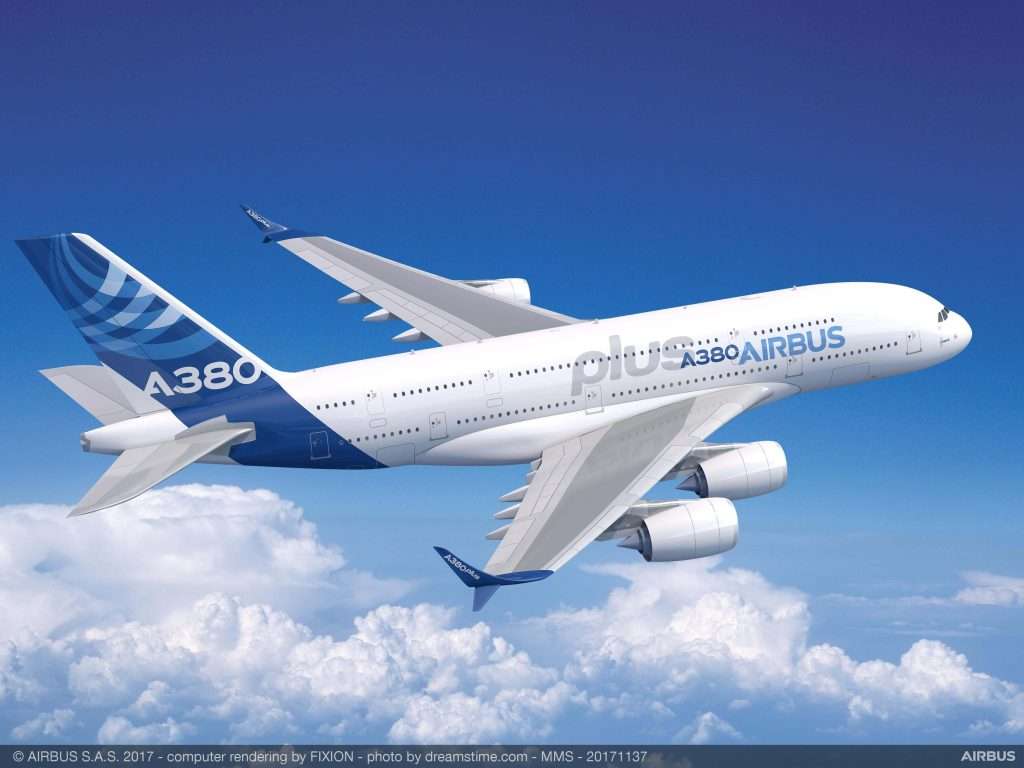
Airbus hoped to bring improvements customers wanted to adopt to the A380-800 through the Plus version. By making these changes, the manufacturer felt it would attract enough interest from airlines to make the jet a firm reality.
Airbus proposed enhancements, including aerodynamic adjustments, increased passenger capacity, and weight reductions.
The most noticeable difference in appearance would be the addition of winglets not previously found on the A380-800. As described by Airbus, the winglets would provide up to 4% fuel burn savings and a 13% cost reduction per seat compared to the A380-800.
A Changing Industry
Unfortunately, while the A380plus brought improvements, the industry’s preference for a particular aircraft type dramatically changed when the aircraft was announced.
More airlines saw types such as the 787 and A350 as better solutions to their long-haul flying, as these planes posed less risk of being filled and could fly profitably.
Furthermore, the planes were cheaper, generally had better economics, and could fly to more locations, ending the need for the hub-and-spoke model.
As a result, airlines now have enhanced options for connectivity between secondary hubs while ensuring fleet commonality. Streamlining fleet renewal efforts was also possible during a challenging economic climate.
These changes meant that the number of planes, such as the A380 and even the 747-8’s, in airlines’ fleets continued to decrease, and new operators were not coming in thick and fast enough to commit to purchase.

Therefore, a plane such as the A380plus could’ve been viewed more as a Hail Mary in an attempt to rekindle interest in the program. This, however, did not work.
Why The A380 Struggled
The A380 is the world’s largest passenger plane, but the fate of the A380plus was also driven by the lack of commercial success enjoyed by this aircraft family during the 2010s.
Despite Airbus releasing its A380plus to the public, the aircraft never had the legs to change airlines’ minds.
Away from struggling commercially, passengers have enjoyed the spacious nature of the aircraft. The positives trickle down to airlines that can utilise the space to redefine their onboard product.
However, it wasn’t a long-term option for many airlines, and the prospective reward didn’t outweigh the risk.
Rising fuel costs, economic conditions, and the challenge of filling the plane across routes meant that the A380-800 wasn’t the commercial success that Airbus may have imagined initially.
So, despite the A380plus with upgrades at its core, the jet was still a double-decker that didn’t address the need to fill the plane.
Not A Worthwhile Upgrade To The A380-800
While Airbus put forward the A380plus, this was all part of the planemaker’s bid to revive a program that was ultimately struggling to sell.
But was there any other option considering the A380plus failed? Analysts argue that the only option was driven by the A380neo, which the leading customer of the A380-800 in Emirates proposed.
Emirates didn’t believe the enhancements proposed on the A380plus were worthwhile enough to commit to the type of express valid interest.
However, Emirates had requested an A380neo, a new engine option to the A380-800, following a similar theme to the A330 program, A320 and A321 types that have enjoyed success through re-engines, among other adjustments.

Emirates has even stated it would invest heavily in the program’s production. However, this is still easier said than done for Airbus, and the rewards are not likely to justify the risk and investment.
To Conclude
Ultimately, Airbus decided against proceeding with the A380plus, and its impact was minimal, leading to the study being deemed a failure.
The A380plus came when the A380-800 struggled to attract sales and cement itself. Driven by this program’s struggles at airlines, bringing interest back would always take a lot.
Moreover, when the largest customer of the Airbus A380, Emirates, had no interest in what the Plus was bringing, it made it hard for the type to impact the industry.
Additionally, Airbus began shifting its priorities and realising that the A380-800s’ presence as an in-production aircraft was beginning to end, and its focus had to move elsewhere.

While an A380plus would’ve extended the life of the world’s largest passenger plane, it became evident that moving forward with other studies that focused on changing how jets were powered would be more beneficial.

ABOUT THE AUTHOR
Daniel Fowkes is a Melbourne-based aviation analyst and journalist with over a decade of industry experience. As founder of Dj’s Aviation, he delivers trusted analysis on aircraft, airline strategy and global aviation trends for djsaviation.net
Leave a Reply
Related Articles




Stay Informed
Get the latest aviation news, analysis and route updates delivered to your inbox.
We respect your privacy. Unsubscribe at any time.
Enjoyed this story?
Make us your go-to for aviation news
Add us as a preferred source on Google and see our latest stories first in Top Stories.
Add Us On Your News Feed
It’s a great failure of technical minds of this century in their inability to find any use for the greatest engineering feat in developing A380 at a equally fabulous cost! The investment should not go waste and appropriate beneficial use must be found quickly, before the A380 goes to the land-fills.