

Emirates is the largest operator of the Airbus A380, with over 100 total orders for the world’s largest passenger plane.
Since introducing this aircraft to its fleet, the quad-engined superjumbo has helped propel Emirates to new heights.
But why did Emirates order the aircraft? What did it see in the type, and how did it plan to use the capacity to its advantage in the long term?
The Emirates Business Model
Emirates’ decision to order the Airbus A380 is first deeply entangled with its business model. Pair that business model with Dubai’s growth over recent decades, and the A380 becomes optimal.
It’s necessary to consider that Emirates operates using a hub-and-spoke model. While more airlines have moved away from this model in the last decade, Emirates has stuck true to it.
The model results in Emirates using Dubai International Airport as its central hub to connect traffic worldwide. This model is also made possible thanks to Dubai’s geographical positioning, which is perfectly positioned between Oceania, Asia, Europe, and North America. Furthermore, it has excellent access to the Middle East and Africa.
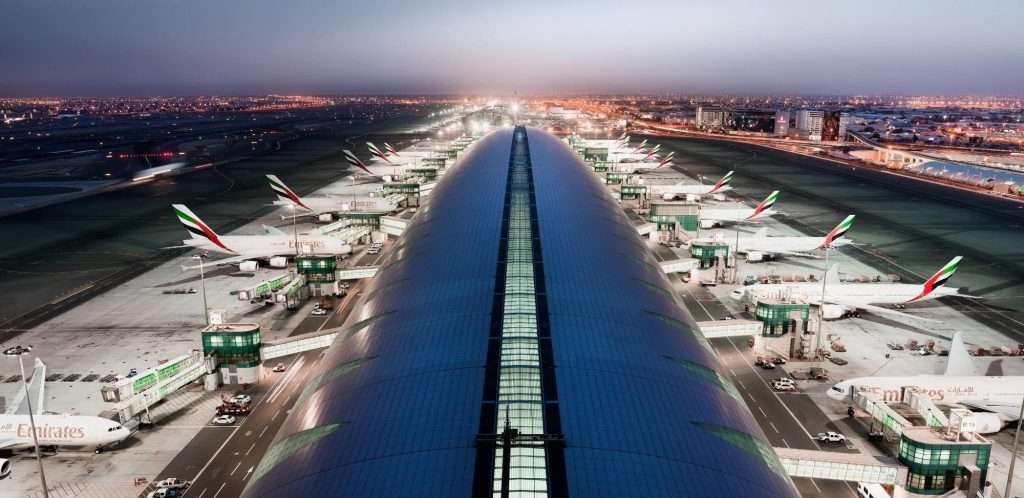
Emirates has capitalised on this growth by establishing a vast network of routes that connect passengers from all corners of the globe through Dubai.
The airline’s strategy focuses on high service levels, which has helped it become one of the world’s leading carriers and compete well in a market with several other leading high-profile airlines.
Flying Into Busy Airports
Airport slots are critical to any airline’s operations. Slots are designated times for takeoffs and landings, and they are a scarce resource at many of the world’s busiest airports.
Airports like London Heathrow, Paris Charles de Gaulle, and New York JFK are heavily constrained in available slots, making it challenging for airlines to increase the number of flights. This is let alone if they want to enter the market.
Emirates, however, flies into these significant hubs and faces the same constraints. To overcome this challenge, the airline needed a solution to add considerable capacity levels without increasing the number of flights.
The Airbus A380 provided the perfect answer. With its ability to carry hundreds of passengers, more than your twin-engine aircraft, Emirates has maximised the number of passengers on a single flight.
The jet allows the airline to operate to routes several times per day and meet the demand while utilising smaller aircraft across its network that don’t require such a big plane.
Branding The Airbus A380
One of the standout features of the Airbus A380 isn’t just its size but Emirates’ view of offering an unparalleled passenger experience.
While some would disagree, Emirates has always aimed to differentiate itself from other operators of the A380. Its sheer size has given it a blank canvas to work with, and it has introduced amenities that make it stand out for travellers.
Emirates’ A380s have first-class private suites, an onboard shower, and an onboard lounge. These features have become iconic, and while other airlines have tried to replicate them in the names of Singapore Airlines and Etihad Airways, Emirates has had one up on them with its fantastic marketing of the aircraft.
For Emirates, the A380 has become more than just an aircraft; it has become a part of the airline, a symbol of its business. Through bold advertisements and marketing campaigns, Emirates has successfully positioned the A380 as something even non-travellers and enthusiasts can recognise.
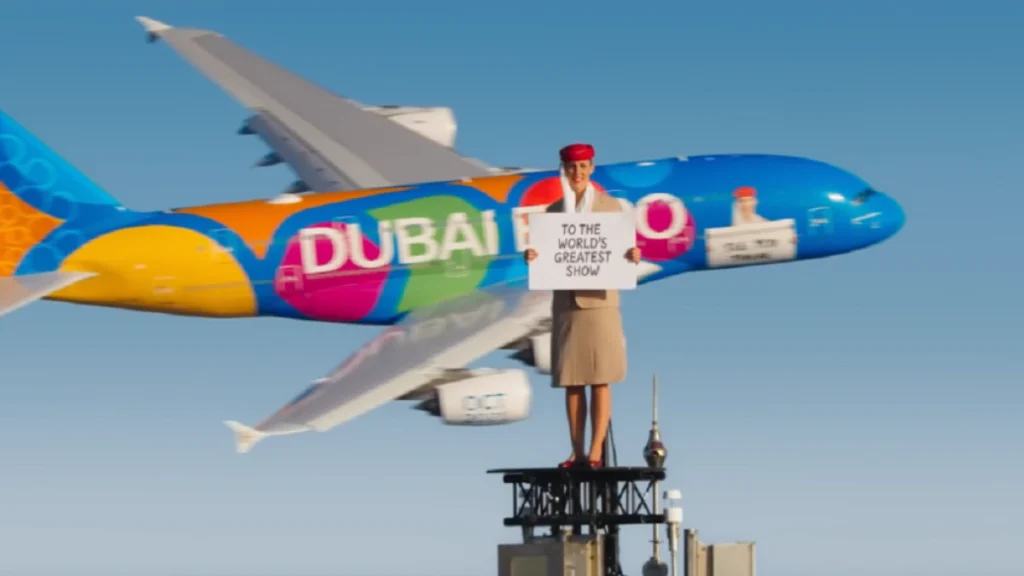
Tim Clark, the President of Emirates, has often highlighted how the A380’s scale allowed the airline to redefine the passenger experience. The capacity and features allowed Emirates to offer previously unimaginable services, which tent as they looked to align the airline’s vision with that of Dubai.
Airbus A380 Challenges & Future
Despite the A380’s many advantages, Emirates now faces a significant challenge. The airline’s business model emphasises maintaining a young and modern fleet, typically retiring older aircraft and replacing them with newer models.
However, with the A380, this approach is complicated by the lack of a definitive replacement and the love for the aircraft.
Production of the A380 has ceased, and no other quad-jet aircraft is in the works. While newer, more efficient long-haul jets like the Boeing 777X are entering the market, they do not match the A380’s capacity.
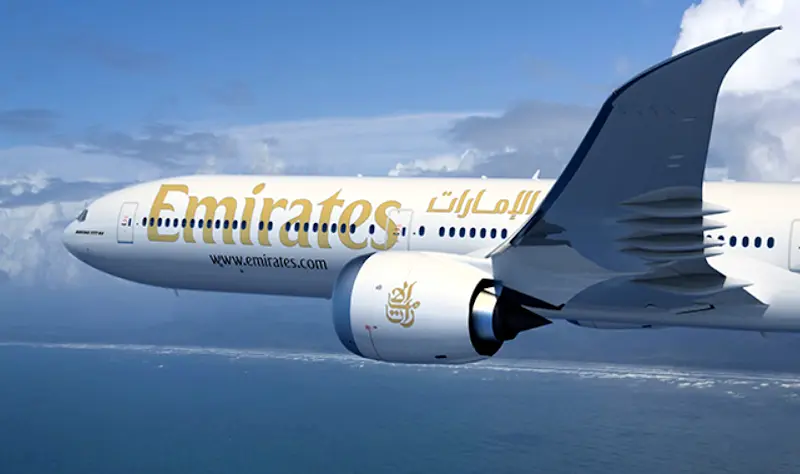
Most airlines find the trade-off between reduced capacity and greater efficiency worthwhile, but Emirates, which has successfully utilised the A380’s capabilities, finds this compromise challenging.
Emirates will look to retain the A380s in their fleet longer than initially planned, potentially through to the early 2040s. The airline’s ability to sustain the A380s will present challenges as maintenance costs rise, but retrofitting programs will be important in maintaining the aircraft’s quality.
Emirates is building massive facilities to support its fleet, and you wouldn’t doubt that the A380 will be kept in working order for a second. However, the aircraft will still be phased out at some point.
To Conclude
Emirates and the Airbus A380 are seen at most airports worldwide, and the airline’s investment proved to be the right one for developing its business.
The scale of the A380 has enabled Emirates to reach new and existing markets while boosting capacity and offering a unique travel experience.
Furthermore, the airline has successfully branded the A380 as more than just an aircraft with advertising campaigns that have worked wonders.
Emirates’ future of the Airbus A380 will be challenging, but their commitment to excellence will make them feel well-positioned to navigate complexities.

ABOUT THE AUTHOR
Daniel Fowkes is a Melbourne-based aviation analyst and journalist with over a decade of industry experience. As founder of Dj’s Aviation, he delivers trusted analysis on aircraft, airline strategy and global aviation trends for djsaviation.net
Leave a Reply
Related Articles




Stay Informed
Get the latest aviation news, analysis and route updates delivered to your inbox.
We respect your privacy. Unsubscribe at any time.
Enjoyed this story?
Make us your go-to for aviation news
Add us as a preferred source on Google and see our latest stories first in Top Stories.
Add Us On Your News Feed
Flew on an Airbus 380 from JFK to Dubai enroute to India.highly impressed!