

Airbus launched the A330neo in 2014 at the Farnborough Airshow, aiming to be a cost-effective solution to the 787’s dominance.
The aircraft launched with two variants, the A330-800 and the A330-900; however, the latter would have the greatest success for the series.
In 2025, the A330-800 remains uninteresting for most airlines, with only a handful of active units and a backlog scarily minimal compared to the larger variant.
As a result, why has the A330-800 become a failure for the European planemaker?
What Is The Airbus A330-800
Advertised as the longest range mid-size widebody on the market and a versatile champion, the A380-800 has not been viewed in this regard by customers.
The A330neo incorporated Rolls Royce Trent 7000 engines, which allows it to keep up with the latest efficiency standards and reduce fuel consumption and CO2 emissions by 25% compared to the previous generation it is replacing.
Other benefits of the A330-800 include double-digit cost savings per seat, which airline customers looking for a midsized widebody with less risk than some larger planes can enjoy.
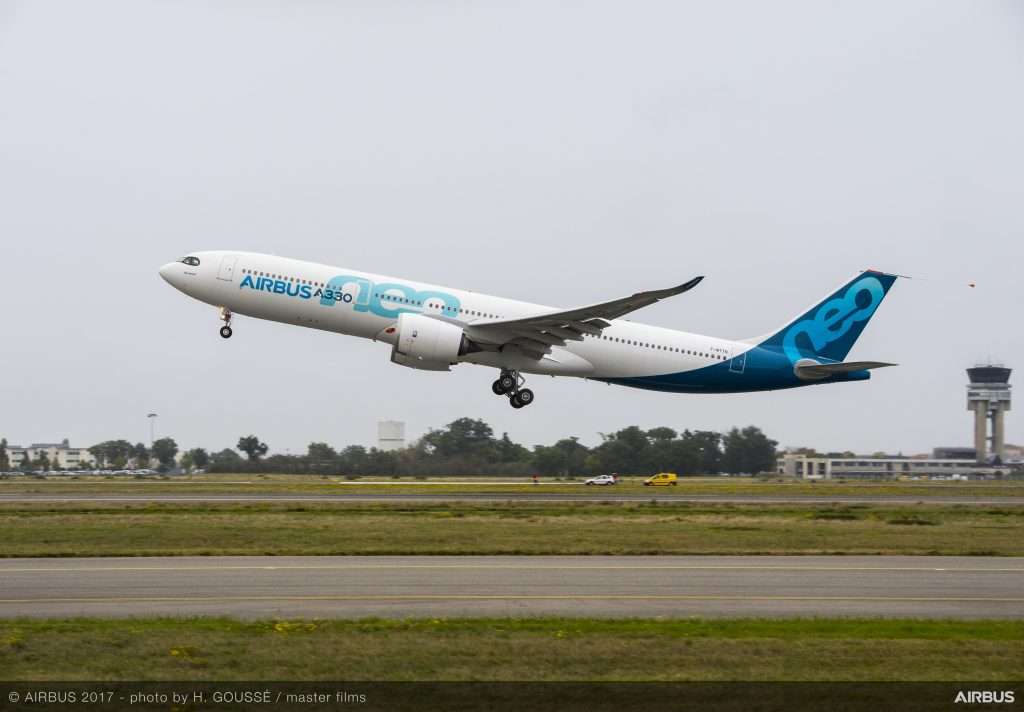
The aircraft has a maximum range of 8,150 nautical miles and a maximum seating capacity of 406; however, those figures aren’t reached based on airlines’ usage requirements.
Airbus says the A330-800’s capacity is more likely to reach 220 to 260 passengers in a typical three-class configuration. The exact figure can depend on how an airline arranges its interior products and deployment.
Other features include a focus on the customers’ experience aboard the aircraft. This is achieved through the new Airspace cabin, which offers more personal space, luggage stowage, and the latest inflight entertainment systems.
Meanwhile, the A330-800 has a length of 58.36 metres, a cabin length of 45 metres, a fuselage width of 5.64 metres and a wingspan (geometric) of 64 metres.
Why The A330neo Launched
Airbus launched the A330neo during a genuine turning point in the industry. The 787 was thriving alongside the launch of the A350, resulting in the shift to twin-engine widebodies being all but confirmed.
Several factors spurred the development of the A330neo. Many believed that Airbus was quickly finding itself in a tough spot at the time, only offering the A350 for long-haul travel with its world’s largest passenger plane, the A380, wildly out of favour.
Airbus needed to find ways to adapt and offer more alternatives in the widebody sector. Generally, the planes it produces must be worth the investment from prospective customers.
Despite being a fantastic plane for the markets it worked in, the A380 certainly wasn’t as flexible as the A350 or A330ceo. Thus, it presented challenges to Airbus and any prospective operator that took the time to consider the jet.
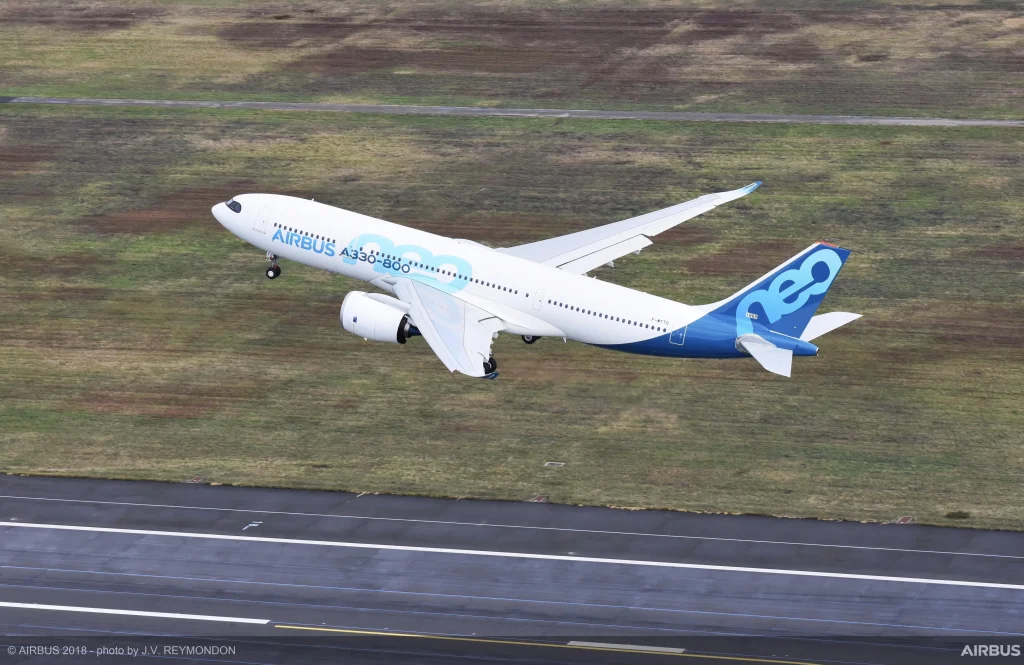
Moreover, while the A350 had launched, this aircraft wasn’t strictly intended to rival the 787. Yes, the A350 and 787 have sometimes been pitted against each other when airlines have considered a widebody order but the A350 is seen as the perfect counter to the 777 and upcoming 777X.
As a result, Airbus moved ahead with a re-engine of the A330ceo, a popular option already in the market, to give airlines more to consider instead of strictly opting for the 787.
The A330neo was seen as a low-cost alternative and a relatively quick plane to bring to market, rather than proceeding with a radical and expensive clean sheet that would’ve slotted into a market not expecting thousands of orders.
Why Is The A330-800 Struggling?
But launched just a decade ago, why has the A330-800 struggled so significantly?
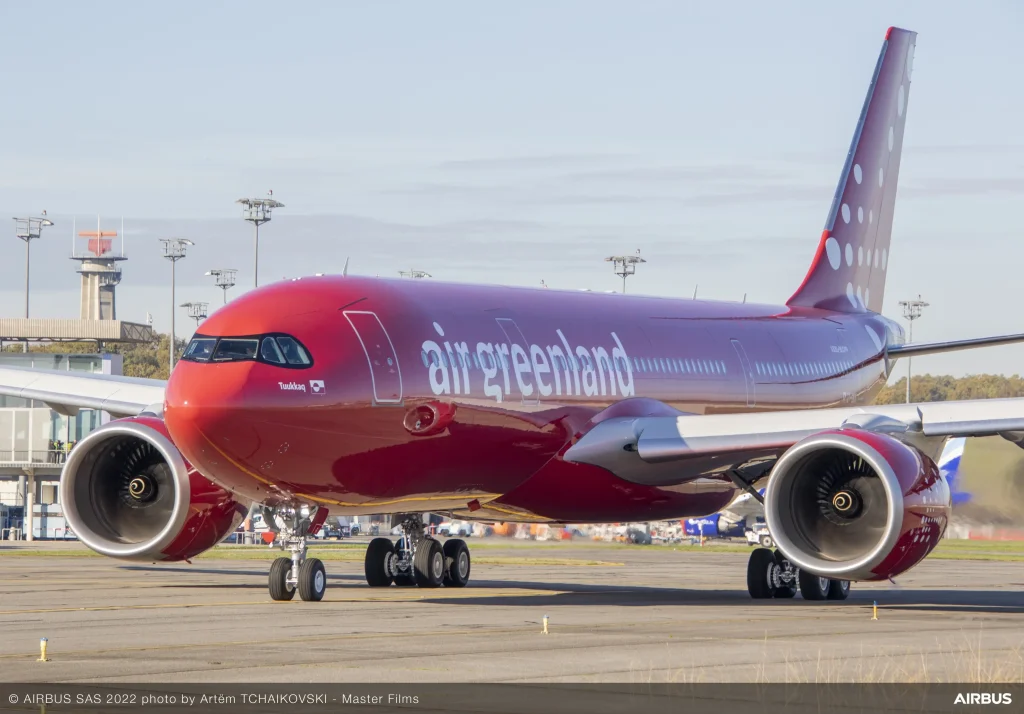
Thus far, only a handful of airlines have ordered the variant, ranging from Garuda Indonesia to Air Greenland, Kuwait Airways, and Uganda Airlines. Moreover, the most significant order is for just four units.
Previously, Hawaiian Airlines placed orders; however, this was driven by a cancellation of the A350-800 model, and this deal was scrapped as the U.S. carrier ultimately opted for the Boeing 787 to serve its future fleet.
During the A330neo’s launch, it was thought that the -900 and -800 models would replace the existing A330ceo models, the -200 and the -300.
However, since the previous generation models launched, industry trends have shifted, and the A330-200, considered modest like the A330-800, has been deemed surplus to most airlines’ requirements. How they’ve replaced the jet has varied, but not through a like-for-like replacement.
For airline customers who have sought to replace their A330ceo with the A330neo, the A330-900 has often been the model selected. This is the higher capacity variant and what is considered by most to be the more optimal manner.
The more optimal nature of the -900 is achieved through factors such as increased capacity, which limits the range over the A330-800, which is a compelling enough benefit that offsets anything the -800 model can provide airlines.
Furthermore, the A330neo came out later than the 787, giving Boeing’s Dreamliner a real chance at the market. Had the roles been reversed, the A330-800 may have stood a better chance.
However, even when the A330neo launched, the A330ceo was not nearing the end of its life for most carriers, whereas the Boeing 787 launched as a clean sheet in a market segment where it aimed to take complete control with something new and groundbreaking.
What Is Next For The A330-800?
Therefore, the multi-billion dollar question on the lips of analysts and Airbus itself is what is next for the A330-800.
In the mid-2020s, the order scenario for the A330-800 doesn’t get any better with time. It is still at all-time lows, with little to no interest in the smallest model of the series.

The A330neo family was never expected to light up from an order standpoint. However, it has enjoyed a positive last few years with considerable commitments from industry leaders. On each occasion, though, the A330-800 was left out of the orders and frankly considered.
With such few purchases and units flying, airlines that would want to commit to the type also have concerns. Thanks to its ecosystem, which has been created with leading international brands, they see the -900 model as a more reliable and safer bet.
There is a natural chance that the A330-800 could secure commitments; however, that pool of interested customers seems non-existent, and those purchasing the plane would likely need it to fill an ever-so-specific niche.

ABOUT THE AUTHOR
Daniel Fowkes is a Melbourne-based aviation analyst and journalist with over a decade of industry experience. As founder of Dj’s Aviation, he delivers trusted analysis on aircraft, airline strategy and global aviation trends for djsaviation.net
Leave a Reply
Related Articles




Stay Informed
Get the latest aviation news, analysis and route updates delivered to your inbox.
We respect your privacy. Unsubscribe at any time.
Enjoyed this story?
Make us your go-to for aviation news
Add us as a preferred source on Google and see our latest stories first in Top Stories.
Add Us On Your News Feed
Air Greenland would have been much better off getting two A321NEO’s or XLR’s instead of that -800.
It’s given them a lot of headaches with cancellations due to the short runway on the newly refurbished Nuuk airport.
There is a natural chance that, the A330-800 will secure a committed and interested customers to purchase the planes.
Therefore, i recommend, that the Air bus A330-800 is better than Boeing 787 and Air bus A330Neo is still getting orders.
The Air bus A330Neo is the best 👌