

The Boeing 757 is an iconic narrowbody aircraft that has achieved substantial commercial success since it entered service.
The series has also earned wide praise from the general flying public, pilots, and industry insiders. The series has made a lasting impact.
But what’s the story of the Boeing 757, and could it be described as the perfect replacement for the ageing 727?
Early Stages of the Boeing 757’s Development
When at the drawing board, Boeing wanted a plane with the same range and capacity as the 727 as a base. However, improvements were needed. Over the years between the two development stages, fuel efficiency and technology improved substantially.
Several concepts were floated, such as the 727-300. If it had moved forward, this new variant would’ve extended the existing 727 series.
After all, for any plane maker or company, it’s easier to build on an existing design than to start from scratch, and in the aviation industry, that means a clean sheet.
For Boeing, though, talk of a 727-300 attracted very little interest, and in the end, the plane maker decided it was best to move ahead with a clean-sheet design.
Introducing The Boeing 7N7, Sort Of
The new plane was codenamed 7N7. Boeing’s 7N7 worked alongside an existing program titled 7X7. This would turn into the 767 series.
It’s safe to say the plane maker was eager to take the next step and produce another plane to replace the 707. Ultimately, Boeing settled on a narrowbody with enhanced capabilities, like the 757.
Boeing did not want its two new aircraft to be so similar that they might compete for each other’s market share. Developing the two jets simultaneously also meant they shared many technologies, so much so that their cockpits were nearly identical, allowing pilots to switch between them quickly.
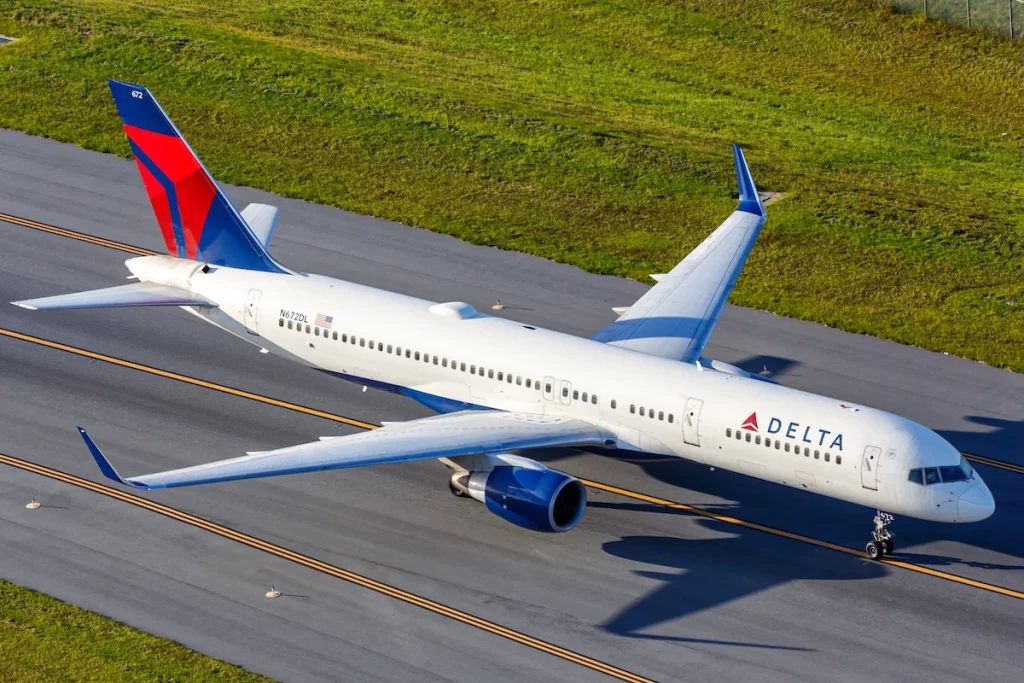
New technologies that would feature on the 7N7, to become the 757, included high-bypass engines, improved aerodynamics, advanced avionics, and a lighter airframe. These advancements also meant the 757 wouldn’t require a flight engineer in the cockpit, unlike the 727.
Perhaps the most critical decision that would set the 757 apart from its predecessor, the 727, was its twin-engine design. Boeing made this choice to improve fuel efficiency.
The other advances mentioned above also let the 757 cruise at a higher altitude than the 727, contributing to an overall 40% improvement in fuel efficiency.
Concept Boeing 757s That Never Released
Although the 757 was designed with only two engines, other early concepts looked quite different from the 757 we know today.
The most noticeable difference is the inclusion of a T-tail on the 757, similar to the 727. It would have looked strange on a plane with two wing-mounted engines. Some 757 models also featured noses identical to the 707, 727, and 737. However, these features were eventually scrapped these features in favour of a new design.
Understanding The Boeing 757 Variants
There were originally planned two 757 variants. The larger 200-seater was the 757-200, and the smaller 150-seater was the 757-100. However, Boeing ultimately abandoned the 757-100 variant and launched the aircraft with only the -200 variant.
The airliner prototype made its maiden flight on February 19th, 1982, and received FAA certification on December 21st of the same year, soon after the first 757 was delivered to the now-defunct Eastern Airlines.
High Profile Customers Flock To The 757
Several European carriers, most notably British Airways, Monarch Airlines, and Air Europe, quickly followed. The most critical customer, however, wouldn’t welcome its first 757 until 1984.
That customer is Delta of the United States, the largest operator of the 757 to this day. Delta initially held off on taking deliveries to have it equipped with the Pratt & Whitney PW2037 engines.

However, despite numerous customers, the 757 seemed to arrive too early in the market. For some, the extra fuel savings didn’t seem substantial enough to warrant replacing their 727s with it.
A Love For The Boeing 757 Grows
Still, the new aircraft made quite a splash with commercial aviation professionals. Some pilots may have described the 757 as a sports car or rocket. This is due to the 757’s light, nimble construction and powerful engines.
Together, these gave it a massive thrust-to-weight ratio, allowing a much shorter takeoff speed and distance, especially compared with the 727.
Despite some initial struggles, the 757’s commercial success would come soon, as fuel prices began climbing again in the late 1980s. The 757 saw commercial success in the air cargo market, with the cargo variant launching in 1985 with an order for 20 aircraft from UPS.
A New Variant Is Released But Fails
After the initial variant’s slow but steady success, Boeing launched the 757-300 in 1996 with Condor Airlines. It was a stretched version of the existing -200, adding 50 passengers.
The -300’s extra-long, narrow fuselage earned the 757 the nickname “flying pencil.” Unfortunately, the -300 ultimately became a commercial failure, especially compared to the -200, with only 55 units ordered, less than 5% of all 757s ever made.
However, the most notable customer of the -300 was the United States government, which ordered four heavily modified airframes to transport government officials.
Saying Goodbye To The Boeing 757
After producing an impressive 1,050 units, Boeing delivered the final 757 to Shanghai Airlines on April 27th 2005, ending a 23-year program.
However, even though it’s been almost two decades since 757 production ended, the airliner has found a new lease on life, squeezing year after year of service out of it.
The 757’s high capacity and long range, combined with its ability to land on smaller runways, make it ideal for several roles. This niche is now vacant for Airbus, with no true replacement for the 757.
Until the next new airliner arrives, Delta and other airlines stubbornly refuse to retire their aging 757s. Delta has committed to flying its 757s until at least the end of the decade, potentially beyond that. While ordering Airbus’ A321neo family, it still believes internally that there’s nothing quite that replaces the 757.
Did It Replace The Boeing 727?
The development of the 757 certainly prompted customers to consider switching from the 727. While some analysts initially said it struggled when released, it eventually found its feet.
Significant advances in technology, along with other operational benefits, made it a worthwhile switch for many customers.
Nowadays, calls for a re-engined 757 continue. However, Boeing shows no signs of pursuing this idea. This indicates how popular the 757 remains today, almost two decades after production ended.

ABOUT THE AUTHOR
Daniel Fowkes is a Melbourne-based aviation analyst and journalist with over a decade of industry experience. As founder of Dj’s Aviation, he delivers trusted analysis on aircraft, airline strategy and global aviation trends for djsaviation.net
Leave a Reply
Related Articles




Stay Informed
Get the latest aviation news, analysis and route updates delivered to your inbox.
We respect your privacy. Unsubscribe at any time.
Enjoyed this story?
Make us your go-to for aviation news
Add us as a preferred source on Google and see our latest stories first in Top Stories.
Add Us On Your News Feed
The 757 was and is an iconic aircraft that is loved all over the world. It was replacement for the 727, the 720 and the 707 in some cases. The reason is its versatility. It could fly all sectors from the short regional hops all the way up to trans-Atlantic. A brilliant aircraft that Boeing have never had foresight to replace, hence the reason for Airbus being so successful with their A321Neo family.
Some airlines had exre fuel tanks fitted underfloor so it could fly transatlantic with slightly reduces passenger load.