
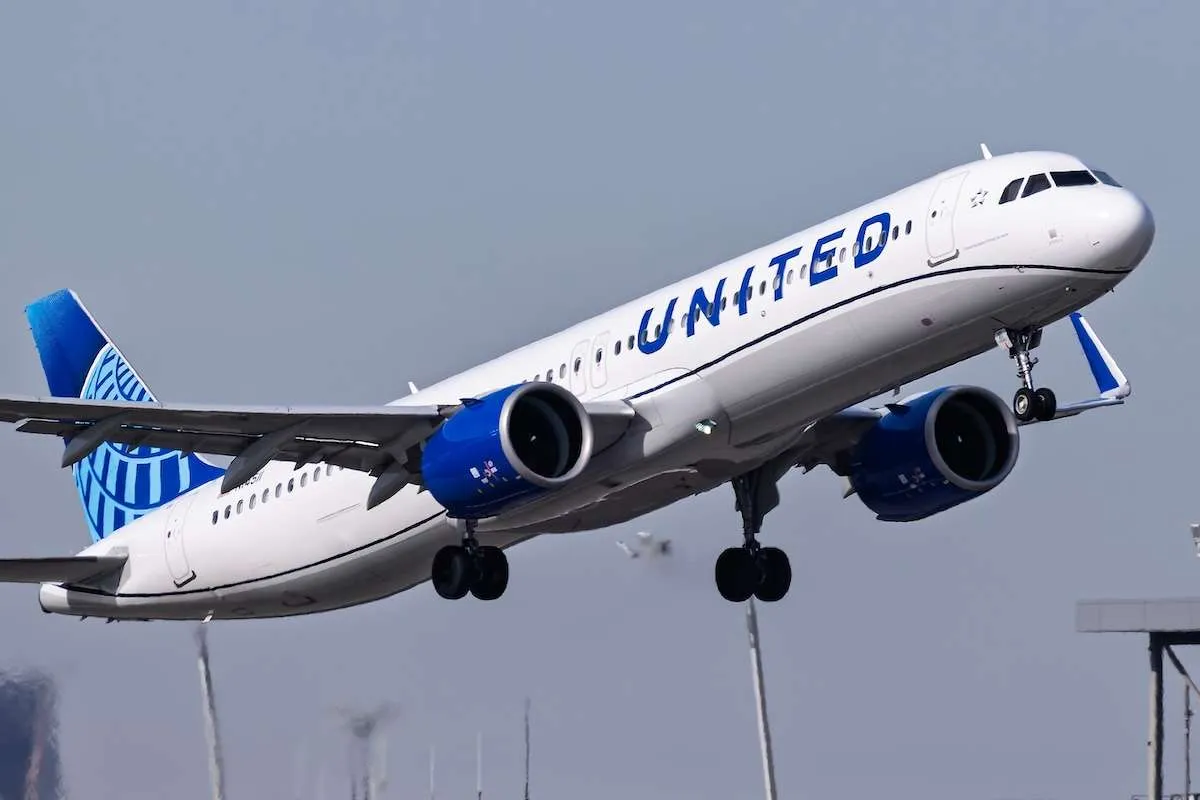
Booking a long United flight and stuck between fare classes? The United Airlines economy vs premium economy decision comes down to three things: seat space, service level and price. Premium Plus, United’s premium economy product, sits in its own semi-private cabin with wider seats, footrests and upgraded dining. Standard economy is the seat everyone pictures when they think “flying coach.”
Here’s exactly what separates them, what it costs, and when the upgrade is worth your money.
Quick Answer
- United Economy: standard seating with a 30–32 inch pitch, 16.3–18.4 inch width, and complimentary snacks or a single hot meal on longer flights.
- United Premium Plus: a dedicated cabin with roughly 38 inches of pitch, up to 19 inches of width, leg and footrests, a 13-inch (or larger) entertainment screen, free alcohol and two checked bags.
- Price gap: Premium Plus typically costs 40–90% more than economy fares on the same long-haul route, well under Polaris business-class fares.
- Where to find it: mostly on Boeing 787s, 777-300ERs, and select 767-300s flying international long-haul and transcontinental US routes, not on short domestic hops.
- Worth it when: flights run longer than five or six hours, you’re over 6 feet tall, or you can book it with MileagePlus PlusPoints instead of cash.
What You Get in United Economy
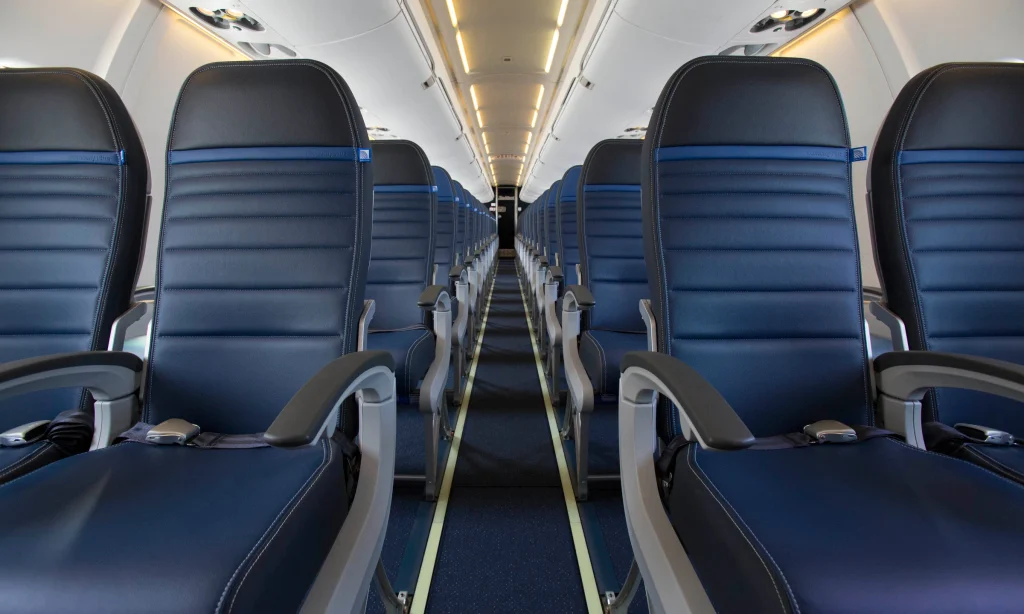
United’s standard Economy cabin (separate from the restrictive Basic Economy fare) is where most passengers fly. Seat pitch runs 30 to 32 inches, and width sits between 16.3 and 18.4 inches, varying by aircraft type, with newer Boeing 787 Dreamliners offering marginally more comfort than older 737s and 767s.
Meal service depends on route length. Domestic flights get complimentary snacks and drinks; international economy passengers get one hot meal plus a snack on longer sectors. Recline is limited to 2–3 inches, and Wi-Fi, seat-back entertainment and power outlets vary by aircraft rather than fare class.
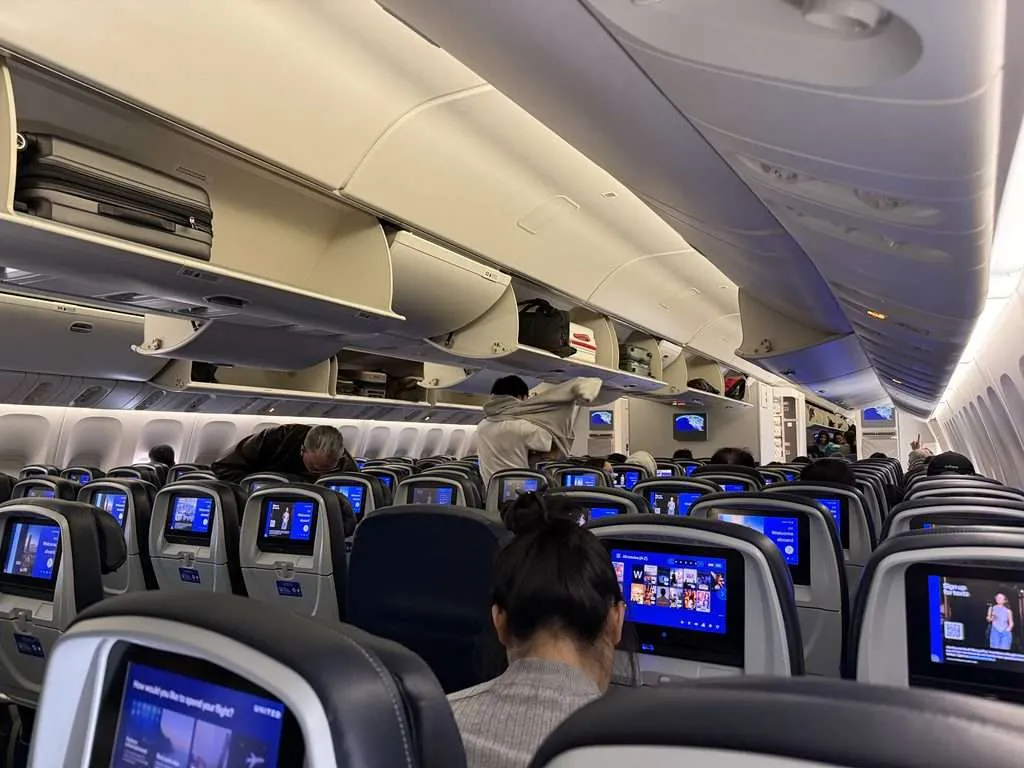
United Economy Plus sits in the same cabin but at the front, offering 3 to 6 extra inches of legroom for a fee or through elite status. It’s worth flagging early because it’s easy to confuse with true premium economy. Economy Plus is still a standard economy seat with more legroom, not a separate product with upgraded meals or baggage.
What You Get in United Premium Plus
Premium Plus is United’s actual premium economy cabin, positioned physically and functionally between Economy Plus and Polaris business class. It launched on select international long-haul routes from March 2019 and has since expanded across most of United’s widebody fleet.
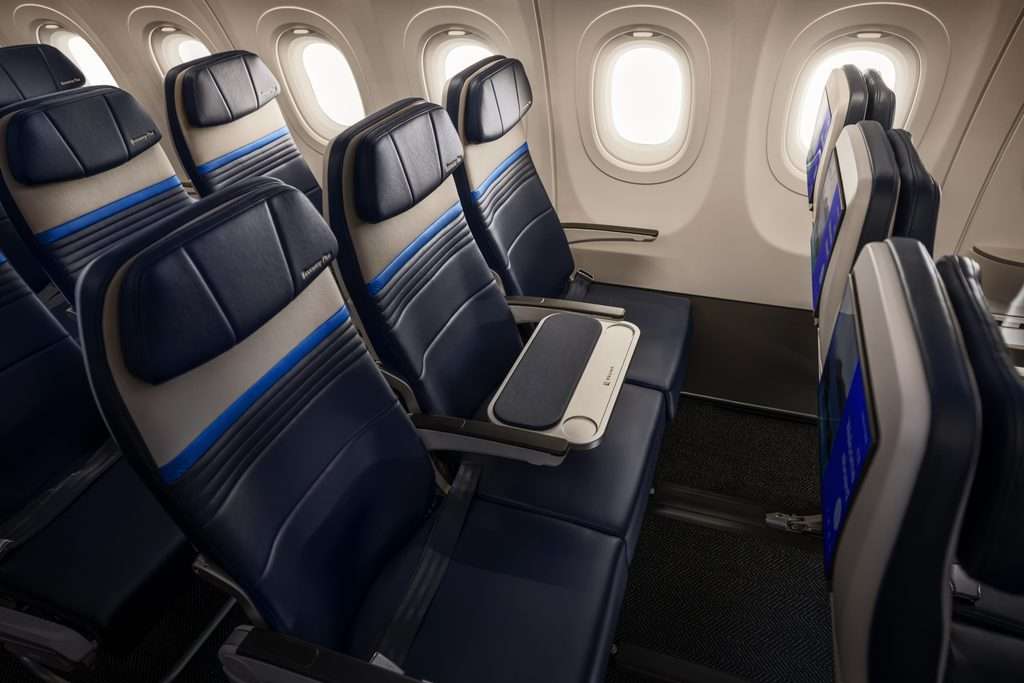
The seat itself delivers a meaningful jump: around 38 inches of pitch, up to 19 inches of width, and 6 inches of recline, with an adjustable leg rest and a built-in pop-up footrest.
The rest of the product follows the same logic:
- Dining: a dedicated menu served before the main economy cabin, with a hot entrée, snacks and complimentary beer, wine and spirits on eligible flights.
- Entertainment: a larger personal screen, typically 13 inches, with noise-reducing headphones provided.
- Comfort extras: Saks Fifth Avenue bedding, an amenity kit on longer international sectors, and an adjustable headrest.
- Baggage and priority: two free checked bags, priority check-in, boarding and access to expedited security lanes (where available).
None of this includes lounge access or a lie-flat seat, which is the clearest dividing line between Premium Plus and Polaris.
United Airlines Economy vs Premium Economy: Price Differences
United doesn’t publish a fixed multiplier for the Premium Plus upgrade because pricing is dynamic and set by route, season, and demand. As a rough industry guide, premium economy fares typically run 30–90% above standard economy fares on the same route, while costing less than half as much as business class on most long-haul sectors.
On a quiet midweek departure, Premium Plus might cost a few hundred dollars more than economy. On a peak transpacific or transatlantic date, the same upgrade can cost nearly as much as a discounted business-class fare elsewhere.
The more reliable route to Premium Plus without paying full freight is via United’s MileagePlus program, covered below.
United Airlines Premium Plus vs Business Class: What Changes
The jump from United Airlines Premium Plus to business class is a bigger step than the one from Economy to Premium Plus, both in comfort and cost.
Polaris seats recline fully flat, offering roughly 76 to 78 inches of sleeping space in a 1-2-1 or 1-1-1 layout with direct aisle access for every passenger. Seat width runs from about 20 to 22 inches, well beyond Premium Plus’s 19 inches, and the seat itself functions as a private mini-suite rather than a recliner. Polaris also unlocks access to United’s Polaris Lounges at major hub airports, with shower suites and full dining service before departure.
Meals in Polaris are served on proper tableware with pre-selection on many routes, compared with the tray service in Premium Plus. Checked bag allowance is identical at 2 bags, though Polaris bags can weigh up to 70 pounds, compared with lower limits in economy cabins.
The practical takeaway on United Airlines Premium Plus vs business class: Premium Plus buys you a noticeably better seat and better food for a moderate premium, while Polaris buys you actual sleep and lounge access for a much larger one. If sleep quality is your priority on an overnight flight, Polaris is the only cabin that reliably delivers it. Premium Plus recline, however generous by economy standards, doesn’t replace a flat bed.
Routes and Aircraft: Where You’ll Find Premium Plus
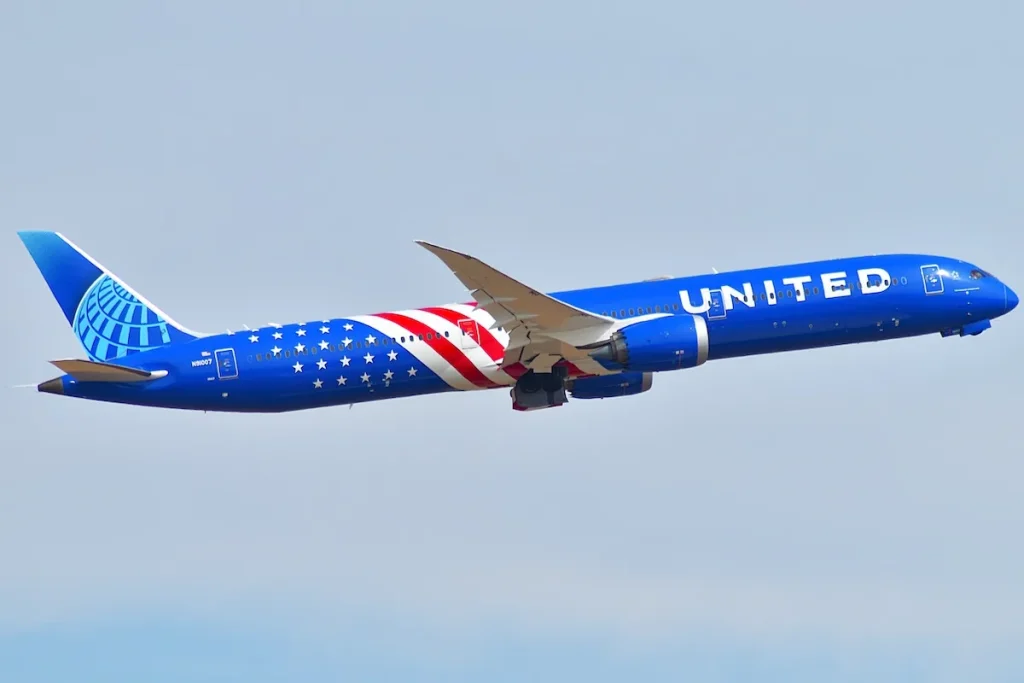
Premium Plus isn’t fleet-wide. You’ll find it on Boeing 787-8, 787-9 and 787-10 Dreamliners, most Boeing 777-300ERs, and a growing number of Boeing 767-300s operating international long-haul and select transcontinental US routes. It’s not fitted to United’s narrowbody domestic fleet, so a short hop between regional cities won’t have the cabin at all, regardless of what you’re willing to pay.
This is worth checking before you fall in love with a fare. The seat map for your specific aircraft, not the route name, determines whether Premium Plus is on offer.
MileagePlus and Upgrades: Reaching Premium Plus Without Paying Cash
United’s PlusPoints system, introduced in 2019 for Premier Platinum members and above, is the primary non-cash path to Premium Plus. Under the program, an upgrade from Economy to Premium Plus costs 20 PlusPoints on long-haul flights, while stepping up from Premium Plus to Polaris costs 30. This is notably cheaper than jumping straight from Economy to Polaris, which runs 40 to 80 PlusPoints depending on fare type.
That pricing structure rewards a two-step approach: book Premium Plus outright, then use a smaller PlusPoints balance to reach Polaris if a seat opens up, rather than needing a full Economy-to-business upgrade in one hit. Members without elite status can still redeem miles for a Premium Plus fare at booking, which is often better value than paying the cash upgrade fee at the airport.
Is Premium Plus Worth the Upgrade?
IATA’s 2025 World Air Transport Statistics recorded 109.7 million international premium-class passengers for the year, up 4.5% on 2024 and now accounting for 5.5% of all international travellers. This trend includes premium economy alongside business and first class, and is one reason carriers like United continue to expand the cabin rather than trim it.
For travellers, the upgrade earns its keep on flights over five or six hours, particularly on overnight sectors, where the extra recline and footrest help you arrive feeling functional. Taller passengers see the clearest benefit, given the jump from roughly 31 to 38 inches of pitch. It’s a weaker case on flights under three hours, where the meal and lounge perks barely come into play before landing, and for shorter people who don’t need the extra legroom to begin with.
Run the United Airlines economy vs premium economy math against your own itinerary length and height before you pay the fare difference.
How United’s Premium Plus Compares to Delta and American
All three major US carriers now sell a premium economy product, and the core proposition is similar across the board, with wider seats, footrests, upgraded dining, and roughly 38-inch pitch. Delta’s Premium Select and American’s Premium Economy both sit at comparable width and recline to United’s Premium Plus, with the practical differences showing up in details like domestic connection routing and lounge tie-ins rather than the seat hardware itself.
Where it gets interesting is pricing dynamics: on some hub-to-hub domestic routes flown with international widebody aircraft, premium economy seats from United and Delta are occasionally sold at Economy Plus or Comfort+ prices rather than full premium economy fares, since the seat is grouped into the extra-legroom economy product for booking purposes on those specific flights. Checking the aircraft type on a route, not just the fare class name, can occasionally reveal a Premium Plus seat for a fraction of its usual cost.
Keep Across the Rest of the United Airlines Story
Cabin comparisons like this are one part of a much wider picture of how United is repositioning itself against Delta and American. For ongoing coverage of United’s fleet, route and loyalty program changes, see our dedicated United Airlines coverage.
For broader context on how premium demand is reshaping the industry, our full archive of aviation industry news tracks the story as it develops.

ABOUT THE AUTHOR
Daniel Fowkes is a Melbourne-based aviation analyst and journalist with over a decade of industry experience. As founder of Dj’s Aviation, he delivers trusted analysis on aircraft, airline strategy and global aviation trends for djsaviation.net
Related Articles




Stay Informed
Get the latest aviation news, analysis and route updates delivered to your inbox.
We respect your privacy. Unsubscribe at any time.
Enjoyed this story?
Make us your go-to for aviation news
Add us as a preferred source on Google and see our latest stories first in Top Stories.
Add Us On Your News FeedRelated articles
· Airlines
Allegiant Air Buys Six More 737-8s From Boeing
Daniel Fowkes
26/10/2026
· Airlines
Emirates vs Qatar Airways: The Gulf Superhub Rivalry Compared
Bryan Shelmon
26/10/2026
· Airlines
Riyadh Air Is Moving Away From Riyadh
Daniel Fowkes
26/10/2026
· Airlines
Emirates Isn’t Worried At All
Daniel Fowkes
25/10/2026