

The A380 struggled to attract the widespread adoption Airbus may have once envisaged, but throughout its history, there were many orders that never even materialised.
For several reasons, like any program, airlines that committed to the series saw their contracts fall through, reducing the backlog of the world’s largest passenger plane.
One of those was former Russian carrier Transaero, which operated scheduled flights and had the intention of flying the Airbus A380, but never did.
The Landmark A380 Order
The landmark decision from Transaero to purchase the Airbus A380 came in October 2011, when a memorandum of understanding (MOU) was signed.
Transaero at the time committed to four Airbus A380’s in a move that would see it become the launch customer for the world’s largest passenger plane in Russia and the broader Eastern European region.
At the time, the second largest carrier of Russia saw the A380 as a means to elevate its long-haul flying, while also pointing towards shorter flights as a possible use point for the superjumbo.
Speaking with Today in the Sky, the CEO of Transaero in 2013, Olga Pleshakova, would say that a high focus for the jet would be the most popular routes on the network, which therefore have the highest passenger traffic.
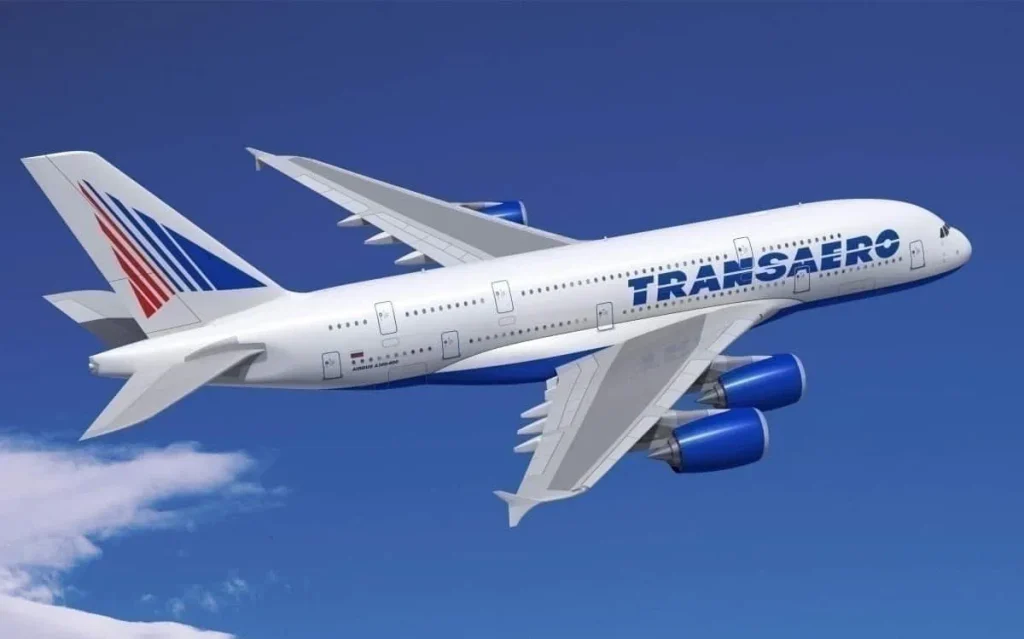
Routes that were touted included Moscow through to Thailand, Moscow to the Dominican Republic, and even Barcelona in Spain; however, international flights were not the sole focus, with Transaero even floating the possibility of domestic service with the jet.
Given the scale of Russia, the flight, if it had gone ahead, would’ve been one of the longest domestic routes possible, coming in at around 4,000 miles and far exceeding coast-to-coast flying in the United States, but would have been shy of New York JFK to Honolulu.
Transaero hoped to use the A380 with the 747-8, leveraging the two quad-engined types to their advantage with the Airbus jet flying across more of the high-season towards markets, and then during the low-season, the usage of the 747 would take shape.
But Who Were Transaero?
Transaero were founded in 1990, and it acted as a privately owned company in Russia and aimed to disrupt the aviation sector in a period of change for the broader country.
Beginning as a small carrier, the rise of Transaero was relatively quick, with the business becoming one of the largest in the country in the aviation industry in a short time.
The airline aimed to take advantage of its emphasis on service compared to state-run competitors, targeting not just one demographic but also those travelling for leisure and business purposes.
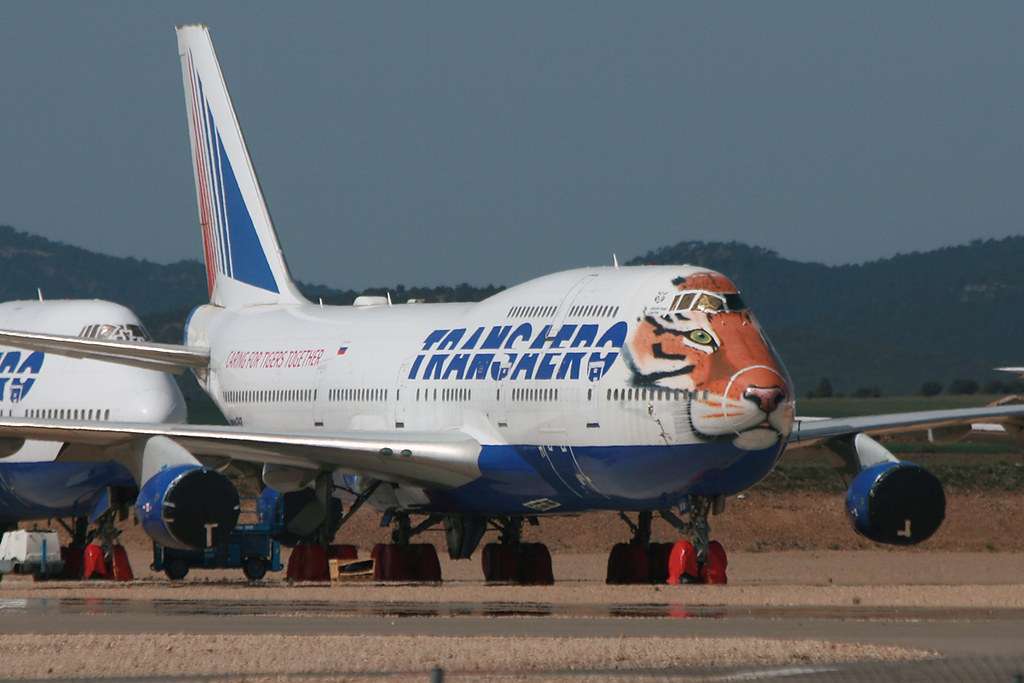
Using Moscow Domodedovo and later Vnukovo, the carrier was able to develop its route across Russia strongly. Additionally, there was the development of the international route network with a focus on flying to Europe, the Middle East, Asia, and more regions.
Throughout its time in the industry, the accolades for the carrier stacked up, notably being the first private Russian airline and therefore attempting to break the monopoly that Aeroflot had long held at the time of Transaero’s introduction.
Meanwhile, becoming the first 747 operator in Russia signified that the direction Transero wanted to head. Additionally, its commitment to the A380, albeit one that failed, highlighted internally what was next.
An Ultra High-Capacity Configuration
Despite the ambitious attempts by Transaero to fly the Airbus A380, one of the biggest decisions came in the form of the configuration.
The carrier confirmed that it would look to configure the A380 once delivered with close to 700 passengers, specifically hoping for 652 seats to be achieved in a three-class configuration.
The configuration would see a more dense economy-based layout with just 12 suites and 24 business class seats, the remaining 600 plus seats would be in Economy class.
For Transaero, this move put it in a different category from other A380 operators who leveraged the space and therefore scale of the jet to move ahead with innovative cabin classes and place greater emphasis on upper classes to help drive revenue.
Each airline’s decision to configure the A380 the way they do will vary. Still, for the most part, each airline has looked to leverage the space in a bid to make the cabin feel spacious, and that’s why customers have flocked to the superjumbo ever since it entered service, driven by that spacious feel.
The End Of The Order
Unfortunately for Transaero, its mission to fly the Airbus A380 did not pan out as intended, and months before the first unit’s delivery, there were concerns about the future of the business.
Transaero, with economic uncertainty, said that it would defer the delivery of the A380 by at least another year, through to 2016, a move that already had analysts’ heads ringing with possibilities, with the business attempting to get its finances in check first.

With visible concerns in tourism levels given the sheer scale of the Airbus A380, there were worries about how Transaero’s initial plan with the jet would pan out, and rightfully so.
In the end, the debt of the Russian carrier would only increase, and more pressure was not on the A380 order but on the mere ability to survive.
As pressures mounted quite considerably, the end of Transaero arrived with the carrier entering bankruptcy and ceasing scheduled passenger flights, which also spelled the end for the Airbus A380 order.

ABOUT THE AUTHOR
Daniel Fowkes is a Melbourne-based aviation analyst and journalist with over a decade of industry experience. As founder of Dj’s Aviation, he delivers trusted analysis on aircraft, airline strategy and global aviation trends for djsaviation.net
Related Articles




Stay Informed
Get the latest aviation news, analysis and route updates delivered to your inbox.
We respect your privacy. Unsubscribe at any time.
Enjoyed this story?
Make us your go-to for aviation news
Add us as a preferred source on Google and see our latest stories first in Top Stories.
Add Us On Your News Feed