

The 747-500 was a bold proposal by American manufacturer Boeing to try and evolve the position of the iconic 747 further and to ensure its survival for decades to come.
Boeing’s proposed -500, however, was ultimately just one of the many variants part of the broader 747 family studied to elevate the program.
However, despite internal interest, Boeing decided to proceed with other endeavours that it believed would be the answer to help propel the 747 into the 21st century.
Boeing Begins Studying A 747-500
From the mid-way point of the 1900s right up to the turn of the century, the development of the aviation industry was evident. Leading from the front, Boeing was pivotal to the advancements and continued innovating and finding new ways to help airlines develop.
The development of the 747 was considered a true dream, with the aircraft affectionately known as the Queen of the Skies being important in fueling many airlines’ growth ambitions.
As the 747 developed and new customers joined the program, Boeing knew it had the opportunity to continue growing and finding ways to bring in more customers. Furthermore, as technology continued developing, there was a consensus that new opportunities existed.
The 747-500’s vision emerged even before the debut of the 747-400, where Boeing saw potential to create a new variant, rather outlandish as well, that would aim to have counter-rotating turboprop engines.
The premise is that Boeing saw a vision where maximum fuel efficiency could be achieved moving forward, giving airlines already operating the 747 or prospective customers a real reason to upgrade from their existing platform.
Such an endeavour wasn’t foreign, with Boeing also exploring something similar through its 7J7 project, focusing on more short-haul narrowbody missions similar to the 717 and 727.

Technology Keeps Advancing
One thing that defined the prospective 747-500 was its proposed reliance on advanced propulsion technologies. Boeing initially considered propfan engines as a means to power the variant.
However, these engines faced complexities, including high noise levels, which prevented the planemaker from proceeding. Apart from this, there was also scepticism from airlines and airport operators about their long-term viability.
This generalised pushback saw Boeing need to head back to the drawing board and find ways to offer a plane that would find an adequate balance between efficiency and overall capabilities, such as range and capacity, two selling points for the series.
However, finding this balance was difficult. Boeing knew it’d need to incorporate these changes into an existing 747 body, attempting to do so without seeing substantial cost overruns and other complications that would impact its business.
Leaps in technology are fantastic and often enable manufacturers such as Boeing to study prospective opportunities; however, not all make sense, and thus, not all formally progress into a launch state.
Despite this, each study acts as a valuable pillar for, in this case, Boeing to continue moving forward with its innovation and understanding what would work from a commercial standpoint and what is genuinely feasible for its own business to implement without seeing significant cost implications.
The Market Dynamics
A pivotal shift began across the industry when the 747-500 gained traction in the late 1980s and early 1990s.
Twin-engine aircraft, such as the Boeing 767 and Airbus A310, were gaining popularity due to regulatory changes driven by the continued growth of ETOPS. These rules allowed twinjets to operate on transoceanic routes.
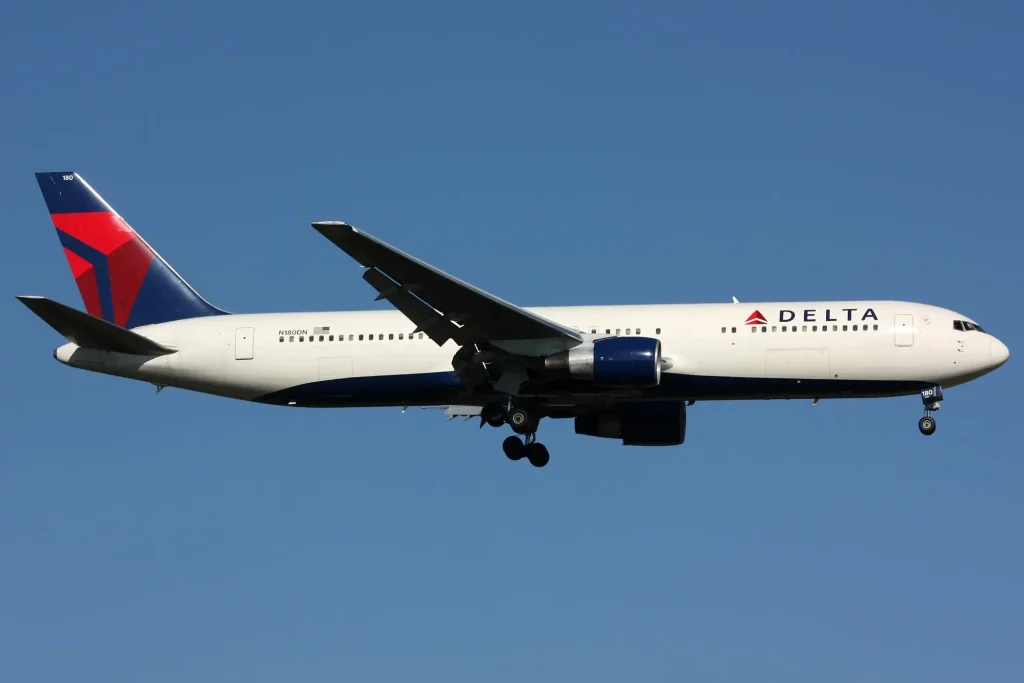
While not for all airlines, these developments did reduce for many operators the desire and need for a four-engined aircraft with greater possibilities present with just half the amount of engines, especially not for something like a 747-500.
Arguably, the very early stages of a trend would see airlines begin preferring twin-engine planes that would offer them more significant cost advantages alongside flexibility for their day-to-day flying and thus reduce the market for such large airlines that Boeing was also studying.
Moreover, airlines capable of serving ultra-long haul markets pitched alongside a prospective 747-500 were to be limited, especially at this point. The reality is that thanks to technological advancements in the 21st century, more airlines can fly missions with distance profitably. However, it wasn’t always like this.
Boeing Cancels The 747-500
The 747-500 faced challenges both from a feasibility standpoint and even from an overall interest standpoint, and despite internal interest, the variant, like many others, never formally got off the ground.
By the time the mid-1990s came around, the twin-engine age was truly rampaging on. Boeing shelved any prospects for a 747-500 and began focusing on other programs and initiatives.
One of the final attempts to revoltuinse the 747 program was through the proposed X variants, however, even that didn’t get off the ground.
In the end, driven by the development of the 787 Dreamliner, the American planemaker decided to progress with a 747-8 that would take fundamental features from Boeing’s new-gen widebody and implement them on a larger scale.
The 747-8 remains the final variation of the iconic queen of the skies and, unsurprisingly to most, failed miserably from a commercial standpoint with little to no interest in an industry rapidly changing and seeing airlines’ need to shift away from planes such as the 747.

Had Boeing progressed with a 747-500 by the time it would’ve reached market it also would’ve encountered turbulence in an industry that was changing and thus affecting its overall market.
While the 747-500 never came to fruition, its story certainly highlights the continued fight that planemakers face when balancing innovation with feasibility.
Boeing’s continued ambition to create a next-generation jumbo jet was constrained by an industry that, while evolving, was ultimately moving away from planes that Boeing had relied upon for some time.
Despite these studies, it wasn’t as if Boeing could not dedicate resources to other programs. The launch of the 777 and then the 787 certainly have highlighted Boeing’s commitment to the next-generation widebody operation, and the 747-500 forever remains an afterthought of what-if?
A Plane That Never Was
Today, the 747-500 sits in a hall of fame at the American manufacturer, which ultimately holds many other conceptual aircraft across the 747 family that never got off the ground.
During the latter stages of the 20th century, Boeing found itself in a key period where innovation was at the forefront, and finding the sweet spot for a new program launch was at the forefront.
Away from the 747, some programs that launched were hits. At the same time, others faded into obscurity, and Boeing also had to ensure it remained profitable and the quality of its product did not collapse.
While the skies never saw the 747-500, its ambition certainly remains a pillar of why the 747 remains such a largely appreciated and loved aircraft for its continued effort to break the boundaries of what was previously laid out for it.

ABOUT THE AUTHOR
Daniel Fowkes is a Melbourne-based aviation analyst and journalist with over a decade of industry experience. As founder of Dj’s Aviation, he delivers trusted analysis on aircraft, airline strategy and global aviation trends for djsaviation.net
Related Articles




Stay Informed
Get the latest aviation news, analysis and route updates delivered to your inbox.
We respect your privacy. Unsubscribe at any time.
Enjoyed this story?
Make us your go-to for aviation news
Add us as a preferred source on Google and see our latest stories first in Top Stories.
Add Us On Your News Feed