

Southwest is one of the industry’s leading low-cost carriers and has played a pivotal role in connecting the United States and beyond.
Since its conception, the airline business has been led by a strategy focused on flying exclusively Boeing aircraft. This streamlined approach has undoubtedly had its positives, but it has also had its struggles.
However, as with any airline’s development, at some point, the focus must rest on deciding what aircraft will replace your existing fleet, something Southwest was forced to do across the last half-decade.
Much of that discussion centred around whether Southwest would continue with the 737 program after a turbulent last half decade, which included several incidents and quality issues.
Was Southwest going to break its allegiance to Boeing and switch to Airbus and the A220 program? Was this interest genuine, and why did Southwest stay with the American planemaker?
Southwest Loves Boeing
Since its inception, Southwest has operated an all-Boeing fleet, focusing on the 737 family to streamline operations and achieve greater operational efficiency.
Southwest’s success has been mainly due to this single-type fleet strategy, which has many benefits, such as maintenance, crew training, and efficiency.
Southwest’s pilots are certified to fly only the 737, which has reduced training costs and time. Thanks to the development of many variants, the aircraft serves a wide range of markets in terms of range and capacity.
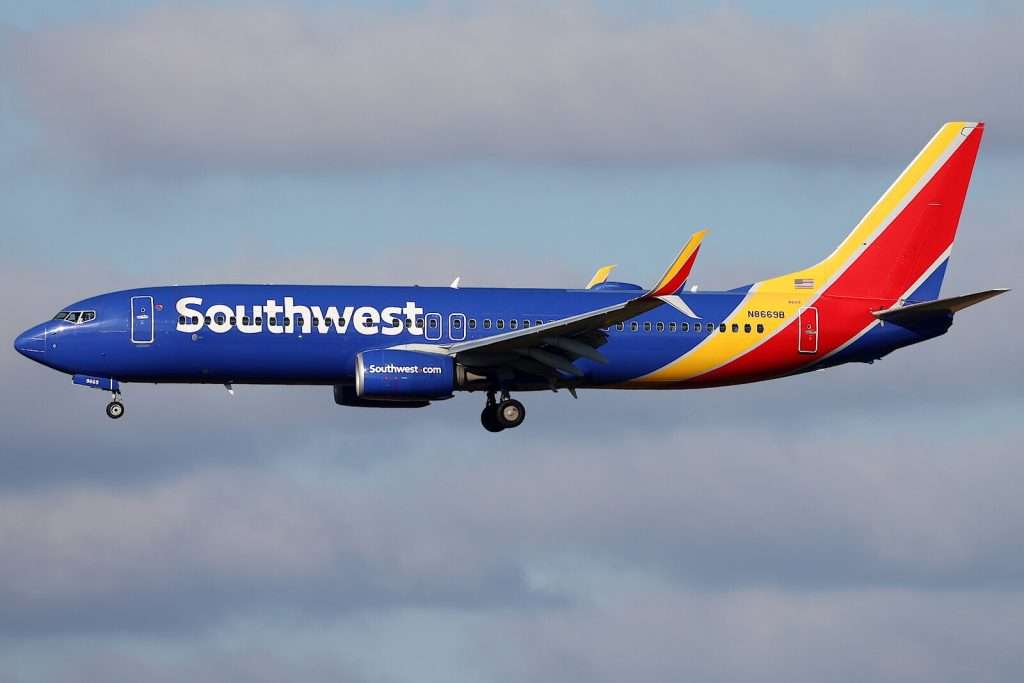
Whether flying short hops between regional airports or connecting major cities, the 737’s versatility perfectly complements Southwest’s high-frequency, point-to-point network, which it has harnessed since its birth.
Additionally, a single-type fleet reduces the need for spare parts and simplifies crew scheduling, among other benefits. For over 50 years, this strategy has served Southwest and helped it become a leading option across the United States.
The A220 Is A Game Changer
The Airbus A220, initially developed by Bombardier as the CSeries, has quickly become a disruptor in the single-aisle market and proved popular among airlines renewing their fleets.
Its design, catering to the 100-150 seat segment, has filled a gap left by competitors, and while battles with Embraer don’t see a perfect response offered by Boeing, giving it a more significant market share.
The A220 offers 20-25% better fuel efficiency than older aircraft of similar size, which is excellent news for airlines seeking to operate thinner and even longer routes.
For example, QantasLink will use the A220 to replace its Boeing 717 fleet. These advancements have allowed the Australian flag carrier to serve any location in Australia from any port, something impossible with previous-generation aircraft.
Ultimately, the combination of advantages the A220 program offers means airlines worldwide have looked to adopt it and have done so successfully. However, at one point, Southwest was also considering this aircraft.
Why Southwest Looked At The A220
Towards the latter stages of the 2010s and during the height of the COVID-19 pandemic, Southwest’s fleet strategy was heavily focused on as it explored options to modernise the aircraft it flew.
While historically loyal to Boeing, the airline briefly considered the Airbus A220-300. Several factors contributed to this consideration, but it was enough to make headlines worldwide, as such a fundamental interest would have represented a massive switch.
Southwest sought a replacement for its aging 737NG. The -700 model, which is smaller but has a capacity comparable to the A220-300 model, was also heavily focused on.
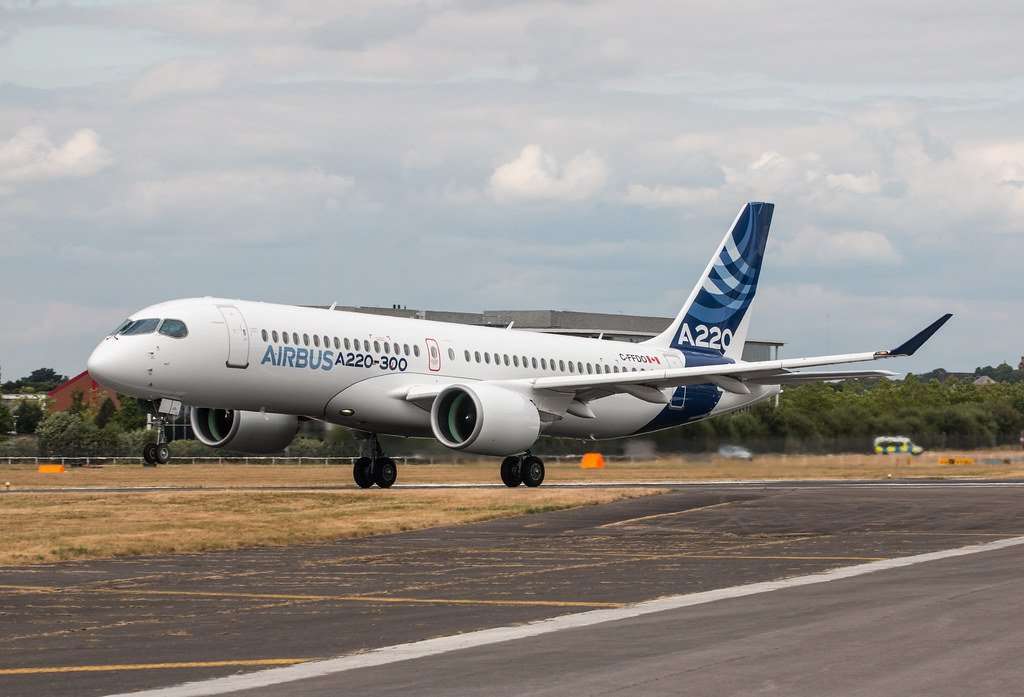
During the fleet’s renewal period, the Boeing 737 MAX program also had ongoing issues, including grounding and delayed deliveries. These challenges forced Southwest to explore alternatives to ensure its plan stayed on track.
Despite having such an allegiance to Boeing, looking at the product Airbus was putting forward would always be the airline’s due diligence. Moreover, despite a reliance on the 737 product, adopting the A220 could’ve presented at the time as a safer option, but whether it was an option for the long term remained another question.
According to Forbes and Leeham News reports Airbus presented the A220 as a solution to renewing the 737 fleets and as a safer option for the MAX program, which was struggling at the time. Further reporting highlights that Southwest ultimately didn’t pursue its offering further through a formal bid.
A Move To Airbus Made No Sense
Despite the A220’s advantages, incorporating it into the carrier’s fleet would have posed significant challenges and associated risks.
Introducing a new aircraft type would have required additional pilot training, maintenance overhauls, and adjustments to operational logistics, which would have presented many complexities.
Southwest’s business model thrives on simplicity, and despite the plane’s apparent benefits, adding a second aircraft type would have disrupted this streamlined approach.
Transitioning to a mixed fleet would have incurred higher upfront and ongoing costs, which could have eroded Southwest’s cost-competitiveness in the low-cost carrier space. While a great aircraft, the type would have been an impractical solution based on the previous successful model.
Southwest Sticks With Boeing
Ultimately, Southwest reaffirmed its commitment to Boeing, placing orders for hundreds of 737 MAX aircraft to replace its aging fleet despite the turbulence experienced across the program in the late 2010s and early 2020s.
Continuing with the 737 Southwest, it has ensured minimal disruption to operations, as pilots, maintenance teams, and support staff required little additional training when welcoming on the MAX.
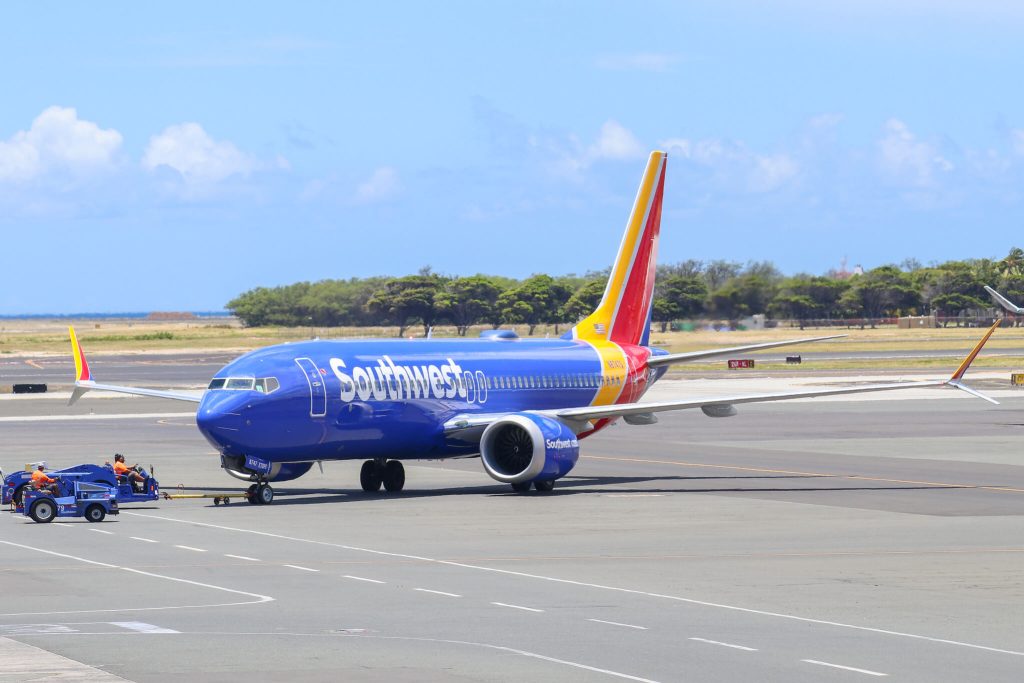
However, there are challenges with the program that cannot be ignored, such as substantial delays in the delivery of new aircraft and persistent quality concerns that have been a long-drawn-out problem.
As a long-standing Boeing customer, Southwest is confident that Boeing can turn its fortunes around. It has a strong relationship with Boeing that will help it navigate the challenges.

ABOUT THE AUTHOR
Daniel Fowkes is a Melbourne-based aviation analyst and journalist with over a decade of industry experience. As founder of Dj’s Aviation, he delivers trusted analysis on aircraft, airline strategy and global aviation trends for djsaviation.net
Leave a Reply
Related Articles




Stay Informed
Get the latest aviation news, analysis and route updates delivered to your inbox.
We respect your privacy. Unsubscribe at any time.
Enjoyed this story?
Make us your go-to for aviation news
Add us as a preferred source on Google and see our latest stories first in Top Stories.
Add Us On Your News Feed
Well, SW will never know how much better the Airbus might be. Sorry to see this as I have no confidence in Boeing as they have failed to get my vote
The A220 is a good aircraft. However, the geared PW engine on it is junk. Having to be replaced at 400 hours or less is a massive cost on the airline. Air Baltic, only flys the A220 fleet of 49, they announced that they will have to cancel almost 4,700 flights in 2025 due to the Pratt engine issues. SW dodged a bullet on the A220 engine issues.
One can only hope that Boeing will come out with an all new ,engineered and designed single isle jet , designate it either the all new 737 or 979 . A lot of Aviation industry people would like Boeing to engineer an all new efficient 757 , keeping its all time distinctive styling , it’s extra high ground clearance along with the latest technology .
Boeing should have gone through and ahead with what they originally proposed to do with the 727 and that was to re-engineer and deign the tail to manufacturer it as a twin jet useing 25,000 to 28,000 thrust engines ,and they would not have had a lot of the issues and problems that they had with 737,s .