

JetBlue continues to be a victim of lengthy aircraft groundings across its Airbus single-aisle aircraft, impacting its operations.
The U.S. carrier’s Airbus fleet is specifically being affected by the Pratt & Whitney GTF engines crisis, which is affecting the global fleet across a host of programs, primarily Airbus planes.
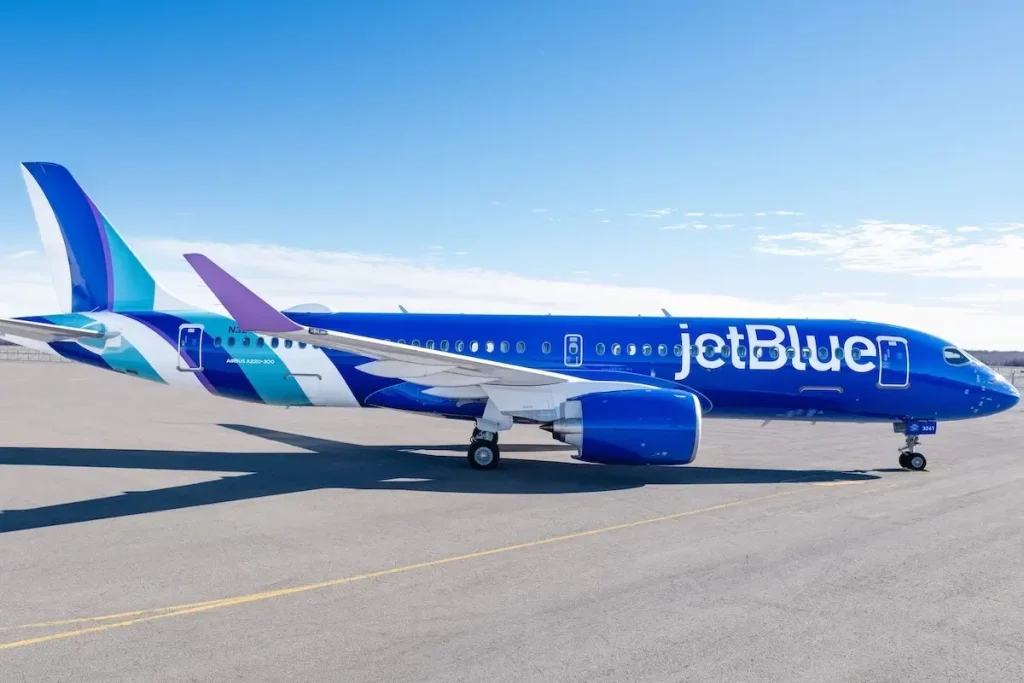
Current data indicates that multiple aircraft in the JetBlue A220-300 and A321neo fleets remain on the ground. The airline, in its quarterly results for the period ending September 30, said six planes were on the ground.
Additionally, regarding the neccesary inspections and each engine overhaul, JetBlue says this is roughly a 200-day process and a staggeringly 300-day process to get the affected A321neo jets back into service.
Looking ahead, JetBlue is reasonably confident that the number of planes on the ground will improve in 2026; this improvement will be a direct consequence of more aircraft that are currently on the ground returning to service.
The U.S. carrier’s positive outlook, or that of one that’s improving, contrasts with other airlines, which believe GTF engine woes will impact their business through the end of the decade and, therefore, for the next four years.
Ultimately, every airline will face a different impact; this depends on units on the ground, the ability to lease planes, and much more. However, the industry’s long-lasting impact cannot be disputed.
JetBlue Transitions To Airbus
While JetBlue has really only experienced growing pains as it transitions to Airbus aircraft, that transition is now complete.
The airlines’ move to rely solely on Airbus planes was completed in early September, when the U.S. carrier said goodbye to its last Embraer aircraft, the E190, after two decades of operations.
Nowadays, JetBlue consists of Airbus A220, A320, and A321 aircraft across the CE and NEO variants of the A320neo family, previously operating the E190 on smaller routes that required less capacity.
The final Embraer E190 flight, flight 190, operated from New York JFK to Boston Logan, with the airline committing to a gate-side event in both cities to celebrate what the model did for the airline.

Since the aircraft began service with JetBlue in 2005, it has played a fundamental role in the U.S. carrier’s growth and in the establishment of its route network on a day-to-day basis, proving to be a valuable and reliable asset.
While there are obvious risks to JetBlue utilising only Airbus aircraft, it would argue that the positives outweigh any risks or negatives, namely fleet simplification, flexibility, and reliability.
Most operators will often go for a mixed fleet industry risk. Still, some of the industry’s big companies, such as Southwest, rely strictly on one operator, even the likes of emerging STARLUX, with just Airbus; these strategies enable the building of strong relationships, allowing for closer support, deals, and integration efforts.

ABOUT THE AUTHOR
Daniel Fowkes is a Melbourne-based aviation analyst and journalist with over a decade of industry experience. As founder of Dj’s Aviation, he delivers trusted analysis on aircraft, airline strategy and global aviation trends for djsaviation.net
Leave a Reply
Related Articles




Stay Informed
Get the latest aviation news, analysis and route updates delivered to your inbox.
We respect your privacy. Unsubscribe at any time.
Enjoyed this story?
Make us your go-to for aviation news
Add us as a preferred source on Google and see our latest stories first in Top Stories.
Add Us On Your News Feed
They should of gone with Boeing
Very good
Does this new development affect the routine flights on JetBlue service from Tampa to Cancun?
This engine issue is not a newsflash. It has been affecting the industry for a little over two years. Have a look at Spirit. 50% of Spirit’s fleet is affected by this. And people wonder why they’re not making money? I wonder if Kirby can do the math on that?
The A220 (built final assembly in Mobile, AL) is a great bridge in the gap between the smaller E190 and the A320-series. I’ve been to JetBlue’s training campus at Orlando International. The Level D simulators for the A220 had just recently been installed and were just starting to be used. I was fortunate to have had access to one. The A220 is fantastic flying and performing aircraft with every modern technology available on board.