
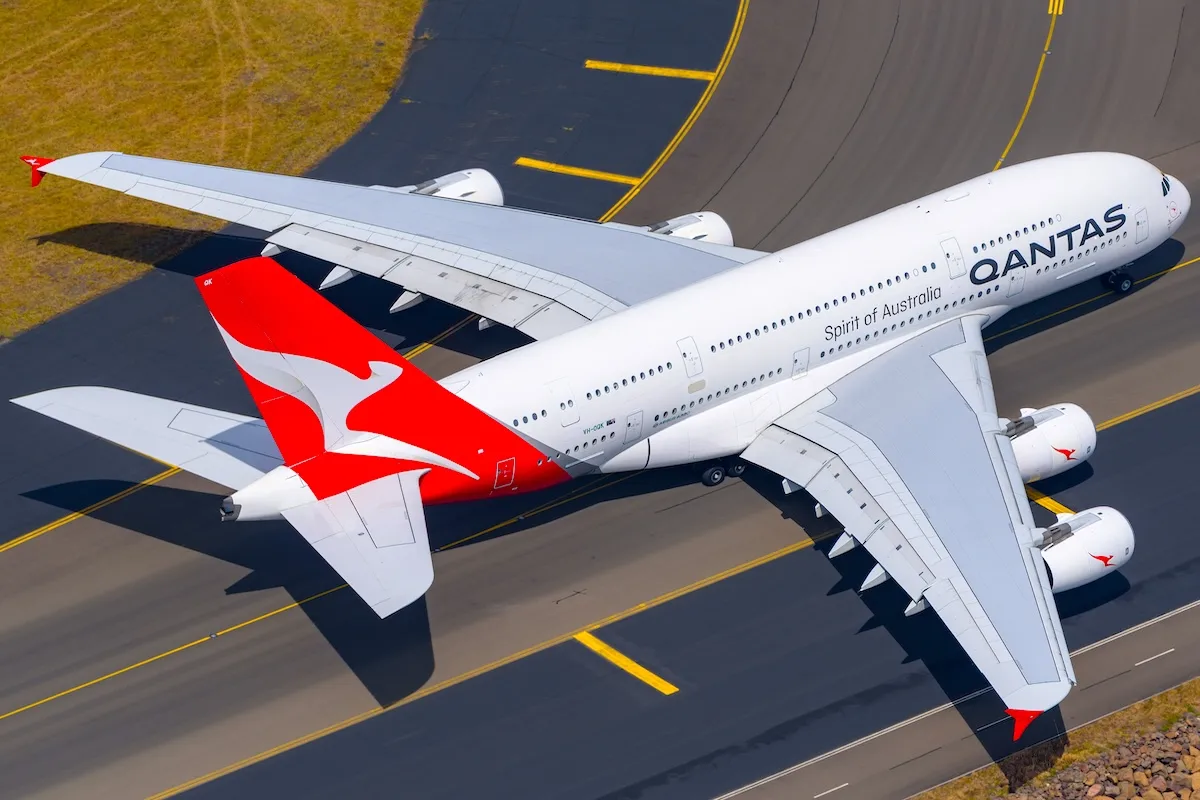
Qantas‘ Airbus A380 fleet is not on the brink of retirement, but its long-term future has been carefully mapped out to provide a timeframe for removal.
The Australian flag-carrier expects to retire the Airbus A380 fleet from the early stages of the 2030s, and like any other transition, has a new aircraft coming into the fleet to make this possible.
With Qantas having a replacement lined up in the Airbus A350-1000LR, the retirement of the A380 becomes more of a reshaping and planned renewal than a forced axing.
While the superjumbo has been the core long-haul and ultra-high-capacity jet for decades, it cannot offer the game-changing economics of a type like the A350 family, which is now better suited to an era defined by lower fuel burn and flexibility.
Qantas’ move to retire the Airbus A380 is part of a reflection on the century to date and the reality that quad-jets are no longer favoured as twinjets with better range and economics have taken over. However, despite the phase-outs planned, the carrier is still extracting value where possible.
As a result, Qantas is moving forward with a deliberate and planned phase-out that’ll see the A380 remain for the medium term and especially on some of its densest premium routes. Still, investments in what’s next are already taking shape.
Qantas’ Airbus A380 Operation Explained
Qantas operates a fleet of 10 Airbus A380-800s, with the airline reactivating the series following the COVID-19 pandemic; executives have labelled getting these back to service as one of the most challenging tasks in company history.
The aircraft remain central to the identity that the business has created with long-haul services, as the mix between capacity and premium volume has been vital for securing strong yields even if the type has four engines.
Qantas’ configuration gives a key reason why the jet remains in service: a strong first class, business class, and premium economy product, meaning airports with high demand, slot constraints, and visible premium traffic can benefit.
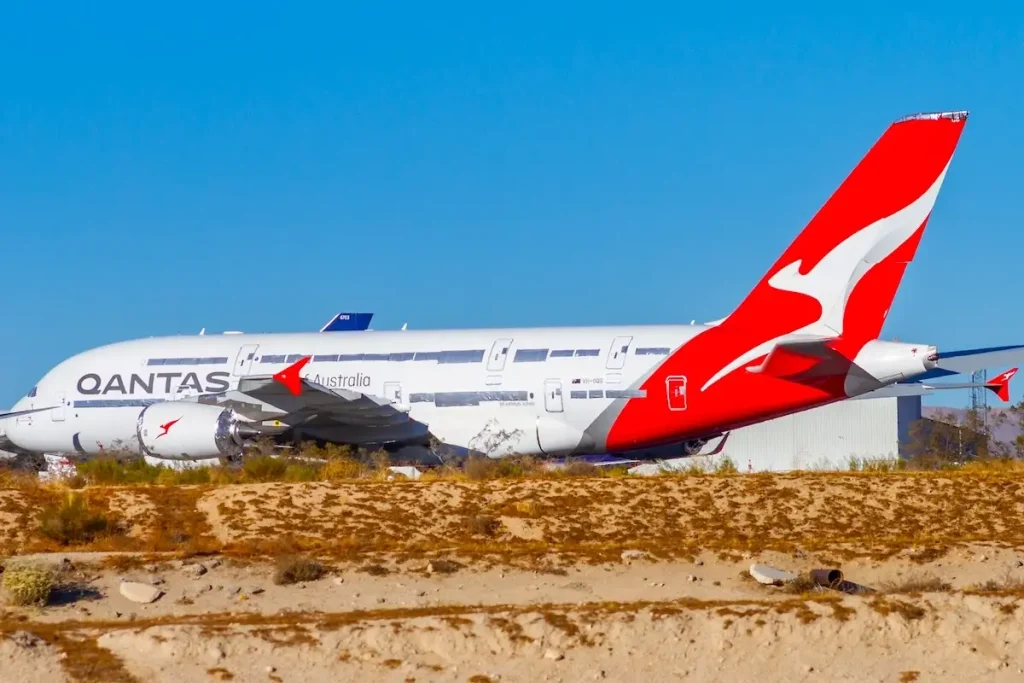
Historically, Qantas has deployed the aircraft on services from Sydney to Singapore, London, Los Angeles, Dallas, Fort Worth and even from Melbourne to key cities around the world. Beyond just being a tool, thanks to its capacity, it is a valuable part of the airline’s long-haul network and has successfully freed up A330s and 787s for missions elsewhere.
Qantas’ logic, therefore, when ordering the A380-800, was straightforward. The airline has built around long-haul services; after evaluating its future fleet composition, it believed that a very large aircraft would be needed for some of its stronger long-haul markets, in an era when it still flew the Boeing 747.
The stronger markets needed the capacity to support a superjumbo visibly, and the order was driven by a statement of premium capacity and an intent to connect Australia to the world better. However, it was purchased in an era when twinjets were becoming more relevant, although this didn’t deter the airline.
What’s Next For The Airbus A380 At Qantas?
With the A380’s retirement still some time away, in the short to medium term, the superjumbo will remain an asset for the business, even as a different future is being prepared at the same time.
Thanks to investments in the cabin refresh program, for the public, this was the clearest signal that the superjumbo was here to remain on the front lines for the airline, at least for several more years.
The A380’s role will also ease somewhat. For years, the A380 has complemented the 787 as one of the two drivers of long-haul flying, but that is expected to change as newer widebodies are finally delivered.
Qantas has strong orders for Boeing 787 and Airbus A350 jets that, in the coming years, will scale the international fleet and, while facilitating retirement, ultimately expand the number of cities served and allow the A380 to be redeployed if deemed necessary.
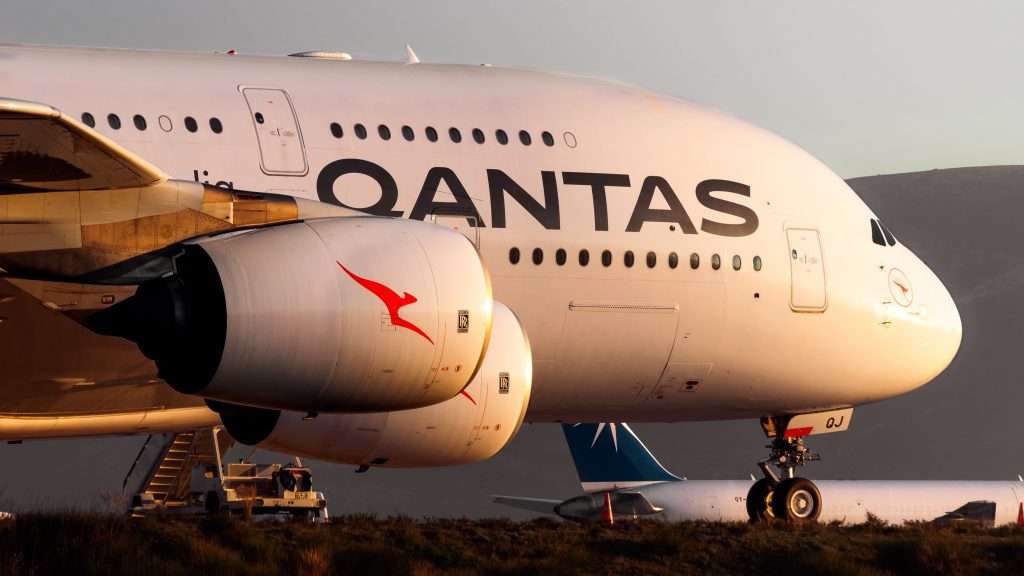
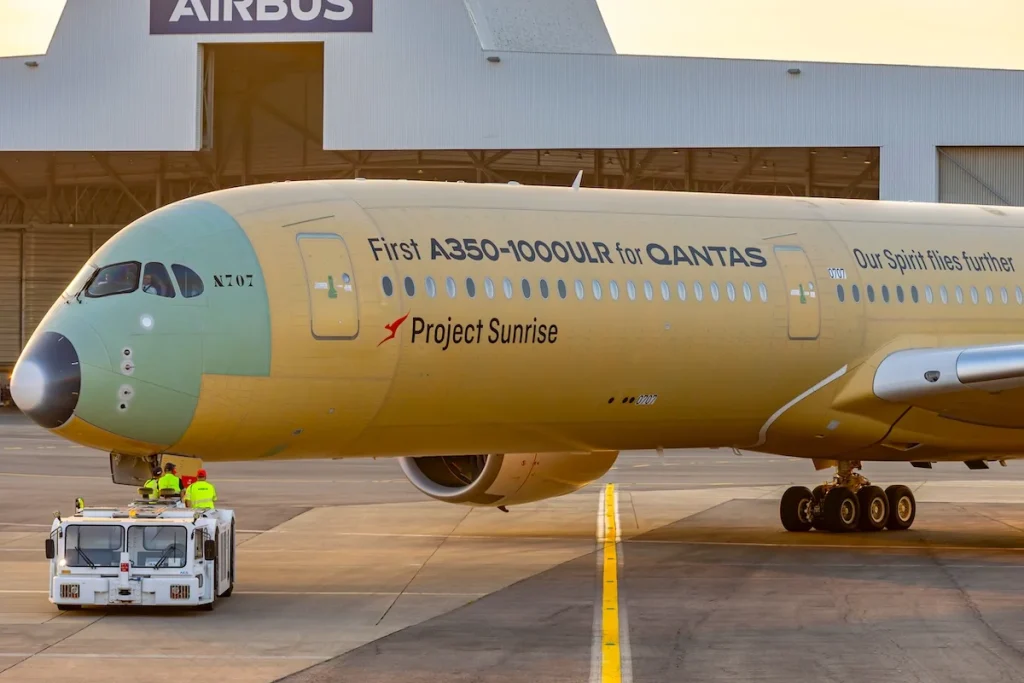
The most important step is Project Sunrise, with 12 Airbus A350-1000ULRs ordered specifically for ultra-long-haul and nonstop flights from Australia to London and New York; the first unit is due in April 2027, with scheduled operations commencing later that same year.
These jets are not a replacement for the A380; however, they are a strategic choice that will open the door for a new model with fewer stops and more range, and a fleet mix that offers greater flexibility than ever seen before.
Alongside that, and critical to the A380’s fate, are the A350-1000s that have been ordered and are expected to be delivered from FY28, with 12 units also on order. These aircraft, not to be mistaken for the ULR, bring the A350-1000 family commitment to 24.
Part of an earlier order by the business, these aircraft are not just intended to build two layers of A350 capabilities but critically have been ordered with the A380 retirement in mind, a like-for-like replacement of the superjumbo with the new high-capacity Airbus jet.
The A380, despite the A350-1000s arriving in the coming years, will not depart just yet and will fly in tandem with the new Airbus jets, but they will serve alongside their replacement.
When The A380 Retires…
Qantas guidance and comments have put A380 retirements commencing around FY2032, a process that will formally begin at the beginning of the next decade with the A350-1000s replacing it.
Qantas has several reasons for the retirement, led by economics; this is central to the decision-making. The A380, being a four-engine aircraft, comes with large trip costs, even with a high seat count. That high seat count means only certain airports are capable of taking the jet.
However, the new inbound A350-1000s are going to, in contrast, offer lower fuel burn and stronger range, even with a reduced capacity that is made up for in their flexibility. The flexibility to shine through on premium-heavy but not necessarily A380-heavy type segments.
Qantas, while being a strong supporter of the A380, isn’t intending to hold onto them forever; by the early 2030s, its widebody fleet mix for the coming 20 years will have formally begun taking shape, and the world’s largest passenger plane will not be part of that.
Barring another unprecedented global crisis such as the COVID-19 pandemic, the Qantas A380s will be here to stick around a little longer, with a retirement planned from FY2032 and the A350-1000 slated to replace them.

ABOUT THE AUTHOR
Daniel Fowkes is a Melbourne-based aviation analyst and journalist with over a decade of industry experience. As founder of Dj’s Aviation, he delivers trusted analysis on aircraft, airline strategy and global aviation trends for djsaviation.net
Related Articles




Stay Informed
Get the latest aviation news, analysis and route updates delivered to your inbox.
We respect your privacy. Unsubscribe at any time.
Enjoyed this story?
Make us your go-to for aviation news
Add us as a preferred source on Google and see our latest stories first in Top Stories.
Add Us On Your News FeedRelated articles
· Airlines
Allegiant Air Buys Six More 737-8s From Boeing
Daniel Fowkes
26/10/2026
· Airlines
Emirates vs Qatar Airways: The Gulf Superhub Rivalry Compared
Bryan Shelmon
26/10/2026
· Airlines
Riyadh Air Is Moving Away From Riyadh
Daniel Fowkes
26/10/2026
· Airlines
Emirates Isn’t Worried At All
Daniel Fowkes
25/10/2026