

Delta is one of Boeing’s most influential customers, but now in the mid-2020s, the airline has transitioned towards Airbus.
What has the transition involved? Could things have been truly different, and has it all been smooth sailing for this leading U.S. carrier?
A Long-Standing History With Boeing
Despite a recent shift towards Airbus, Boeing has long played an essential role in Delta’s fleet, helping develop the airline certainly into the position it finds itself in today, often considered a Boeing airline.
Whether visible through itself or predecessors of Northwest, there have been many Boeing aircraft that have operated across the airlines, ranging from the 727, upwards to a long-standing reliance on the 737 program, which will continue with the MAX, to workhorses of the 757 and 767, even the queen of the skies in the 747 and 777.
However, visible today, the airline has four Boeing fleet types, all showing their age and on the way out rather than in, highlighting the legacy that Boeing has had on this company for so long.

The airline’s commitment to the 717 fleet is present with 80 units to its name, averaging 24.2 years of age, followed by 240 of the 737 family, ranging from the -800 upwards to the 737-900ER.
Two of the company’s most significant workhorses are the 757, with 92 aircraft to its name, averaging 27 years of age, followed by 58 Boeing 767s across two variants, similar to the flying pencil, averaging 27.5 years of age.
The two aircraft types are also not expected to depart anytime soon. Similarly, Emirates’ Airbus A380 problem, these aircraft seem to have been so influential that the business continues to have a hard time saying goodbye to them and finding the perfect replacement, instead trying to squeeze as much as possible out of them.
Delta Begins Shifting The Needle
Delta’s shift to Airbus has now been a long time in the making and has developed across recent times as well, with fresh commitments to aircraft.

Aircraft like the Airbus A220, formerly known as the CSeries, which are proving to be the backbone of airlines’ short-haul operations, are among the early signs that the transition is truly taking shape.
The widebody scene has already seen substantial upgrades, with the airline committed to the A350-900, a type that has become increasingly familiar on long-haul flights worldwide.
The newest addition to the A330neo in the widebody scene has also elevated opportunities for the airline, following the dismissal of the Boeing 777 fleet during the height of the COVID-19 pandemic as part of restructuring efforts.
For Delta as well, the A321neo will be the backbone of the fleet and enable the business to deploy more seats in short- to medium-haul markets, with the next-generation efficiency benefiting the bottom line quite substantially.
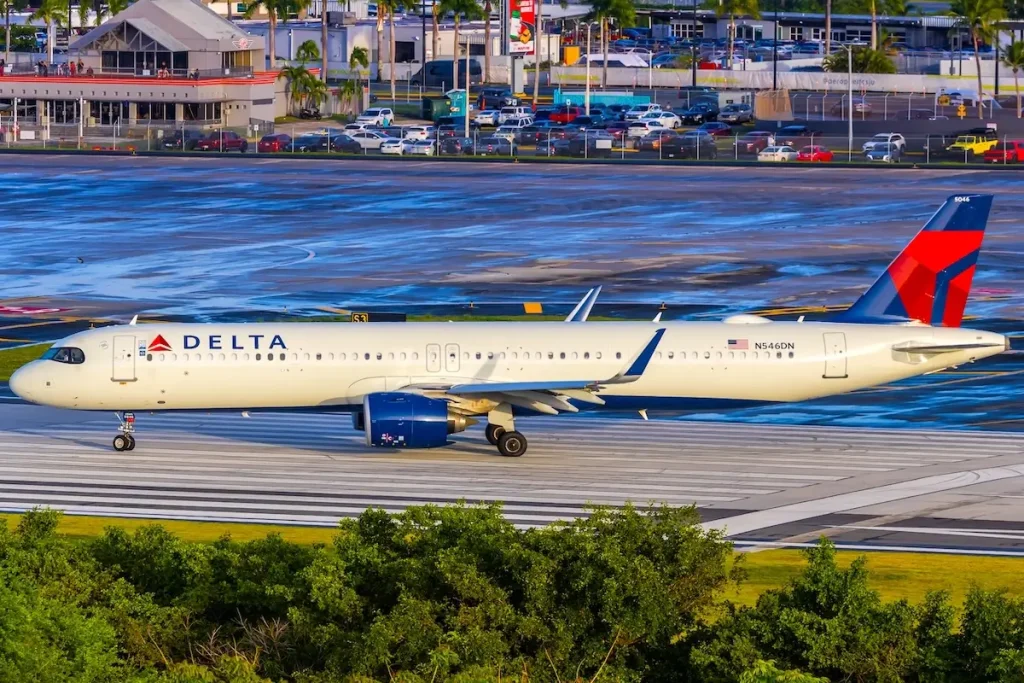
Delta’s landmark order for the A350-1000 in January 2024 further cemented its reliance on the planemaker for its future air travel needs. The deal included up to 40 units, with 20 firm and 20 additional options.
The additional capacity from -1000 to the existing -900 is what the airline considers ideal for reaching other markets while retaining fleet flexibility and simplicity, with markets across Asia and the Middle East of interest.
What cannot be ignored is the benefit that more aircraft arriving has for existing units, which have been taking the bulk of the pressure due to delays. As more planes are delivered, pressure eases, and fresh opportunities for deployment arise, which come with time and a degree of patience.
Things Could’ve Been Different With An NMA
Delta’s fleet mix, which is now leaning more heavily towards Airbus, could’ve been very different had Boeing moved ahead with a specific aircraft, the NMA, dubbed the 797.
This prospective model, which never moved past the drawing board in the 2010s, was of great interest to Delta, primarily because of its long-standing operation of the Boeing 757 and 767.

With some airlines, such as Delta, arguing that there has yet to be a perfect replacement for these planes over recent decades, the belief was that Boeing’s NMA was the ideal answer, which is why there was such high interest.
In February 2019, the airline began discussing the prospect of acquiring a model such as the 797, with CEO Ed Batian expressing the hope that Boeing would move forward with the launch of this proposed middle-of-the-market airliner, seeing it as a direct replacement for its 757 and 767 fleets.
After a handful of months and amid much discussion about Boeing following the recent MAX incidents, Bloomberg reporting highlights just how genuine Delta’s interest was, with the hope of purchasing up to 200 of the aircraft as a founding order, with room for this to grow further in due course.

While Boeing received support from Delta and many other airlines for the prospective launch of a dedicated middle-of-the-market aeroplane, the planemaker faced many issues that impacted its operations, and the launch of this jet never quite panned out.
A Crucial 737 MAX Order
While no Boeing 797 order was placed, Delta at least committed to one next-generation aircraft from the American planemaker in the 737 MAX, to help fuel renewal efforts.
This order, confirmed in 2022, was announced at the Farnborough Airshow, with the airline choosing 100 of the high-capacity 737-10 model, which also included options for an additional 30 planes, following a lengthy hiatus in orders.
The U.S. carrier went so far as to say the planes had been ordered based on studies showing the MAX 10 was perfect for the current business structure when operating from hubs, alongside its pilot utilisation strategies.

This, however, is the only Boeing aircraft on order, based on the airline’s history, therefore, and the sheer volume of fleet types that remain on order, that shift to Airbus has been more than noticeable; these jets and associated deals that can be recieved to take them in at this point in the carrier’s operation are proving to be winners.
Delta should’ve already been flying the 737 MAX 10 when it placed the order; it hoped to have 29 aircraft delivered across 2025. Instead, the plane remains uncertified and is unlikely to reach the airline’s hands for some time, as delivery schedules were forced to be adjusted.
Complications, But An Exciting Future Ahead
For any airline, relying primarily on one manufacturer can certainly have its benefits, evident in commonality and the building of a solid relationship with that customer.
In Delta’s case, there are clear benefits, with almost every Airbus aircraft type playing a role in the business to some extent. This reduces maintenance costs for the airline and, by extension, for its customers, increasing passenger comfort with newer planes. There are many other positives, too.

Delta has also been able to strengthen its relationship with Airbus by going all in on this planemaker, allowing it to secure better deals, competitive deliveries, and more. With a company that always requires more planes, there’s also an opportunity for Airbus to strengthen its backlog through future orders.
However, it has not been the most effortless transition; relying on just one planemaker has also thrown its curveballs, with delays in the acquisition of new planes driven by supply chain woes, political tensions, throwing early this year concerns about future orders and costs associated with deliveries and even obstacles in replacing existing fleet types.
With that being said, much of the delay in new deliveries is felt across the industry, whether the airline has primarily purchased Boeing or Airbus jets, from supply chain constraints to certification woes. While positives are present, there is still much patience required for any airline looking to renew its fleet.

ABOUT THE AUTHOR
Daniel Fowkes is a Melbourne-based aviation analyst and journalist with over a decade of industry experience. As founder of Dj’s Aviation, he delivers trusted analysis on aircraft, airline strategy and global aviation trends for djsaviation.net
Leave a Reply
Related Articles




Stay Informed
Get the latest aviation news, analysis and route updates delivered to your inbox.
We respect your privacy. Unsubscribe at any time.
Enjoyed this story?
Make us your go-to for aviation news
Add us as a preferred source on Google and see our latest stories first in Top Stories.
Add Us On Your News Feed
I’m an Airbus guy, but I have never seen an airline with so much weight & balance limitations, or ‘payload optimized flights’ (how they call it) on A320 family as much as this airline does.