

In 2020, Delta decided to ground its fleet of Boeing 777s, just after investing hundreds of millions into the product.
With questions over the future of the Boeing widebody at the time, what happened? Why were key decisions made, and did this move partly spell the end of the carrier’s strong reliance on the American planemaker?
A Global Pandemic & Opportunity
For most airlines, the global pandemic brought about a period of rapid change and equal pressures to sustain demand as government restrictions were imposed.
While the losses were severe during this period, and airlines saw all metrics of their business drop, for some of these companies, it wasn’t all doom and gloom.
For Delta, the COVID-19 pandemic presented an opportunity to simplify its business by eliminating fleet types, thereby streamlining operations and emerging from the restrictions as a more efficient company.

Many U.S. carriers, before the pandemic, and arguably some still do now, given their sheer scale, have a diverse range of aircraft types, which can be perceived as an inefficient way to operate nowadays.
Therefore, with demand having dropped, Delta sensed the opportunity to make changes to its fleet in a bid to streamline. However, before it could make the necessary changes, it was forced to park/ground aircraft in response to the drop in demand.
Delta Confirms Parking Of 777
Delta’s decision to park its Boeing 777 fleet came as no surprise, given that travel demand plummeted, and the Boeing widebody program was parked.
With that being said, before the grounding, the Boeing 777 played a crucial role in the long-haul operations of the business and was primarily deployed in transpacific markets, serving destinations in Asia and as far as Australia.

The Boeing 777 was also not the only aircraft type grounded; the scene across airports in the United States was that of a once-in-a-lifetime sight: the mass parking of fleet types, essential aeroplane graveyards at major international airports.
The benefits of the Boeing 777 operation were visible through the use of the 777-200LR, specifically the LR, which stands for Long Range, offering range possibilities far exceeding those of base models.
Usage of this aircraft allowed for not just the connection between markets long distances apart, even through service to South Africa, among some of the longest flights in the world, but also the ability to see cargo transported to these markets far and wide as well.
Unfortunately, however, the decision to ground the fleet came with consequences, including the inability to serve networks, despite demand having plummeted. This also followed a major investment.
See, Delta had commenced a significant investment in upgrading its Boeing 777 fleet to overhaul the product, an investment of hundreds of millions.
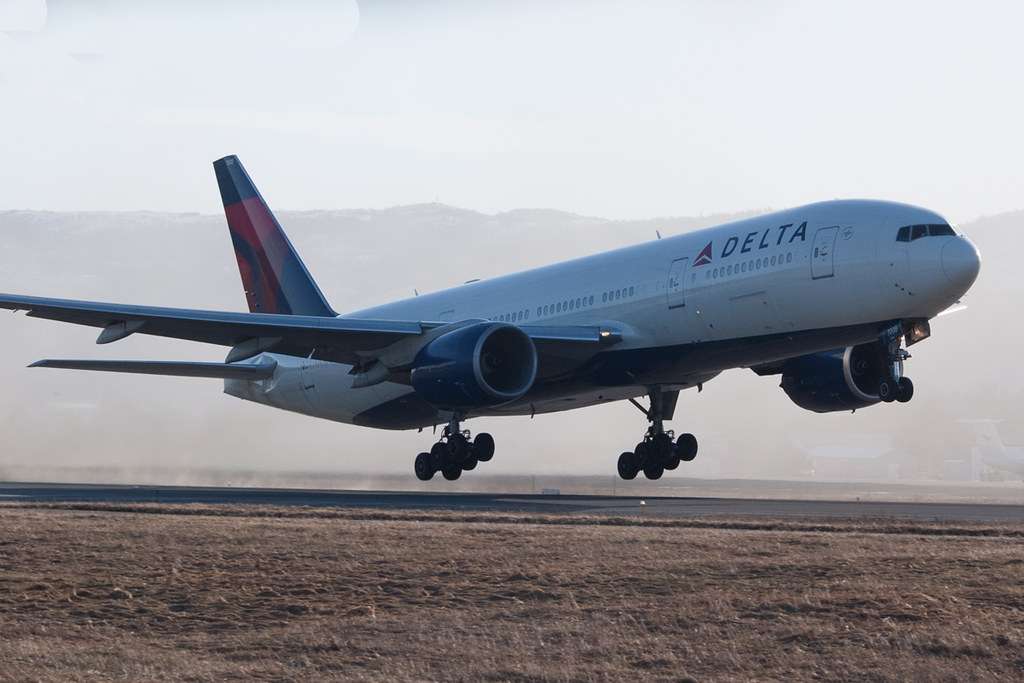
The investment would also allow Delta to bring the older aircraft, in comparison to inbound planes, up to date, which includes types such as the Airbus A350; however, hindsight shows that the investment likely was a mistake.
More often than not, when an airline invests money on this scale, it does not have the intention of immediately axing the product just moments after, for the return on the investment would not be present.
A Retirement Is Confirmed
In May 2020, just two months after the emergence of the COVID-19 pandemic, Delta acted quickly on the future of the 777 fleet.
Delta confirmed it would retire all of its remaining Boeing 777s by the end of 2020, part of an overall bid to simplify the fleet by modernising it with a greater reliance on newer and therefore more efficient types.
At the time of the axing, Delta had 18 Boeing 777s to its name, spread across the 777-200ER and the 777-200LRs, an almost even split with the LR model having more units present.
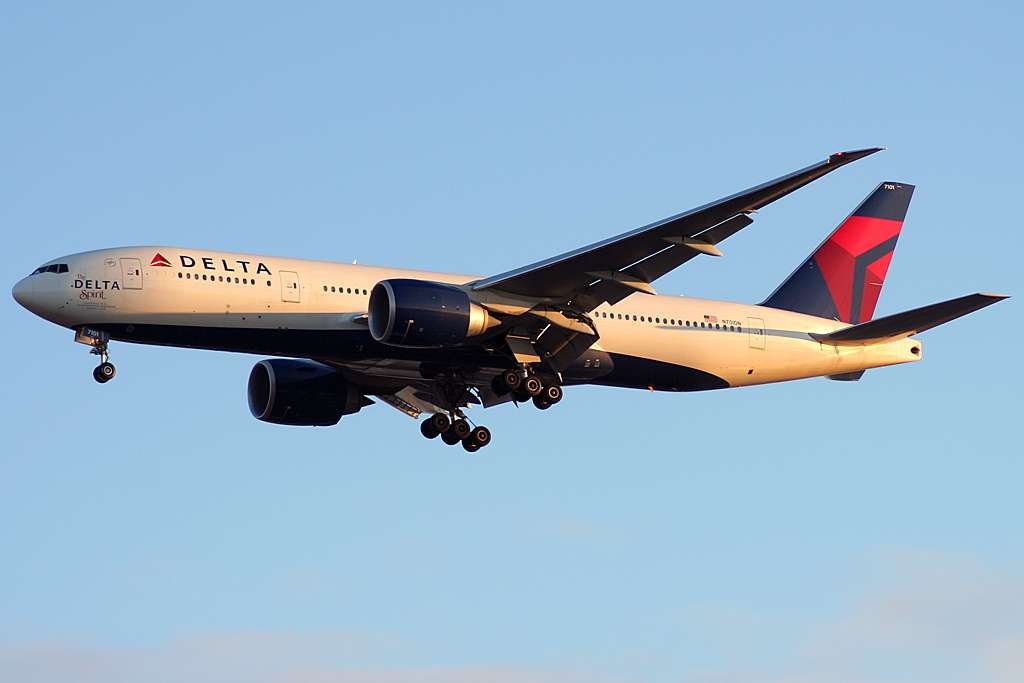
The airline’s Chief Operating Officer stated that the 777 had been a long-standing part of the fleet, and its operational reliability had consistently shone through during its 21-year tenure in service, following its first delivery in 1999.
However, the retirement of the aircraft was neccesary in a bid to move ahead and to respond to the COVID-19 pandemic, with a focus on being well-positioned for the eventual recovery of demand.
After many months, on October 31, Delta would go on to operate the last flight with the Boeing 777, flight DL8777, between New York and Los Angeles, a fitting repositioning flight as it headed to Victorville.
What Happened After This?
Delta’s decision to retire the Boeing 777 also fundamentally ended a long-established reliance on Boeing products and cemented a long-term future that would see a greater focus placed on Airbus products.
For the airlines’ widebody flying purposes, the use of the Airbus A350 is key, with the A350-900 being a primary option. Additionally, the A350-1000 is also expected to be utilised in the future.
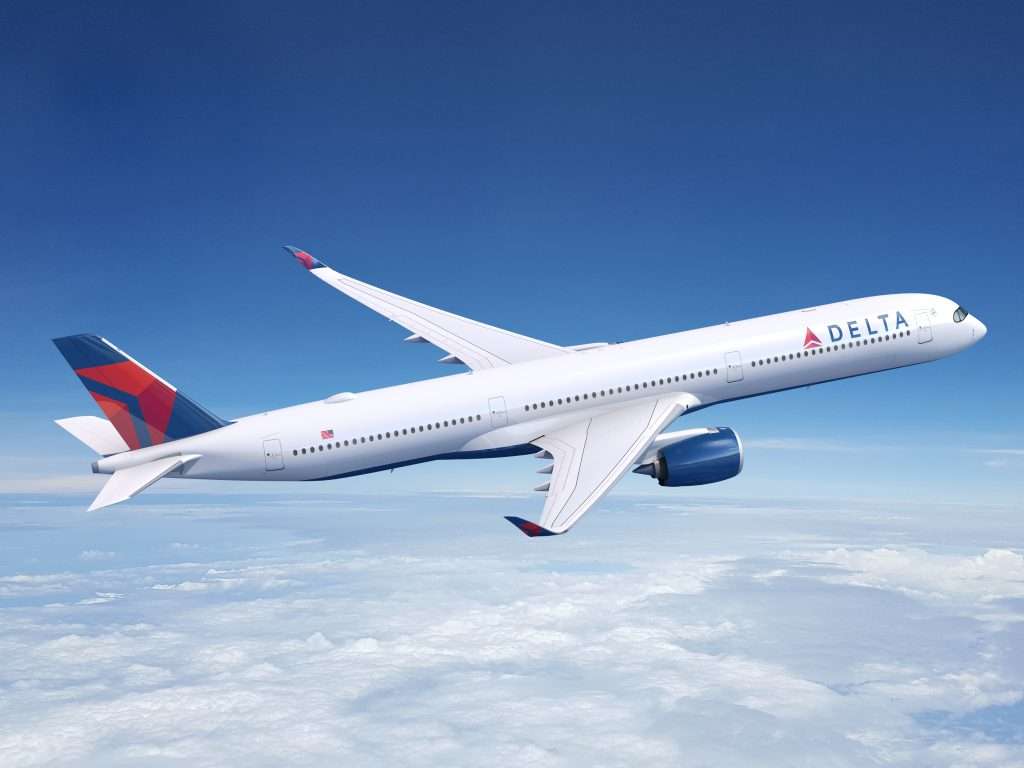
Delta also leverages the capabilities of the A330-900, part of the A330neo model, across its network, with the ability of this aircraft to serve medium-haul routes on a transatlantic and transpacific basis.
The use of aircraft such as the A330neo and the A350 also results in operations at a significantly lower cost, with improved cabins, reduced maintenance costs, and overall better reliability.
With that being said, the 777 still served as an important part of the airline’s route network for many years, and the airline and analysts would always argue that it fulfilled the requirements when purchased.
However, when the COVID-19 pandemic hit, harsh decisions needed to be made to preserve the business in the long term, which included retiring aircraft types such as the 777 to streamline operations. operations

Delta was not the only airline that was forced to make bold decisions to survive. In the end, although it was sometimes argued that it was short on capacity, it was the right decision for the business’s financial future.

ABOUT THE AUTHOR
Daniel Fowkes is a Melbourne-based aviation analyst and journalist with over a decade of industry experience. As founder of Dj’s Aviation, he delivers trusted analysis on aircraft, airline strategy and global aviation trends for djsaviation.net
Leave a Reply
Related Articles




Stay Informed
Get the latest aviation news, analysis and route updates delivered to your inbox.
We respect your privacy. Unsubscribe at any time.
Enjoyed this story?
Make us your go-to for aviation news
Add us as a preferred source on Google and see our latest stories first in Top Stories.
Add Us On Your News Feed
I was disappointed when Delta axed its 777. The same for the 747. I have been a true fan of aviation having built my first model, a Revell P-38 Lightning at age 6. At 12 we would jump the runway fence to witness a Delta 747 takeoff (1970). So, I’m naturally affected when these aircraft are retired.