

Delta once pinned its future hopes on Boeing’s proposed NMA, dubbed the 797, but those hopes didn’t quite pan out as intended.
With the NMA viewed as the hopeful replacement to the aging 757 and 767 fleets, CEO Ed Bastian even committed to purchasing hundreds to renew the fleet and grow across key transatlantic and transcontinental markets.
However, the aircraft never launched, despite Delta’s best efforts, forcing one of the largest airlines in the world to pivot.
Where Interest In The 797 Began
Delta’s interest in the Boeing 797, a proposed New Midsize Airplane (NMA), emerged towards the end of the 2010s, specifically through industry reporting in 2017 and 2018.
During this period, industry analysts and executives began discussing the introduction of a new middle-of-the-market airplane that would sit between the 737 and 787 and, in doing so, fill the void left by the outgoing 757 and 767.
In the case of Delta, reporting indicated that the airline, which already had large fleets of the two aforementioned aging Boeing jets, had an appetite to be a possible launch customer.

However, the buzz around a prospective purchase of the NMA, if it were launched, came from Ed Bastian, the airline’s CEO, who expressed hope on several occasions that Boeing should move forward with the aircraft.
With a view of the NMA possibly redefining what transcontinental and even transatlantic travel could be on thin routes, the jet was something Delta showed strong interest in throughout the latter stages of the 2010s, alongside other airlines such as Qatar Airways.
Delta’s Fleet Renewal Strategy
Delta specifically targeted the 797 to bridge the gap between its smaller single-aisle and larger widebody offerings, similar to what was achieved with the Boeing 757 and 767 fleets.
However, with these two airframes continuing to show signs of age, the need for a replacement was discussed internally at Delta, which, until murmurings of an NMA, felt no adequate replacement had yet come to market.

With the promise of a suitable range for transatlantic and transcontinental routes at lower costs, the 797 was viewed as a good pivot for Delta towards a more diversified strategy that focused on efficiency and flexibility.
Based on the metrics presented, the NMA was seen as a game-changer.
The Deal That Could’ve Changed Delta Forever
While many airlines express interest in aircraft that never left the drawing board, very few show such a strong intent to purchase the plane as Delta did with the Boeing NMA.
CEO Ed Bastian, across a multi-year period, pushed to be the launch customer of the 797, pitching the plane as the ideal replacement for its 757 and 767 jets on more than one occasion.
In 2019, Bastian publicly told Bloomberg at industry conferences that ordering the NMA was of interest and that, if the project was greenlit, such a purchase could include 200 aircraft.
Knowing that Delta had such a large fleet, Bastian pushed this as an incentive to Boeing to underscore just how interested it was in the hopes that not only would the jet be built, but it would also receive discounts and prime positioning for eventual delivery.

If the deal had materialised, the NMA would’ve appeared to have transformed the Delta businesses overnight, emphasising fleet acceleration and slashing operational costs across some of the airlines’ most in-demand routes.
Furthermore, additional capacity could have been deployed on secondary markets labelled ‘thin routes’ where demand was present but did not require an oversized aircraft, such as a widebody.
Why Boeing’s NMA (797) Never Took Off
Boeing’s NMA, which was often dubbed the 797, never took off for a handful of reasons. Its prime time in the industry was headline-grabbing, but also took place in a period of crisis which has occupied much of not just the 2020s but the latter stages of the 2010s.
Much of the momentum for the single-aisle program came in 2018 and 2019; however, this was also when the two fatal accidents involving the new 737 MAX occurred, while pushed to the side initially, the second crash unleashed a wrath of pain, not just on families, the industry and the world, but certainly on Boeing.
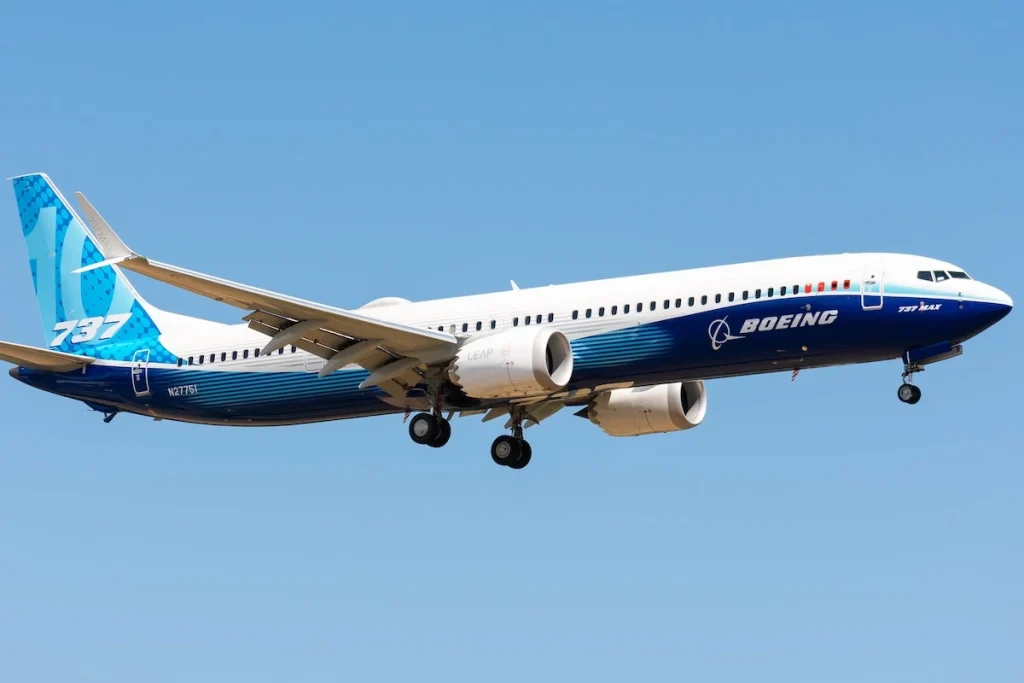
The profound impact trickled down to Boeing, costing them billions, and all attention was placed on the battle to get the most critical aircraft back in the skies, from certification and safety fixes to the push to regain trust.
There was little to no bandwidth available then for the business to push forward with innovation. The COVID-19 pandemic, which impacted travel, didn’t make matters any easier, despite Airbus’ launch of the A321XLR right before this, which is aided by its higher stability compared to its counterpart.
Analysts argue that Boeing missed a boat, and by the time some stability had been achieved, the pathway to launching the NMA with current technologies would not justify an upgrade, despite interest from the likes of Delta.
By the mid-2020s, the middle of the market sector presents a scene more depleted of options than once predicted, but Airbus’ A321neo program and derivatives largely hog a large share of the available market.
Delta’s Lost 797 Dream: What Happened?
Delta’s aggressive push for the Boeing 797 was within reason. Although the aircraft had not been formally launched at the time, it was seen as a clear game-changer and aligned with future fleet planning and internal strategies.
With CEo Ed Bastian positioning an order for up to 200 jets and the aircraft to directly replace the 757 and 767 fleets, it made sense, until Boeing shelved any internal plans it had to move forward with this aircraft, forcing the U.S carrier also to adjust its plans.

Now, for Delta, the most recent purchase of the Boeing 787-10 will help replace the 767s. On a smaller scale, the A321neo program has been deemed the most capable option to phase out the 757.
Had Boeing moved ahead with the NMA, Delta’s fleet composition could’ve looked very different, with arguments that the middle-of-the-market gap persists.

ABOUT THE AUTHOR
Daniel Fowkes is a Melbourne-based aviation analyst and journalist with over a decade of industry experience. As founder of Dj’s Aviation, he delivers trusted analysis on aircraft, airline strategy and global aviation trends for djsaviation.net
Related Articles




Stay Informed
Get the latest aviation news, analysis and route updates delivered to your inbox.
We respect your privacy. Unsubscribe at any time.
Enjoyed this story?
Make us your go-to for aviation news
Add us as a preferred source on Google and see our latest stories first in Top Stories.
Add Us On Your News FeedRelated articles
· Airlines
Allegiant Air Buys Six More 737-8s From Boeing
Daniel Fowkes
26/10/2026
· Airlines
Emirates vs Qatar Airways: The Gulf Superhub Rivalry Compared
Bryan Shelmon
26/10/2026
· Airlines
Riyadh Air Is Moving Away From Riyadh
Daniel Fowkes
26/10/2026
· Airlines
Emirates Isn’t Worried At All
Daniel Fowkes
25/10/2026