

Delta is turning 100, and to celebrate its centenary, the focus on the future couldn’t be more critical.
Thus, the major U.S. carrier has emphasised what the next century will look like in the ever-evolving and hard-to-predict aviation industry and is enhancing its relationship with Airbus.
The European planemaker and Delta will form a new partnership, focusing on the Airbus UpNext division. The partnership will advance the deployment of next-generation technologies, revolutionising the industry and how flying is conducted.
One of the first pillars announced is Delta and Airbus collaborating through early-stage fast-tracking of technology solutions to improve the future of flight, thanks to Delta’s Sustainable Skies Lab and the many labs Airbus has across its UpNext division.
But What Is Airbus UpNext?
In essence, Airbus UpNext focuses on developing the future of aviation by speeding up the implementation of key technologies that may be beyond what is feasible today. This will ensure that the industry is ready for whatever comes next.
This division aims to develop, evaluate, and even mature concepts currently being studied. Its goal is to find ways to make firm breakthroughs and implement them on larger platforms for eventual adoption on commercial airliners.
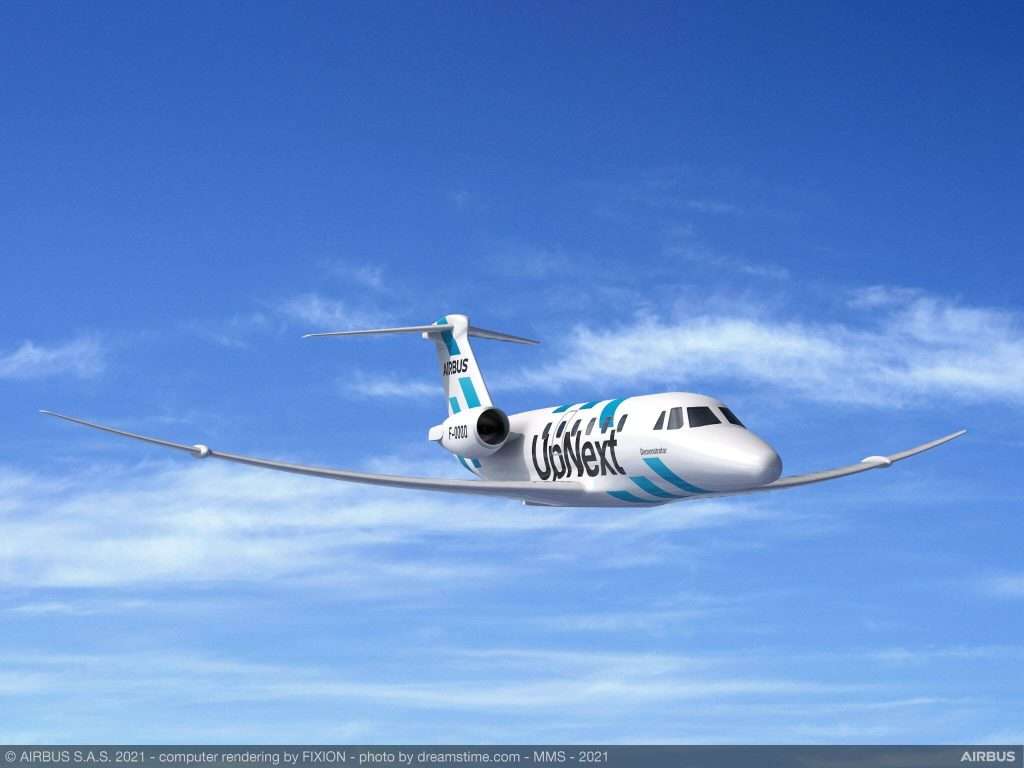
Current projects are underway, such as a demonstration focusing on validating and testing wing technologies to improve aerodynamics and performance for future aircraft entries into the commercial airplanes division.
Moreover, the mission is to identify disruptive trends and evaluate whether specific concepts have the groundwork to be studied further and eventually adopted.
What Are Delta & Airbus Doing?
In addition to collaborating to study new technological solutions, Delta says it will also test new flying techniques pioneered by what Airbus calls fello-fly. This endeavour aims to create an uplift that drives fuel efficiency and reduces fuel consumption thanks to wake energy retrieval.
This endeavour announced by the pair will see test phase flights set to commence in the second half of 2025. Furthermore, the continued commitment to Sustainable Aviation Fuel (SAF) will occur, with Airbus announcing that it will join the Minnesota SAF hub, a first-of-its-kind coalition.
The pair understands that decarbonisation is required, but not enough SAF is available to make this possible, so finding ways to scale this up will be essential moving forward.
Delta highlights the sheer percentage of the world’s population not in a fortunate enough position to fly and thus see the world. Therefore, the major international airline is making it a core mission to be a pioneer for the future, and relationships such as those announced with Airbus are crucial.
Achieivng net-zeto carbo emissions by 2050 remains the goal across the industry, it’s ambitious but Delta knows that coming together with those that produce planes will be crucial to ensure that aircraft design can move in a positive direction.
Moreover, the best fuel use cases and flying techniques must also be focused on to continue finding ways to adapt and increase efficiency across the board.

ABOUT THE AUTHOR
Daniel Fowkes is a Melbourne-based aviation analyst and journalist with over a decade of industry experience. As founder of Dj’s Aviation, he delivers trusted analysis on aircraft, airline strategy and global aviation trends for djsaviation.net
Related Articles




Stay Informed
Get the latest aviation news, analysis and route updates delivered to your inbox.
We respect your privacy. Unsubscribe at any time.
Enjoyed this story?
Make us your go-to for aviation news
Add us as a preferred source on Google and see our latest stories first in Top Stories.
Add Us On Your News Feed