

JetBlue has been placed back under the microscope in 2026, not because of a merger or a new product it’s aiming to launch, but because of questions about its future.
Its founder, David Neeleman, made comments over the last two months about the airline he had long since left, suggesting it would be unable to avoid bankruptcy in 2026 under its current model.
Those stark warnings were quickly dismissed by the airline itself, which argued that Neeleman’s lack of a role at the airline in recent memory means he is no longer qualified to assess the trajectory of the U.S. carrier.
That said, the question remains whether the business will be able to grow and stabilise itself from its current position enough to become a standalone, profitable and sustainable airline in the future.
Where JetBlue Finds Itself Today
The problems at JetBlue have been well documented for some time; it’s no stranger to them, and it’s been trying to work through them. The business isn’t big enough to compete with the major airlines, but it is also too expensive to run in its current space.
Additionally, it cannot be an ultra-low-cost carrier because its margins would be stretched even further. As a result, with domestic share having slipped, the airline’s unit costs now sit closer to those of its legacy competitors, who are in a much more stable position.
For JetBlue, following the COVID-19 pandemic, its operating expenses have surged, with a near-30% annual rise, whether due to wage increases for pilots and rewards driven by inflationary pressure, or to other operating expenses.
However, as operating expenses have grown and economic volatility has put pressure on the airline, it has not been able to maintain revenue growth at the same rate as outgoings. As a result, persistent losses have become a common occurrence for the U.S. carrier on both a yearly and a quarterly basis.
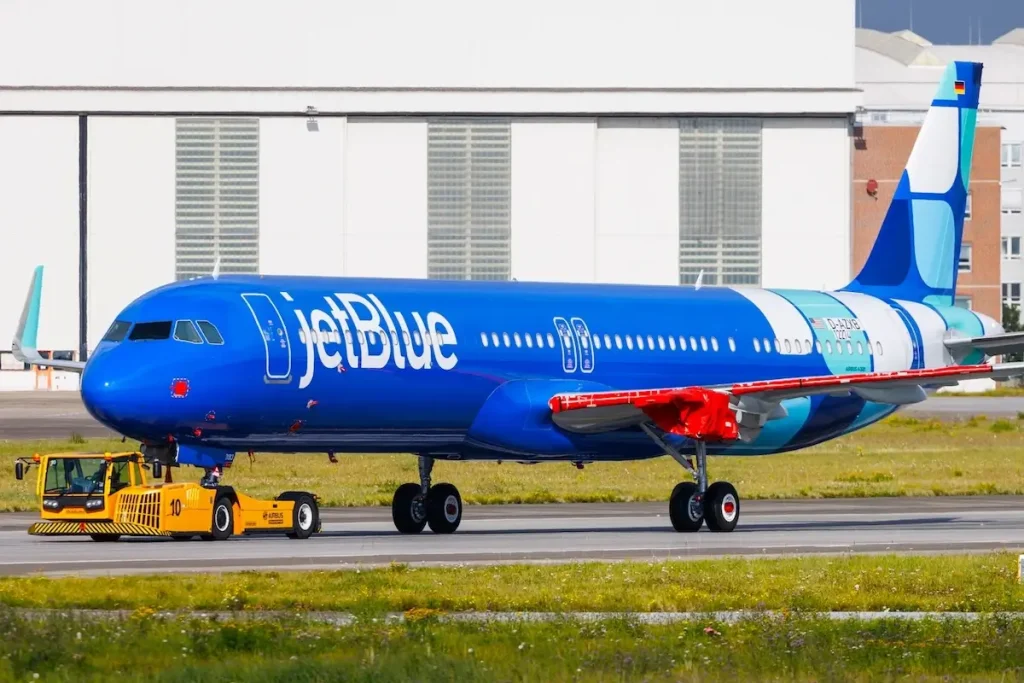
Those mounting losses have not allowed the airline to turn this around, meaning annual interest is already north of $600 million and heading towards the $800 million mark, on nearly $10 billion in debt.
JetBlue, therefore, finds itself starving for a sustainable middle ground in which it is debt-free and operating on a profitable model. What was once a structure that worked is now under significant pressure, something it has not been able to manage or fix, and the longer it is without a solution, the more pressure it is under.
Then, A Spirit Airlines Merger Fails
Another catalyst for the airline’s current position is what transpired years ago with Spirit Airlines. The two had an understanding to merge, an agreement that was ultimately rejected and torn up, but would’ve ideally put the two together as one to tackle the U.S scene.
These types of deals do not materialize overnight, and management on both sides spends significant time pursuing them, a process that is also expensive. The pitches include finding the best match among routes, fleet, assets, and more to stand the best chance of approval.
However, when the DOJ challenged the deal and won, the merger was killed, and the path that had been prosperous for the airlines led to JetBlue incurring a further hefty bill, from integration costs to the legal ramifications of its pursuit, which disrupted its margins even further.
The underlying issues didn’t wait for the airline during this time either. While the Spirit deal collapse was one angle, the business was also the Northeast Alliance at American Airlines, which was collapsing under antitrust pressure.

Profitability for the airline, which already seemed unlikely, was being put to the test by a worsening environment. Analysts say that JetBlue’s position over the last 5 years, whether due to internal or external factors, has worsened considerably, which is why there’s persistent talk about its future.
2026 A Nail In The Coffin
How 2026 has played out thus far is far from what anyone had predicted, let alone for multi-billion-dollar airlines that are also in debt, such as JetBlue.
When conflict broke out in Iran following strikes taken by the United States, alarm bells rang, and the impact was felt almost immediately, with a sharp increase in jet fuel prices as the closure of the Strait of Hormuz impacted supply.
Jet fuel, which had been sitting comfortably below $100 a barrel, skyrocketed to nearly double that, leaving airlines that had priced tickets and forecast expenses scrambling. For JetBlue, an already-in-debt airline that wasn’t profitable and was in a worsening economic position, this type of event hit it hard.
Full-year guidance has already been suspended; the business has cut capacity, increased fares, and indicated that it will move ahead with a slower hiring process, as its fuel guidance for even Q2 has sharply increased.
Neeleman directly referenced the fuel modelling, which showed that at a $4.50 price, JetBlue would stand to lose more than $1.2 billion in 2026. That modelling referenced to JPMorgan would push debt above $9 billion and ensure interest payments reach $800 million.
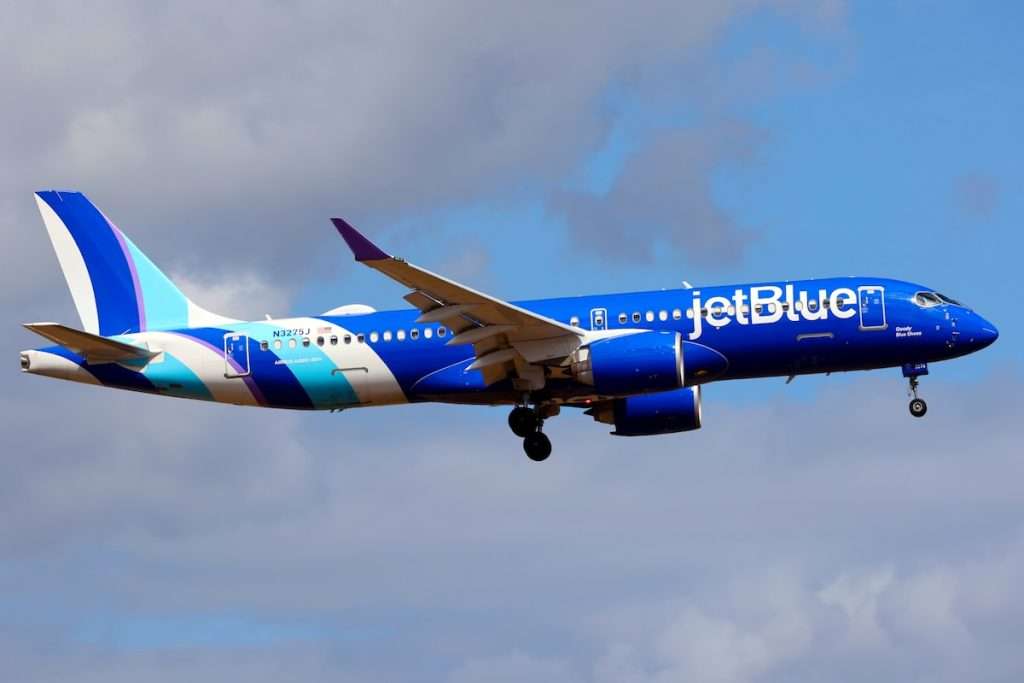
He believes that these types of figures, no matter what workarounds are implemented, would materially position the airline for bankruptcy or, at the very least, signal as much. With fuel prices not easing and operating costs continuing to rise, it’s a disaster for the airline, which has been unable to absorb the pressure.
Despite this, JetBlue has maintained that Neeleman’s comments are not representative of the business to date and has launched its JetForward initiative to raise funds and provide a pathway to break even and achieve positive free cash flow.
Pricing increases have been successful, but the problem remains the rising cost. With rising costs, prices are outpacing businesses’ ability to adapt, making it an endless game of catch-up where debt continues to balloon.
Spirit Collapse Gives A Chance To Reinvent?
Spirit’s shutdown came as no shock to the U.S. industry, but was still unfortunate given its history, employee base, and role. While never good news, within hours of the collapse, airlines were attempting to take on the role of the business by transporting passengers, none more so than JetBlue, and its intent was different from that of a larger operator.
With many new routes being announced, all on ex-city pairings offered by Spirit, JetBlue has built its largest-ever schedule from Fort Lauderdale this summer, with almost 130 daily departures and a sharp 75% year-on-year rise. Management is also flagging this as a focus location as it grows its Florida operations.
Early performance has also been encouraging for the airline, with third-quarter booking revenue showing strong signs as it targets routes flown by the now-collapsed Spirit. What this shows is that JetBlue’s early-stage opportunity view is paying off, but will it be enough to turn around its fortunes?
Finding ways to innovate is key, but structural problems for the business will persist, whether it’s rising costs, inflation, maintenance fees, aircraft challenges, or a customer base unwilling to keep paying more after the loss of Spirit.
Ultimately, pouncing on the collapse of Spirit shows an appetite for change, and the business is positive, as it should be, focused on the future. Still, concerns remain, and Neeleman’s concerns, while they may not materialize, are valid.

ABOUT THE AUTHOR
Daniel Fowkes is a Melbourne-based aviation analyst and journalist with over a decade of industry experience. As founder of Dj’s Aviation, he delivers trusted analysis on aircraft, airline strategy and global aviation trends for djsaviation.net
Related Articles




Stay Informed
Get the latest aviation news, analysis and route updates delivered to your inbox.
We respect your privacy. Unsubscribe at any time.
Enjoyed this story?
Make us your go-to for aviation news
Add us as a preferred source on Google and see our latest stories first in Top Stories.
Add Us On Your News FeedRelated articles
· Airlines
Allegiant Air Buys Six More 737-8s From Boeing
Daniel Fowkes
26/10/2026
· Airlines
Emirates vs Qatar Airways: The Gulf Superhub Rivalry Compared
Bryan Shelmon
26/10/2026
· Airlines
Riyadh Air Is Moving Away From Riyadh
Daniel Fowkes
26/10/2026
· Airlines
Emirates Isn’t Worried At All
Daniel Fowkes
25/10/2026