
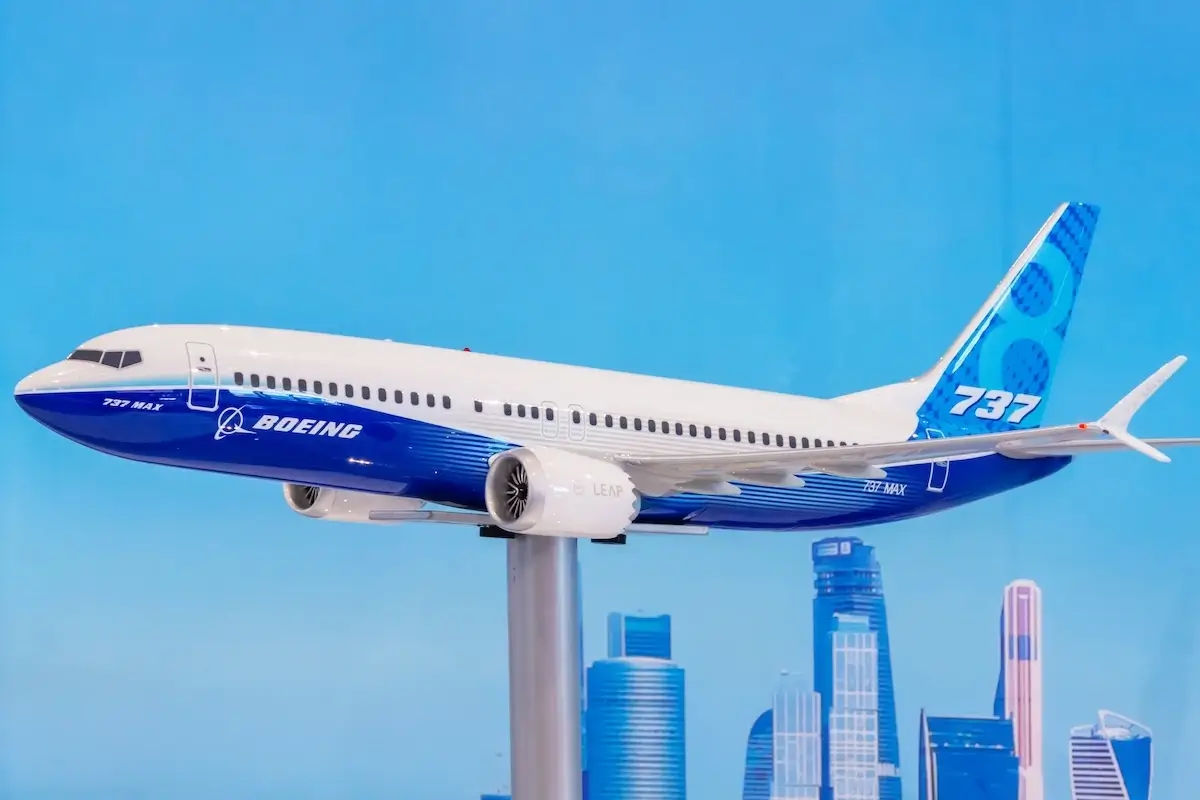
Boeing’s 737 MAX remains one of the most controversial programs, and it once had another model dubbed the 737-8ERX.
In an era where Airbus and Boeing were competing head-to-head with innovation through their at-the-time-fresh A320neo and 737 MAX families, respectively, both were finding ways to outdo each other.
The 737-8ERX was one possible option for the business in an effort to better compete with Airbus, which was advancing further development of its A321neo.
What was the 737-8ERX? What happened to the model? And what does the future look like for Boeing now?
Introducing The 737-8ERX
The prospective Boeing 737-8ERX was reported on in March 2015, with Leeham News’ Scott Hamilton and Bjorn Fehrm breaking the news of its development.
The reports suggested that Boeing was showing a conceptual aircraft to airlines around the world, dubbed the 737-8ERX. As the naming suggests, this aircraft would’ve acted as a long-range version of the 737-8, part of the MAX series.
More importantly, however, much of the interest in showcasing this prospective aircraft variant to airlines was driven by the need to fend off interest in the emerging A321LR from Airbus at the time.

At its heart, the concept aimed to add range to the -8 following various internal studies undertaken by the American planemaker in an effort to understand how to develop the MAX program and better compete with Airbus.
The range enhancement would see the 737-8ERX have a higher maximum takeoff weight, with the MTOW likely to be in the region of the 88-tonne mark, a six-tonne increase from the standard 737-8, which is available to airlines.
To make this possible, Boeing was reportedly adapting the airframe to utilise wings and other key components featured on the larger 737-9 model.
By making these slight changes, Boeing would have enabled the 737-8ERX to fly further than the 737-8 model, providing a better option for airlines seeking to upgrade their single-aisle fleet and avoid opting for Airbus’ alternative model.
What Happened To The Aircraft?
At the time of initial reporting, a prospective Boeing 737-8ERX was suggested to have a possible entry into service sometime in 2020 or 2021. This would also see it emerge just a handful of years after the A321LR.

If the business had proceeded, the aircraft would have been of interest and could’ve helped give airline customers more range without the need to complicate their fleets with another model.
However, there were downsides to the 737-8ERX; analysts pointed to the seat capacity of the prospective jet, which would’ve been less than that of the A321LR, while the A321LR’s selling point was its longer range. The additional capabilities, which also came on a jet with higher capacity, served as a bonus hard to pass up.
Over the course of Boeing’s time in the industry, numerous conceptual studies have been conducted, including some pitches to airlines, some of which remain internally, and others that are nearing a formal launch. However, unforeseen circumstances often arise at the last moment, preventing such variants from moving forward.

At the time of the early reports, Boeing stated that it would continue to conduct studies on advanced concepts to highlight new technologies that could be made available. However, just because this occurs doesn’t mean every innovation will see the light of day; all studies are still necessary.
Moreover, the fate that the 737 MAX program would experience just over three years after the variant was first reported was also far from favourable for the prospects of further iterations’ launch, as evident from the two fatal accidents that occurred in 2018 and 2019.
These accidents were deadly and damaging to Boeing’s reputation, given that the planes that went down were brand new; however, it was the aftermath that would uncover far more deeply rooted issues plaguing the business.
As a result, innovation was put on the back burner, with priorities shifting towards grounding the model, addressing quality control issues, and overcoming output struggles, a process that Boeing is still rebuilding nearly seven years later.

So, while the 737-8ERX likely did not work out as a conceptual study anyway, the 737 MAX crisis, followed by the COVID-19 pandemic, made the jet a less attractive option to pursue, all the while with uncertified models still in the program.
Ultimately, all this followed Airbus’ launch of the A321XLR, an evolution of the A321LR, ultimately killing Boeing’s attempt at a market-leading model, following their decision to halt proceedings on the NMA, dubbed the 797.
What’s Next For Boeing?
2025 has been a year of rebuilding for Boeing; however, it has also not been without its challenges, with the 737-8ERX now feeling like a distant memory for the American planemaker.
Instead of proceeding with this model, Boeing plans to focus on ongoing certification efforts for its two remaining variants in the initially promised lineup for the 737 MAX, which includes the 737-7 and 737-10.

These two variants, acting as the smallest and largest in the series, have backing and are also substantially delayed in their certification, thus leading to a delayed launch with customers, causing frustration among airlines awaiting the game-changing models.
Additionally, a focus has been on the range of culture, which is directly tied to quality control, safety, and productivity at both the operational and production levels. With MAX production having been capped for nearly two years, this has taken a financial toll on the business.
Boeing continues to study for the 2030s, while recently cooling talk of a new prospective single-aisle jet. The Wall Street Journal reports that work is underway on the next iteration of Boeing’s commercial aeroplanes division as it eyes a replacement for the 737 MAX in the 2030s.

The 737-8ERX studies remain important for the planemaker in the context of its history; those studies are not something that can be entirely disregarded, as the learnings are key for the development of other aircraft and also for the trajectory the business has taken. However, it ultimately did not proceed at that time.

ABOUT THE AUTHOR
Daniel Fowkes is a Melbourne-based aviation analyst and journalist with over a decade of industry experience. As founder of Dj’s Aviation, he delivers trusted analysis on aircraft, airline strategy and global aviation trends for djsaviation.net
Leave a Reply
Related Articles




Stay Informed
Get the latest aviation news, analysis and route updates delivered to your inbox.
We respect your privacy. Unsubscribe at any time.
Enjoyed this story?
Make us your go-to for aviation news
Add us as a preferred source on Google and see our latest stories first in Top Stories.
Add Us On Your News Feed
This looks great.. just built them safe first.. We can feel your back on the right track.. good job!!