
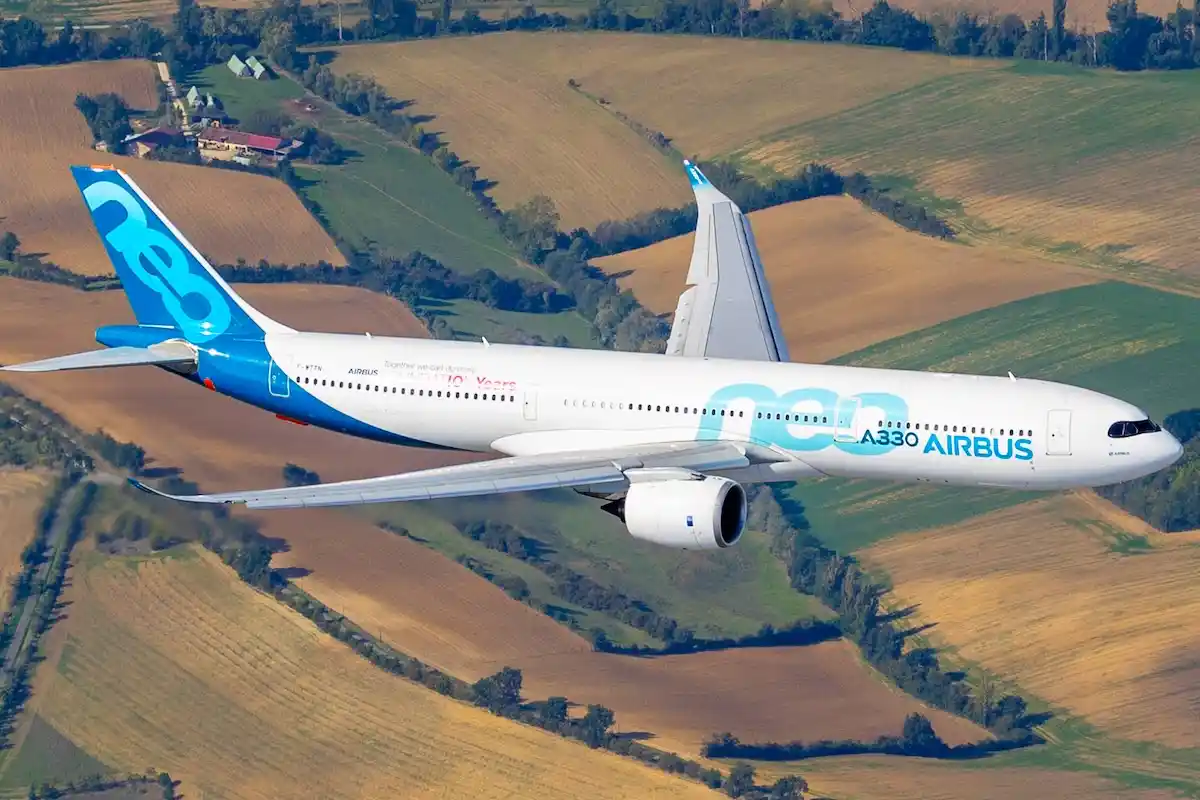
Airbus has just improved its A330-900 with a new maximum passenger capacity of 480, opening the door to new possibilities and, crucially, far denser cabins.
As Airbus looks to strengthen the midsize widebody against Boeing and the clean-sheet, highly popular 787 product, the increase adds a further 15 seats to the previous 465-passenger limit through enhanced emergency exit equipment.
The change matters for customers because it lets them carry more passengers on busy regional or medium-haul routes and gives companies more reason to commit to the type.
What did Airbus change on the A330-900?
As part of the capacity change, the higher limit is possible thanks to the evacuation capabilities. The European Union Aviation Safety Agency’s A330 type certificate data sheet has identified approval arrangements that now accommodate 480 passengers.
Under this approval, modification 210978 requires installing four pairs of Type A+ exits, identified as “Slide rafts for Type A+ Exit.” This means that, without modifying the A330-900, the maximum seat capacity will remain at 465.
The seating ceiling approval isn’t a stretch of the aircraft or its fuselage to fit more seats, but part of the typical process planemakers use throughout a programme to find ways to extract more performance, win over customers, and close the gap with competitors.
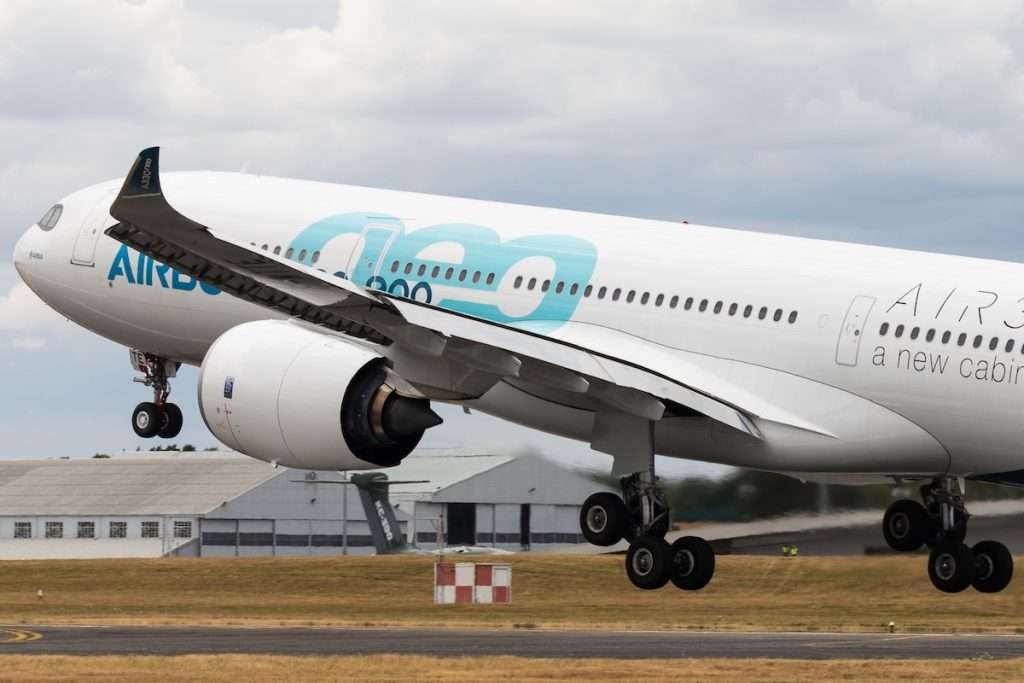
EASA has further specified that the approved interior layout determines each aircraft’s maximum passenger capacity as delivered, meaning an airline still needs approval for the relevant cabin arrangement, and exit modification isn’t the only lever to pull to create space for the extra 15 seats.
Furthermore, while the A330-900’s maximum seat count is now listed at 480 passengers, like other aircraft types, that doesn’t mean most airlines will configure it that way. An airline hits the maximum capacity limit only if it chooses an all-economy layout that prioritises seats over space.
Traditionally, the average A330neo operator looks for a cabin configuration that balances premium and standard seating to drive strong revenue per flight. As a result, capacity in a three-class layout typically sits closer to the 287-303 limit.
The high-density opportunity with the A330-900
While most operators will not configure their A330-900 close to maximum seat capacity, some airlines have found real opportunities in this higher capacity.
Cebu Pacific is an established user of the A330neo and has shown the type’s potential, with its first delivery in November 2021 to the Philippine-based airline, enabling a single-class layout on an efficient widebody platform.
Since the jet’s delivery, Cebu Pacific has focused heavily on trunk routes to Asia and even Australia, with a capacity of 459 seats and an all-economy 3-3-3 layout. This is the densest A330-900 layout to date, pushing the jet to its limits at the time.
Similar opportunities, such as with Cebu Pacific, are evident in scenarios focused on low-cost widebody operations, concentrating on high-volume leisure flying and regional routes where demand is concentrated in a limited number of departures.
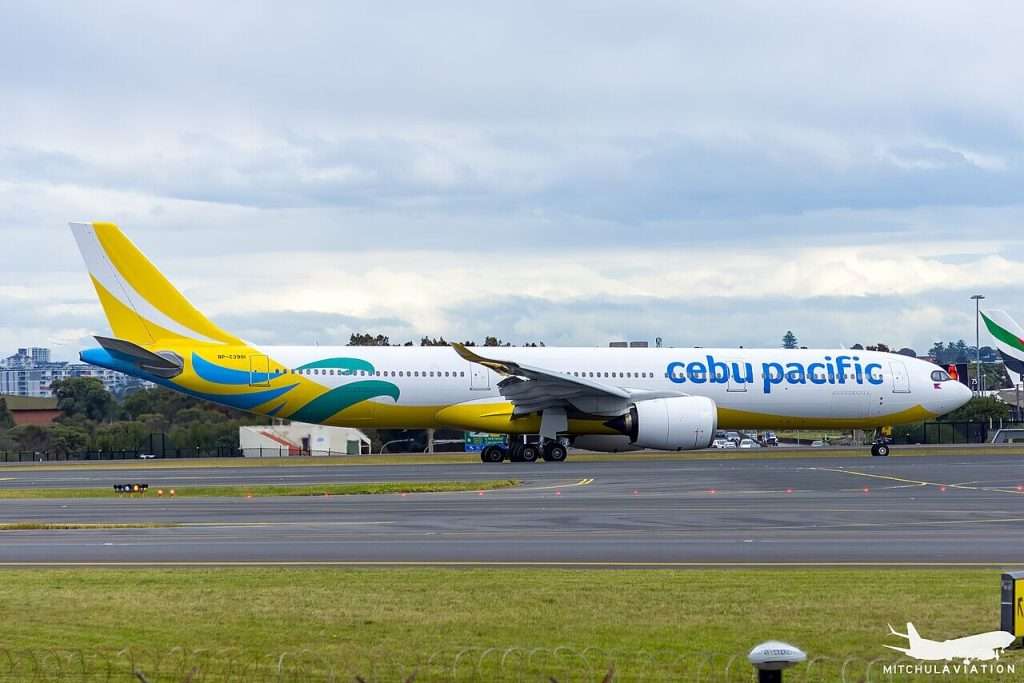
For these operations, the emphasis is on commercial value, and the additional economy seats benefit airlines that already depend heavily on load factors and selling every seat. Low-cost Asian operators have been cited as ones who could benefit, but it is not strictly limited to just here.
Airbus’s A330-900 ultimately aims to close the gap between the product and the 787 Dreamliner, while creating a clear use case for specific operators at a fraction of the cost of launching a new clean-sheet widebody.

ABOUT THE AUTHOR
Daniel Fowkes is a Melbourne-based aviation analyst and journalist with over a decade of industry experience. As founder of Dj’s Aviation, he delivers trusted analysis on aircraft, airline strategy and global aviation trends for djsaviation.net
Related Articles


Stay Informed
Get the latest aviation news, analysis and route updates delivered to your inbox.
We respect your privacy. Unsubscribe at any time.
Enjoyed this story?
Make us your go-to for aviation news
Add us as a preferred source on Google and see our latest stories first in Top Stories.
Add Us On Your News Feed