
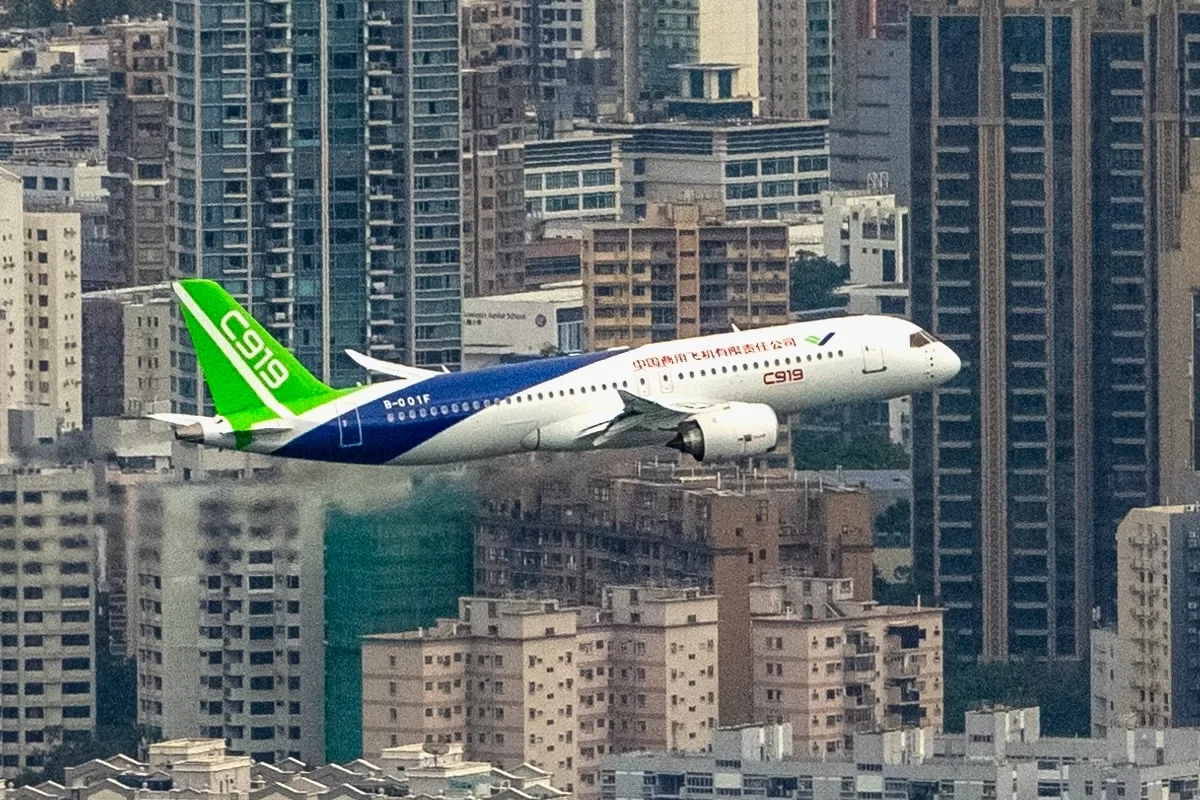
COMAC’s C919, which rivals the Airbus A320neo and Boeing 737 MAX, has completed its first scheduled international commercial flight as it ramps up preparations to debut globally.
The flight, operated by Air China, flew from Beijing Capital International Airport to Ulaanbaatar in Mongolia on 12 August 2026 and became the first commercial C919 service beyond mainland China.
Flight CA723 departed Beijing at approximately 1517 local time, arriving in Ulaanbaatar just before 1700, giving the C919 a chance to serve an international market after previously operating only on domestic scheduled services.
While short, the route allows COMAC to demonstrate its capabilities in an overseas market within easy reach of China. The C919’s international reach is vital as part of efforts to handle air and ground processes overseas and demonstrate that this single-aisle aircraft is a viable option outside of mainland China.
Mongolia is the natural first destination for the C919
COMAC’s decision, supported by Air China, to launch the C919’s first scheduled international service to Mongolia was logical, as the close ties from an aviation standpoint were already present. Where the aircraft lacks approval elsewhere, it has the green light under Mongolian regulatory arrangements without needing EASA or FAA certification.
As a consequence, the international debut in Mongolia was the easiest and best test case. At the same time, the planemaker awaits its certification from EASA, which, in the last 8 months, began key test work, albeit at a slower pace, to verify the C919 and whether it could be cleared in Europe.
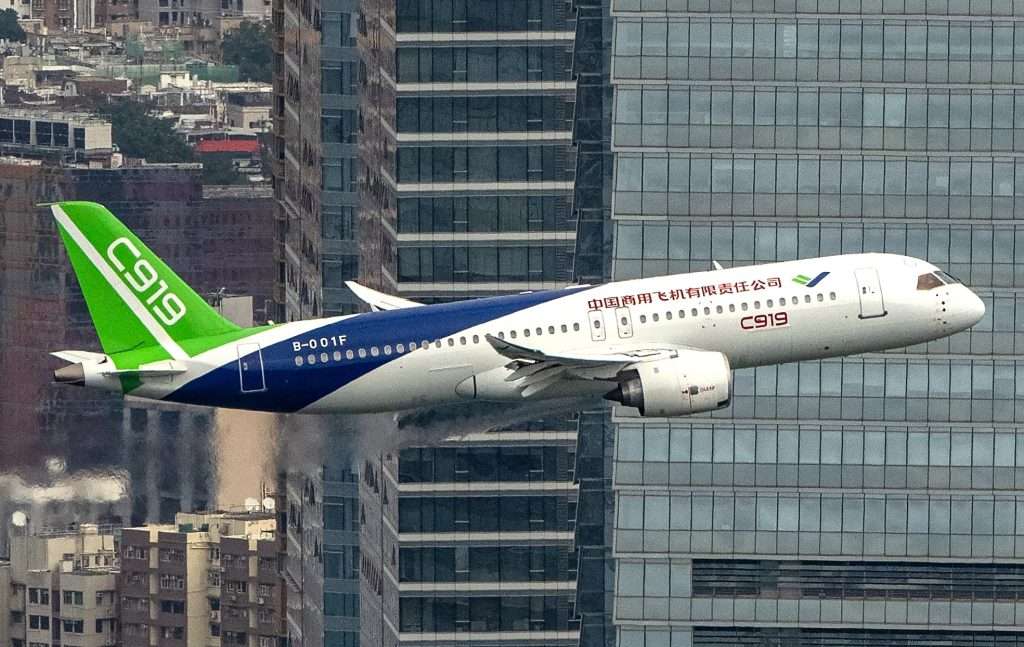
The C919 is COMAC’s answer to the A320neo and 737 MAX duopoly held by Airbus and Boeing, respectively. Although still young, the aircraft has been in commercial service since 2023 with China Eastern Airlines and has since seen its customer base grow to include Air China and China Southern as well; this, though, has just deepened the domestic base.
Without international flying, the type’s critics have had further reason to doubt. While the debut is an important next step, it doesn’t mean global deployment can be achieved. Chinese certification is not recognised in all markets, which restricts adoption beyond other concerns; this is why Mongolia presented as the best option.
Can the C919 challenge the A320neo and 737 MAX?
The C919, being designed for the same segment as the Airbus A320neo and Boeing 737 MAX families, has been viewed as an ambitious move by industry analysts. Demand for short- and medium-haul aircraft has surged, while delivery availability has become increasingly constrained; COMAC aims to change that with its limited backlog.
Its single-aisle design, able to carry in the mid-to-high 100s range in a typical layout, is positioned as the answer to today’s constrained availability of A320neo family and 737 MAX aircraft. For China, it’s an attempt to break the long-held duopoly and see airlines receive a next-generation single-aisle sooner than having to wait into the 2030s, as Airbus and Boeing both hold backlogs numbering in the thousands.
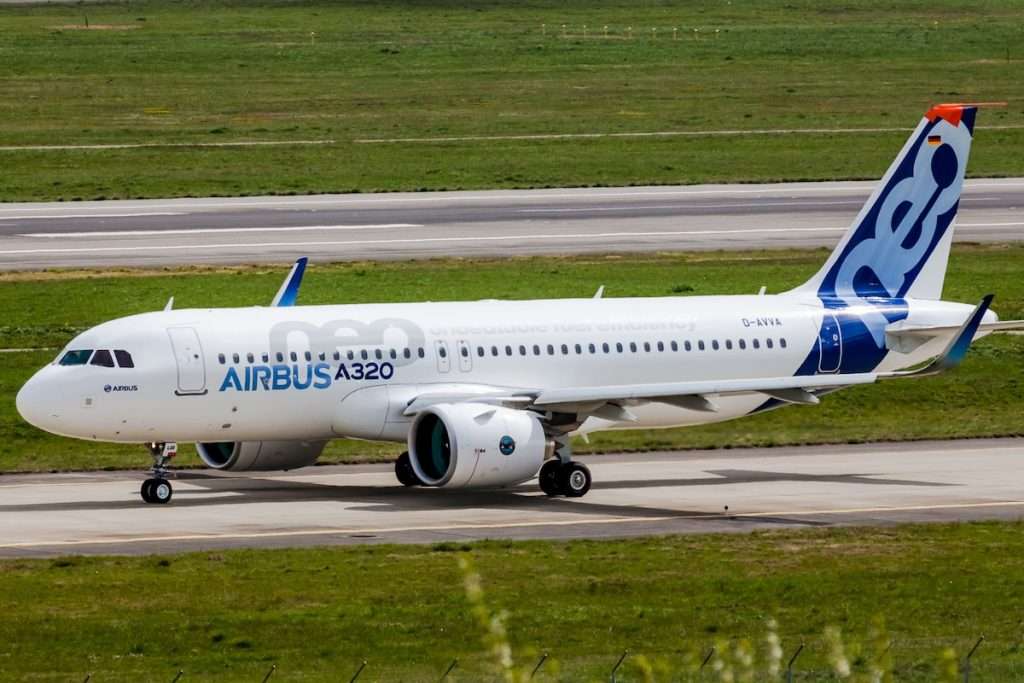
For China, the aircraft provides another supply option with delivery slots constrained, while geopolitical tensions with the West also create uncertainty; the long-term goal is to see adoption on a global scale. However, without certification and concerns about quality, scale and relations, the C919 and planemaker have not been able to break into the West.
Airbus and Boeing produce dozens of aircraft per month and are supported globally with maintenance, spares, training, and other networks. COMAC’s output is lower, and it’s yet to prove it could support an airline on the other side of the world; that’s a cause for concern in a volatile industry beyond just the certification aspect.
As a result, while the first international flight is historic for the C919 and COMAC’s progress, its end goal of being a global solution still faces challenges in certification, supply chain, support, and market adoption. Those challenges were emphasised after several airlines, such as Korean Air and Ryanair, rejected the type in favour of sticking with what was familiar and proven.

ABOUT THE AUTHOR
Daniel Fowkes is a Melbourne-based aviation analyst and journalist with over a decade of industry experience. As founder of Dj’s Aviation, he delivers trusted analysis on aircraft, airline strategy and global aviation trends for djsaviation.net
Related Articles




Stay Informed
Get the latest aviation news, analysis and route updates delivered to your inbox.
We respect your privacy. Unsubscribe at any time.
Enjoyed this story?
Make us your go-to for aviation news
Add us as a preferred source on Google and see our latest stories first in Top Stories.
Add Us On Your News Feed