
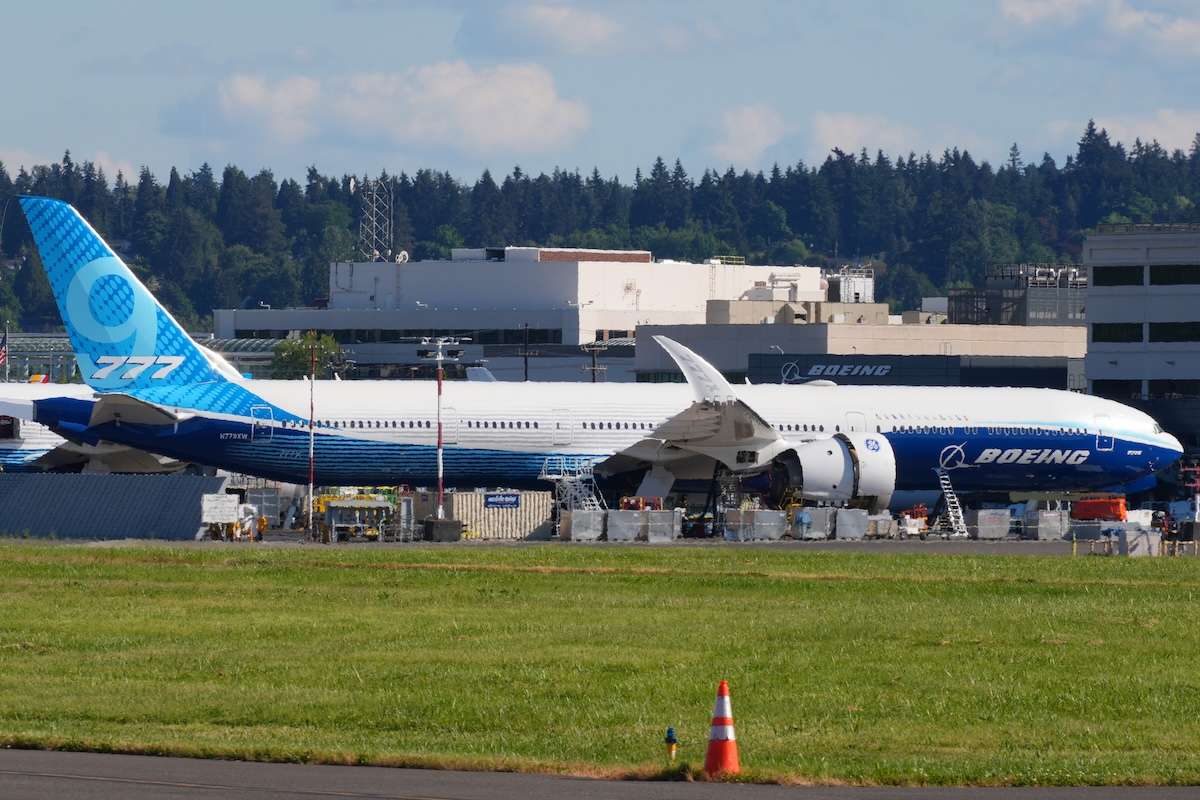
Lufthansa is betting its entire future economic success on two aircraft: the Boeing 777X & Airbus A350.
The German flag carrier continues to fall short of its economic goals due to both internal and external factors. In a Hail Mary attempt, the success now hangs on the coattails of these two aircraft.
What makes it a gamble is that both aircraft models are brand-new and will take more than a decade to determine whether the shift will pay off.
However, with rising costs for its current operation, this ambitious fleet renewal program may be grounded before it even takes off.
Exploring Lufthansa’s Older Fleet of Widebodies
Lufthansa’s fleet renewal is long overdue. It’s been more than a decade of attempting to introduce new long-haul aircraft into its fleet, and its long-time workhorses are beginning to show their age.
The Boeing 747, Airbus A380, and A340 are Lufthansa’s wide-body aircraft servicing long-haul routes between its Germany hub and destinations across North America and Asia. The flag-carrier’s current bet is to consolidate the variety of wide-body aircraft in the fleet in favour of two exceptional models that can handle the same capacity.
What do each of Lufthansa’s current wide-body aircraft have in common? They’re all quad-engine aircraft. Quad-engine aircraft use more fuel, and rising fuel costs due to global conflicts are putting significant strain on operational costs for every flight.
Lufthansa aims to achieve Net 0 emissions in the future, but the massive fuel burn from quad-engine aircraft results in higher-than-desired emissions.

Operating costs aren’t the only thing influencing Lufthansa’s decision to bet on the next-gen aircraft. It’s seeing a decline in customer satisfaction due to the flying experience. It has a different onboard experience across each aircraft, and customers are seeking a more premium experience every time they fly that older planes can’t deliver, compared to newer, state-of-the-art models.
Lufthansa’s gamble on its next-gen fleet hopes to solve each of these issues.
The 777X and A350 Orders: What has Lufthansa Committed To?
One of Lufthansa’s biggest risks is betting the entire success of its long-haul fleet on aircraft models that have yet to prove themselves in the sky. It originally ordered 10 Airbus A350-1000s and shortly after increased its commitment to 15. The first is currently scheduled for delivery in Fall 2026, with the remainder projected through 2029.
The Boeing 777X is the second next-gen aircraft that will help phase out Lufthansa’s aging fleet. The German airline will be a launch customer for the 777X after committing to 27 total. However, it’s been a storied aircraft, with extensive delays pushing delivery back by more than 6 years, so it remains uncertain when they’ll finally enter the fleet.
In June 2026, a doubling down on its gamble became clear with an intent to increasing an for both aircraft models by 2027. It introduces additional risk, with an extensive backlog of aircraft from both manufacturers.
However, with big risk comes big reward if the gamble pays off.
Why Has Lufthansa Committed to the A350 & 777X?
Lufthansa’s fleet renewal program will upgrade nearly 60% of its current fleet. The A350-1000 and 777X are part of the next generation of long-haul aircraft. Ordering both models allows Lufthansa to compare the most efficient plane for its operations side by side. Since both meet goals for the updated fleet, the airline is confident they will be high-flying successes once delivered.
Lufthansa’s bet on the A350 and 777X isn’t a random roll of the dice. They’re upgrades to the A350-900 and 787, which it already operates. It provides a preview of how twin-engine wide-bodies fit into the fleet program before the newer models are received.
With a twin-engine design, Lufthansa can work towards its Net 0 ambitions by operating lower-emission, more fuel-efficient aircraft on its long-haul flights. Additionally, it hopes the order will streamline maintenance and reduce repairs compared to operating older models.
One of the biggest advantages of betting on the A350-1000 and 777X is the improvement in customer experience. As Lufthansa introduces them into its fleet, it will create a more consistent onboard experience and improve its premium classes, as seen with the updated Allegris 787 cabin experience.
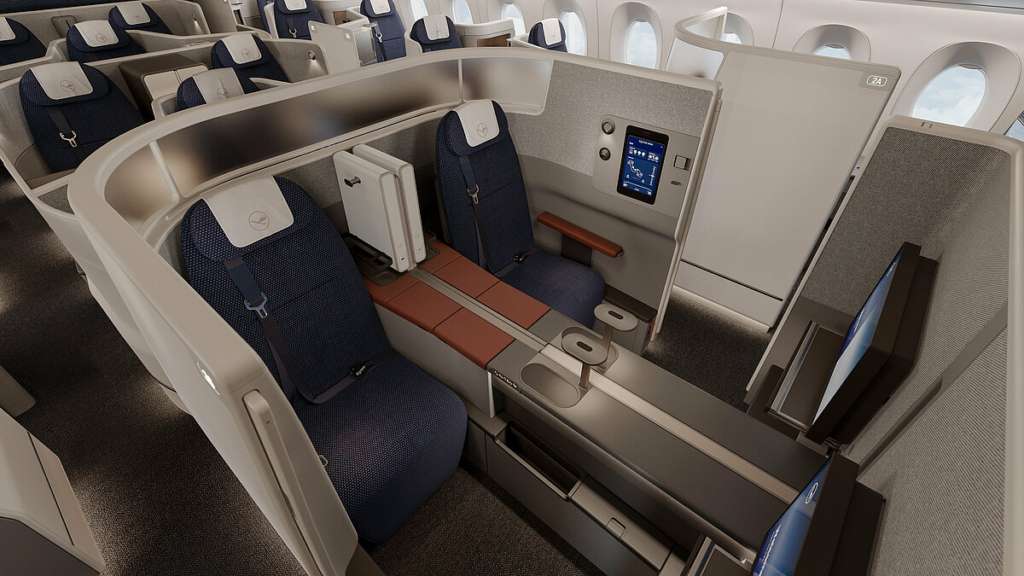
The next-gen aircraft will help reduce jet lag on long-haul flights, provide improved in-cabin lighting, offer more room for carry-on bags, and reduce engine noise.
Lufthansa’s early commitment to both Airbus and Boeing gives the airline a head start on competition once the aircraft are finally delivered.
How Have the Delays Hurt the Airline?
The downside of making firm commitments so early for the new aircraft is that it ties up financial resources until the aircraft is delivered. And this has been one of the biggest nail-biters for Lufthansa’s bet on the A350 and 777X.
Lufthansa Group placed its initial order for the A350-1000 in March 2023. Delivery was supposed to start in April 2026, but the timeline has already been pushed back by 6 months to October 2026.
As a launch customer for the 777X, it committed to nearly 30 aircraft when the program was announced in 2013, with a target delivery in 2020. However, with the COVID pandemic and now certification delays, it’s projected for 2027.
Lufthansa has waited patiently for its next-gen aircraft, which hasn’t materialised as expected. With each delay, the business is stuck with high operating costs from flying its quad-engine planes, maintenance costs for older aircraft, and declining customer satisfaction. Each of these has major implications for its financials.
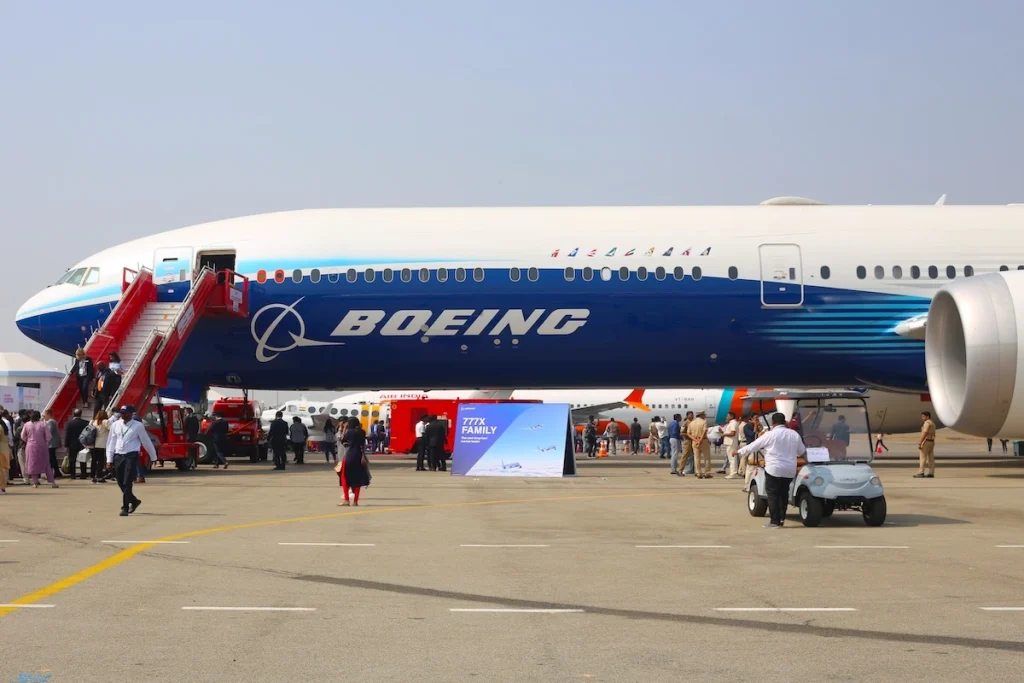
The airline is already years deep into the gamble on the A350-1000 and 777X, but how long can it hold out before its financial resources run out?
Will the Gamble Pay Off By 2040?
Based on expected delivery dates and the time required to introduce new aircraft into commercial operations, Lufthansa has a long time before it sees any potential return.
There’s no doubt that the 777X and A350-1000 will be a timely lifeline for the German flag carrier. Improved operating costs will boost profit margins, and the upgraded passenger experience can increase demand for long-haul flights between continents.
As Lufthansa’s fleet renewal unfolds with its next-gen aircraft, it’s a race against time to prove it made the right bet.

ABOUT THE AUTHOR
Bryan Shelmon is an aviation journalist with 10 years of experience covering commercial aviation, private aviation, airports, aircraft and wider industry news. Based in the Detroit metropolitan area, he has contributed to publications including Lonely Planet, Matador Network and Visit Detroit.
Related Articles




Stay Informed
Get the latest aviation news, analysis and route updates delivered to your inbox.
We respect your privacy. Unsubscribe at any time.
Enjoyed this story?
Make us your go-to for aviation news
Add us as a preferred source on Google and see our latest stories first in Top Stories.
Add Us On Your News FeedRelated articles
· Uncategorized
· Routes
WestJet Is Cancelling 3 European Routes
Daniel Fowkes
03/10/2026
· Uncategorized
Lufthansa’s Boeing 777X & Airbus A350 Gamble
Bryan Shelmon
10/09/2026
· Emergency Landing
· Uncategorized
SWISS A330 Makes Emergency Landing As Smoke Fills Aircraft
Daniel Fowkes
28/07/2026
· Uncategorized
Airbus A321XLR and Boeing 787 Avoid Collision
Daniel Fowkes
19/07/2026