
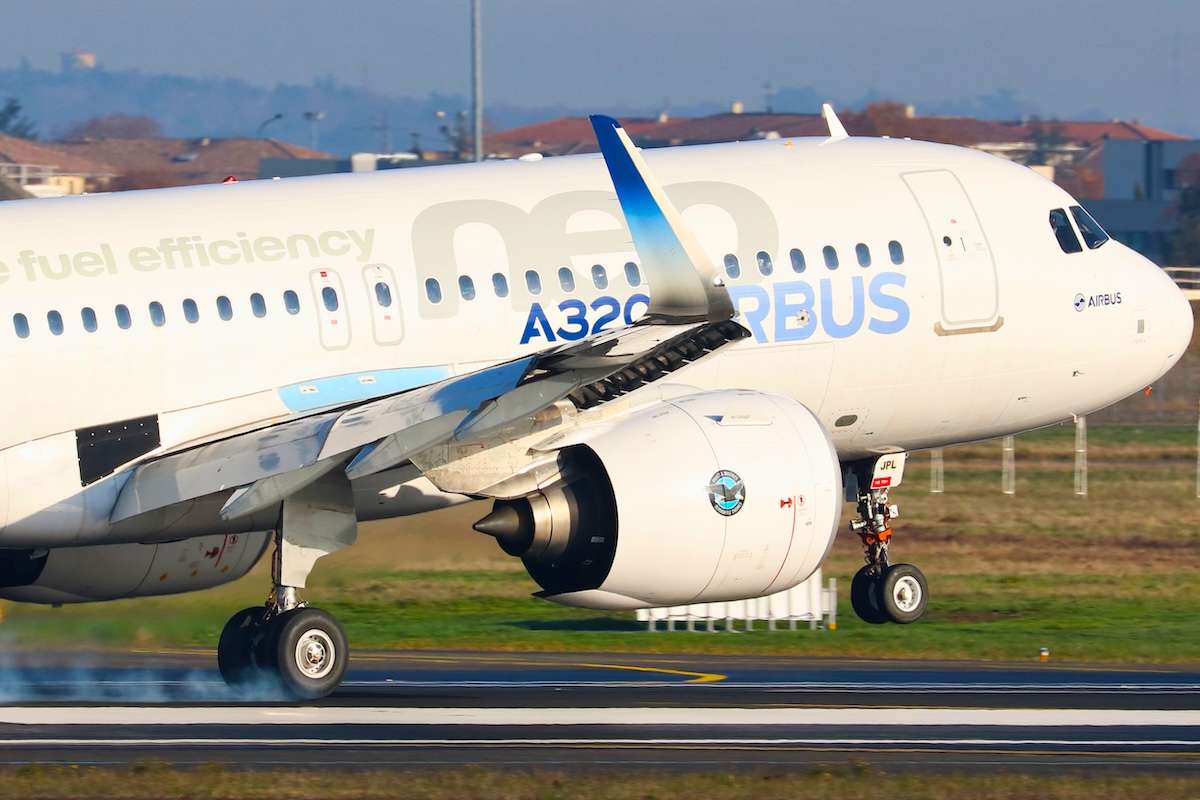
Airbus CEO Guillaume Faury has reaffirmed his stance that the company will launch its all-new aircraft soon, serving as the successor to the A320, with a 2030 launch and entry into service in the second half of 2030.
Speaking with Aviation Week, Faury said the project, which has been internally named as eAction, is in the deep research stages, with pre-project and technological comparisons and evaluations ongoing.
As a result of its drive, the timeline has not changed; the business is working overtime to lay the groundwork for this new aircraft so it can enter the industry.
Airbus Prepares The A320 Successor
Speaking in an interview, Faury described the future of the narrowbody as the successor to the A320, as expected given the A320 family’s role for decades and its continued presence into the 2030s.
With a view to launching the program in 2030 and having the model enter service by the second half of that same decade, the planemaker is not just focused but very committed to the schedule and believes this is the perfect slot for launch.
Technological development pairs directly with ongoing research. Airbus needs to understand the solutions available to it across multiple fronts while also conducting simulations and pre-project analysis.
The work covers multiple angles, including wings, the fuselage architecture, how propulsion will change, and which concepts can be implemented in the basic systems to be installed on the aircraft.

Beyond the scope of the aircraft itself, Airbus also needs to build the successor at a high rate and acknowledges there will be an overlap between the A320neo and the successor. As such, it has to work closely with its own systems and suppliers to understand what will be possible moving into the next decade.
Tier 1 suppliers and key engine makers are already involved in confidential discussions to shape what the A320 successor will look like for the business in the coming decade.
A Timeline For The Next New Aircraft
Any new aircraft will inevitably encounter hiccups along the way. However, for the moment, Faury says that the timeline they etched very publicly some time ago remains intact, and that includes selecting the engine architecture in the next 12 to 24 months, launching a program in 2030, and entering commercial service by the back end of the 2030s.
The timeline not having changed is what Faury describes as the sweet spot, and he has done so on multiple occasions, knowing this will be when a Next-generation single-aisle aircraft that exceeds the capabilities of the A320neo family will be needed for those early adopters who acquired the neo in the 2010s.
Ultimately, it’s entirely possible that the timeline could slip due to unforeseen circumstances. Whether related to supply chain woes, an economic crisis, or technological advancements not being ready. If that were to occur, it would be considered a significant blow to the planemaker.

Airbus has repeatedly stated that the timeline it has outlined for its next plane is the sweet spot. Its planned timing is supported by analysts and by airlines that have commented on the subject. As such, preparing early is critical to navigating potential headwinds.
However, while much emphasis is on the next-generation type, Airbus must remain committed to its current product offering in the A320neo family, despite its fair share of complications. As such, the manufacturer is still making improvements and plans to scale production in due course, as the backlog balloons and is set to outpace handovers annually.
Why A New Aircraft?
Faury has remained rather insistent that a launch will come next decade, which gives the business time to work with suppliers, airlines and more to understand what the next plane will look like, the successor to its most important jet.
Airbus wants to be there when airlines require that new piece of tech, just as it did with the A320neo, which forced its competitor, Boeing, to scramble in response to the 737 MAX’s release. All things considered, in 2026, Airbus feels well-positioned to conduct these studies into what’s next.
A deliberate approach now gives the company time to firm up which technology will be adopted on its single-aisle aircraft, which, once launched, will likely see its final flight come after the vast majority who were instrumental to its birth have passed away.
With this in mind, the successor to the A320 couldn’t be more important for the future of the planemaker, airlines and the broader industry. Despite the nickname eAction, this plane is still on the drawing board; it will launch, but there is no official name or configuration yet. engine choice or firm details beyond a rough timeline.

ABOUT THE AUTHOR
Daniel Fowkes is a Melbourne-based aviation analyst and journalist with over a decade of industry experience. As founder of Dj’s Aviation, he delivers trusted analysis on aircraft, airline strategy and global aviation trends for djsaviation.net
Related Articles




Stay Informed
Get the latest aviation news, analysis and route updates delivered to your inbox.
We respect your privacy. Unsubscribe at any time.
Enjoyed this story?
Make us your go-to for aviation news
Add us as a preferred source on Google and see our latest stories first in Top Stories.
Add Us On Your News FeedRelated articles
· Airlines
· Airbus A380
Would The Airbus A380 Work In India?
Bryan Shelmon
24/09/2026
· Aircraft
· Airbus
· Airlines
Airbus’ Forgotten A350-800 Order
Bryan Shelmon
24/09/2026
· Aircraft
· Airbus
· Routes
Airbus A321XLR Route Map: How One Jet Opens Thin Long-Haul Market
Bryan Shelmon
23/09/2026
· Analysis
· Airbus
· Aircraft
· Boeing
Airbus A350-1000 vs Boeing 777-9: The Next-Gen Widebody Matchup
Bryan Shelmon
22/09/2026