
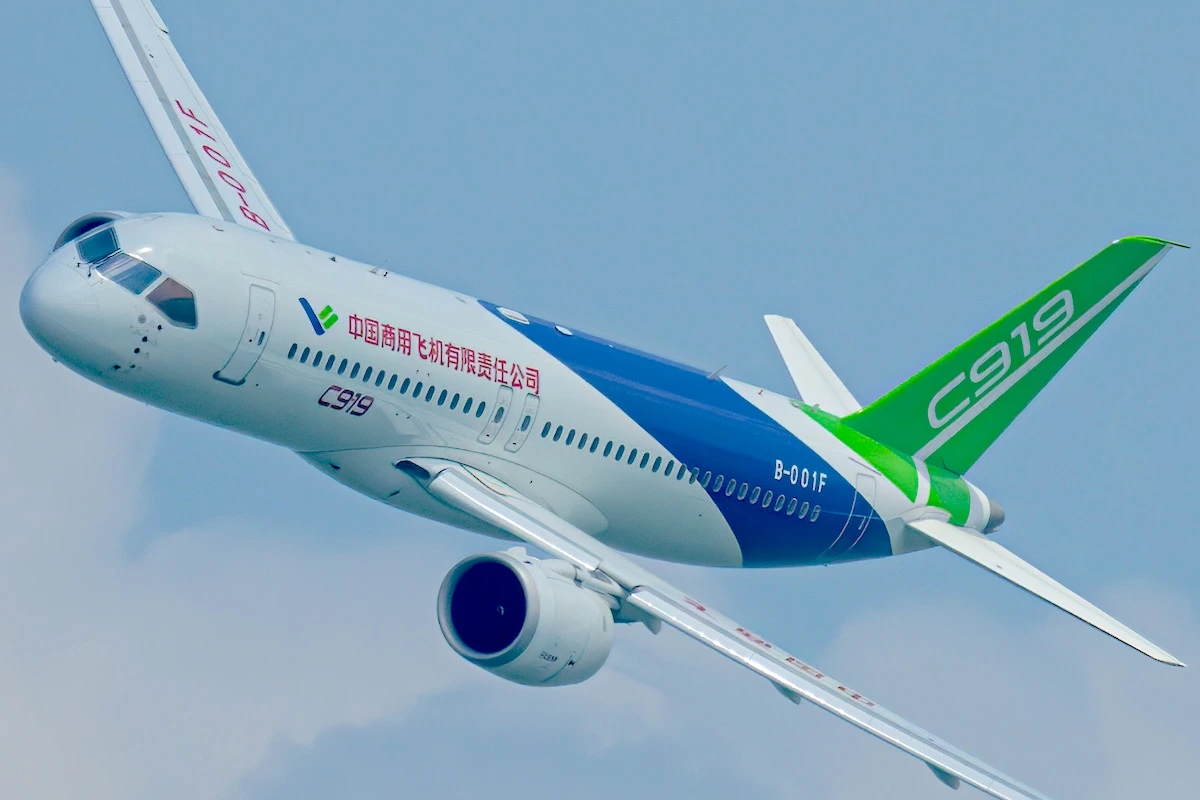
China’s COMAC is making a bold push for new international orders and routes with its C909, following a major funding package with Chengdu Airlines.
Breaking into markets dominated by Airbus and Boeing remains a challenge for COMAC, which must overcome steep certification and trust hurdles.
What does this investigation involve? What are the persistent struggles at the Chinese planemaker, and how will this be changed?
COMAC’s Cash Boost For Airlines
China’s COMAC is continuing to double down on efforts to grow its international portfolio following an injection of capital into a subsidiary carrier to expand the coverage of its aircraft.
Flagged by local media, the aircraft manufacturer will see USD 91.76 million injected into Chengdu Airlines, the launch customer of the C909 and one in which COMAC holds a 48% controlling stake.

Combined with past funding, the airline has seen a near tripling of its overall funding injection into Chengdu Airlines over recent times, as the groundwork is laid for the future adoption of COMAC aircraft in more global markets.
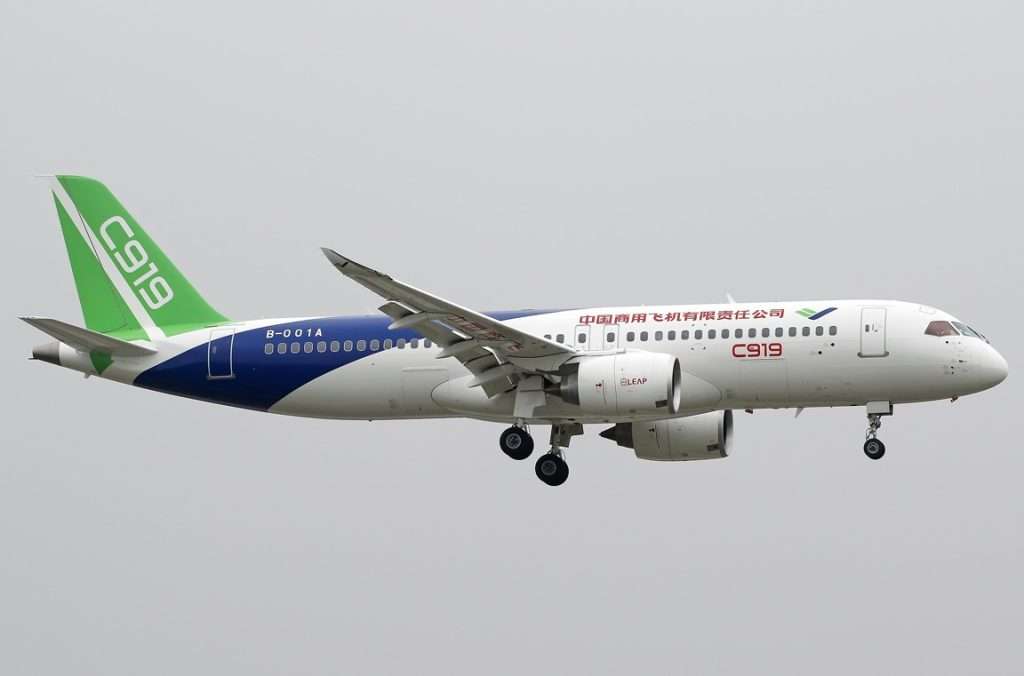
The additional funding, not just to support relations, is specifically aimed at helping Chengdu Airlines overhaul its route network and expand international coverage using planes like the C919.
Why COMAC Has Struggled Outside Of China
COMAC has struggled internationally for several reasons, but the situation is not helped by the lack of Western certifications from the Federal Aviation Administration (FAA) and the European Union Aviation Safety Agency (EASA) for jets such as the C919 and C909.
The lack of certification and, at times, the willingness to progress have limited airlines’ ability to even consider the Chinese planemaker when renewing their fleets.
Without these important certifications, the operational capabilities of COMAC aircraft are significantly reduced, and thus, airlines globally face barriers to prospective adoption of the model due to insurance, financing, resale, and parts issues.

Other airlines have their fair share of geopolitical concerns that could impact their acquisition and long-term operations with the aircraft, with components vulnerable to ongoing trade tensions, supply shortages, and more, which led to COMAC seeing a significant drop in 2025 deliveries from expectations.
While Airbus says that all planemakers must start somewhere, the unproven reliability of COMAC-produced aircraft further compounds the stress on airlines that have been pitched planes by the manufacturer.
COMAC’s Hopes For International Expansion
COMAC continues to aggressively pursue its EASA certification to unlock its aircraft in Europe, with recent validation through test flights piloted by regulators in Shanghai, marking significant progress.
While the certification isn’t guaranteed or expected to be a shorter process, the confirmation that the aircraft, despite small teething issues, is in good nick is what the planemaker wants to hear.
Ryanair’s Michael O’Leary has expressed interest in the product as a possible alternative moving forward; however, US lawmakers were quick to reject this, citing that it would not be a good idea, and thus, talks were halted.
Korean Air, another global carrier but closer to the plane makers’ home, outright rejected the planes, citing sufficient backlogs with Airbus and Boeing, a lack of support and ongoing risks surrounding the maintenance and support network.
With the Chinese planemaker seeking to invest in airlines, build new ties, and pursue certification, it hopes to, by the 2030s, amid a crunch on availability, push its commercial aircraft and accelerate adoption globally.

ABOUT THE AUTHOR
Daniel Fowkes is a Melbourne-based aviation analyst and journalist with over a decade of industry experience. As founder of Dj’s Aviation, he delivers trusted analysis on aircraft, airline strategy and global aviation trends for djsaviation.net
Related Articles




Stay Informed
Get the latest aviation news, analysis and route updates delivered to your inbox.
We respect your privacy. Unsubscribe at any time.
Enjoyed this story?
Make us your go-to for aviation news
Add us as a preferred source on Google and see our latest stories first in Top Stories.
Add Us On Your News Feed