

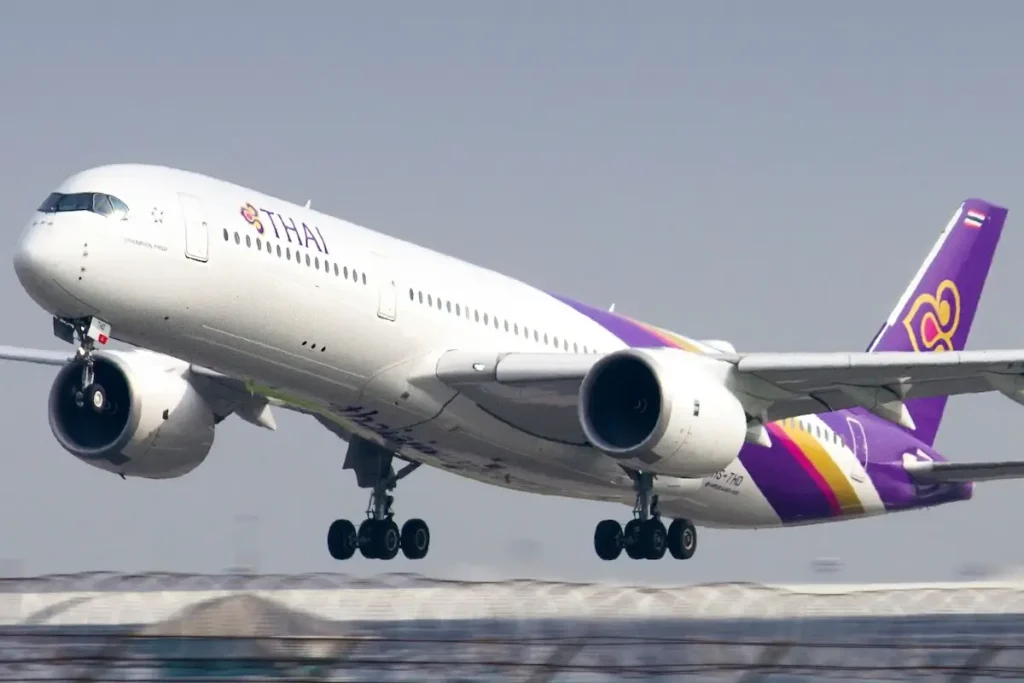
Thai Airways’ complications with aircraft are continuing; however, this time, some of the focus is placed on the Airbus A350.
The Bangkok-based airline says that expansion efforts long into 2026 are being impacted because shortages of engines across its business are expected to see seat capacity grow at just 4%. This is a substantial reduction from the 10% growth this year.
One of those woes centres on the Rolls-Royce engines that power the airline’s fleet of Airbus A350S, which are impacted by lengthy turnaround times for ongoing engine maintenance.
Typical scheduling would see these engines out of action for three months; however, Thai Airways confirms that this will double, to six months, a stress on the industry and something not just Thai Airways is facing.
Vietnam Airlines’ Boeing 787 fleet has faced a similar issue, with the Vietnamese company confirming that engines on its Dreamliner fleet were spending significantly longer in maintenance halls than expected, primarily due to supply chain constraints.
Thai Airways has taken delivery of 23 Airbus A350-900s, with these aircraft averaging 7.8 years of age; however, as confirmed by the business through fleet data, two units remain parked, meaning 21 aircraft are active.
Thai Airways Drives For New Aircraft
With such pressures around the Airbus A350, this certainly would not be abnormal for any airline, but for a company such as Thai Airways, it comes at the worst possible time.
This airline has undergone significant restructuring in recent times, resulting in many fleet types being axed to streamline operations and lower costs.
While Thai Airways would argue this has now had the desired effect across its operations, the company is naturally without capacity, especially given these outgoings being the highest-capacity jets in operation.
Last week, the airline was reported to be in discussions with Boeing about converting options in an existing 787 Dreamliner order into firm orders, building on a deal for 45 firm units announced in February 2024.

Adding more aircraft to the airlines’ backlog will ease pressure on the fleet in the long term; however, in the short term, the business has been in the headlines amid pressure and failed attempts to secure widebody aircraft.
In August, the airline said it was scrambling to secure planes to serve its widebody network so that capacity losses wouldn’t be a daily occurrence. This scrambling was driven entirely by the planemakers, Airbus and Boeing, not delivering planes on time.
With the requirement then placed on lessors to provide the planes, the leasing market feels additional pressure, as Thai Airways is not the only company seeking a short-term capacity solution to alleviate ongoing pressures.
The carrier has remained very clear about its struggles, stating that if it’s unable to secure aircraft, it won’t be able to proceed with its growth ambitions moving forward, which is far from ideal.

ABOUT THE AUTHOR
Daniel Fowkes is a Melbourne-based aviation analyst and journalist with over a decade of industry experience. As founder of Dj’s Aviation, he delivers trusted analysis on aircraft, airline strategy and global aviation trends for djsaviation.net
Leave a Reply
Related Articles

Stay Informed
Get the latest aviation news, analysis and route updates delivered to your inbox.
We respect your privacy. Unsubscribe at any time.
Enjoyed this story?
Make us your go-to for aviation news
Add us as a preferred source on Google and see our latest stories first in Top Stories.
Add Us On Your News Feed
very interesting. I worked on an up grade for transformers at the Rolls Royce factory in Derby, approx 5 years back. A long term employee was telling me that RR had out sourced much of the engine build and maintenence to non aircraft companies . So we are seeing a self inflicted issue. And what has driven this. Money, thats what makes the world turn
How many times do thai air have to restructure and cut costs????
They keep going bust???
For a worldwide leader this keeps happening. Corruption?????