

Despite being the largest operator of the A380, Emirates also ended the world’s largest passenger plane.
Emirates’ decision to cancel orders for the superjumbo in 2019 changed the course of the A380 forever, confirming the long-rumoured end of the jet, which it had also arguably kept alive with its long-running backing.
What happened with the order cancellation? What transpired for Airbus, and how has Emirates moved forward with fewer units than initially expected?
Emirates’ Relationship With The A380
Emirates’ love for the Airbus A380 dates back before it was even known as the A380, and therefore certainly before it flew for the Dubai-based carrier.
Emirates announced an order for the A3XX in 2000 at the Farnborough Airshow, being among the first to commit to the upcoming superjumbo before it even held the designation of the A380-800.
Since that first order, additional deals were signed not just in the 2000s but also in the 2010s, one of the more notable arriving in 2001, just weeks after the 9/11 events.

Emirates played a critical role in instilling confidence in the A3XX, enabling Airbus to proceed with the formal launch with the conviction that future sales would be possible from a broader range of global airlines.
Once the A380 was delivered, it became clear that the aircraft would have a significant impact on the airline’s operations, with its high capacity proving incredibly handy as the airline began a drive to expand its operations and feed passengers through Dubai.
The superjumbo allows not just for easier flying into slot-constrained major international airports, but also the ability to customise the interior of the aircraft, bringing a new standard for onboard products for customers in higher classes.
Since entering service, the A380 has become a mainstay of the airline’s operations, often considered a staple of the business, a key part of the identity, and featured across viral commercials and more. Even those not in the industry are familiar with the aircraft associated with the airline.
The A380 is a truly special aircraft in so many ways. For Emirates, it gave us the opportunity to redefine the travel experience, efficiently serve demand at slot-constrained airports, and bolster our network growth.
Sir Tim Clark, President Emirates Airline

Despite the numerous obstacles that have impacted the economy over the last two decades, Emirates’ commitment to the A380 has remained steadfast. When demand dropped during the COVID-19 pandemic, a grounding occurred, but the carrier backed the plane.
Now, the aircraft has returned and is flying around the world; the airline remains very keen on operating the jet for a long time into the future, knowing that there’s no other alternative available on the market.
An Order Cancellation Arrives
By early February 2019, despite Emirates’ strong affection for the Airbus A380, it was disclosed that the carrier had begun talks with the manufacturer over its existing contract for the widebody.
As part of those discussions, there was considerable speculation about how many aircraft the airline would retain, given Emirates’ still relatively healthy backlog for the world’s largest passenger plane.
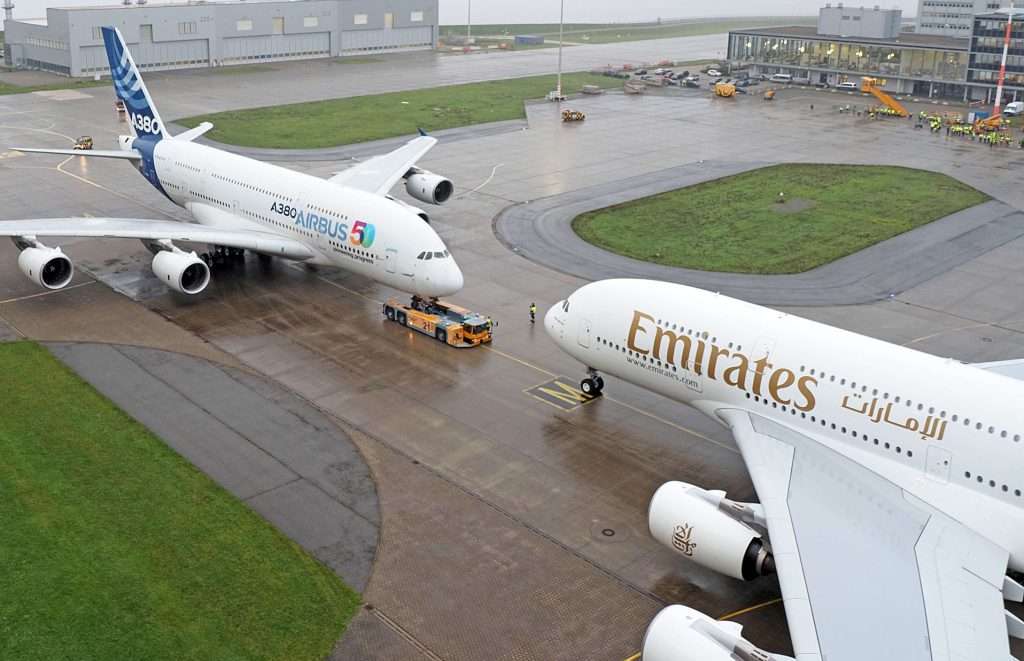
On Valentine’s Day, February 14, 2019, Airbus confirmed, just two weeks later, that it had reached an agreement with Emirates over their A380 contract, implementing a new strategy.
The new agreement followed a review of the airline’s operations and resulted in a reduction of the remaining A380 orderbook from 162 units to 123 aircraft.
The reduction meant that Emirates would only take delivery of 14 more Airbus A380 jets, representing a significant reduction from the many more that were initially part of the deal.
However, while Airbus would see orders cancelled for its A380, Emirates would also commit to additional next-generation aircraft from the planemaker to move forward with greater efficiency.
Those fleet studies showed that renewal was to be important, and 70 new aircraft were purchased, including another commitment for the previously cancelled A350-900.
Additionally, Emirates purchased the A330neo, examining the A330-900, which was ordered in 40 units to serve as a more modest widebody and enhance fleet diversification efforts.
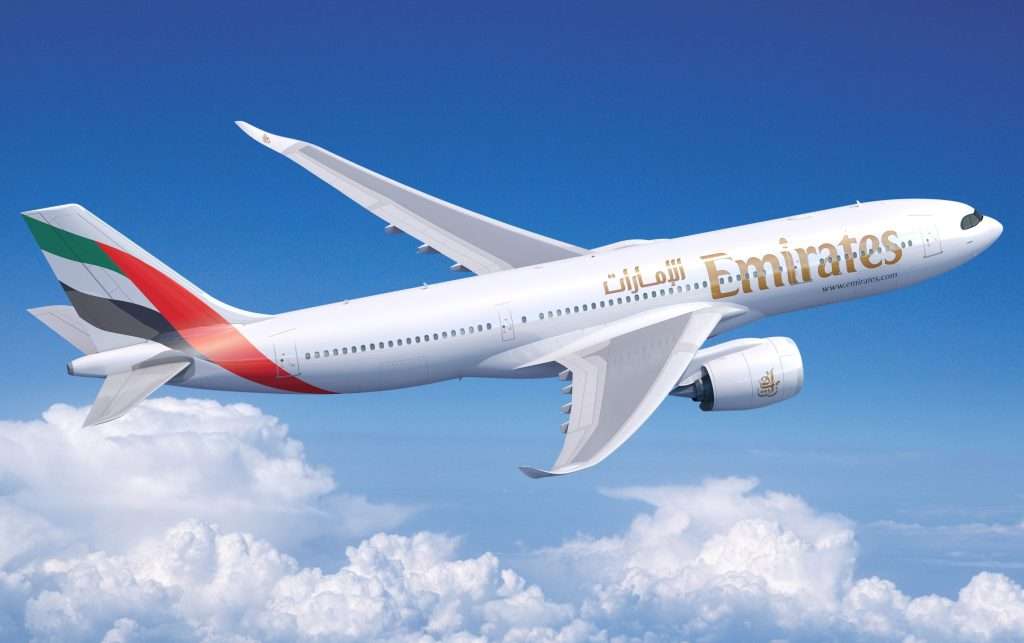
Not only were these orders a strong commitment to the future of the airline’s operations, but they also represented the airline’s further intent to diversify the fleet and introduce new aircraft types, thereby enhancing operations and expanding the route network with increased flexibility and opportunities.
What Happened Next
While the deal saw A380 order cancellations and naturally led to new commitments, it was the aftermath that would attract the biggest headlines.
Given that Emirates had cancelled the majority of its remaining units, Airbus found itself in an unfortunate position with the program, which involved assessing its production future.
Long before Emirates’ cancellation, Airbus had sought to push the world’s largest passenger plane on sales pitches to deepen its order book; however, on each occasion, this had failed, with no interest materialising.
Airbus even moved ahead with the development study of the A380plus. Still, given that this failed to address key requirements that Emirates wanted in a successor to their ideal jet, the A380neo, the plus model faded away rapidly and never attracted any interest, was not pursued, and ultimately disappeared.

With this in mind, Airbus confirmed the difficult decision to bring the A380 program to an end, understandably far earlier than what would’ve been intended when the planemaker invested so much in getting the aircraft to life in the first place.
Emirates’ order cancellation being the straw that broke the camel’s back, given that this was the only airline still significantly backing the program, the planemaker’s chief executive officer said that with no substantial backlog, there was no basis to sustain production.
The A380 is not only an outstanding engineering and industrial achievement. Passengers all over the world love to fly on this great aircraft. Hence today’s announcement is painful for us and the A380 communities worldwide. But, keep in mind that A380s will still roam the skies for many years to come and Airbus will of course continue to fully support the A380 operators.
Tom Ends, Airbus Chief Executive Officer in 2019
Despite the COVID-19 pandemic, which affected deliveries and airlines’ acquisition efforts of new commercial aeroplanes due to record levels of demand drops and the grounding of widebody jets, Airbus followed through with its previously announced timeframe for production end.
On December 16, 2021, Emirates celebrated the delivery of its 123rd and final Airbus A380, with the registration of A6-EVS, marking a milestone in the company’s 21-year commitment to the program.
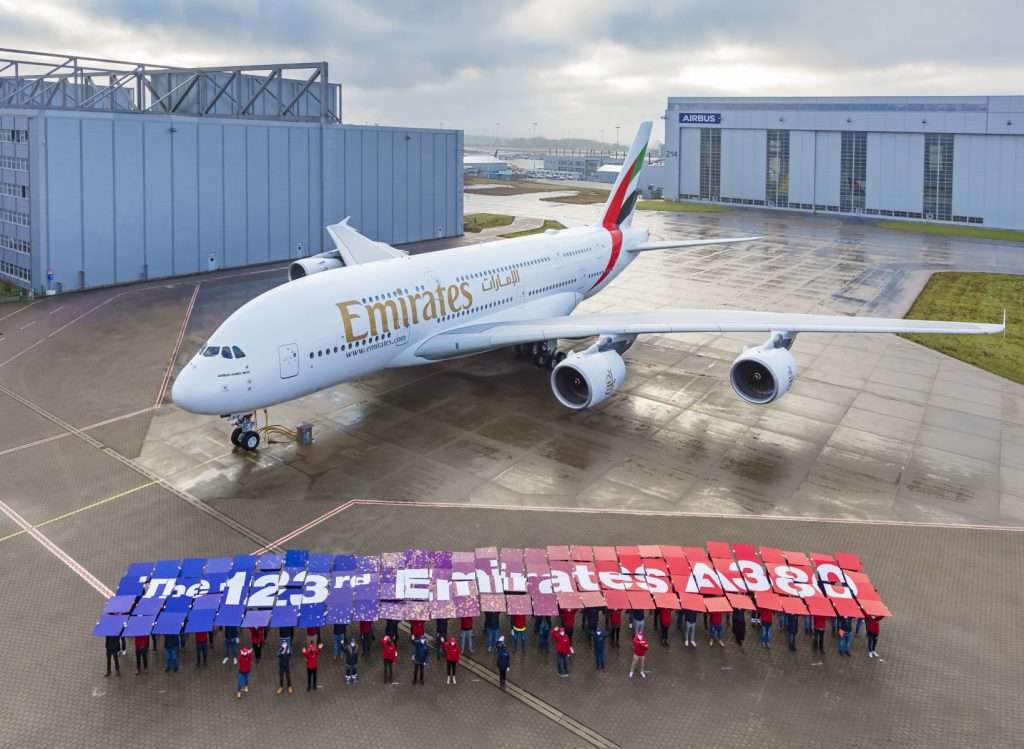
The delivery was a bittersweet moment for Airbus, which also said goodbye to the world’s largest passenger plane, choosing to utilise the space for more in-demand aircraft.
Emirates’ Future Plans Revealed
Following Emirates’ decision to cancel orders for the Airbus A380, the airline would argue that it was a whirlwind, given that the planemaker has not moved ahead with a successor.
As the airline continues to find ways to elevate its fleet, the realisation has long set in that the A380 will not be around forever. With no dedicated replacement and no jet coming entirely close to the world’s largest passenger plane, complications arise.
Emirates has already confirmed that the A380 will remain in service until the 2040s, which will position the Dubai-based carrier as likely the last to fly the aircraft type, thereby abandoning its previously established fleet plan of keeping the average age relatively low.

With the knowledge that no replacement exists, Emirates has on several occasions pushed for the release of the A380neo, not just following the A380-800 production shutdown, but also in the 2010s.
Emirates argues that the A380neo would address key efficiency downsides present in the first model, but despite its calls for this new-engine model, it has not been able to secure movement on the prospective jet.
With no A380neo seemingly forthcoming, Emirates has also discussed, in recent weeks, the prospect of Airbus or Boeing moving ahead with a larger A350 or 777X model, respectively.
The A350 Stretch and 777-10 have both been discussed in the industry, but nothing has materialised to this degree. Emirates argues that this would give it the best chance of replacing the A380 thanks to the additional capacity.

Ultimately, the order cancellation came at the right time for Emirates, but it is now scrambling to find ways to eventually replace this aircraft as it undergoes continued reviews of its fleet.

ABOUT THE AUTHOR
Daniel Fowkes is a Melbourne-based aviation analyst and journalist with over a decade of industry experience. As founder of Dj’s Aviation, he delivers trusted analysis on aircraft, airline strategy and global aviation trends for djsaviation.net
Leave a Reply
Related Articles




Stay Informed
Get the latest aviation news, analysis and route updates delivered to your inbox.
We respect your privacy. Unsubscribe at any time.
Enjoyed this story?
Make us your go-to for aviation news
Add us as a preferred source on Google and see our latest stories first in Top Stories.
Add Us On Your News Feed
Please keep in the flight 380.
We love 380. After fly with 380 we can not fly any other aircraft.Try for advance version of 380.
Please keep in the flight 380.
We love 380. After fly with 380 we can not fly any other aircraft.Try for advance version of 380.
It is first time I comment
I love 380
Keep it in your flight
Trying for new version of 380
Replacement with a new and higher quality plane from boeing.
When we see the age of the 777,300 and stiĺl flying loved by passenger and crew, that s the way it should be.
I am flying Syd to lhr and the 380 and Emirates is my first choice. Unfortunately Emirates are the most expensive by far having told my TA that they are a premium offer, hence the top price.
There is a limit to a premium pricing strategy and sadly I am booked on BA business.
I’m in love with the A380! I’m praying that the A380 Neo project comes to fruition in the future. It would be a dream come true.