
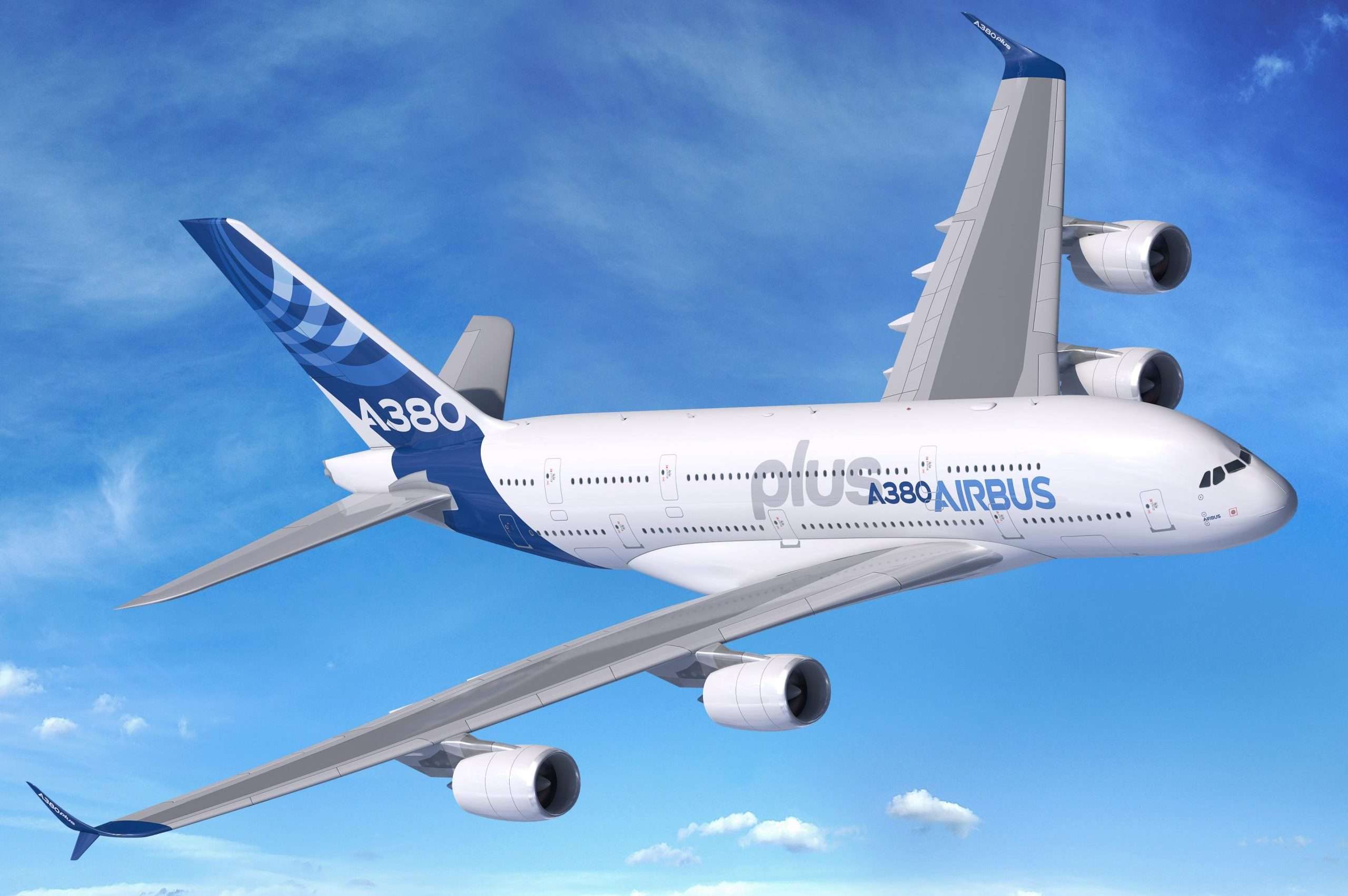
The Airbus A380plus was a development study released by Airbus in 2017 to extend the series’s life and provide airlines with a more efficient solution to operating the type.
However, the A380plus, like several development studies across recent decades, would not be released and would fade into the sunset, which analysts would argue is the way it came in.
What happened to the A380plus? What did it propose, and why did it never release?
Airbus Introduces The A380plus
Unveiled in 2017, the Airbus A380plus arrived on the scene surprisingly with question marks around its capabilities alongside the business case.
However, throughout the announcement, Airbus remained persistent that the aircraft would harbour significant benefits for customers who chose to operate it.
Airbus proposed a redesigned cabin layout that could accommodate up to 80 additional passengers, bringing the total capacity to around 575 passengers in a typical three-class configuration.
In addition to the cabin modifications, the A380plus included aerodynamic improvements to better fuel efficiency and reduce operating costs. These enhancements saw the addition of large winglets at the end of the wings, and the hope was to reduce drag while also improving aerodynamic performance.

Overall, the A380plus was expected to lead to fuel savings of around 4% per trip. The European plane maker viewed the A380plus as a means to address some of the initial concerns from customers over the A380-800 and provide solutions that would work.
The A380plus was an efficient way to offer even better economics and improved operational performance simultaneously. It is a new step for our iconic aircraft to serve worldwide’s fast-growing traffic and the evolving needs of the A380 customers. The A380 is well-proven as the solution to increasing congestion at large airports and offers a unique, passenger-preferred experience. He wasn’t inherently wrong with this in the slightest.
Airbus Chief Commerical Office in 2017
A Love For The Airbus A380
While the Airbus A380 has struggled to attract many customers throughout its history, largely relying on strong commitments from the likes of Emirates, the aircraft has always been loved.
Passengers have enjoyed the spacious nature of the aircraft and the present possibilities. The same can be said for some A380 customers, with airlines utilising the space to redefine their cabin products.
While there were several reasons why the A380 never succeeded or fulfilled its full commercial potential, its ever-lasting love with passengers will be something that’ll be remembered long into the future, even when there are very few A380s flying.
The A380plus Struggles
For the A380plus, despite the visible improvements Airbus proposed, it needed to generate more interest than it was at the time. In fact, it attracted zero firm interest following its announcement.
When the largest customer of the A380 in Emirates essentially opposes such an A380plus and believes an A380neo, a re-engine, would harbour better efficiency, your study is at risk.
Away from Emirates, there would always be questions over who would be interested in such a development study. Airbus was struggling at the time to sell its A380-800, yes, because of efficiency problems but also largely because of the size.

Airlines worldwide struggled at times to handle the capabilities of the A380-800, and only specific airports were equipped to handle it. As a result, airlines only ever required a small number, and these customers had already ordered all the planes needed.
Frankly, not just for the A380-800 or A380plus, but even at Boeing, the quad-engined era was dying long before Airbus would unveil the A380plus in 2017.
Some analysts believed that the A380plus was a last-ditch attempt by Airbus to sell the program to keep production continuing. By 2017, Airbus wasn’t bringing in any new sales, and thus, production was looking like it couldn’t continue for much longer.
The Fate Of The A380pplus
Following the official reveal in June 2017, there wasn’t much talk of such an A380plus again. Seemingly, the way the aircraft quietly entered the market is also exited.
The A380plus would ultimately be a development study that would struggle to attract market interest and thus would be deemed surplus to the manufacturer’s requirements.
A more telling tale was when Airbus announced production would cease on their A380 18 months later. This decision generally indicates the direction the Airbus A380 series was heading.
While Airbus did offer improvements with the A380plus, the desire wasn’t there from customers. Even with their improvements, Airbus couldn’t overcome the A380’s existing challenges.
As a result, the A380plus became yet another development study that would, yes, make it further than some other studies with a formal announcement but wouldn’t stick the landing.

ABOUT THE AUTHOR
Daniel Fowkes is a Melbourne-based aviation analyst and journalist with over a decade of industry experience. As founder of Dj’s Aviation, he delivers trusted analysis on aircraft, airline strategy and global aviation trends for djsaviation.net
Leave a Reply
Related Articles



Stay Informed
Get the latest aviation news, analysis and route updates delivered to your inbox.
We respect your privacy. Unsubscribe at any time.
Enjoyed this story?
Make us your go-to for aviation news
Add us as a preferred source on Google and see our latest stories first in Top Stories.
Add Us On Your News Feed
😲 Wow