

Emirates has placed significant orders for the A350 across its history, with multiple deals signed.
The Dubai-based carrier’s history with the Airbus flagship product stretches far before an order placed less than a decade ago.
Over the last two decades, the airlines’ interest has materialised into orders, but then been followed by cancellations and another recommitment.
Cases such as these are rare, with most airlines that choose to cancel said order not returning for the same aircraft, so what happened?
Emirates’ Original A350 Order
Emirates’ initial order for the Airbus A350 was placed nearly two decades ago, at the 2007 Dubai Airshow.
The sizable order for new aircraft did not just include the A350, but also saw the airline commit to further Airbus A380s. Adding more of the world’s largest passenger plane to the backlog would become a common theme.
The deal included firm orders for 70 A350s from the program, comprising 50 A350-900s, as well as a commitment to the high-capacity A350-1000.
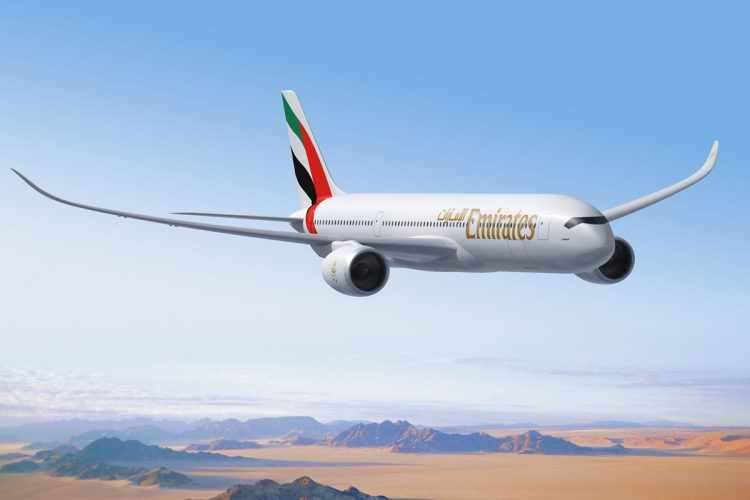
Under that contract, Emirates said that it had secured delivery slots seven years in advance, with the aircraft to begin arriving in Dubai in 2014.
For Emirates, the major order, which substantially increased the number of aircraft on order, ultimately came in at close to $35 billion and boosted the backlog of future planes.
The Dubai-based carrier sealed the deal during a period when it was attempting to chart a course for growth that focuses strongly on the use of high-capacity planes in and out of the UAE.
For the UAE, the development of the Emirates’ fleet was crucial in attracting more people to Dubai. As a result, the 2000s and 2010s were marked by sizable investments in Emirates’ growth, which helped bring it to its current position as a leader in its region and arguably worldwide.
An Airbus A350 Order Cancelled
Seven years later, and ironically, in the same year that deliveries were scheduled to commence to the airline after it first placed the contract, a significant decision was confirmed.

Emirates said it was moving ahead with the cancellation of its entire order for the A350, including the two variants and orders it had held for a considerable period.
What was considered a significant blow for Airbus reduced the backlog of the jet, which was gaining momentum in the industry, and it also attracted considerable attention from onlookers.
Emirates, at the time of the cancellation, said the decision followed a thorough review of fleet requirements, something that occurs continuously throughout the years as airlines find the best ways to optimise their operations.
Bloomberg reported that part of the airline’s move followed delivery schedules, which may have impacted the growth of the Dubai-based airline during a crucial period when growth was critical to its long-term success.

Bloomberg’s data suggested that if the revised delivery timeframe of 2019 had been implemented for these widebodies, Emirates’ overall fleet growth rate would have significantly dropped, with hindsight, something that would’ve occurred anyway.
Did It Impact Airbus?
An order cancellation of the magnitude of one from Emirates would typically send shockwaves through a planemaker, but Airbus held an opposite view.
Instead of voicing its displeasure over the cancellation, the planemaker was relatively unfazed, believing that this created fresh opportunities for customers to push forward their delivery schedules or introduce new ones into the program.
At this point, the A350, despite facing delays, was beginning to make its mark on the industry and turning the heads of airlines that had yet to make a commitment. Executives of the company said that interest in the jet remained very high as well.

In a statement, the planemaker said that because deliveries had been shifted to commence at the end of the decade, representing a pushback from the original timeframe of 2014 when the deal was first signed, the impact was very minimal.
Additionally, as more airlines seek to develop their widebody fleets with a more efficient product, the European manufacturer was confident it would secure more orders sooner rather than later.
The Airbus A350 Returns
In a move, however, that remains a rare occurrence across the aviation industry, Emirates returned to the A350 program five years later with another order.
In February 2019, the carrier confirmed an order with Airbus worth approximately US$21.4 billion at list price, which included 30 units of the A350-900.
At the same time, the deal marked the end of the A380 era, with the cancellation of many remaining units in the backlog. This meant that the world’s largest passenger plane would cease production in just two years.
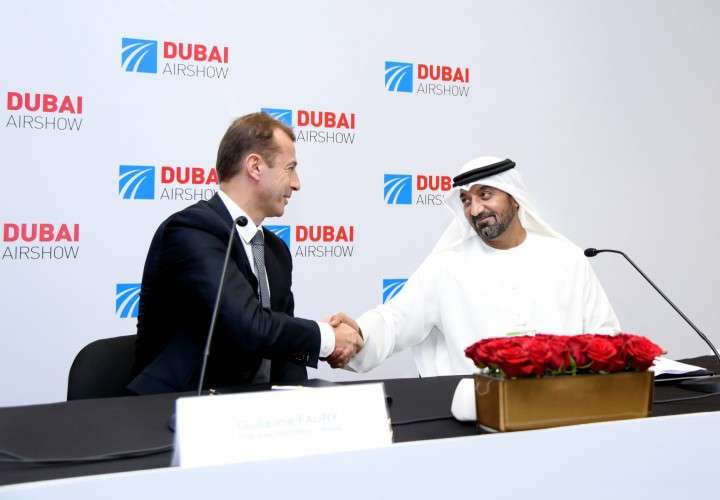
By November 2019, at the 2019 edition of the Dubai Airshow, the carrier confirmed its US$16 billion deal for the A350, with 50 units selected to power its future fleet.
Today, we are pleased to sign a firm order for 50 A350 XWBs, powered by Rolls-Royce Trent XWB engines. This follows a thorough review of various aircraft options and of our own fleet plans. It is Emirates’ long-standing strategy to invest in modern and efficient aircraft, and we are confident in the performance of the A350 XWB.
HH Sheikh Ahmed bin Saeed Al Maktoum, Emirates Chairman and Chief Executive
After numerous delays, and more importantly, the COVID-19 pandemic, Emirates launched its long-haul commercial services with the A350 on January 3, 2025.
The aircraft arrived some 18 years after the initial order for the deal, marking the first new aircraft series to join the carrier in nearly two decades.
Now, the A350 flies throughout the network with deliveries occurring continuously, serving as the perfect bridge between the existing A380 and 777.

Emirates states that the introduction of the A350 has enabled it to significantly enhance the destinations featured on its route map, while also providing a more modern cabin for customers.

ABOUT THE AUTHOR
Daniel Fowkes is a Melbourne-based aviation analyst and journalist with over a decade of industry experience. As founder of Dj’s Aviation, he delivers trusted analysis on aircraft, airline strategy and global aviation trends for djsaviation.net
Leave a Reply
Related Articles




Stay Informed
Get the latest aviation news, analysis and route updates delivered to your inbox.
We respect your privacy. Unsubscribe at any time.
Enjoyed this story?
Make us your go-to for aviation news
Add us as a preferred source on Google and see our latest stories first in Top Stories.
Add Us On Your News Feed
It Is shocking that an airline cam cancel with no penalties such orders. It cam be understood for the still non certified 777X but it’s hard to understand for the 350 which has some delays but already has hundredth of aircrafts flying every day with significant costs and sustainability gains. Difficult not to imagine some political pressured to “protect the UAE”. It’s sad for Airbus and Europe who developed this program very efficiently. But are always losing the long haul market leadership often missing the right aircraft as suggested by the A340 and A380 failures
?? Airbus manufacturers also faulter on deliveries. Just because it’s an Arab country, your comment was made. Quite ludicrous
Emirates is a classy reliable service provider with outstanding service levels. They know what they are doing
When we travel we try and make it a point to travel A380 where available. We feel airbus designs are more comfortable and passenger seating details more thought out. The double engines we feel add to safety though clearly it is commercially less viable for Emirates. The A350 is a good second.
Excellent