
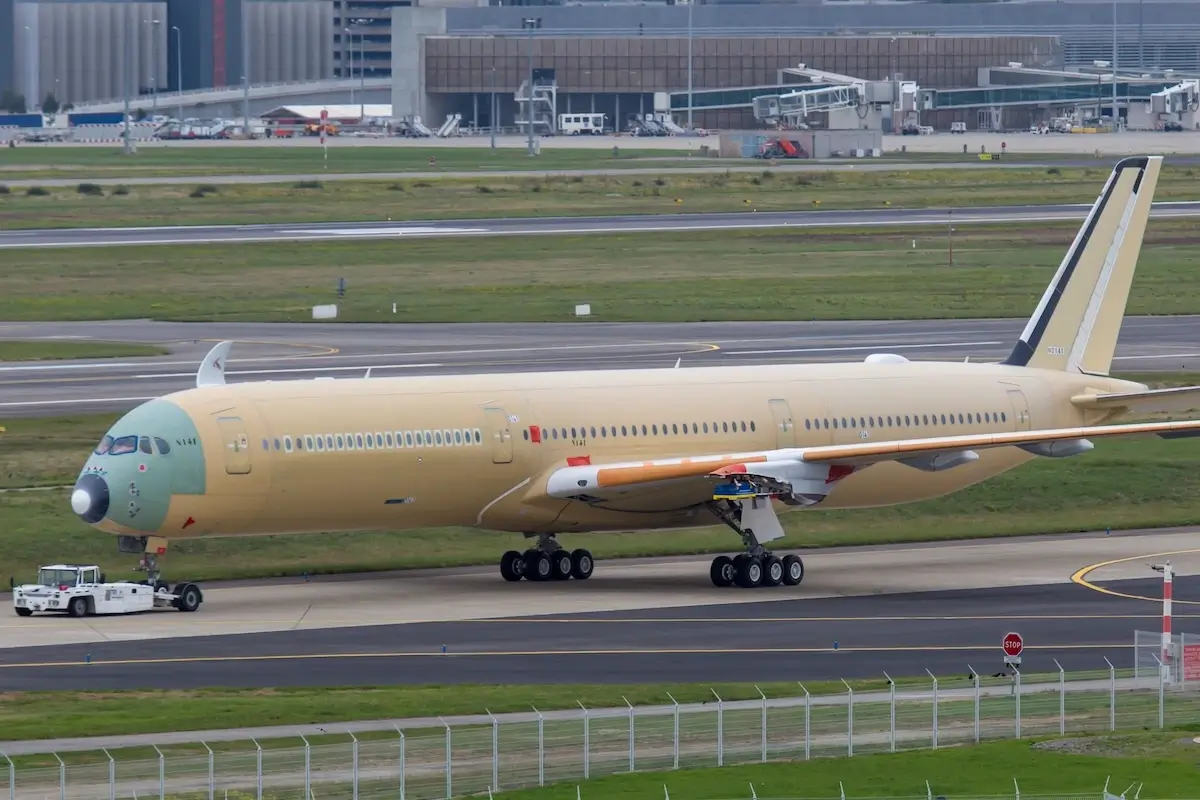
Airbus has broken a record, with its backlog now exceeding 8,700 units as demand hits major levels.
The planemaker has been able to sell many aircraft recently, and sizable contracts as well as airlines have scrambled to secure their planes for the future.
Much of the intensity from airlines to commit to new planes follows a darker period during the COVID-19 pandemic, where airlines were forced to re-adjust their priorities and put greater emphasis on restructuring over growth.
However, as many of those global airlines exit restructuring, they can refocus on growing as a business to meet future demand, and, as a result, there’s renewed confidence in growth.
With this renewed confidence, airlines are once more turning to planemakers to either increase their available aircraft or transition from older generation planes to newer ones with higher levels of efficiency over the departing types.
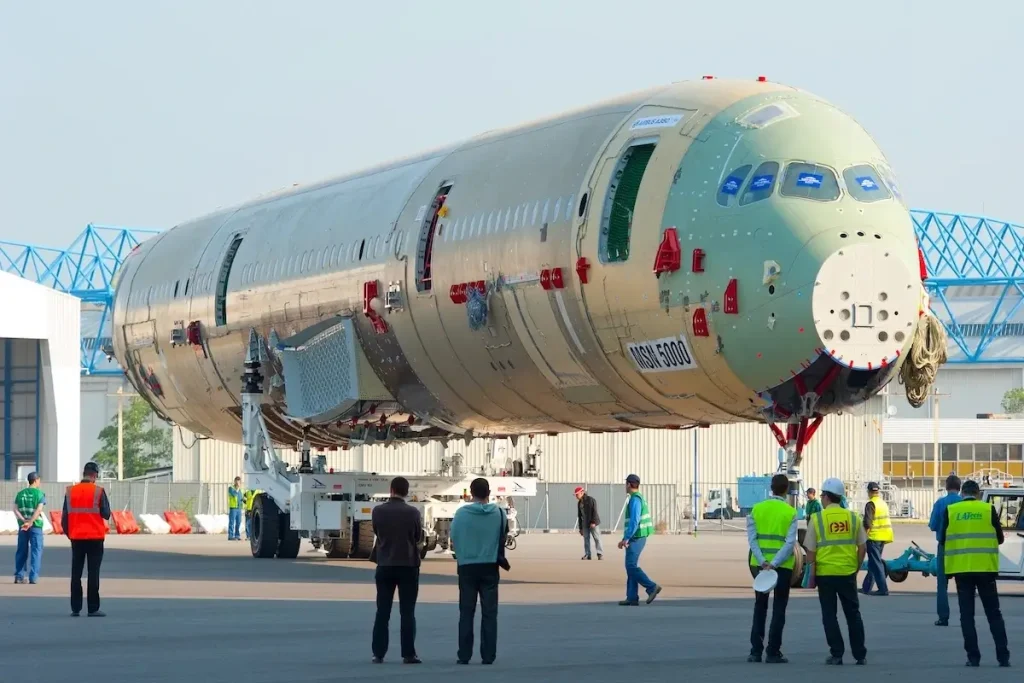
But, with many airlines scrambling to purchase new aircraft based on their internal studies and plotting perfect delivery schedules, available slots for deliveries begin to disappear, making it harder for airlines that have yet to commit to aircraft for the future to get their new arrivals when needed.
Additionally, with Airbus running behind on deliveries already, what fills the backlog is already coming with delays that the manufacturer is attempting to work through.
To be able to work through this backlog in a healthy manner, it remains critical for the delivery perfromance of the planemaker to improve; this is one of the key risks for the business to progress moving forward.
While deliveries aim to reach 820 by the end of the 2025 calendar year, the start of this calendar year has been far from optimal, with slowed delivery rates seeing the gap between itself and American planemaker Boeing reduce considerably after years of significant distance between them.
But Airbus Faces A Challenge
While having a record-breaking backlog is a sign that there’s strong demand for air travel moving into the remainder of the decade and beyond, meeting that is the next challenge Airbus faces.

Following the COVID-19 pandemic, supply chains have been severely disrupted; these supply chains are crucial to the production of new commercial aircraft at Airbus and the continued delivery of planes to customers awaiting them.
However, with many complications, delayed delivery of parts, and Airbus’s inability to meet timelines laid out for deliveries at order have become a thing of the past, with no new aircraft arriving on time.
Instead, airlines are beginning to get accustomed to month-long delays, at times stretching into years, forcing them to adjust program launch dates, retirement dates of older aircraft and deal with the financial and operational stress involved in having a delayed delivery.
The quarter most recently ending in June showed the planemaker enjoyed a surge in deliveries; however, that surge, based on available data, was far weaker than the previous quarter.
The reduction comes from lower than expected A320neo family deliveries, deliveries across more programs were also slowed as Airbus faces major challenges, and with that a generalised inability to raise the production rates to levels required.

Ultimately, Airbus finds itself in a position where it is not in the slightest struggling to acquire new aircraft orders, and its backlog is reaching record levels, but there’s a challenge now in meeting that demand.
Airbus must find ways to lift deliveries year over year; current patterns do not indicate the planemaker will reach its 2025 delivery target, which is a cause for concern, resulting in this being yet another year where the annual target is not met.
With that being said, the planemaker would otherwise find itself in a strong position, it’s sorting out this avenue which remains the most pivotal, that’ll come with time, but finding ways to accelerate the process will be key where possible, doing so in a safe manner.

ABOUT THE AUTHOR
Daniel Fowkes is a Melbourne-based aviation analyst and journalist with over a decade of industry experience. As founder of Dj’s Aviation, he delivers trusted analysis on aircraft, airline strategy and global aviation trends for djsaviation.net
Leave a Reply
Related Articles




Stay Informed
Get the latest aviation news, analysis and route updates delivered to your inbox.
We respect your privacy. Unsubscribe at any time.
Enjoyed this story?
Make us your go-to for aviation news
Add us as a preferred source on Google and see our latest stories first in Top Stories.
Add Us On Your News Feed
I like the feel of Airbus planes. More comfortable to fly in.
I’m not an engineer or planemaker but just a CEO. How can the supply chain be so disrupted 5 years after COVID and for Airbus apparently much more than Boeing when they often use the same suppliers. Airbus has surely made one major mistake by relying too much on Pratt&Whitney who is damaging the A220 beyond any acceptable level. They must diversify their motor suppliers and always offer two suppliers per aircraft model.
It would be nice to know what type of company you are the CEO of?
As a CEO how many suppliers do you rely on? in the aircraft industry we rely on virtually thousands who supply millions of parts for each aircraft and especially the engines every one of these parts go through many inpection and test processes before they can be sent then inspected again on delivery only then can they be used.
You also ask about the engines, this is another area of concern as the final user makes that decision not the manufacturer of the aircraft, the supplier makes statements as to how their engine is better but like in P&Ws case it has turned into a disaster, the B747 had many problems with the P&W JT9D engine and Lockheed with the RR RB211 on the L1011, but eventually they get worked out
You haven’t mentioned the concern about Boeing planes that have been experiencing crashes & emergency actions of late?
Author
Yes, I have plenty of articles exploring the struggles at Boeing.
I’m not im the Industry, but it could be an option for Airbus to expand the Chester site, that already builds wings for Airbus, and create a production line for one or more of the types. This would cut some costs in flying wings to France, increase UK jobs, and help towards reaching or exceeding the delivery slot issues. The UK has been a leading aircraft manufacturer in the past, and I believe that we can again be a major producer in the future of Airbus, and come to that, any other aircraft manufacturer, as we built quality aircraft for many years before the Airbus giant even existed.