

In 2020, Etihad Airways followed the same path as many other airlines, grounding its entire Airbus A380 fleet.
However, what would differentiate the Abu Dhabi-based carrier from others was its intent never to return the aircraft to service, instead permanently retiring the fleet.
So, why was the A380 grounded, and why did the airline make the shock decision to return it to service? Lastly, what’s the future of this aircraft/airline combination?
Restrictions Limit Global Travel
For the global A380 fleet, and certainly Etihad Airways, the emergence of the COVID-19 pandemic at the start of 2020 harshly affected plans.
With restrictions being implemented by governments around the world, international travel demand was particularly affected, with airlines that rely on this type of operation hurting.
In the case of Etihad Airways, with international flying being its core business, it relies on demand across this segment to support its financial performance, alongside other factors.
If demand is affected, as it was during the COVID-19 pandemic, it impacts Etihad Airways’ ability to turn a profit and necessitates a significant adjustment in overall network and fleet utilisation.

During these years, not only was there a pandemic, but Etihad Airways was also attempting to turn around its fortunes, facing significant debt that needed to be overcome.
As a result, specific aircraft were parked, some were retired, and the once robust network was substantially cut to prioritise the few routes that could be served, with minimal overall capacity.
For a plane like the A380, its place within Etihad Airways was no longer required, given the lack of demand and its status as the world’s largest passenger plane.
Etihad Airways & The A380
Etihad Airways has a strong fleet, including commitments to seven Airbus A380 jets; however, before the pandemic, this number was at 10 units.
The jet was delivered between 2014 and 2017; therefore, its youthful nature meant that at the time of the pandemic, it was still among some of the newest.
Destinations served by the Etihad Airways A380 operation included London, New York, Paris, and Sydney, among others.

All these aforementioned destinations, as well as others that have been within the network in the past, such as Melbourne, are all high-level cities that require strong capacity.
Etihad Airways leveraged the strong capacity of the A380-800 to reach these markets, sometimes limiting the requirement to just one flight per day.
However, in the case of services to markets such as London, it was able to significantly increase capacity without requiring additional slots to be secured in an airport that has very few to spare, without incurring large costs.
The Retirement Is Confirmed
When the global pandemic struck, as previously mentioned, Etihad Airways was compelled to make significant adjustments to its operations to sustain itself for as long as restrictions remained in place.
What didn’t favour Etihad Airways over some of its Middle Eastern neighbours was its already poor financial position, which it was still attempting to overcome.
Just years before the pandemic, Etihad was bleeding billions every single year; this was a cause for concern that would result in a colossal turnaround initiative being implemented.

When demand dropped and the industry underwent a turnaround, planes like the A380 came under scrutiny. While the high-capacity nature of the jet benefited the Abu Dhabi-based carrier, opportunities existed outside of this type.
For example, Etihad Airways was expecting to take delivery of many new wide-body aircraft in the years to follow, which would be more efficient.
If the carrier could accommodate the A380 and, in the meantime, the pandemic continued, managing with a smaller fleet while stabilising finances, it was seen as a win-win.
The A380 was hence parked, but unlike other airlines that wanted the jet to return to service at some point, Etihad Airways went one step further and confirmed what was at the time the permanent retirement.
In several interviews, financial reports, and other sources, it was reported that there was no need for the A380 given the complex operating climate and that the removal of this fleet type would save money over time, despite the investments made, such as onboard products like The Residence.
The Return Of The A380
After much deliberation, and in response to an internal requirement to meet emerging capacity across destinations worldwide, particularly in London, Etihad Airways made a bold decision.
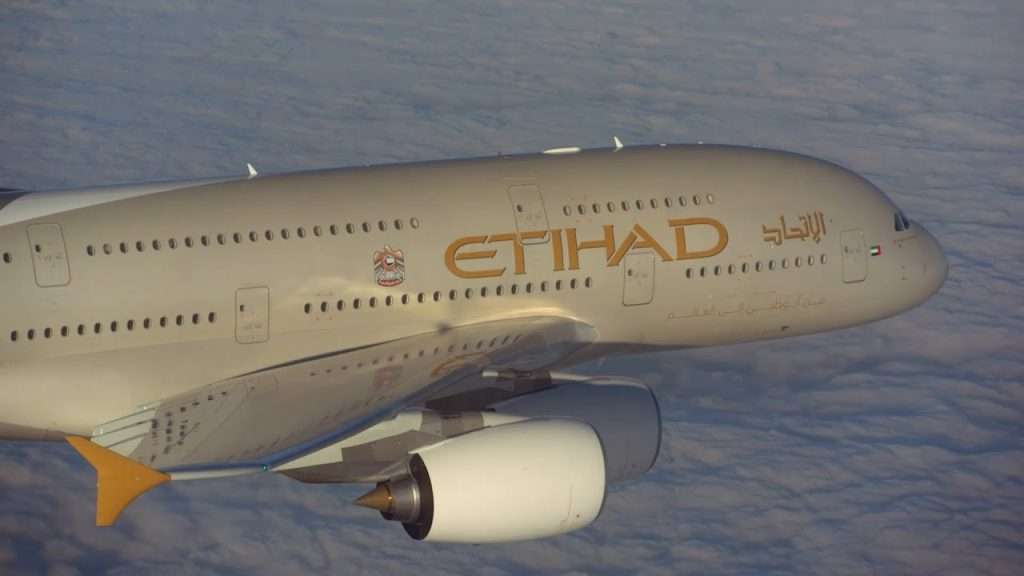
The carrier confirmed on 9 December 2022 its intent to reintroduce its A380 fleet with a strict focus on London Heathrow from Abu Dhabi, where four of the superjumbos would be returned to service.
Etihad cited the surge in demand across its network and specifically noted customer feedback, which continued to request the return of the A380 to service.
Ultimately, the decision marked a change from Etihad Airways’ initial plans, which were to see the plane not return for good in a bid to streamline and become more efficient.
Since re-entering service, the jet has been deployed to even more locations than just London Heathrow and has firmly cemented its place back in the fleet.

Etihad is looking to retain the jet for many more years, but knows its time with the A380 won’t be forever, as it seeks to find ways to evolve.

ABOUT THE AUTHOR
Daniel Fowkes is a Melbourne-based aviation analyst and journalist with over a decade of industry experience. As founder of Dj’s Aviation, he delivers trusted analysis on aircraft, airline strategy and global aviation trends for djsaviation.net
Leave a Reply
Related Articles




Stay Informed
Get the latest aviation news, analysis and route updates delivered to your inbox.
We respect your privacy. Unsubscribe at any time.
Enjoyed this story?
Make us your go-to for aviation news
Add us as a preferred source on Google and see our latest stories first in Top Stories.
Add Us On Your News Feed
Confidence in the Airbus 380 is high, particularly the earlier 4 engine models. Just travelled by one on the day the AI 787 crashed. Etihad and others should continue with this plane. The fights on long hauls are full even though Etihad is more expensive than air india.