

The Airbus A350 is one of the industry’s leading widebody offerings for airline customers seeking to evolve their fleet and cater to increasing long-haul demand.
Since entering the industry, this widebody has been a hit, and substantial commitments have been secured from airlines worldwide.
Furthermore, at some airlines, it has proven to be a reliable and efficient alternative to some of the outgoing quad-engined aircraft, such as the 747 and even the A380.
However, Airbus is not moving uncontested in this market, and Boeing’s upcoming 777X aims to disrupt it and provide an efficient alternative to the A350.
But what are the advantages of each aircraft, what are the fundamental differences, and which plane has the advantage?
Introducing The 777X & A350
The Boeing 777X is the next evolution of the highly successful 777 series, which entered the industry in the 1990s. It aims to be a game-changer for twin-engine flying across high-capacity and long-ranged routes.
The 777X will enter with two primary passenger variants, the 777-8 and the 777-9. The latter is catered to customers requiring additional capacity. Furthermore, the 777-9 has been the more successful of the two variants, with the -8 struggling significantly to attract meaningful attention.
The plane has many improvements. It was designed to respond to the Airbus A350 and enhance the long-haul product in an industry that was shifting away from quad-engined widebodies.
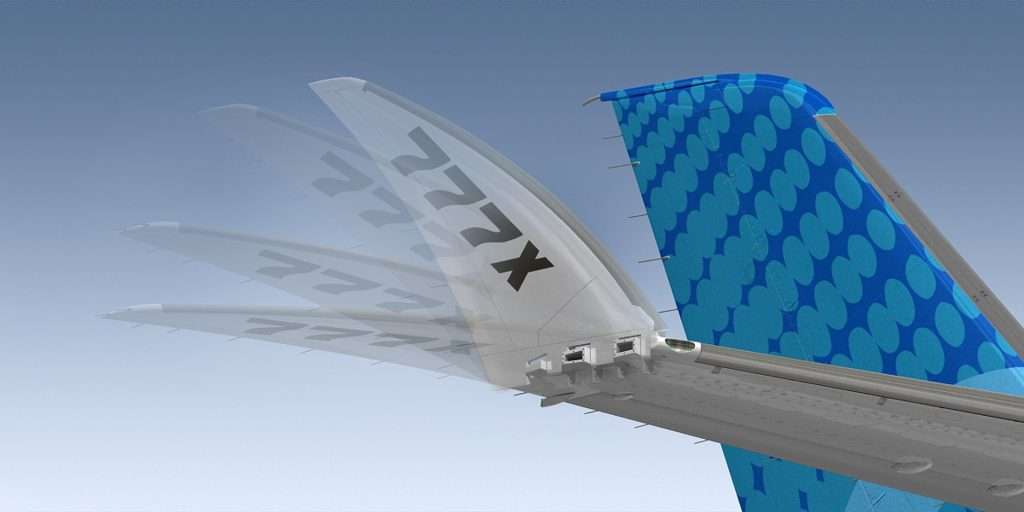
Key innovations include its folding wingtips, which allow the aircraft to be more efficient in the air and fit into pre-built gate spaces at airports around the world. Moreover, highly efficient but also large GE9X engines are set to break boundaries previously laid out.
The Airbus A350, on the other hand, was created as a clean-sheet design to compete with Boeing and its widebody products, which were continuing to dominate.
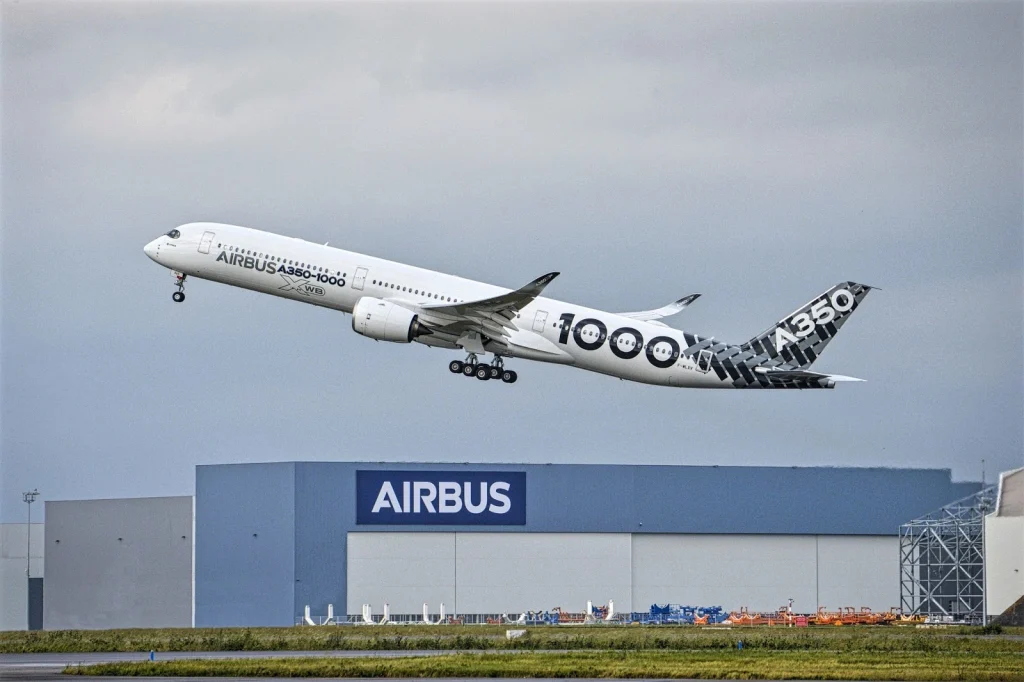
Available in two variants—the A350-900 and A350-1000—the aircraft addresses airlines’ requirements for comfortable, efficient, and long-range operations in today’s industry.
Its use of lightweight carbon-fibre-reinforced materials across the airframe reduces weight and improves fuel economy, making it a popular option for airlines addressing their fleet requirements.
Analysing The Two Aircraft
While the two aircraft share similarities, each will ultimately offer airlines something different, which will play a defining factor in the final decision.
As the planemaker advertises, the Boeing 777X can seat up to 426 passengers in a two-class configuration. This is for the larger -9, with the -8 seating a more modest 384 thanks to its reduced fuselage.
This capacity is compared to the A350-1000, which is more equipped to seat the late 300s to early 400s at maximum capacity, whereas the A350-900 is a more optimal choice for those seeking the low to mid-300s.
The 777-8s’ range is advertised at 16,170 km, whereas the 777-9 will look to be 13,500km. This is still a suitable range for most companies, but it is just marginally more than the A350-900, which is 15,000km, and the A350-1000, which is 16,100km.
That range also revolves around all-important fuel usage, which can be key for airlines to plot what aircraft they will purchase. The 777-9 looks to burn a calculated 48lb of fuel per nautical mile, whereas the A350-1000 sits at around 32lb.

While the fuel burn metric is important, it will fluctuate quite significantly depending on the airline’s chosen route deployment, configuration, and overall weight. As such, it isn’t possible to come to a firm conclusion for both old-generation and new-generation planes.
Both aircraft are equipped with two engines. From a length, wingspan, and width standpoint, the 777-9 edges out in every metric with a longer fuselage of about 9ft, a larger wingspan of 26ft, and even a height increase of about 8ft.
| BOEING 777-9 | AIRBUS A350-1000 | |
| Wingspan | 238ft 10in (72.80 metres) | 212ft 5in (64.75 metres) |
| Height | 64ft 1in (19.53 metres) | 56ft (17.08 metres) |
| Length | 251ft 9in (76.72 metres) | 242ft 1in (73.78 metres) |
Why Airlines Buy These Planes
Both aircraft target long-haul and ultra-long-haul routes, offering an adequate balance for airlines profitably seeking range and efficiency.
The 777X provides a compelling case for capacity-driven markets. Particularly, through the 777-9, this variant’s ability to seat over 400 passengers can respond to markets with significant demand for airlines that still operate a hub and spoke model.
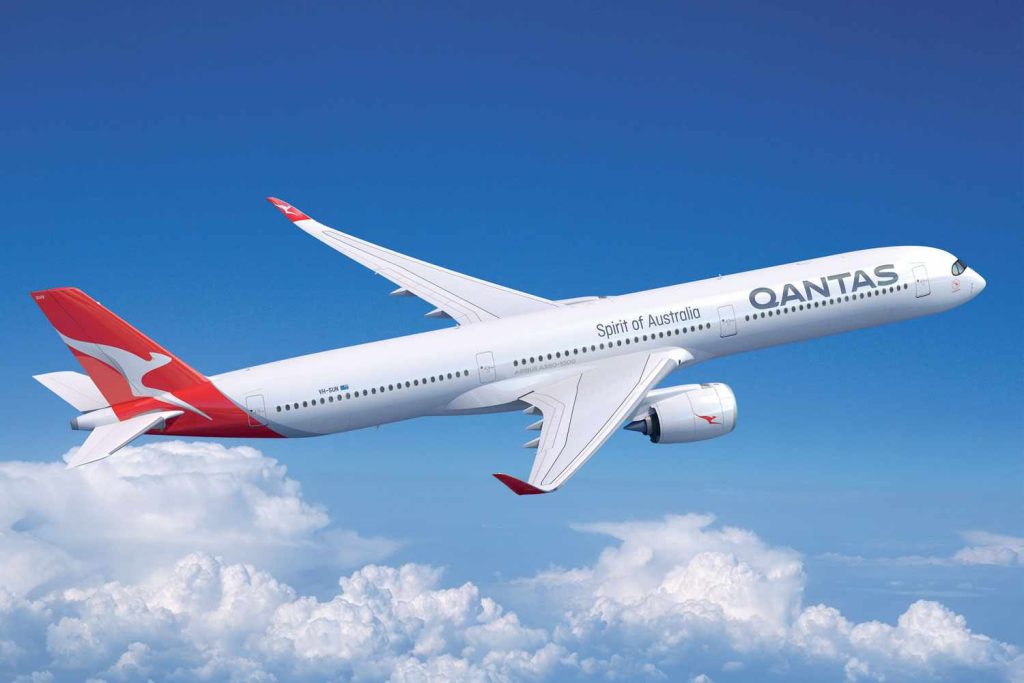
The A350, with its slightly smaller capacity but still having key performance metrics, can allow airlines greater flexibility across their route network. It has been bought by airlines that similarly prefer what the 787 can do as a more modest widebody.
Generally, these two aircraft are the only ones available to airlines seeking to replace their ageing quad-engined planes, such as the 747 and A380. Nowadays, aircraft manufacturers have moved away from producing ultra-high-capacity and inefficient planes.
As a result, the 777X and A350 are broadly considered the only alternatives, and airlines must determine which option better suits their business through RFPs.
What Aircraft Do Airlines Want?
Ultimately, many factors can influence an airline’s decision to use one aircraft type over another. Each airline’s perspective will differ; thus, each end decision will likely differ based on the circumstances.
Factors influencing a decision include fleet commonality, relationships with the planemaker, price point, delivery timeframe, and business optimisation.
Airlines already operating Boeing aircraft, particularly the 777, may gravitate toward the 777X for its operations and pilot training continuity, believing that a seamless entry into service will be possible.
Similarly, Airbus operators may lean towards the A350 as they seek some form of commonality. While these aircraft types are destined to compete, their uses can not always overlap.
As seen in the Middle East, the 777X and A350 will work in harmony to serve various destinations differently. Dubai-based Emirates is utilising the A350 for more regional international markets, whereas the Boeing widebody will have capacity on its side.
One avenue that remains more relevant than ever is delivery timelines. While Airbus has largely delivered A350s on schedule, Boeing has faced years of delays with the 777X program.
These delays and heightened scrutiny following the 737 MAX crisis have frustrated prospective and existing 777X customers. The Boeing long-haul jet remains undelivered, whereas the rival Airbus is thriving and proven.
Order Performance
The order books of the 777X and A350 tell two very different stories. Boeing has been able to see its order book increase on a continued basis for the 777X; however, at times, this has slowed down to rates that are not entirely surprising.
The aircraft has welcomed orders from key international airlines such as Emirates, Lufthansa, Qatar Airways, and even ANA. These airlines share similarities in operating through a singular hub airport rather than multiple.
The A350, with over 1,000 orders across both variants, has seen more substantial market traction. A proven and reliable aircraft, this type has had time on its side. With the 777X remaining uncertified, this Airbus aircraft has had years to develop and mature.
While Boeing has sometimes struggled to attract orders, its plane remains uncertified, and Airbus has had much longer to see its alternative mature.
Furthermore, Airbus has sought to develop its widebody series further through ULR variants, which have broken the boundaries initially presented to customers and given airlines new opportunities.
The 777X remains in a stagnant position. Away from a freight variant, further innovation isn’t possible, considering the planemakers’ colloidal struggles.
But Which Aircraft Wins?
At the midway point of the 2020s, these two aircraft remain important pillars of many airlines’ international networks. However, only one remains certified.
While the 777X has all the appeal and fantastic economics to work alongside its innovation, it remains uncertified and unproven regarding airline usage.
The A350, however, is proven to fly globally and is continuously being delivered; therefore, its time in the market has been longer, and the series has more credibility.
The gap will likely shrink once Boeing’s long-haul aircraft formally enters service, which is expected in 2026. However, given Boeing’s turbulent times, the A350 undoubtedly continues to have the upper hand, which is visible through orders and customer feedback.
Boeing must resolve its program and many internal issues before it can truly claim that its offering is more successful.

ABOUT THE AUTHOR
Daniel Fowkes is a Melbourne-based aviation analyst and journalist with over a decade of industry experience. As founder of Dj’s Aviation, he delivers trusted analysis on aircraft, airline strategy and global aviation trends for djsaviation.net
Related Articles




Stay Informed
Get the latest aviation news, analysis and route updates delivered to your inbox.
We respect your privacy. Unsubscribe at any time.
Enjoyed this story?
Make us your go-to for aviation news
Add us as a preferred source on Google and see our latest stories first in Top Stories.
Add Us On Your News Feed