
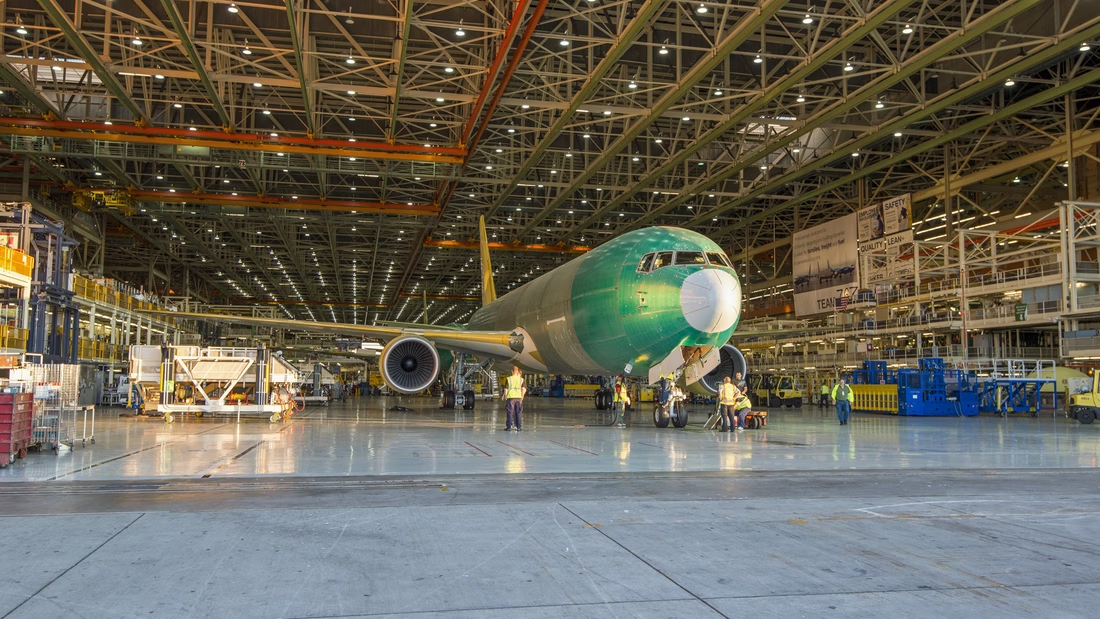
The Boeing 767X was a hopeful variant that was often pitted as the perfect 767/757 replacement and aimed at aiding Boeing in the middle of the market sector.
Throughout the 2010s and into the early 2020s, enthusiasts discussed the prospect of a 767X to help Boeing close the gap with its fierce rival, Airbus, which was beginning to widen.
While there were murmurs of an X-type variant at different points, Boeing decided not to proceed with the aircraft variant.
It’s worth mentioning that Boeing also studied a 767-X concept in 1986 but didn’t proceed with it. This piece will not focus on the 1986 study but rather discuss a next-generation 767 in the 2010s and 2020s.
So, what truly was the 767X? Was it of interest to any airlines? Was Boeing keen on it? And what ended up happening?
The Rise & End Of The Boeing 767
Introduced in the 1980s, the 767 quickly became a staple of the industry on medium—and longer-range routes, thanks to its enhanced capabilities at the time.
When airlines operated the aircraft, they typically spoke highly of it, often making considerable commitments to it to fuel their domestic or international operations, and sometimes both.
However, as the 2000s approached, the Boeing aircraft saw its time in the light fade as the planemaker would wrap up production for at least the commercial passenger variant.
Unlike other aircraft, such as previous 747 variants, some airlines felt the company wasn’t offering a like-for-like replacement when this was wrapped up.
The 767 entered the industry looking to be a game changer, and for some of its customers, it certainly was that. The plane was a driving force for change in the shift from quad-engined planes to twin-engine planes, breaking the boundaries previously set up under ETOPS.
What Is The Boeing 767X?
As the 2000s arrived, offering more fuel-efficient flying became even more important. The aircraft manufacturer’s role was to produce adequate aircraft to achieve this.
The 767, while a workhorse, wasn’t achieving the numbers necessary to be seen as a fuel-efficient alternative across the industry. Thus, it was not just seeing production cease, but airlines begin retiring it.
Immediately after the 767 production ceased, there were discrepancies over the dedicated replacement. While Boeing was moving forward with a 787, which included a more modest 787-8, there were equally some concerns that it still wasn’t the true perfect middle-of-the-market aircraft.
A prospective 767X would’ve looked to utilise the capabilities of emerging technologies from the 2010s and onwards to implement them onto a fuselage, bringing greater efficiency to airlines.
Furthermore, a 767X would’ve acted as a bridge between the narrowbody 737 MAX and the widebody 787 Dreamliner. Analysts, onlookers, and airlines even argue that this gap between the two aircraft types is a cause for concern.
Optimised to seat over 200 passengers, this aircraft would’ve been ideally positioned to meet middle-of-the-market demand, for which analysts forecasted up to 4,000 units could be required in future decades, per studies across the last decade.
Would Airlines Need A 767X?
However, a fundamental reason for an aircraft manufacturer to move forward with a prospective aircraft is whether airlines desire it.
While feasibility studies and internal discussions can occur, resulting in some interest from the planemaker to move ahead with a variant, if it isn’t successful with airlines, then there is little to no reason it’ll formally launch.
Some airlines expressed a desire for an aircraft to fill the middle of the market sector, primarily known as a Boeing NMA, which most also call the 797.
At the time of a prospective 767X, airlines were at least interested in mid-sized fuel-efficient aircraft that could help bridge the gap between existing aircraft types such as the MAX and 787.
While Boeing progressed with its own 737-10 and Airbus’ A321XLR and LR, there were still murmurs that these aircraft were not feasible for replacing larger types such as the 767.

Furthermore, more airlines were looking to increase flexibility across their fleet, seen notably through planes such as the Dreamliner, which has three available variants that offer a wide array of possibilities for the airline operating it.
A 767X could’ve offered airlines great flexibility and efficiency, allowing existing customers of the old-gen series to transition to a new-gen type relatively hassle-free.
The prospective aircraft did have retirements on its side; however, airlines across the 2010s and even early 2020s desired to source a replacement for their ageing Boeing jets.
If anything, had Boeing looked to re-engine the 767 as discussed for its passenger division, this would’ve likely needed to have occurred earlier, now that it has missed the boat.
What Happened To The 767X?
Despite high prospects, Boeing never pursued a 767X for passenger flying. There were concrete murmurs that they were discussing a Freighter, which would’ve sought to bring efficiency to the freight side of the business.
However, the resources required to get a 767X off the ground would be substantial, and thus, concerns would undoubtedly ensue about the overall viability of the programme from almost all angles.
By the time the 767X discussion came around, Boeing had long said goodbye to the 767, and as such, it had also bid farewell to the production space and key equipment used to produce the passenger plane.

While the freighter variant continues to live on, the 767X was not pursued for many reasons. However, Boeing’s state over the last decade has undoubtedly not prevented any new aircraft programmes from developing further.
Looking ahead, the 737 MAX and 787 will, at least for the foreseeable future, be the primary replacements for the many ageing Boeing planes.
The Right Decision?
Looking into a 767X and Boeing not engaging in such murmurs across the 2000s, it was likely to be the right one. While there were prospects for this to be a short-term hit, that’s likely what it would’ve been.
Furthermore, there have been arguments that an X variant would’ve been too large to fit into the true middle of the market sector, and something like a 757X would’ve made more sense.
Considering the operational challenges experienced over the last decade, launching this plane would have been a disaster financially and resource-wise.
Moreover, the rumoured variant was likely only considered a short-term solution, and Boeing has indicated it will wait to adopt new modern technologies for its next commercial airplane.
The 767X is a tale of what could’ve been, but logistically, it never made much sense.

ABOUT THE AUTHOR
Daniel Fowkes is a Melbourne-based aviation analyst and journalist with over a decade of industry experience. As founder of Dj’s Aviation, he delivers trusted analysis on aircraft, airline strategy and global aviation trends for djsaviation.net
Related Articles




Stay Informed
Get the latest aviation news, analysis and route updates delivered to your inbox.
We respect your privacy. Unsubscribe at any time.
Enjoyed this story?
Make us your go-to for aviation news
Add us as a preferred source on Google and see our latest stories first in Top Stories.
Add Us On Your News Feed