
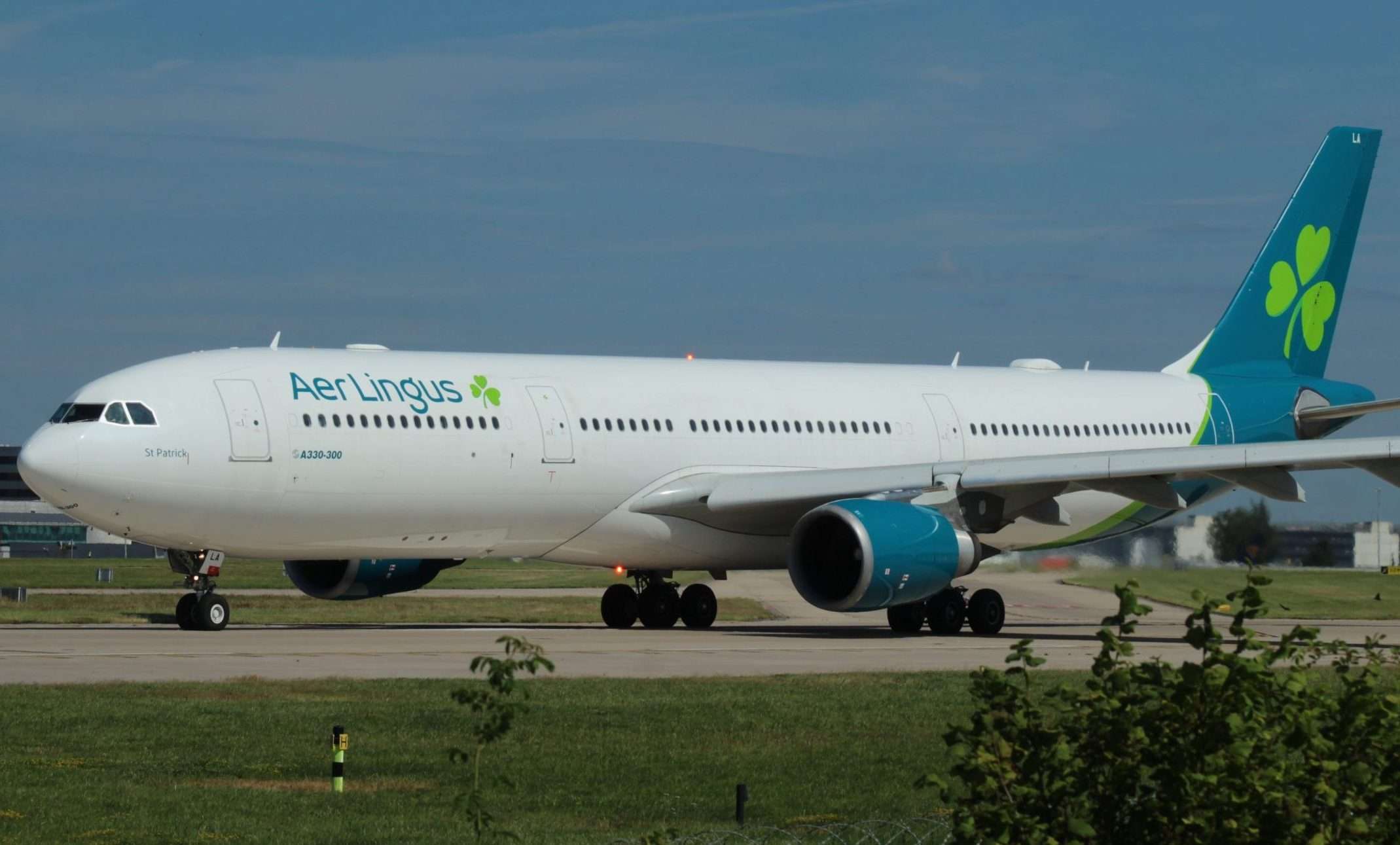
Aer Lingus is reportedly being forced to ground aircraft across its operations to combat ongoing challenges across its business.
Driven by passenger caps at its home of Dublin Airport, the airline will need to assess its overall day-to-day operation and make necessary cuts.
Passenger caps aren’t just a threat for Aer Lingus. Other airports worldwide are acting similarly and causing turmoil for the airlines that call these places home.
Cuts in capacity at major international airports can dramatically affect an airline’s schedule and mean it cannot meet overall demand. The most recent example was the turmoil experienced at Amsterdam Schiphol in the last 12 months.
As highlighted by the Irish Independent, the airline is also struggling with profitability, affecting overall investment opportunities.
An inability to be profitable to the extent required is a concern, and Aer Lingus knows this. The airline wasn’t afraid to state that profitability would allow the renewal of the fleet, further growth, investment in key technologies to keep up with competitors, and more.
But without the portability margins required, these fundamental changes will not be possible, and thus, changes must be required to ensure the airline is fit to fly for the long term.
Talk of downsizing, however, is hardly a new development. This is a hot topic of conversation across Ireland, and analysts and the broader public are closely examining the airline’s state.
Aer Lingus Will Make Fleet Changes
The airline’s CEO has also confirmed that aircraft across the Airbus family will be grounded. One A330 will be parked, and A320 operations will be scaled back.
However, the airline hasn’t also ruled out further fleet reduction if required to try to turn around its fortunes while stabilising.
Based on the most recent data provided, Aer Lingus has a fleet of 55 active aircraft; of these, the airline has 13 Airbus A330s and 35 A320 family aircraft, with one A320-200 already listed as parked.
Looking ahead, however, the overall scaleback is required, especially as Aer Lingus gears up for the arrival of the next-generation A321XLR, elevating aspects of the business and providing fresh opportunities.

While the A321XLR is an exciting prospect, it cannot be viewed as the sole answer to Aer Lingus’ problems. Instead, the aircraft will help propel it towards markets it believes it can be successful in, but key challenges, such as increasing levels of competition, will remain.
However, given the state the airline is in just before acquiring a new aircraft, it faces the terrible prospect of having too many aircraft, making its operation unsustainable.
Changes are set to extend to its staff, with a redundancy scheme expected and a freeze on hiring to be implemented in a bid to stabilise core aspects of the business again.

ABOUT THE AUTHOR
Daniel Fowkes is a Melbourne-based aviation analyst and journalist with over a decade of industry experience. As founder of Dj’s Aviation, he delivers trusted analysis on aircraft, airline strategy and global aviation trends for djsaviation.net
Leave a Reply
Related Articles




Stay Informed
Get the latest aviation news, analysis and route updates delivered to your inbox.
We respect your privacy. Unsubscribe at any time.
Enjoyed this story?
Make us your go-to for aviation news
Add us as a preferred source on Google and see our latest stories first in Top Stories.
Add Us On Your News Feed
Perhaps if ticket price greed would cease and they made it affordable to fly into Shannon they wouldn’t have this problem.