
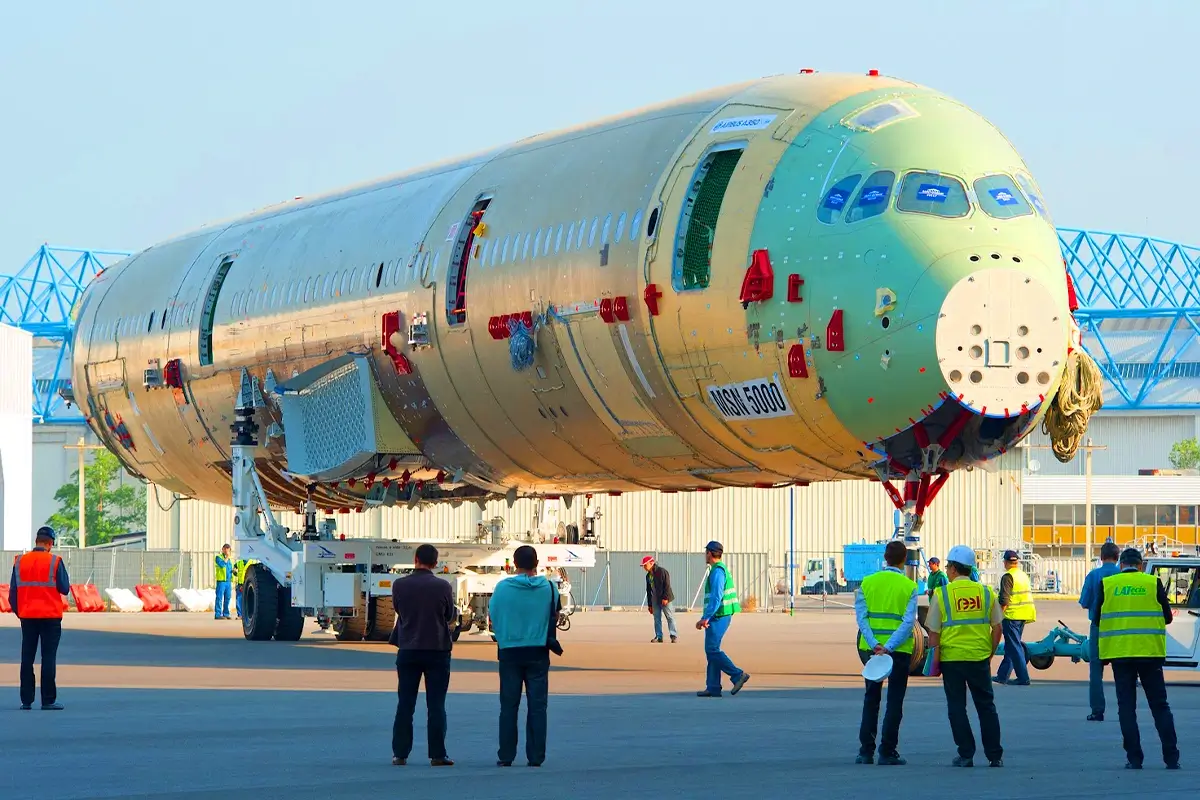
Four years after the A350 entered service, talk emerged that Airbus was studying a possible A350neo, a new engine model for the program.
These reports came at a record pace for a family still new to the industry, with talk of ongoing engine studies at the back end of the 2010s.
What happened to these talks, the A350 family since and will this model eventually launch?
Why The Airbus A350 Was Launched
Airbus’ A350 was launched, interestingly, unlike many other widebody jets, driven by the admission that Boeing had a killer new program that needed a response from Airbus.
These comments from executives in the early 2000s followed a period in which Airbus rejected the industry claims that Boeing had a threatening aircraft, which affected Boeing’s market share in the 787.
The possibility of the A350 came in the latter stages of 2004, following initial proposals of a redesigned A330 known as the A330-Lite. But that never progressed, and instead, the A350 became something to be offered.
Initially, the planemaker wanted the jet to sit in the 250-300 seat market and believed the market demand for it was clear; with thousands of units in demand, it was seen to become a fundamental new flagship product for Airbus, and it has truly become so.

Qatar Airways’ pledge to purchase the plane in mid-2005 was part of the early commitments for the aircraft, indicating the appeal was very much present. By the latter stages of 2005, the programme’s more formal launch had arrived, along with development cost estimates.
However, it wasn’t all easy sailing: the A350 underwent a significant redesign following criticism of its design, which hit back at Airbus’ lack of innovation with the aircraft and its strategy, which seemed to focus solely on responding to Boeing rather than innovating.
By 2006, the A350XWB, as it is known today, was a redesign that included a wider fuselage cross-section and more adjustable seating arrangements, ranging from low-density to high-density configurations, depending on airlines’ requirements.
Early Murmurings Of An A350neo
With the first commercial flight of the Airbus A350-900 between Doha and Frankfurt on 15 January 2015 with Qatar Airways, talk of a possible new model typically should’ve been expected until the 2035-2040 mark. For the A350, this did not happen.

A mere four years after the A350 entered scheduled passenger services, reports began to emerge surrounding an A350neo, flagged initially by Aviation Week, which said Airbus was in the early stages of talks with engine suppliers to bring a re-engined model of the widebody to life.
This reporting was further backed by the reputable trade publication The Air Current, which hinted that Airbus intended to develop a new engine model. Aviation Week, later in that same year, stated that GE was the likely earlier candidate to provide the engine should the manufacturer progress with such studies.
While innovation is at the forefront of planemaker’s focus, especially in such a competitive and equally demanding industry, it’s not all that common for a planemaker to begin exploring a radically new derivative just years after debuting the first iteration in the family.

After this 2019 reporting emerged, talk of a prospective A350neo quietened considerably, months after reports of the COVID-19 pandemic reshaped how the planemaker operated on a day-to-day basis. Assessments of customer requirements saw priorities in the family lay elsewhere.
With the COVID-19 pandemic and other priorities therefore derailing the process in the latter stages of the 2010s, Airbus remained calm about the matter, confirming in public statements that it didn’t believe there was much pressure on driving for a replacement, especially given the strong demand for the series still present and strong customer feedback as well.
What’s The Focus At Airbus Now & Will It Launch?
Now, in 2026, Airbus continues to sell its A350 family and push customers to commit to the widebody, with planned production increases and variants. The future is certainly bright for this flagship now that the A380 has exited active production at the planemaker.
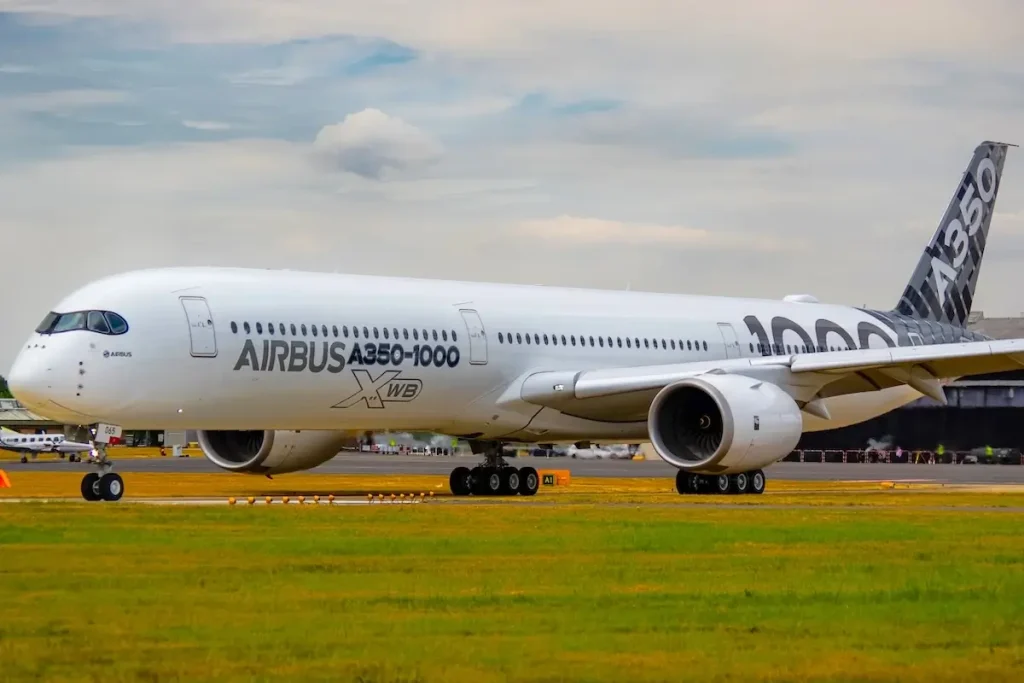
However, there remain questions over the 2018 and 2019 reporting, suggesting the A350neo was of some interest internally. Also, given this is a popular widebody, airlines will eventually require a natural, dedicated replacement to be offered.
While those days are still some time away, behind the scenes, Airbus and engine manufacturers are driving innovation through new wing concepts, engine technologies, and more to better understand what the future of flying will look like.
Indeed, the manufacturer’s immediate focus has been on a single-aisle replacement for the A320neo, its most popular aircraft family. Based on studies, it’s likely see the framework laid for eventual adoption on a larger scale with whatever widebody replacement is to be offered.
For the A350 program, the dedicated A350F and the upcoming launch of the A350-1000ULR are two of the more immediate focuses, not forgetting, in the medium term, the hoped-for increase in production for the widebody program to meet demand and limit delays.

So, for the moment, the A350neo has taken a backseat in the headlines, but, as Airbus would say, that doesn’t mean key studies behind the scenes aren’t ongoing to help understand what the future of the commercial aircraft portfolio will look like come the late-2030s and into the 2040s.
Key dialogue with engine manufacturers, supply chain partners, and more will be required for the business to truly understand what’s possible, including timelines, alongside dialogue with customers to determine what they want and when.
Ultimately, the A350neo remains an aircraft still more than possible; its first reporting, coming mere years after the program’s launch, highlights that the appetite is there. The success of the series already indicates that a replacement will be required at some point, whether it’s called the A350neo or something else remains to be seen. Still, Airbus will always need a widebody flagship.

ABOUT THE AUTHOR
Daniel Fowkes is a Melbourne-based aviation analyst and journalist with over a decade of industry experience. As founder of Dj’s Aviation, he delivers trusted analysis on aircraft, airline strategy and global aviation trends for djsaviation.net
Related Articles




Stay Informed
Get the latest aviation news, analysis and route updates delivered to your inbox.
We respect your privacy. Unsubscribe at any time.
Enjoyed this story?
Make us your go-to for aviation news
Add us as a preferred source on Google and see our latest stories first in Top Stories.
Add Us On Your News Feed